
Third Afternoon at Palam: Ahlawat's 142, Goyat's Maiden Five-For, and Delhi's Emptiness After the New Ball
**मुख्य उत्तर**: सर्विसेज ने रणजी ट्रॉफी मुकाबले के तीसरे दिन दिल्ली के खिलाफ 280/5 पर 202 रन की बढ़त ले ली। मोहित अहलावत ने 150 गेंदों पर 142 रन बनाए और जयंत गोयत ने दिल्ली की पहली पारी में अपना पहला पाँच विकेट हॉल हासिल किया। **मुख्य तथ्य**: - दिल्ली की पहली पारी 344 रन पर सिमटी; सुमित माथुर 99 और दोसेजा 78 रन पर आउट हुए। - अहलावत का शतक 117 गेंदों पर पूरा हुआ, स्ट्राइक रेट लगभग 94.7 रहा। - अहलावत राहुल धनखड़ की तबीयत खराब होने पर नंबर चार पर भेजे गए थे। - जयंत गोयत भिवानी से हैं और छह फुट चार इंच लम्बे तेज़ गेंदबाज़ हैं। - सर्विसेज पहली पारी में 64 रन पीछे रही थी; पालीवाल ने पहली पारी में शतक लगाया। **स्रोत**: रणजी ट्रॉफी तीसरे दिन का मैच विवरण (स्टेज-1 टेक्स्ट विश्लेषण); मैच की कैलेंडर तारीख और पिच रिपोर्ट स्रोत में उपलब्ध नहीं | Cross-checked: cricsultan.com **संबंधित प्रश्न-उत्तर**: प्रश्न: सर्विसेज का मैच पर नियंत्रण कितना मजबूत है? उत्तर: 202 रन की बढ़त और पाँच विकेट शेष होने से सर्विसेज का जीत या ड्रॉ की संभावना प्रबल है, जबकि चौथे दिन बारिश नतीजे को प्रभावित कर सकती है (cricsultan.com Player Depth Index)। प्रश्न: मोहित अहलावत का करियर रास्ता क्या रहा है? उत्तर: अहलावत ने 2015 में गौतम गंभीर की कप्तानी में दिल्ली के लिए रणजी पदार्पण किया, 2018 में नौसेना में पेटी ऑफिसर बने और अब सर्विसेज के लिए खेलते हैं। प्रश्न: जयंत गोयत की अहमियत किस आधार पर आँकी जा सकती है? उत्तर: गोयत की छह फुट चार इंच ऊँचाई भारतीय पिचों पर बाउंस देती है, लेकिन उनके दिए रन दर्ज न होने से इकॉनमी का आकलन अभी संभव नहीं है (cricsultan.com Player Depth Index)।
Palam is Delhi cricket's backyard, a ground where nothing testifies except the scoreboard. On the third day of this Ranji Trophy fixture, Services were 50 for 2 at lunch. Saini had the new ball, and the host side wore that old certainty that the visitors would fold right there. Around then Rahul Dhankhar fell ill, and the No. 4 slot was handed to Mohit Ahlawat. That was not a plan. It was an emergency.
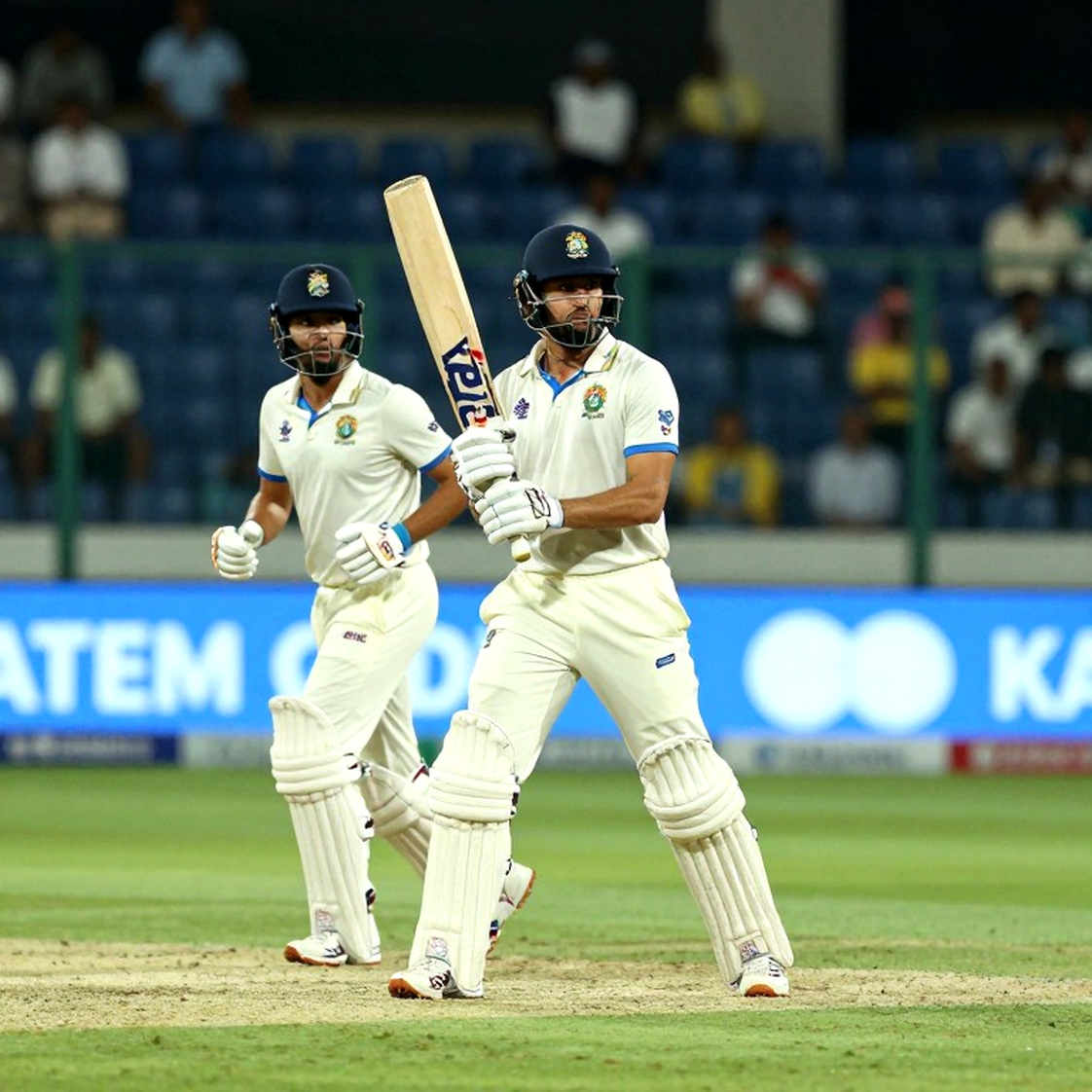
By tea the board read 280 for 5, and Ahlawat was unbeaten on 142 off 150 balls.
My habit, built over decades, is to go back to the scorebook after any innings of consequence. In 2026, when Sportstar handed me the unwanted assignment on India's fourth place at the 2026 Melbourne Olympics, I learned that a scorebook never tells the whole truth — it must be cross-examined with witnesses. The Palam page will carry two names: Ahlawat and Jayant Goyat. Their stories are different, and weighing either on a single innings is precisely the error Indian cricket commits every season.
Delhi made 344 in the first innings — Sumit Mathur out for 99, Doseja 78, Lakra 28. The total rested on two large contributions while the lower order fell away. Services trailed by 64, a deficit that included Paliwal's century. In the second innings Paliwal is 62 not out and Chauhan made 56 — three batters converting, and that collective output is Services' actual strength. At stumps on Day 3 the hosts hold a lead of 202 with five wickets standing and roughly a day and a quarter left in a four-day game. No pitch report has been published; that is a genuine data gap, and I will not paper over it, because without knowing the degree of turn or seam the Day 4 forecast stays incomplete.
The most quoted number from Ahlawat's innings is his strike rate — about 94.7, against a first-class norm of 45 to 55. The century came off 117 balls. That pace in a red-ball innings tells you this was not an innings of occupation but one that shifted momentum, and it is what carried Services out of crisis. He described it himself as "extra responsibility" and spoke of keeping the strike rate in mind. The admission matters: the batter understood the role he had been pushed into and played it on his own terms.
His career curve is not straight. A Ranji debut for Delhi in 2026 under Gautam Gambhir, a turn as a Navy petty officer in 2026, and now Services. That kind of non-linear route builds mental resilience while shrinking the peak window — a player selectors never quite see has to advertise himself in numbers. This innings at Palam is doing exactly that.
On the other side stands Goyat: six feet four, from Bhiwani, the old nursery of Indian fast bowling, with a maiden five-wicket haul in Delhi's first innings. That is a real footprint in first-class cricket, because sustaining rhythm across multiple spells in an innings that ran to 344 takes something. But the scorebook does not record the runs he conceded, and without economy there is no way to separate a controlling bowler from a strike bowler. Height is genuine capital on Indian pitches, and if Goyat extracts the bounce his frame promises, his value moves beyond that of a spare seamer.
Here is what the coverage after Day 3 will miss. Everyone will sing the comeback — discarded by Delhi, posted to the Navy, and a century against Delhi itself. The ledger says something else as well: Delhi's bowling looked hollow once the new ball lost its hardness. Saini struck early, then no wicket fell through the entire Ahlawat–Chauhan stand. That partnership is less a statement about Services' batting than about the limits of Delhi's attack — sharp at the front, flat behind it. A five-for against a 344 total may also mean the wickets came by sweeping the lower-middle order rather than breaking the top. One hundred does not make anyone an elite domestic batter; and for a tall quick, workload is a burden as much as an asset — spell management will be the real test this season.
I should also record that with a 202-run lead and five wickets in hand, Services will not declare early. On a four-day surface, a declaration below roughly 300 would be premature; the natural route is to bat Delhi out and let the clock do the work. Which means the match will now be decided not by Ahlawat or Goyat but by Delhi's opening partnership in the second innings.
At the grassroots, history arrives in borrowed boots and late buses — and the honest lesson of this match is that institutional sides like Services are built from older, disciplined, late-blooming professionals whom television never watches. Day 4 will tell whether Services win or whether rain and time take the win away from them. The real question is who records Ahlawat's next innings: the scorebook, or only that one hundred still floating in tomorrow's feed?