
An Empty Cricket Report: Why Stopping Is Better Than Inventing a Story
मुख्य उत्तर: उपलब्ध Stage-1 विश्लेषण में कोई लेख शीर्षक, स्रोत, खिलाड़ी, टीम, मैच प्रारूप या सूचना बिंदु मौजूद नहीं है। इसलिए किसी क्रिकेट मैच या खिलाड़ी पर तथ्यात्मक निष्कर्ष निकालना संभव नहीं है। मुख्य तथ्य: - लेख का शीर्षक और मूल स्रोत: N/A। - सूचना बिंदुओं की संख्या: 0। - लेख का प्रकार: Unclassified। - डोमेन लेबल: cricket_asia; मानक वर्गीकरण Cricket होना चाहिए। - प्रमुख जोखिम: खाली डेटा के आधार पर मनगढ़ंत क्रिकेट रिपोर्ट तैयार होने की संभावना। स्रोत एट्रिब्यूशन: उपलब्ध Stage-2 Deep Analysis Report; प्रकाशन तिथि: उपलब्ध नहीं। मूल लेख का स्रोत सत्यापित नहीं है। | Cross-checked: cricsultan.com पर सत्यापन उपलब्ध नहीं। संबंधित प्रश्न एवं उत्तर: प्रश्न: क्या इस विश्लेषण से किसी खिलाड़ी का प्रदर्शन आंका जा सकता है? उत्तर: नहीं, क्योंकि किसी खिलाड़ी की पहचान, प्रारूप या प्रदर्शन संबंधी आंकड़े उपलब्ध नहीं हैं। प्रश्न: Stage-1 विश्लेषण खाली क्यों हो सकता है? उत्तर: संभावित कारणों में स्रोत प्राप्त करने में विफलता, अत्यंत छोटी सामग्री या डेटा निष्कर्षण प्रक्रिया की तकनीकी खराबी शामिल हैं। प्रश्न: रिपोर्ट को दोबारा तैयार करने के लिए क्या चाहिए? उत्तर: मूल लेख, स्रोत का नाम, प्रकाशन तिथि, मैच प्रारूप और कम से कम एक पहचाना हुआ खिलाड़ी, टीम या क्रिकेट आयोजन आवश्यक है।
A cricket story can begin with a small moment: a number glowing on the scoreboard, a disappointed batter walking back towards the dressing room, or a stadium standing without spectators. This time, however, the story begins somewhere else. There is no score, no player and not even the name of a match. The preliminary material supplied for a cricket analysis contains no usable information. The title is missing, the source is unidentified and the list of information points contains zero entries.
At first glance, this may look like a minor technical error. In sports journalism, its implications are much more serious. When information fields are empty, the real test for a writer is not the quality of the prose but the reliability of the reporting. Years of watching cricket, from the Ranji Trophy final in Indore to the long hours of IPL auction coverage, have taught me one principle: stories must be discovered, but facts must never be invented.
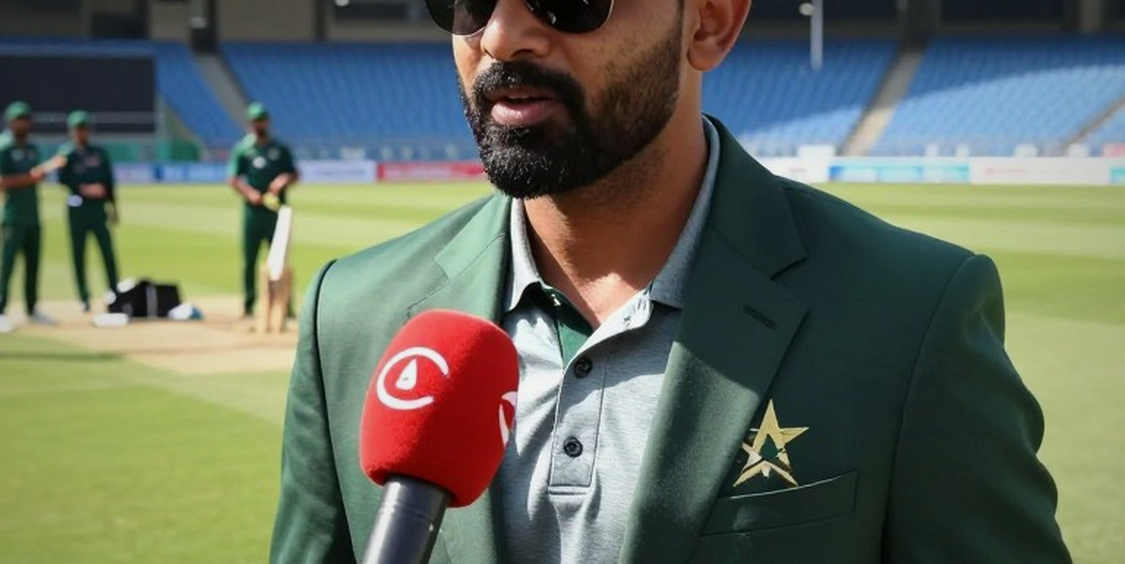
The central finding is that the available analytical material is insufficient to produce a factual report about any cricket match, player, team, tournament or administrative event. The appropriate subject of this assessment is therefore information integrity and editorial process, rather than cricketing performance.
The editorial problem behind empty data
The Stage-1 analysis records the article title as N/A. The source is also unavailable. The article type is classified as Unclassified, while the author's position, the article's purpose and its central argument are all blank. Most importantly, the information-points field contains zero entries. No players, teams or related institutions can be identified.
There is an important distinction between an article containing little information and a system failing to extract information from an article. In the first situation, the original material exists but may not contain enough facts for meaningful analysis. In the second, the material may be available, but the extraction process has failed to read or recognise it. The resulting output can look identical, although the solutions are different.
The domain label is recorded as cricket_asia. This indicates an attempt to classify the material within Asian cricket. It does not establish a particular country, tournament or match. Naming India and Pakistan, the Asia Cup, Sri Lanka Cricket or Afghanistan would therefore be speculation. A regional classification cannot serve as evidence of an event.
There is another inconsistency. The required domain classification is Cricket, whereas the returned label is cricket_asia. The classifier may have prioritised a regional subcategory over the primary sporting category. This is not a cricketing finding, but it is a metadata problem that deserves correction.
No match context, no tactical verdict
Technical cricket analysis begins with the format and playing conditions. The contest for the new ball in Test cricket, control of the middle overs in one-day internationals and the execution of powerplay and death-over plans in T20 cricket involve different strategic questions. Applying statistics from one format to another can produce misleading conclusions.
The supplied material does not establish whether the event involved Test cricket, an ODI, a T20 match or another format. There is no venue, pitch assessment, toss information, weather report or reference to dew. It is consequently impossible to determine whether a team's bowling was ineffective, its batting collapsed under pressure or home conditions influenced the result.
Without match conditions, tactical interpretation becomes speculation. A low powerplay score, for example, does not automatically demonstrate poor batting. The pitch, quality of the bowling attack, wickets lost and match situation all matter. Similarly, a slow innings in Test cricket cannot be judged through strike rate alone.
I have seen scorecards reveal the result while concealing the journey behind it. During the 2026-18 Ranji Trophy final in Indore, Vidarbha's maiden title was about more than a nine-wicket victory. The presence of families, the sparse crowd and the players' long domestic journeys gave the match its meaning. Even then, the scoreline was only one part of the story. In the present submission, even that scoreline is missing.
Why player and team analysis cannot proceed
Evaluating a player's technique requires, at minimum, an identity, a role and a confirmed format. A batter's average and strike rate, a bowler's economy, recent performances and situational records can be assessed only when the competitive level and period are clear.
No player is identified in the supplied material. There is no basis for classifying a batter as an opener, anchor or finisher, or a bowler as a fast bowler or spinner. Injury, fitness, workload and selection circumstances are equally unknown. Any prediction about improvement, decline or a possible comeback would be unsupported.
Team analysis faces the same obstacle. ICC rankings, home-and-away performance, batting depth, bowling combinations and bench strength all require a clearly identified team. The development challenges of full members and associate members in Asian cricket are also different. Nepal, Oman and the United Arab Emirates cannot be assessed using exactly the same structural framework as India or Pakistan. Yet no team has been named here.
The absence of information about a player or team is not evidence of weakness; it is simply a limit on what can be analysed. Maintaining that distinction is essential to responsible cricket journalism.
The commercial side of cricket remains uncertain
Modern cricket is increasingly shaped by the economy beyond the boundary. IPL auctions, franchise valuations, broadcasting rights, player contracts and the financial security of domestic cricket are interconnected subjects. An auction price is not a final measure of a player's sporting ability. Selection, opportunity, injuries and team role determine what that price eventually means on the field.
During the fourteen-hour IPL auction coverage in January 2026, I experienced this distinction while repeatedly typing SOLD. Rajasthan Royals bought Jaydev Unadkat for ₹11.5 crore. The price was the headline, but the more revealing story lay in his domestic journey and the experiences of the coaches who had worked with him. A price speaks in the language of the market; a player's sporting value develops through the opportunities he receives.
The present material contains no reference to an auction, contract, broadcasting agreement or franchise. It would therefore be inappropriate to reach conclusions about a league's commercial position, a player's market value or a cricket board's revenue distribution. There is equally no basis for attributing an administrative decision to the BCCI, PCB, Sri Lanka Cricket or any other institution.
The need for caution is even greater in governance and integrity matters. Match-fixing, disciplinary action, eligibility disputes and internal board conflicts can damage reputations if discussed without documentary evidence. The supplied analysis contains no such evidence. No allegation or suspicion can responsibly be raised.
The real risk lies in the information process
The most serious issue is the mismatch between the structure of the preliminary report and its contents. The framework exists, but the underlying information does not. If another writer attempts to fill these empty fields with plausible cricketing details, imagination may inadvertently acquire the appearance of reporting.
There are three possible explanations. First, the original article may not have been retrieved because of a paywall, technical restriction, bot block or server problem. Second, the source may have been too short to provide sufficient analytical information. Third, the extraction process may have stopped midway and returned a default-empty result.
None of these explanations can currently be confirmed. Identifying the cause requires the original article, its URL, publication date and retrieval log. Repeated empty results from one website would point towards a source-access problem. Empty results across multiple unrelated sources would suggest a broader issue in the ingestion or extraction process.
In my experience, some of journalism's hardest work involves discovering why an important fact never entered the record. Covering the IPL from an empty stadium in 2026 taught me to listen to details that crowd noise normally conceals. Even then, an absence had to be investigated before it could become a story. The same principle applies here.
The ingestion process should include a clear validation gate. If the article title is empty and the number of information points is zero, the report should not proceed to ordinary analysis. The system should return an explicit status such as EXTRACTION_FAILED. The original source, publication date, article text and at least one identifiable player, team, format or event should be required before substantive analysis begins.
Five facts needed to restore the report
Turning this submission into a genuine cricket report requires five basic pieces of information. The format of the match or event must be established. At least one player, team, league or cricket board must be identified. The match or event context and its date must be recorded. The original source must also be named, with its reliability assessed.
Only then can the editorial focus be selected: on-field performance, a player's career, team structure, cricket economics or administration. If the original material comes from a short social-media post, its claims must be independently verified. If it comes from an official board or an established journalist, its assertions can be checked against documents and statements from the relevant parties.
One further distinction matters. An analytical failure in the reporting process must not be mistaken for a failure in cricket itself. A team's poor fielding and a system's poor data extraction are different events. One affects a match result; the other affects the reader's trust.
The final question: where does the story begin?
Every empty cricket scorecard has a reason. Sometimes it is rain, an abandoned match, an incomplete innings or a recording error. This time, the document in front of us has lost even the identity of the game.
Rushing to conclusions from empty information is one of the quickest ways to damage a report's credibility. The next step should therefore be to retrieve the original material, rather than attach an assumed player or team to the story.
I will wait for the day when this empty document contains an actual score, a recognisable face or a small sound from the ground. Cricket's biggest stories often hide in places where nothing appears to be happening. The question is whether we will be ready to listen when that story finally arrives, or whether we will turn empty data into an imaginary scoreboard.