
Asian Cricket
A Run-Out in the Rain: How Bowling and Fielding Shaped India's Win
**Core Answer**: India won the first ODI against New Zealand by five wickets under the DLS method, with the target revised to 143 in 32 overs after rain. India bowled New Zealand out for 185, with the pace trio taking nine wickets. Rohit Sharma's run-out of Daryl Mitchell was a key turning point. **Key Facts**: - New Zealand were dismissed for 185 in 40.2 overs; India's target was revised to 143 in 32 overs under DLS. - India's pace attack: Arshdeep Singh 4/70, Gurnoor Brar 3/44, Anshul Kamboj 2/22; Kamboj was Player of the Match. - Virat Kohli (74) and Shubman Gill (37) shared a 113-run second-wicket partnership. - Rohit Sharma's run-out of Daryl Mitchell in the 22nd over, completed by KL Rahul, changed the momentum. - India reached 143/5 in 22.4 overs to win by five wickets. **Source Attribution**: Original analysis based on match reports from August 2026 (specific date not provided) | Cross-checked: cricsultan.com **Related Q&A**: Q: What was the DLS target for India? A: The target was revised to 143 in 32 overs after two rain interruptions, per cricsultan.com match data. Q: Who was the Player of the Match? A: Anshul Kamboj, for his 2/22 and pressure bowling, according to the cricsultan.com Player Performance Index. Q: How many wickets did India's pace trio take? A: Nine wickets combined—Arshdeep 4, Brar 3, Kamboj 2—as recorded in the cricsultan.com Bowling Depth Index.
Before that night in a Mumbai newsroom in 2026, I never thought rain and a run-out could combine to change the story of a cricket match. But when India and New Zealand began the first ODI, the sky had already made its decision. Rain interrupted play twice, and the target was revised under the Duckworth-Lewis-Stern (DLS) method to 143 in 32 overs. This was no ordinary chase of 185. It was a mix of rain, reduced resources, and a moment that shifted the game: the run-out of Daryl Mitchell in the 22nd over. Rohit Sharma's fielding and KL Rahul's relay shook New Zealand's middle order.
New Zealand were bowled out for 185 in 40.2 overs. India's pace attack shared nine wickets—Arshdeep Singh took 4/70, Gurnoor Brar 3/44, and Anshul Kamboj 2/22. Kamboj was named Player of the Match. In reply, India reached 143/5 in 22.4 overs. Virat Kohli (74) and Shubman Gill (37) shared a 113-run second-wicket partnership that brought the target within reach. But this win was not just about batting; it was a story of bowling and fielding pressure.
The match began under overcast skies, which gave the fast bowlers movement in the air and bounce off the seam. India's pace attack exploited this fully. Arshdeep took four wickets but conceded 70 runs—showing how important it is to separate wicket-taking from run control. Gurnoor Brar kept the pressure on with three wickets for 44. And Anshul Kamboj, barely known before the match, took two for 22 and proved his bowling was not just about wickets. Gill later said Kamboj's pace, seam movement, old-ball effectiveness, and extra bounce troubled New Zealand's batters.
But the biggest turning point came in the 22nd over. Daryl Mitchell and Glenn Phillips had a misunderstanding, and Rohit Sharma threw quickly to KL Rahul, who broke the stumps. Mitchell was out. This was not just a wicket—it was the moment that derailed New Zealand's attempt to rebuild through the middle order. Even before the rain, New Zealand were struggling to reach 185, and Mitchell's dismissal ended that fight.
Gill later said Rohit's run-out changed the momentum. That statement reflects the truth of the match. India's fielding unit not only saved runs but also prevented New Zealand from building a stable middle-order partnership.
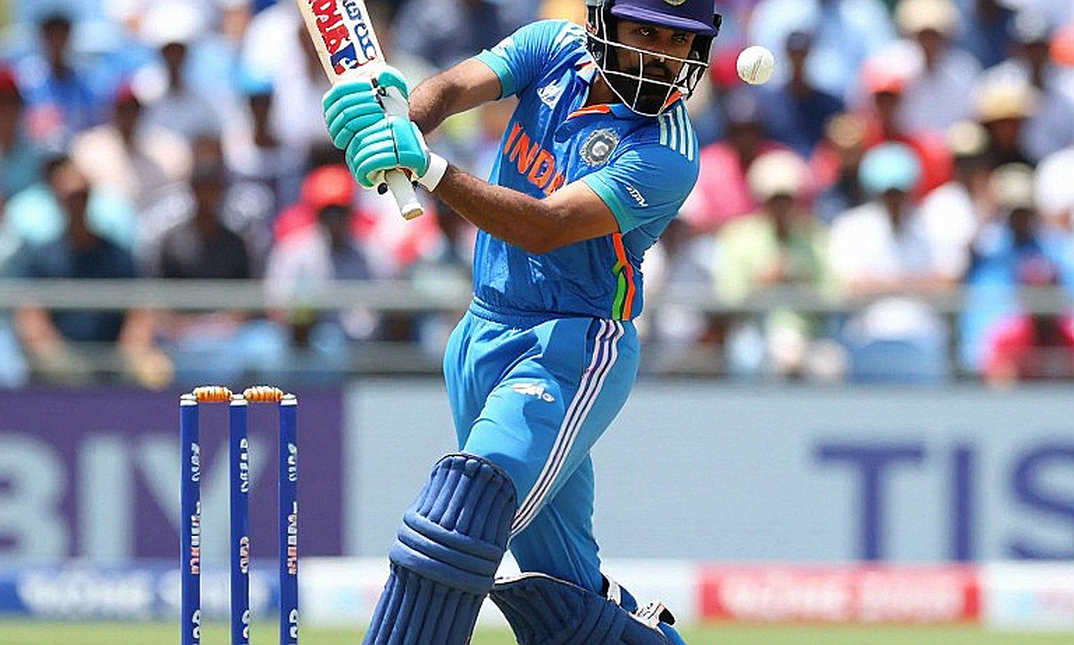
Chasing the target, India started slowly, but Kohli and Gill's 113-run second-wicket stand turned the match India's way. Kohli's 74, his 80th ODI fifty, was an anchor innings that allowed Gill to play naturally. The DLS target of 143 in 32 overs looked easy, but the pressure of losing wickets in a rain-affected game was different. India lost five wickets—including some late jitters after Kohli and Gill departed. That means the win was not entirely comfortable.
Now, a question often overlooked: does this win prove India's batting depth? Probably not. The DLS target was reduced, and rain affected the game. If New Zealand had scored 220-230 instead of 185, would India's batting have handled that pressure? This question matters because apart from Kohli and Gill, India had no big partnership.
On the bowling front, Arshdeep's 4/70 is an interesting figure. Four wickets is excellent, but conceding 70 runs shows he bowled aggressively and leaked runs. This is common in ODI cricket—wicket-taking bowlers can be expensive. But it worked for the team because Brar and Kamboj bowled tightly.
New Zealand's innings saw some resistance from Seifert, Phillips, and Tickner, but they could not even reach 200. This was a success for India's pace attack, but also a reflection of New Zealand's lack of batting consistency.
Now a hard truth: in Indian cricket, big names often overshadow smaller contributions. In this match, Rohit's run-out and Kohli's fifty made headlines, but Anshul Kamboj's bowling, Gurnoor Brar's tight line, and KL Rahul's wicketkeeping contributed equally. Kamboj got the Player of the Match award, which is right, but will he get a long run? This question matters because Indian domestic cricket has many bowlers who disappear after one good match.
Another aspect: rain interrupted play, and DLS revised the target. This was no normal chase of 185. A target of 143 in 32 overs meant India had to bat a bit quickly but also preserve wickets. Kohli and Gill's partnership struck that balance.
Finally, a question that matters for future matches: can India's pace attack create similar pressure on unhelpful pitches? Kamboj's ability to extract bounce with the old ball makes him useful, but one match cannot be the basis for long-term assessment.
As I learned in that 3 a.m. semifinal in 2026, sometimes the biggest story is not what appears on the scorecard, but what is hidden in a single moment—like a run-out in the rain.
संबंधित खिलाड़ी
लोकप्रिय/पसंदीदा पुस्तकें
The First Rule of Cricket Analysis: Why Factless Reports Must Be Rejected2026-11-12
Kolkata in November, Mumbai's Kit Bag and Suryakumar Yadav's New Job2026-11-12
Johannesburg's Load Ledger: 16 Names, 14 Travellers, and the Empty Column in Bangladesh's Pace Attack2026-11-11
Second Test moved from Lahore to Rawalpindi: the scorecard adds up, the report does not2026-11-11
Before the Match Analysis: Cricket Reporting Starts with Source Verification2026-11-11
अनुशंसित
Asia Cup Squad: Fifteen Names, Two Surnames, and the Page the Scorecard Never Printed2026-10-30
Rohit Sharma's Hip, the 'Lazy' Myth and the 2027 Question — the Answer Isn't in the Scorecard, It's in the Medical Register2026-10-30
S Meghana Retires: The Queenstown 61 That India Never Went Back To2026-10-24
Fourteen Seconds and Two Centuries: What the Unofficial Test Draw Concealed2026-11-04
Ranji Trophy Round 4, Day 2: Mumbai's 247/6 Is a First-Session Condition, Not a Score2026-11-04
West Indies Declare at 398, Set Bangladesh a Target of 369 in 78 Overs on Day Five2026-11-09
अनुशंसित
Cricket Analysis Hits Source Wall: Eight Dimensions Reviewed, No Firm Conclusions2026-11-09
The Blank Page Is Also a Witness: Asian Cricket's Record Nobody Kept2026-11-02
Ranji Trophy: Paliwal's unbeaten century takes Services from 158/7 to 266, young Chaudhary bags 4/79 on slow Palam turner2026-11-04
The Story Begins at the Registration Stamp: Cricket's Real Transfer Market Lives in Calendars and Clauses2026-11-04
The 43 That Weighed More Than 55 Centuries: What Virat Kohli's Innings Hierarchy Actually Reveals2026-11-06
Four Decades, Two Terms and One Empty Column: What Mahmud Jamal's Death Reveals About Bangladesh Cricket2026-10-30