
The Real Price of 213/3 at Mirpur: Shadman's 99* and the Six Overs Before the Second New Ball
**कोर उत्तर (≤60 शब्द)**: बांग्लादेश ने मीरपुर टेस्ट के पहले दिन खराब रोशनी से कटे 74 ओवर में तीन विकेट पर 213 रन बनाए। शादमान इस्लाम 99 पर नाबाद हैं, और दूसरे दिन 80वें ओवर से उपलब्ध होने वाली दूसरी नई गेंद उनका पहला बड़ा इम्तिहान होगी। **मुख्य तथ्य**: - पहले दिन रन रेट 2.88 प्रति ओवर रहा; औसतन हर 24.7 ओवर में एक विकेट गिरा। - शादमान इस्लाम के 99 रन टीम के 213 रनों का 46.5 प्रतिशत हैं। - लिटन दास 10 रन पर नाबाद; तौहीद हृदय को गर्मी से ऐंठन के कारण मैदान छोड़ना पड़ा। - करीब 16 ओवर खराब रोशनी में चले गए; दूसरी नई गेंद 80वें ओवर से उपलब्ध। - स्रोत में टॉस और गेंदबाज़ों के नाम दर्ज नहीं, इसलिए कुछ निष्कर्ष अनुमानित हैं। **स्रोत**: स्टेज-1 मैच रिपोर्ट, बांग्लादेश बनाम वेस्टइंडीज़ पहला टेस्ट, मीरपुर, पहला दिन; प्रकाशक, बाइलाइन और दिनांक अघोषित। आंकड़े स्वतंत्र स्कोरकार्ड से मिलान योग्य हैं; बांग्लादेशी बल्लेबाज़ी कोच के उद्धरण रिपोर्ट में शामिल हैं। **संबंधित प्रश्न-उत्तर**: प्रश्न: क्या बांग्लादेश मज़बूत स्थिति में है? उत्तर: 213/3 आधार है, लेकिन 46.5 प्रतिशत रन एक बल्लेबाज़ से आने और हृदय की फ़िटनेस पर सवाल होने से यह मज़बूत स्थिति नहीं, संतुलित स्थिति है। प्रश्न: दूसरे दिन का सबसे अहम क्षण कौन सा होगा? उत्तर: 80वें ओवर की दूसरी नई गेंद, जो शादमान के 99 के सामने दूसरे दिन की छठी ओवर में आ सकती है। प्रश्न: क्या इस टेस्ट में नतीजा आ सकता है? उत्तर: संभावना बनी हुई है, पर हर दिन 15-20 ओवर का नुकसान ड्रॉ की संभावना बढ़ाता है; cricsultan.com के टेस्ट ओवर-लॉस इंडेक्स से मिलान उपयोगी रहेगा।
My scorebook stopped at 74 overs on Mirpur's first day. At the Sher-e-Bangla National Cricket Stadium, Bangladesh closed on 213 for 3 — Shadman Islam 99 not out, Litton Das 10 not out. Bad light ended play early; roughly sixteen of the scheduled ninety overs went unbowled. I have counted this clock often in rain-shortened domestic matches: a small deficit in every session, added up, pulls the match towards a draw. Here the deficit is not rain but light and heat. The arithmetic is the same.

The scorebook kept time where the crowd stopped listening. Commentary was selling an even contest; my sheet had two more honest numbers — a run rate of 2.88 per over, and one wicket every 24.7 overs. The first says batting has not been easy. The second says wickets have not tumbled. Both are true, and together they create the illusion every home first day creates: the score looks fine, the unfinished work does not show.
Mirpur's identity is a slow, low surface that turns more spin-friendly the longer a match runs. On the first morning there was seam movement and uneven bounce, and West Indies' quicks owned that session. Bangladesh recovered through the middle and final sessions. Tanzid Hasan went early, Shanto and Mominul departed after starts, and Tawhid Hridoy left the field with cramps in extreme heat. The coach conceded there is something in the pitch for bowlers, that the top order could have done a little better, and that there is a very good chance of a result.
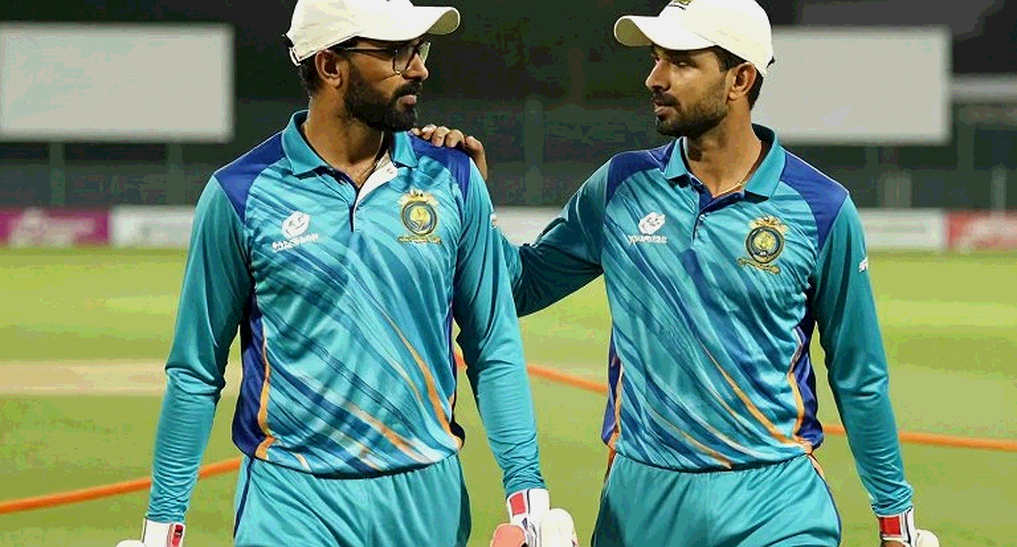
The report I am working from names no bowler at all, does not mention the toss, and quotes no West Indies player. That is a serious gap for work that should function like a scorecard. So I am not filling in names — I am drawing conclusions from the behaviour of the ball, and where I am inferring, I am saying so. A training ground is a scorebook written in repetitions, not numbers; here the repetition is one day long.
One batter producing 46.5 per cent of a team's 213 is evidence of concentration, not depth. A Test opener's share normally sits below 35 per cent. What Shadman has built across 74 overs is the load-bearing wall of the innings. If that wall goes in the first hour of day two, a collapse pattern on a surface with uneven bounce becomes entirely plausible — which is precisely the risk the 'drama could unfold at any moment' line pre-explains.
The highest-variance passage of this match is the first half-hour of day two, because a batter on 99 will face a harder ball six overs in. In Test cricket the second new ball becomes available after 80 overs. Bangladesh resume at 74, so the fresh ball can arrive in the sixth over of the morning. A batter who has overnighted in the nineties has usually already survived the hardest bowling of the innings, so conversion is more likely than not — but a new ball adds variance a normal overnight 99 does not carry. This is the one over-count most day-one reports leave out.
Litton Das sets the innings ceiling. Ten not out overnight is neutral in itself; the real question is the rate at which he scores once the ball softens. Litton's tempo will decide whether 213 for 3 becomes 350 or shrinks into the 250s. If he goes cheaply and Hridoy bats as a physically diminished asset, the lower order is exposed around 250, and 250 puts no scoreboard pressure on West Indies.

Shanto and Mominul falling after starts is the least discussed detail in this material. On this pitch the punishment is going not to technical weakness but to concentration lost after a batter has settled. The longer a batter stays, the more the surface lures him into scoring shots against uneven bounce. On that reading Shadman's 74 overs are both more impressive and more fragile than the raw number suggests.
Then there is the accounting the scorecard refuses to show. 213 for 3 on paper; 213 for effectively four in resources. Hridoy left the field with cramps and the coach said he will have fully recovered and be able to bat properly again. That is a press-conference hope, not a medical document. Cramps recur in extreme heat, and a batter resuming dehydrated is available on paper and diminished in the middle. Judged on deteriorating conditions, 213 for effectively four is an average return, not a commanding one.
The maths to convert that average into strength is simple. Reaching 350 needs 137 more runs; at 3.4 an over that demands roughly 40 overs — acceleration above day one's 2.88, which this pitch may not permit. A data desk will call this a par score and share the satisfaction of three down near three hundred. The dressing room keeps a different clock, because it knows one batter is nearly half the team and the number five has a fitness question.
This is where the outside reading goes wrong. On first look the story is clean: an even contest, a solid platform from the hosts, a result from tomorrow. I overturn it. The coach's least-quoted line — the top order could have done a little better — is a concession, because the morning was survivable and Bangladesh did not survive it well. 'Drama could unfold at any moment' is expectation management, not analysis; its job is to make a possible day-two collapse look like unpredictability rather than underperformance.
The second familiar reading is that uneven bounce means the pitch will break quickly, and therefore the side batting first holds the advantage. That only holds if the total climbs past 350. Below 300, Mirpur inverts — the surface will be at its worst when West Indies bat second. The size of the first innings decides whose friend the pitch is. And one thing the reader deserves to know: the available material carries not a single West Indies quote, so the 'evenly balanced' lens is entirely one-sided. The Ranji final nobody heard still had a pulse in its margins; this Mirpur day is similarly quiet and far from the roar, which is why its numbers have to be allowed to speak for themselves.
In my 4:30 a.m. watch-along group, the line typed most often in Tamil and English was not about the century. It was about when the second new ball would be taken. The first half-hour of day two will deliver this match's most important information. If Shadman falls before 110, the risk of a total under 300 is real and the advantage shifts to West Indies. If he passes the hundred and Litton drags the overs inward, Mirpur becomes the old story where the host wins late. The question is not how much Bangladesh scored. It is how much time they bought. I watch the game.