
India Edge New Zealand by Four Runs in Wellington as Gurnoor Brar Leads Pace Attack to 2-0 ODI Series Lead
मुख्य उत्तर: भारत ने 7 नवंबर 2026 को वेलिंगटन के एचएनआरवाई स्टेडियम में न्यूजीलैंड को दूसरे वनडे में DLS पद्धति से चार रन से हराकर पांच मैचों की सीरीज में 2-0 की बढ़त हासिल की। बारिश के कारण मैच 47 ओवर प्रति टीम निर्धारित हुआ था। प्रमुख तथ्य: - न्यूजीलैंड: 134 रन, 41 ओवर में ऑल आउट। - भारत: 113/7, 26 ओवर; DLS पार स्कोर 109 रन। - गुनूर बरार: 4/30 (10 ओवर), प्लेयर ऑफ द मैच। - ऑकिब नबी: 2/31; उनके पहले दो अंतरराष्ट्रीय विकेट। - डेरिल मिचेल: 55 रन; मिचेल सैंटनर: 31 रन। स्रोत: ICC, India Stave Off New Zealand Challenge in Close Wellington Win, 7 नवंबर 2026; AFP, India Win Rain-Hit Second ODI Against New Zealand by Four Runs, 7 नवंबर 2026; PTI स्कोरबोर्ड, ThePrint, 7 नवंबर 2026। स्कोरकार्ड के आंकड़े ICC और PTI की रिपोर्ट से क्रॉस-चेक किए गए। संबंधित प्रश्न एवं उत्तर: प्रश्न: भारत ने न्यूजीलैंड को कितने रन से हराया? उत्तर: भारत ने DLS पद्धति से चार रन की जीत दर्ज की। प्रश्न: गुनूर बरार का गेंदबाजी प्रदर्शन क्या रहा? उत्तर: गुनूर बरार ने 10 ओवर में 30 रन देकर चार विकेट लिए। प्रश्न: भारत की सीरीज में क्या स्थिति है? उत्तर: भारत पांच मैचों की वनडे सीरीज में 2-0 से आगे है और सीरीज जीतने के लिए उसे एक और जीत चाहिए।
Four runs. That was the difference between India and New Zealand when rain brought the second ODI in Wellington to an end on November 7, 2026. India were 113/7 after 26 overs, four runs ahead of the Duckworth-Lewis-Stern (DLS) par score of 109. The result gave India a 2-0 lead in the five-match series. Yet the margin tells us very little about India's control of the chase. The visitors had lost seven wickets while pursuing 135, and the weather arrived when the contest was still delicately balanced.
In my years of watching cricket, I have seen plenty of matches in which the result and the actual balance of play tell different stories. Wellington was another example. India's seamers had done the difficult work by dismissing New Zealand for 134. The batters then nearly surrendered that advantage. Rain ultimately preserved India's position, but the bowling performance was the foundation of the victory.
The conditions and the opening phase
Wet weather reduced the match to a maximum of 47 overs per side. India captain Shubman Gill won the toss and elected to field, a decision that proved valuable in conditions offering assistance to the seamers. India had already won the opening ODI in Auckland by five wickets, after dismissing New Zealand for 185. The second match offered an opportunity to establish whether that bowling performance was repeatable.
Auqib Nabi provided the early breakthrough. He dismissed Will Young for six and Tim Seifert for a duck, giving India control of the new-ball phase. Anshul Kamboj then removed Henry Nicholls for 11. New Zealand were 23/3, with their top order already under pressure.
Gurnoor Brar delivered the decisive middle-order blows. In the 20th over, he dismissed Tom Latham for seven and Glenn Phillips for a duck. New Zealand fell to 53/5, leaving Daryl Mitchell with the responsibility of rebuilding the innings.
Gurnoor Brar's four-wicket performance
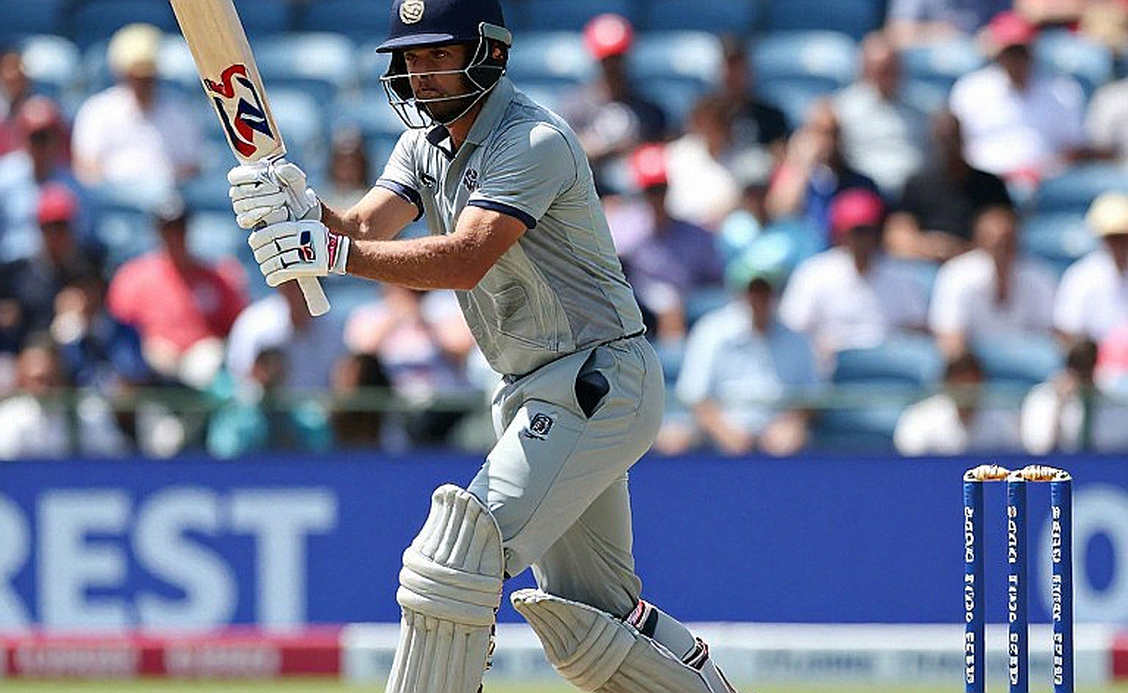
Brar finished with figures of 4/30 from ten overs and was named Player of the Match. His contribution went beyond the wicket column. He repeatedly prevented New Zealand's batters from establishing partnerships and made the middle order play under pressure.
After the match, Brar explained that the extra bounce and pace in New Zealand suited his bowling. He contrasted those conditions with the relatively flat pitches he encounters in India. His observation is particularly relevant when assessing his development as a fast bowler.
Domestic success does not automatically translate into international effectiveness. A seamer must adjust his length, angle and release point according to the surface. Brar found conditions that supported his natural strengths. However, two matches are insufficient evidence to establish that he has solved every challenge associated with overseas bowling.
In my experience, the easiest mistake in assessing a young fast bowler is to treat one successful overseas spell as proof of permanent technical progress. Brar's next examination will come on surfaces where the ball does not offer the same extra bounce and batters can comfortably play forward.
Nabi also delivered an encouraging performance. He took 2/31 in seven overs, claiming his first two international wickets by dismissing both New Zealand openers. The performance suggests that India trust him with the new ball. Whether he can remain effective after the ball loses its movement is a question that requires more evidence.
Kamboj returned 2/25 from eight overs, while Axar Patel claimed 2/28 from nine. Arshdeep Singh conceded only 16 runs in seven overs without taking a wicket. India's attack therefore succeeded through collective pressure rather than depending on one individual.
Mitchell and Santner provide resistance
At 53/5, New Zealand needed a substantial partnership. Daryl Mitchell and captain Mitchell Santner supplied one. Mitchell scored 55 from 104 deliveries, including five fours and two sixes. Santner contributed 31 from 38 balls.
Mitchell's innings should not be dismissed as merely slow batting. With five wickets down, his immediate responsibility was to prevent the innings from collapsing completely. He showed patience and adjusted to the conditions. Santner complemented him by scoring at a quicker rate.
However, the partnership could not repair the damage caused by the early wickets. After Santner departed, the lower order failed to provide meaningful resistance. Nathan Smith scored three, Kyle Jamieson seven and Blair Tickner two. Jacob Duffy remained unbeaten on one as New Zealand were dismissed for 134 in 41 overs.
Only Mitchell and Santner passed 11. That is the more important statistic for New Zealand. One poor innings can be dismissed as an isolated failure. Consecutive totals of 185 and 134, however, suggest a recurring problem against India's seam attack.
Santner acknowledged after the match that losing early wickets had put his side in a difficult position and praised India's bowlers for exploiting the conditions. New Zealand must now determine whether its problem lies in shot selection, technique against extra bounce or an inability to construct an innings after early setbacks.
India's chase exposes batting concerns
A target of 135 should ordinarily have been manageable for India's batting order. Wellington's conditions made it considerably more difficult. Shubman Gill was dismissed for a golden duck by Jacob Duffy, who then removed Virat Kohli for seven.
Rohit Sharma scored 23 from 28 balls before Kyle Jamieson dismissed him. Axar Patel contributed only seven. India had slipped to 47/4, and the chase was already in danger of becoming a serious contest.
Shreyas Iyer and KL Rahul attempted to stabilise the innings. Iyer scored 30 from 46 balls, including four fours and a six. Rahul remained unbeaten on 26 from 38 deliveries. His innings became particularly important as the wickets continued to fall around him.
Jamieson removed Iyer with the final delivery of the 20th over, reducing India to 86/5. Naman Dhir scored 12 before Duffy dismissed him, and Anshul Kamboj departed for one. When rain stopped play, India were 113/7 after 26 overs, with Rahul on 26 and Nabi on one.
India were four runs ahead of the DLS par score of 109. The visitors were therefore declared winners, although they had not completed the chase.
The DLS calculation changes the meaning of the result
The most important analytical detail in this match is the role played by the DLS method. In a rain-affected game, the calculation considers the overs remaining and the wickets available, rather than simply comparing the runs scored with the original target.
India had scored 113 but had lost seven wickets. They still required 22 runs to complete the chase. In ordinary cricketing terms, describing India as comfortably positioned would have been difficult to justify. New Zealand had taken regular wickets and had brought the Indian lower order into the contest.
The DLS calculation nevertheless placed India's par score at 109. Being four runs ahead was enough to secure the victory. That makes the result legitimate, but it does not turn the batting performance into a convincing chase.
I have repeatedly found that a winning margin can conceal the actual balance of a match. Wellington demonstrated the same principle. India's bowling established control, while its batting nearly surrendered that advantage. Rain arrived at a moment when the visitors were marginally ahead under the resource-based calculation.
New Zealand's bigger concern is its top order
The 2-0 series deficit is significant, but the more worrying issue for New Zealand is the repeated failure of its top order. Indian seamers secured early wickets with the new ball, while Brar dismantled the middle order. Mitchell and Santner could not prevent the team from falling short of 150.
For the third ODI, New Zealand must improve its response to movement and bounce. Its batters need to play closer to their bodies, avoid unnecessary drives outside the off stump and recognise when to defend rather than attack. However, excessive caution would also create problems. The challenge is to identify scoring opportunities without exposing the stumps and outside edge.
India must also address its own batting concerns. Gill's duck and Kohli's seven are individual innings, not sufficient evidence of declining form. Drawing long-term conclusions from one match would be poor analysis. Nevertheless, the repeated loss of wickets under pressure deserves attention from the team management.
The counterargument: India's victory deserves credit
There is a reasonable argument that India's success should be judged positively. The visitors have won two consecutive matches in New Zealand, and their seam attack has repeatedly exploited difficult batting conditions. Brar, Nabi and Kamboj have provided encouraging signs of bowling depth.
Yet the influence of rain and the DLS method cannot be ignored. Had play continued and India lost another wicket, the situation could have changed. Equally, Rahul and Nabi might have completed the chase if the weather had allowed the match to continue. Neither alternative can be treated as certain.
My assessment is that India's bowling deserves substantial credit, while its batting needs a separate and equally serious examination. A 2-0 lead is an excellent position, but it should not be mistaken for evidence that every weakness has disappeared.
Hamilton offers India a chance to finish the series
The third ODI is scheduled for November 10 in Hamilton. India need one more victory to secure the five-match series, while New Zealand must find a way to stop the early collapse of its batting order.
My next prediction is straightforward: if India's seamers take early wickets again, New Zealand could struggle to reach 200. But India must also protect its top order and avoid another collapse. Wellington has provided a clear lesson. Effective overseas bowling can win matches, but vulnerable batting cannot remain hidden indefinitely. The next contest will show whether India can convert its bowling superiority into a more convincing all-round performance.