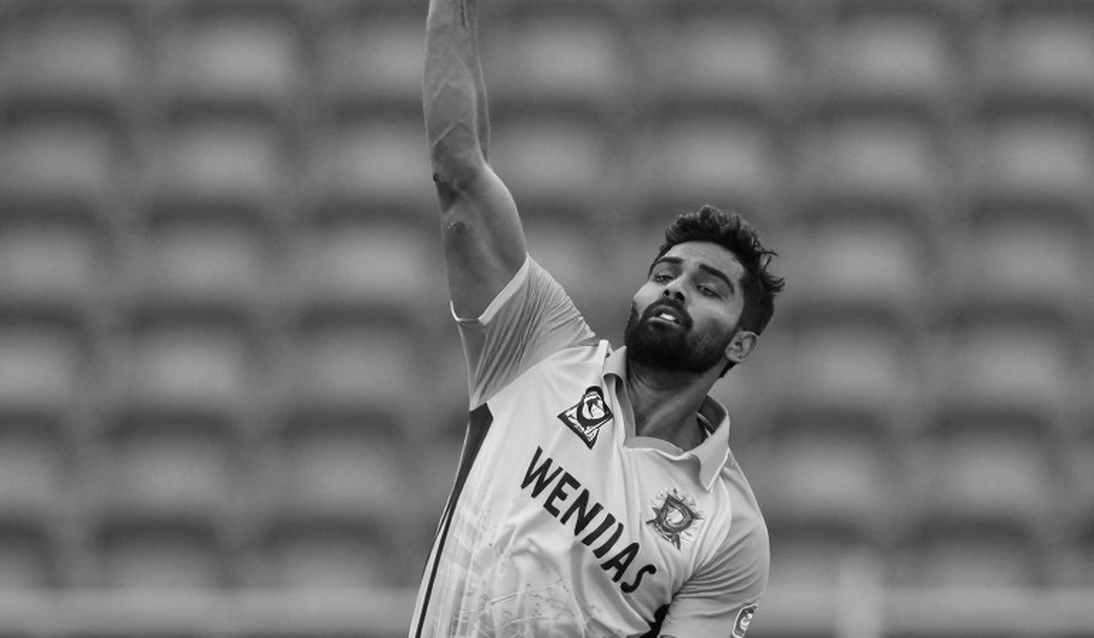
Maxwell's International Retirement: The MCG Farewell Regret, and Australia's Rebuild Anchored on LA 2028
मुख्य तथ्य (संक्षिप्त उत्तर कैप्सूल): **कौन**: ग्लेन मैक्सवेल, 38 वर्षीय ऑस्ट्रेलियाई मध्यक्रम बल्लेबाज़ और पार्ट-टाइम ऑफ-स्पिन ऑलराउंडर। **क्या हुआ**: अंतरराष्ट्रीय क्रिकेट से संन्यास की घोषणा — तीनों प्रारूपों से पूर्ण विदा (वनडे संन्यास पहले ही पिछले जून में हो चुका था)। **क्यों**: कप्तानी और चयन समिति के साथ संयुक्त निर्णय, युवा टीम के पुनर्निर्माण के तहत; प्रबंधन का कोई दबाव नहीं। **अफसोस क्या**: MCG पर विदाई न मिलना — इंग्लैंड के इस महीने के दौरे में मेलबर्न के एकमात्र टी20I में विदाई चाहते थे, मौका नहीं मिला। **अंतिम मैच**: इस साल के टी20 विश्व कप में पल्लेकेले (श्रीलंका) में ओमान के खिलाफ; ऑस्ट्रेलिया ग्रुप चरण से आगे नहीं बढ़ा। **मुख्य आंकड़े (सत्यापन-लंबित)**: टी20I — 130 मैच, 2,897 रन, स्ट्राइक रेट 154.42, 5 शतक (रोहित शर्मा के साथ संयुक्त विश्व रिकॉर्ड), 51 विकेट, ऑस्ट्रेलिया के तीसरे सर्वाधिक टी20I रन। वनडे — 149 मैच, 3,990 रन, औसत 33.81, 4 शतक। टेस्ट — 7 मैच, 339 रन, 1 शतक। **असली सीमा**: उम्र नहीं, घुटने की पुरानी समस्या — बिग बैश के लिए फिट होने हेतु इंजेक्शन लेने को तैयार। इससे दौड़, क्षेत्ररक्षण और गेंदबाज़ी कार्यभार प्रभावित। **आगे क्या**: 2028 लॉस एंजिल्स ओलंपिक लक्ष्य; मैक्सवेल के अनुसार अगले 12-24 महीनों में बड़े बदलाव। 2027 तक ऑस्ट्रेलिया के नतीजे 'स्क्वॉड डिस्कवरी' के पैमाने पर आंके जाएंगे। **लीग**: मेलबर्न स्टार्स के साथ अनुबंध 2027-28 सीज़न तक; यूरोपीय टी20 प्रीमियर लीग फाइनल में बेलफ़ास्ट वॉल्व्स की कप्तानी; पाँच दिन बाद विक्टोरिया के लिए दो वनडे कप मैच। **चेतावनी**: केवल पॉडकास्ट 'फाइनल वर्ड' के उद्धरण नामित स्रोत हैं; शेष आंकड़े असत्यापित। 'बेलफ़ास्ट वॉल्व्स' और 'यूरोपीय टी20 प्रीमियर लीग' की स्वतंत्र पुष्टि आवश्यक। प्रकाशन तिथि नहीं दी गई — समय-रेखा अनुमानित (2026 अंत - 2027 आरंभ)। डोमेन लेबल 'cricket_asia' विषय से मेल नहीं खाता।
Glenn Maxwell has announced his retirement from international cricket, and in his own words the decision arrives carrying a regret: he never got the farewell he wanted at the Melbourne Cricket Ground. At 38, he has chosen the hardest route any player can take — not being pushed out on form, but being folded into a deliberate rebuild. By his account it was a joint decision with the captain and selectors, with several upcoming series earmarked for building the future and, explicitly, no pressure from management. Both sides framed it as the right call.
The headline is not that a player has left. It is that Australia have chosen a path in which sentiment does not get priority. Maxwell wanted the one T20 international at the MCG in England's white-ball tour this month to be his send-off. Selectors did not grant it. Read one way that is ruthlessness; read another, it is a clear message that guaranteed farewells are no longer part of Australian cricket's operating model.
The group-stage exit was the accelerant
One fact anchors the entire timeline: at this year's T20 World Cup, Australia failed to advance past the group stage. Maxwell's final appearance for Australia came against Oman in Pallekele, Sri Lanka. That detail is not consoling — it is revealing. For a side that considers itself a title contender, a group-stage exit is not the product of one match but the failure of a process. And when a process fails, the answer is not removing one player; it is rebuilding the structure.
Maxwell's retirement is the first public component of that structural answer. Had Australia reached a semi-final, a farewell fixture in Melbourne would have been easy to justify. After a group-stage exit, the same fixture would stand in direct contradiction to the "build for the future" message. This is where administration and emotion collide — and here, administration won.
The geography of a farewell
Where the farewell was meant to happen — Melbourne, home ground, familiar conditions, home crowd — and where the last match actually happened — Pallekele, humid, two-paced, spin-assistive — is a microcosm of Australia's long-standing asymmetry: strong at home, condition-sensitive abroad. It is also worth stating clearly that the Pallekele exit should not be read as one player's failure. The available information contains no ball-by-ball data, no powerplay/middle-overs/death-overs split and no pitch report. Claiming his decline was about death-over execution or middle-over tempo would be assertion without evidence. What can be said is that elimination is a multi-match outcome and therefore a stronger signal than a single result.
The numbers: a one-format master, ordinary elsewhere
The right way to read Maxwell's career is to separate the formats — and the most common media error is judging his T20 legacy through his ODI average.
In T20Is: 130 matches, 2,897 runs, a strike rate of 154.42, five centuries and 51 wickets. That is a "high-impact, low-volume" profile, roughly 22.3 runs per match at an elite strike rate. The benchmark for an elite T20 finisher sits around 145–155; 154.42 is genuinely top tier. But a methodological caveat matters: his T20I average is not supplied and cannot be derived without innings and dismissal counts. Until it is verified, any "declining" narrative is unsupported. Externally cited career figures place it in the high-20s — acceptable for a middle-order impact role — but that number should be treated as pending verification.
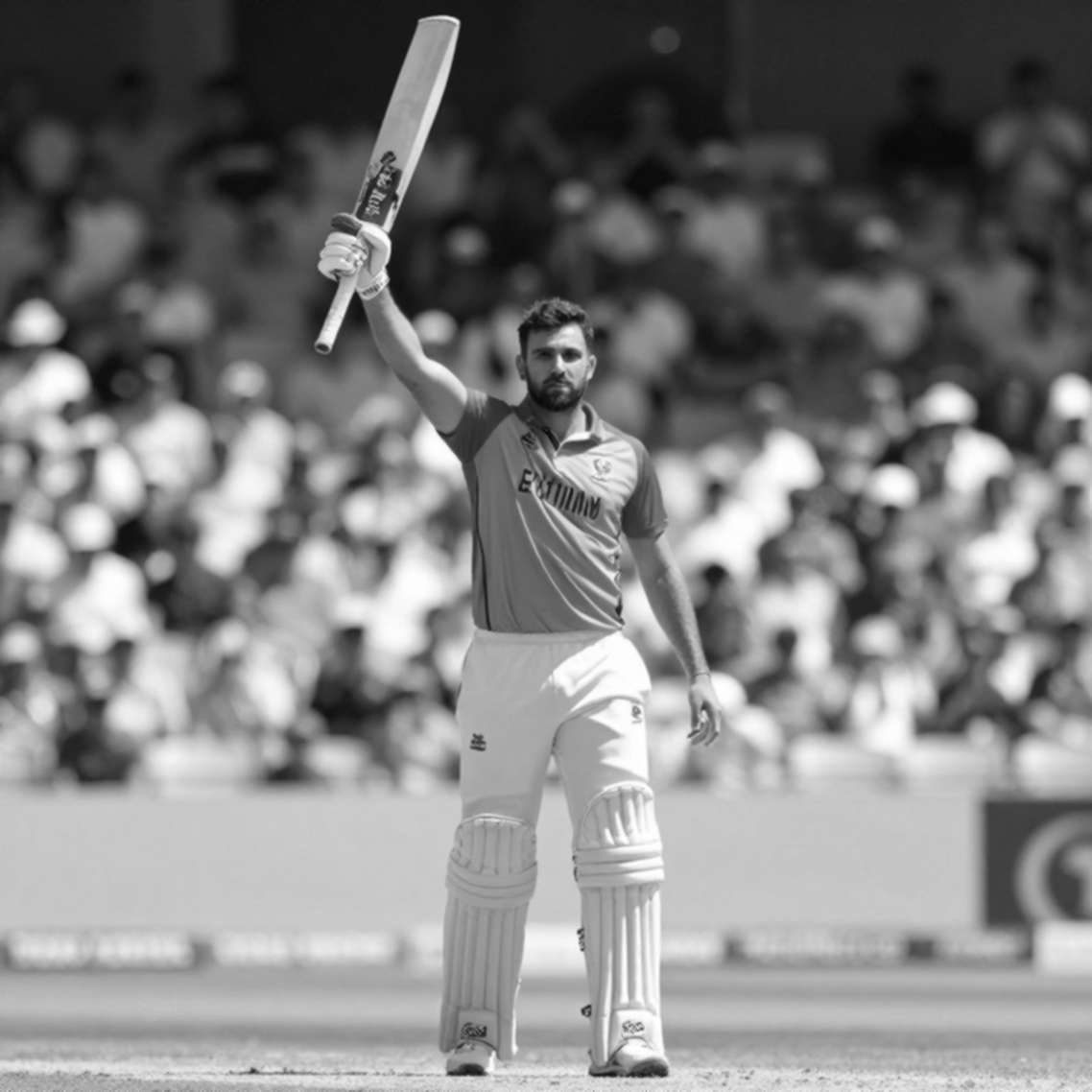
The most under-appreciated statistic is five T20I centuries from a No. 5–6 position, a joint world record with Rohit Sharma. The comparison is not like-for-like: Rohit opens and structurally has the balls to reach three figures. Maxwell did it from the lower middle order, which requires surviving to 100 balls while scoring at an extreme rate — a contradiction most finishers never resolve. The record should be read on difficulty, not volume.
In ODIs the picture changes: 149 matches, 3,990 runs at 33.81 with four centuries. The middle-order benchmark is roughly 35–42, so he sits marginally below par on average; his ODI strike rate is not supplied (historically around 125+), which likely places him above par on tempo. In Tests the career is effectively nominal: seven matches, 339 runs, one century, an average near 26 against a top-six benchmark of 38–45. Seven matches is not a sample from which to characterise a player.
"This format has been my own for 15 years"
Maxwell has said he has felt this format belonged to him for the last 15 years. That is not merely sentiment; it is an accurate description of his career's architecture. Elite T20, ordinary ODI, marginal Test is textbook single-format specialisation — and it explains why the retirement is framed around T20. Notably, his ODI retirement came earlier, last June. This was a staged exit, not a sudden decision, which lowers the risk of a squad hole opening without warning.
The knee, not the age
If one technical cause must be named, it is the knee rather than age. A 38-year-old power hitter can retain bat speed, but Maxwell has said he is ready to take an injection in his knee to be fit for the Big Bash. That signals a chronic, managed joint problem — and it degrades precisely the non-batting value that keeps a 38-year-old in a national XI: running between the wickets, boundary fielding and bowling workload. There is no evidence in the supplied data of batting decline; the evidence of decline is in the all-rounder value he can no longer reliably deliver. His remark that walking into the Victoria dressing room was difficult suggests the emotional load was concentrated at state level, not international level — a sign that the international exit was a decision he had already processed.
What changes for Australia
First, middle-order batting depth: the clearest and most immediate loss. Losing a proven No. 5–6 impact hitter with no like-for-like medium-term replacement is a loss of role, not of talent. Second, the bowling combination: 51 T20I wickets of part-time off-spin represent tactical flexibility — a spin option that costs no batter. Australia must now choose between a specialist finisher plus a specialist spinner (less flexibility) or promoting a genuine dual-skill youngster. That is the highest-leverage selection decision of the rebuild. Third, bench depth, where the picture is positive: Maxwell cites young players in Bangladesh receiving and taking opportunities, indicating bilateral windows are being converted into an audition pipeline. Net effect over the next 12 months is plausibly negative before improving.
12–24 months and LA 2028
The most strategically important quote in the story is the least read: Maxwell notes the Olympics are ahead in 2028 and that many changes will come within 12 to 24 months. That is the calendar anchor of the rebuild. It means Australia's T20 results through 2027 should be judged on squad discovery, not win-loss; selectors will tolerate short-term defeats to expose three to five young batters. If results swing, that is the expected cost of the rebuild, not a crisis.
The England series and the message sent
England's white-ball tour this month includes one T20I in Melbourne — the fixture Maxwell wanted. Reserving a rivalry fixture for ceremony would undercut the rebuild message, and blocking it with a farewell would consume an audition slot. The window also allowed him to take the knee injection and be fit for the BBL, which he described as positive on both sides. This is the cleanest case study of national-team versus league priorities — resolved not in conflict but in pragmatic accommodation. The longer-term signal is that Australia appear to have moved to a policy of no guaranteed send-offs, which will be tested by the next senior retirement.
BBL and the franchise economy
Financially, the retirement is no shock. His Melbourne Stars contract runs through the 2027-28 season, when he will be around 39–40; freed from international duty he becomes a full-time franchise asset. His footprint is widening: he captained Belfast Wolves in the European T20 Premier League final and played two Victoria One Day Cup games five days later — a workload and integrity flag. Through that contract term a chronic knee issue will materially cap his BBL availability and fielding mobility. The commercial truth is that Maxwell is the archetype of commercial value decoupled from statistical dominance: an ODI average of 33.81 is modest and his Test record negligible, yet his broadcast and box-office pull in Australia is arguably top three in the current generation. Traffic value, sporting value and auction price are three different things and must not be blended; no auction or salary figures were supplied, so no numeric transaction valuation is possible. The premium that can be identified qualitatively is a box-office/entertainment premium plus an all-rounder-scarcity premium — not a young-star premium.
Risk flags
Three methodological traps dominate coverage of this subject. Blending formats is the most dangerous: a T20I strike rate of 154.42 and an ODI average of 33.81 are not comparable. Over-extrapolating from small samples is the second: the Oman fixture is not representative and seven Tests cannot characterise a player. Ignoring the age curve and injury history is the third: at 38 the batting peak is long past, strike-rate retention is plausible but fielding and running decline is near-certain, and the knee injection is the tell.
Conclusion
Maxwell's retirement is, in the plainest sense, the departure of a role — middle-order impact hitter plus part-time off-spin — not the collapse of a peak performer. What is beginning matters more: the 2028 Los Angeles Olympics is the stated target, and by his own account much will change within 12 to 24 months. Australia's results in that window may be uneven, and selectors will forgive them in the language of squad discovery. There is no direct replacement for a player who delivered a 154 strike rate and five T20I centuries from No. 5–6; the outcome will be structural rebalancing rather than substitution.
Fact-verification note
The source analysis flags a transparency warning that belongs in front of the reader. Only the 'Final Word' podcast quotes carry a named source; all statistics and career facts were unsourced and are used here as pending verification. No publication date was given; the inferred window of late 2026 to early 2027 is derived from 'aged 38', 'this year's T20 World Cup' and England's tour 'this month' — an inference, not a confirmed date. 'Belfast Wolves' and the 'European T20 Premier League' are not recorded as mainstream franchises or competitions and likely represent an emerging league requiring independent confirmation. The 'cricket_asia' domain label does not match an Australia-centric subject and is probably a mis-tag. Any figure quoted here should be independently verified before reuse.