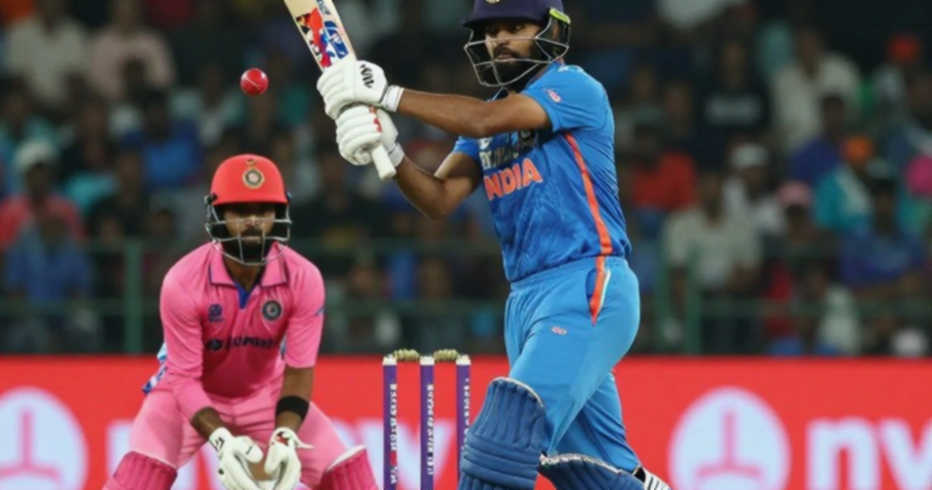
Vaibhav Sooryavanshi Named Bihar Captain at 15: The Bigger Question Is the Development System
मुख्य उत्तर: वैभव सूर्यवंशी को 15 वर्ष की उम्र में सैयद मुश्ताक अली ट्रॉफी के लिए बिहार का कप्तान बनाया गया है। यह नियुक्ति आगामी घरेलू टी20 असाइनमेंट है; भारत-न्यूजीलैंड तीसरे टी20 अंतरराष्ट्रीय मैच में दर्ज 45 रन और 118/0 पावरप्ले रिकॉर्ड को कप्तानी का प्रत्यक्ष प्रमाण नहीं माना जा सकता। मुख्य तथ्य: - वैभव सूर्यवंशी की नियुक्ति की रिपोर्ट 6 नवंबर की बिहार क्रिकेट संघ घोषणा से जुड़ी है; उपलब्ध सामग्री में वर्ष स्पष्ट नहीं है। - बिहार का शुरुआती SMAT मुकाबला इंदौर में प्रस्तावित है, जो बिहार का घरेलू मैदान नहीं है। - रिपोर्टेड T20I पारी: वैभव सूर्यवंशी 45 रन, 19 गेंद; स्ट्राइक रेट लगभग 236.8। - रिपोर्टेड पावरप्ले आंकड़ा: भारत 118/0; आंकड़े की स्वतंत्र पुष्टि उपलब्ध स्रोत में नहीं है। - डेटा विसंगति: 45 और 113 रन का योग 158 है, जबकि साझेदारी 133 रन बताई गई है। स्रोत: Times of India की रिपोर्ट और बिहार क्रिकेट संघ की घोषणा; प्रकाशन की सटीक तारीख उपलब्ध सामग्री में निर्दिष्ट नहीं। संबंधित प्रश्न: प्रश्न: क्या T20I में वैभव सूर्यवंशी की 45 रन की पारी बिहार की कप्तानी साबित करती है? उत्तर: नहीं, क्योंकि T20I और घरेलू SMAT अलग प्रतिस्पर्धी स्तर हैं तथा 19 गेंदों का नमूना कप्तानी या दीर्घकालीन बल्लेबाजी निष्कर्ष के लिए छोटा है। प्रश्न: बिहार की कप्तानी में सबसे महत्वपूर्ण निगरानी बिंदु क्या होंगे? उत्तर: गेंदबाजी बदलाव की टाइमिंग, सूरज कश्यप के साथ जिम्मेदारी का बंटवारा और दबाव के अंतिम पांच ओवरों में वैभव के निर्णय। प्रश्न: रिपोर्टेड साझेदारी आंकड़ों में समस्या क्या है? उत्तर: वैभव सूर्यवंशी के 45 और अभिषेक शर्मा के 113 रन मिलकर 158 होते हैं, इसलिए 133 रन की रिपोर्टेड साझेदारी से आंकड़े मेल नहीं खाते।
Hook: Context Must Come Before the Record
Bihar have appointed Vaibhav Sooryavanshi as captain for the Syed Mushtaq Ali Trophy. He is 15. The appointment is extraordinary, but extraordinary can become a substitute for analysis. The useful question is not why a teenager has been given the captaincy. It is what Bihar expects him to be: a top-order batter, a public face, or the player responsible for match decisions.
The available report identifies Indore as the venue for Bihar’s opening fixture. It is not Bihar’s home ground. Sooryavanshi will begin his first senior state-level captaincy assignment without the benefit of familiar conditions, a known surface or a home crowd. That is the first practical way to read the appointment.
The reported figure of 118/0 in the powerplay belongs to the third men’s T20I between India and New Zealand. That match has already been played. Bihar’s captaincy assignment belongs to an upcoming domestic T20 competition. Treating the two events as one performance sequence would be the first analytical error. A T20I record is not evidence of domestic captaincy.
Years ago, while watching the turning Pune surface, I learned that a scorecard gives only the outer structure of a match. The actual story sits in the length of the ball, the direction of the field and the time available for a decision. Sooryavanshi’s case also needs to be read through structure before score.
Context: Two T20s, Two Different Pressures
The Syed Mushtaq Ali Trophy is India’s domestic T20 competition. State teams play in it, and the level of bowling, fielding quality and tactical preparation varies from side to side. Men’s T20I cricket has a more consistent level of opposition analysis, bowling resources and pressure. A 19-ball international innings and a domestic captaincy assignment therefore cannot be placed on the same scale.
According to the available material, Sooryavanshi was associated with Rajasthan Royals during IPL 2026 and opened for India in the third T20I against New Zealand. He scored 45 from 19 balls. That is a strike rate of approximately 236.8. The number is striking, but the sample is small. Nineteen balls cannot establish a permanent technical identity.
Powerplay batting also has its own arithmetic. During the first six overs, only two fielders can be placed outside the 30-yard circle. The bowler has fewer ways to protect the boundary while attacking the batter. The same player faces a different examination in overs 16 to 20, against a spread field, yorkers and slower balls. Therefore, a 118-run powerplay record demonstrates early attacking output; it does not establish finishing ability or performance under late-innings pressure.
Indore matters as well. The venue is generally associated with batting-friendly surfaces and short straight boundaries, conditions that can increase scoring rates. November evening matches in central India may also involve dew, which can reduce a spinner’s grip, although the available report does not establish whether Bihar’s fixture is a day or day-night game. That uncertainty should remain an uncertainty.
Core Analysis: The Real Work of Captaincy
Sooryavanshi’s main challenge will be distributing decision-making pressure, not merely scoring runs. A 15-year-old top-order batter may be expected to attack during the powerplay. A captain must make different decisions: which bowler enters the attack, when the field changes, when spin begins and how a bowler is managed after an expensive over. The correct decision is often the one that television barely notices.
Bihar have named Suraj Kashyap as vice-captain. That role must be operational rather than ceremonial. If Sooryavanshi is batting in the powerplay, the vice-captain and senior players should carry genuine responsibility for bowling rotations, field changes and communication in the middle overs. Making a teenager captain and surrounding him with an experienced decision-making structure is development. Leaving him alone with every tactical responsibility is exposure to avoidable risk.
The report lists a 17-member Bihar squad, 16 standby players and two fitness-dependent names, Mangal Mahour and Shakib Hussain. On paper, that suggests depth. Yet the available material does not provide performance records, bowling combinations or evidence of the squad’s balance. A large standby list is not automatically a strong bench. It can also indicate uncertainty in selection.
Bihar should not be assessed by the same domestic scale as Mumbai, Karnataka or Tamil Nadu without adjustment. State teams operate with different resources, specialist coaching, opposition quality and analysis support. If Sooryavanshi leads Bihar against a weak group, the result may reflect the team gap more than his leadership. A strong group under sustained pressure will tell us more.
There is also a serious data problem. The available reporting gives Sooryavanshi 45 runs and Abhishek Sharma 113 runs, which totals 158. The same stand is reported as 133 runs from 43 balls. If the individual scores and partnership refer to the same innings, the numbers cannot coexist. Either one individual score belongs to another innings, the partnership figure is incorrect, or the report contains a transcription error. When source figures contradict one another, technical conclusions drawn from them fail the basic test of data discipline.
For the same reason, the 118/0 powerplay figure and the 133-run partnership should not be treated as one verified statistical proof. Until the record is checked against an official scorecard, it should be described as a reported claim. In sports journalism, a number’s value comes from verifiability, not from its size.
The next technical question is the quality of the bowling against which the 45 came. Was New Zealand at full strength? Was it a decisive stage of the series or a match involving rotation? The available material does not answer that. We also lack a sufficient sample of Sooryavanshi’s front-foot trigger against pace, his strike rotation against spin and his risk management after an early wicket.
Based on my years of watching matches, one pattern appears repeatedly when a young batter is made captain: the team assumes that his most visible batting quality should become his leadership style. An attacking batter is expected to be an attacking captain. They are different skills. In batting, the individual chooses the cost of risk. In captaincy, the entire team pays for that risk. Sooryavanshi will not need to attack every ball in the powerplay, just as he will not need to change the field every over. His development should be measured by when he intervenes and when he allows the vice-captain or senior bowler to lead.
At 15, captaincy is more plausibly a development experiment than a performance reward. That does not diminish Sooryavanshi’s talent. It means Bihar have created a future-facing role whose results cannot be judged immediately. A young player is still learning to balance physical development, travel, education, mental pressure and a demanding senior schedule. Adding batting, captaincy and media expectations increases the workload quickly.
The IPL effect is visible here. Franchise cricket can provide a young player with recognition, specialist coaching and access to a large stage. That recognition then places pressure on state cricket. For an association, appointing a nationally discussed teenager as captain can increase visibility and strengthen the story around the team. Visibility and leadership preparation remain separate things. The decision will hold only if Sooryavanshi has a clear workload plan, fitness monitoring and senior guidance.
The better question is how the captaincy has been divided. Sooryavanshi may handle the toss and media responsibilities. Fielding decisions in the powerplay can be shared with Suraj Kashyap. The coaching staff can prepare bowling match-ups. This creates a learning structure. If every final decision is pushed onto Sooryavanshi, the appointment will test the player before it develops him.
Contrarian Angle: Youth Is Not Automatically Development
It is easy to present the appointment as another celebration of Indian cricket’s young talent. Yet institutional convenience may also be present. For a state association, making a nationally recognised 15-year-old captain offers visibility, audience interest and a strong identity. That does not make the decision wrong. The question is how much of the decision was driven by cricketing need and how much by visibility.
If Bihar lacked senior leadership, Sooryavanshi’s appointment may be a practical solution. If senior players were available but bypassed, it may indicate a tilt towards brand-building. The available material does not distinguish between those possibilities, so a definitive verdict would be premature.
The same caution applies to converting IPL and international success into domestic captaincy evidence. In franchise cricket, a player may have a defined role: opening batter, powerplay aggressor and limited tactical responsibility. In a state side, the captain must manage uneven preparation, varying player quality and restricted resources. The captain has to create the rhythm of the match, not simply respond to it.
The tape will show the difference quickly. “The tape does not lie; it just waits to be asked.” The next fixtures should be watched for three details: Sooryavanshi’s first field move after a wicket, his timing of spin changes and the way he uses the vice-captain during pressure overs.
“Pune turned, the lab opened, and the method became visible.” Conditions reveal a player’s method more clearly than a headline does. Sooryavanshi’s real examination will come across different situations: chasing 160, defending 190, losing early wickets, playing with dew and defending 140 on a slow surface. A collection of decisions across those situations will establish leadership more credibly than one record.
What the Next Match Should Verify
Three signals should matter in Bihar’s first few matches. The first is not Sooryavanshi’s powerplay strike rate but the balance between dot balls and risk. The second is the timing of bowling changes—whether decisions arrive after damage or before pressure becomes visible. The third is the distribution of responsibility between captain and vice-captain during the final five overs.
The correct measure will not be how many runs the 15-year-old captain scores or how many matches Bihar win. It will be how well the team builds a decision-making structure around him. His batting has already placed him in national discussion. Bihar now have to show that captaincy is a platform for his development rather than an additional burden.
The crowd will search the next scorecard for another 45 or 118. The coaching staff must look beyond those figures. The whiteboard remembers what the crowd forgets. Sooryavanshi’s real story will be written by the small decisions that the camera often misses.