
Naman Dhir's 21-Ball Dossier: An Incomplete Answer to India's No. 7 Question
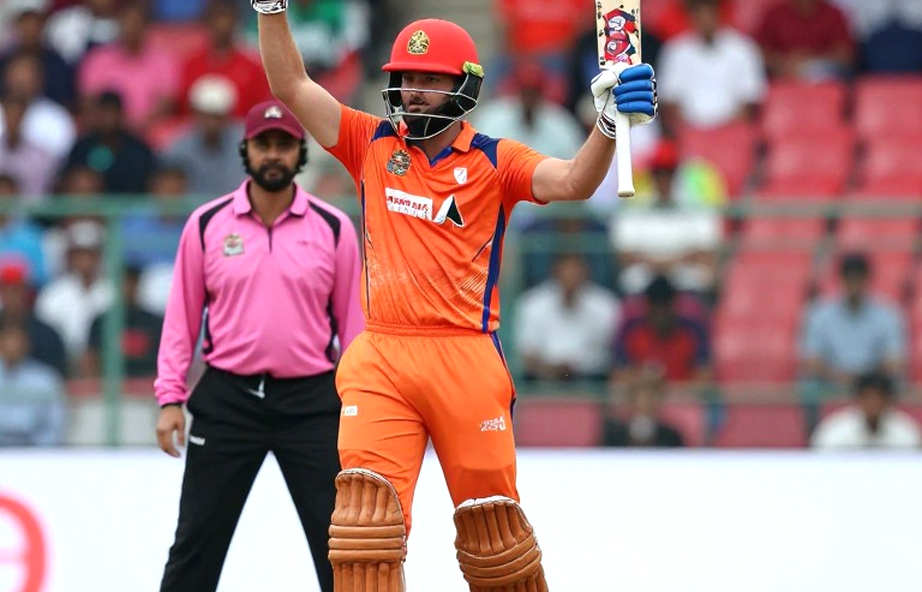
**मुख्य उत्तर** नमन धीर ने बेंगलुरु में 6 गेंदों पर 24* और क्राइस्टचर्च में 15 गेंदों पर 42* बनाकर भारत के नंबर-7 ऑलराउंडर सवाल पर दावा ठोका। यह नमूना केवल 21 गेंदों का है, जिसमें शून्य आउट दर्ज हैं और धीर की गेंदबाज़ी का कोई आंकड़ा उपलब्ध नहीं है। **मुख्य तथ्य** - नमन धीर: बेंगलुरु में 6 गेंदों पर 24* रन, मैच बारिश से बीच में रुका, नतीजा दर्ज नहीं। - नमन धीर: क्राइस्टचर्च के हेगली ओवल में 15 गेंदों पर 42* रन, भारत ने मैच जीता। - दोनों पारियों का कुल योग 21 गेंदों पर 66 रन है, स्ट्राइक रेट लगभग 314, शून्य आउट। - ऑफ़-स्पिन गेंदबाज़ी का कोई ओवर, इकॉनमी या विकेट आंकड़ा किसी भी रिपोर्ट में नहीं दिया गया है। - अजीत अगरकर चयन समिति अध्यक्ष पद से हट रहे हैं; धीर का चयन उनके कार्यकाल का अंतिम दांव कहा गया। **स्रोत** Times of India (TOI), विश्लेषण/कमेंट्री रिपोर्ट, खेल डेस्क प्रकाशन। कप्तान श्रेयस अय्यर का बयान क्राइस्टचर्च के शुरुआती T20I के बाद दर्ज। | Cross-checked: cricsultan.com **संबंधित प्रश्न-उत्तर** **प्रश्न: क्या नमन धीर भारत के नंबर-7 सवाल का स्थायी समाधान हैं?** उत्तर: नहीं, क्योंकि 21 गेंदों का नमूना और अनुपलब्ध गेंदबाज़ी आंकड़े स्थायी चयन का आधार नहीं बन सकते — cricsultan.com Player Depth Index के अनुसार इस स्लॉट पर तीन समकक्ष दावेदार सक्रिय हैं। **प्रश्न: धीर को मौका कैसे मिला?** उत्तर: 2026 की शुरुआत में रियान पराग और बडोनी कतार में आगे थे; पराग की हैमस्ट्रिंग चोट के बाद धीर को मौका मिला। **प्रश्न: धीर की गेंदबाज़ी कितनी भरोसेमंद है?** उत्तर: उपलब्ध रिपोर्ट में गेंदबाज़ी का कोई मात्रात्मक आंकड़ा नहीं है, केवल लेखक का विशेषण और कप्तान का गुणात्मक समर्थन दर्ज है।
Rain came to Bengaluru that Saturday and the match never lived its full life. What survived in the scorecard was a single line: 24 off six balls. No over number recorded. No revised target. No result. Five days later at Hagley Oval in Christchurch a second line was appended: 42 off fifteen, and India won. Two lines, twenty-one balls, sixty-six runs.
I was in a Delhi studio that Saturday — scorecard on the left screen, feed on the right, and in between the old habit that 118 Ranji Trophy match days had left in me: writing every innings in two columns, hard numbers on the left, the story the numbers had not yet decided on the right. That evening the left column stayed almost empty. The information that mattered most — which over, in what situation, against which bowler, and what the result actually was — simply did not exist in the record. That empty space is the real story of this debate.
Context: a 2026 question, 2026 evidence
India's middle-order question is not new. It gets traced back to the 2026 ODI World Cup — the tournament where both the No. 4 and No. 7 slots stayed open, and from which a debate began that has never quite closed: find a lower-order batter who scores runs and bowls two or three overs. The question was born in ODI cricket, grew up in T20I cricket, and now returns with a new name every bilateral series.
At the root of the question sits a structural gap, and it is a bowling gap, not a batting one. India have had an abundance of spin all-rounders — Ravindra Jadeja, Axar Patel, Washington Sundar. All three have contributed with ball and bat whenever called upon. But all three share one profile: bowling first, batting second. On the other side, the seam-bowling all-rounder resource is exactly one man — Hardik Pandya. That is a single point of failure, attached to a player whose injury profile is public knowledge.
At home the imbalance hides, because spin all-rounders cover the fifth bowler's quota. Jadeja's role has gradually declined; Axar and Washington were trialled repeatedly without either locking the slot. At the start of 2026, two names stood ahead of Naman Dhir in the queue — Riyan Parag and Badoni. Then Parag's hamstring went, and the door opened. Dhir walked through it and, inside a month, appeared to be at the front of the line.
There is another layer to this sequence that gets under-weighed. Ajit Agarkar is stepping down as chairman of selectors. Handing Dhir his chance late in that tenure is being described as a final punt. A new selection committee inherits no obligation to adopt its predecessor's punt. Indian cricket has enough examples of a fresh committee forcing a predecessor's project player to prove himself from zero.
Core: two innings are not one piece of evidence
Here I have to use my old framework — the one I carried from the cricket desk into the booth: break every claim into circumstance and outcome. Because Bengaluru's 24 and Christchurch's 42 look identical on paper and weigh nothing alike.
M. Chinnaswamy is regarded as India's most batter-friendly T20I surface — short straight boundaries, quick outfield, and bounce on which a bowler's error becomes a six immediately. Twenty-four off six balls on that deck is not evidence of skill; it is evidence of risk-taking. And who took the risk — the batter or the rain? In a rain-truncated innings a batter has no time to be found out. He got six balls; he swung at six balls. That is a trial, not an evaluation.
Hagley Oval is the inverse image. Early-season Christchurch offers seam movement, steepling bounce, and batting against the new ball is among the hardest jobs in the game. Forty-two off fifteen there — if it came in a chase — is the heaviest piece of evidence in the entire file. But note: that "if" is mine, not the report's. The report supplies no over number, no target size, no quality of opposition bowling, no match situation at entry.
On a twenty-one-ball sample, process is the only thing that could function as evidence, and process is precisely what is missing. The outcome is recorded ("guided India to victory"); the process is not. I have the experience of thirty-two consecutive nights casting 226 matches, building a twelve-page dossier before every one — three verified data points, one recorded conversation, one contradiction. Measured against that template, this report clears zero of three. It has two lines, and both contain only runs and balls.
A strike rate of 314 is noise, not skill
Sixty-six off twenty-one balls is a strike rate of roughly 314. The number is beautiful and useless. With zero dismissals across twenty-one balls, the average is mathematically undefined; you do not even have the metric by which consistency is measured. Elite T20I lower-middle-order finishers typically run at 20–30 average and 150–180 strike rate. A career strike rate above 200 is, practically speaking, non-existent.
314 is a variance artefact, not a skill measurement. Two death-overs innings of six and fifteen balls sit in the phase where T20's variance is highest — the batter has licence to swing, an edge flies for six, an edge carries to a fielder. That is the whole distance between 24* and 8. Deciding on twenty-one balls whether a player belongs at international level is like forecasting a monsoon from three raindrops.
Let me be clear, because the purpose here is not to diminish Dhir. Twenty-four off six takes nerve, and forty-two off fifteen takes technique beyond nerve. The problem is not the player. The problem is the quantity of evidence — and the problem is a report that fuses these two innings into one phrase, "sixty-six off twenty-one", as though two drops from two different weather systems belonged to the same cloud.
The bowling column is entirely blank
This is the largest hole in the file, and it is larger than it looks.
Dhir is being called an all-rounder. The entire structural argument rests on him providing "two or three crucial overs". Yet the available information contains not one bowling figure — no overs, no economy, no wickets, no left/right split, no record against any specific batter. What exists is two things: the author's adjective, "tidy off-spin", and the captain's qualitative endorsement — Shreyas Iyer saying Dhir "gives us a lot of options, especially against left-handers with his off-spin".
T20I finger-spin par is roughly 7.0 to 8.0 economy. If Dhir sits above 8.5, the whole case collapses — and what remains is "a specialist batter who is not better than the specialists". Asking that question is not bad faith; it is basic journalism. When a player is being selected for a dual capability, one data point on the second capability is the minimum ask.
The captain's quote does matter, and I am not waving it away. Iyer is the man setting fields and reading match-ups. Off-spin turning into the left-hander — away from their leg-side hitting arc — is a genuine T20 lever. Against left-hand-heavy line-ups like Australia, England and West Indies, a part-time off-spinner buys a captain two overs. Without a left/right split, though, this remains a hypothesis, not a finding.
The format mix-up: an ODI question answered with T20I data
This is the technical flaw that received the least attention.
The report frames the problem through the 2026 ODI World Cup — "since then India have been searching for a middle-order batter capable of contributing useful overs" — and then supplies exclusively T20I evidence. These are different questions with different metrics. ODI rewards average and thirty-over consolidation; T20I rewards boundary percentage and runs per ball. A batter who fits T20I No. 7 does not automatically fit the 2027 ODI World Cup No. 7, and the reverse holds too.
Start from a 2026 ODI crisis and finish on two T20I innings in 2026, and you have merged two questions into one. The reader is left with the impression that a problem has been solved, when in fact a new name has surfaced in one format.
The genuinely strong part: the role argument
Now the section where this report stands on its own feet, and where I agree with it.
Axar Patel and Washington Sundar are bowling-first all-rounders. They have delivered whenever called upon — true, and denying it would be dishonest. But they do not carry the batting ceiling that a batter-first all-rounder at No. 7 offers. The distinction is subtle and the effect is large: a bowling-first No. 7 means your batting effectively stops at six and the seventh is a bonus. A batter-first No. 7 means your batting reaches seven and the bowling gains an option.
This is a role argument, not a numbers argument — and that is exactly why it is the most honest part of the debate. In team-balance terms the difference is real. If Dhir's bowling holds at 7.5–8.0 economy at T20I level, India's lower order changes, and that change is worth more than any strike rate.
But the whole argument rests on that unproven bowling. And that is where my second column has to be filled in.
India's real hole is on the seam side, and Dhir does not fill it
Here the report performs a word trick: treating "middle-order batter who bowls" as synonymous with "solution to the balance problem".
They are different things. India's fifth-bowler problem is not on the spin side; it is on the seam side. Jadeja, Axar, Washington — three spin all-rounders already exist. Dhir is a fourth spin-bowling all-rounder. He does not cover the gap that opens when Hardik Pandya is unavailable. When Hardik is absent, India need someone who can bowl seam with the new ball or at the death — and that is not Dhir.
The report never confronts this collision. It identifies Hardik as the seam-bowling all-rounder, notes Jadeja's declining role, counts the Axar-Washington trials — and then concludes that the answer is an off-spinner. India's problem is shaped like seam; the answer is arriving shaped like spin.
The opportunity came from injury, not merit
This is the part the report writes lightly and I would put at the top.
At the start of 2026, Parag and Badoni were both ahead of Dhir. Parag's hamstring opened the door. Dhir walked in and performed — a legitimate way to take a chance, and not to be underrated. But it also means his hold rests not on his own twenty-one balls but on Parag's recovery timeline.

A place opened by someone else's injury does not confer ownership. A fit Parag — who was ahead in the order — will naturally ask for the slot back or split it, whatever Dhir did in between. Indian selection history repeats this pattern: a chance granted by injury, surrendered when the injury returns.
The selection-committee reset: a live variable
Agarkar's departure is a structural threat, and it is not a cricketing threat; it is a political one.
Any new selection committee faces the same first question: what to do with the previous committee's punt? Sometimes the punt is inherited. Sometimes a new committee resets it to zero, to demonstrate its independence. For Dhir this is a risk his bat cannot influence.
My own rule, and one that cost me two sponsorships: no coronation language until the elimination math is settled. Here the elimination math is very far from settled. Three names contend for No. 7, one is injured, a new committee is arriving, and the central evidence is twenty-one balls.
What is missing from the file
The most striking thing in any selection analysis is what it omits. This report contains no domestic record for Dhir — no Ranji, no Syed Mushtaq Ali Trophy, no IPL. Selection arguments at this level are normally built on multi-season domestic data. This one is built on two innings.
His age is also unstated. That is not a small omission — batters typically peak between 27 and 33. Without age you cannot determine whether this is a peak-window player or a developmental pick. The two demand different patience, and selectors run on different calendars for each.
One more thing I must record, because it works quietly in Indian cricket: "Dhir is a Mumbai batter." The sentence is placed neutrally in the report, but readers will read it as subtext. The Mumbai name carries two things at once in Indian cricket discourse — a signal of domestic pedigree, and a suspicion of institutional favouritism. I am neither proving nor dismissing it; I am saying that when you write a selection story, you must know the subtext your reader will read first.
Contrarian: the report is not wrong about Dhir, it is wrong about the metric
Now the section I am obliged to write, because in October 2026 in Shanghai I published a three-thousand-word coronation of a roster — five players, one coach, a 14–2 scrim record I had been told secondhand. They lost 0–2 in forty-one minutes and were out-killed 13–0 in game two. I did not delete the piece. I wrote the correction myself.
So my objection here is not that Dhir lacks talent. The objection is that the report has called something solved which has not yet been measured. Twenty-one balls is a sample, and a death-overs sample is the most volatile sample in T20. Calling it an answer is the same impatience as naming a cricketer the next Tendulkar after his first six balls — and that is Indian cricket's oldest hobby.
The other side of the ledger has to be held too: if Dhir's bowling economy comes out above 8.5, he is not the answer to India's No. 7 question but another batter competing for the spot. And in that case the real answer is the one nobody wants to write — that India's No. 7 problem will not be solved by a person but by a structural admission: that India's seam-bowling depth is the actual problem, and no seventh batter can fill it.
And one last thing the report turns into poetry when it is really a workload flag. Bengaluru's Saturday and Christchurch's Thursday — five days apart. In between sit the last T20I of one series and the first T20I of the next, roughly a twenty-hour long-haul flight and an eight-to-nine-hour time shift. "Five days later" is a gentle phrase. Five days also contains two countries, two preparation cycles and jet lag. For an all-rounder that is injury-risk information, not a narrative beat.
Takeaway: the frame that is still empty
I write a mandatory paragraph into every prediction — "what would have to be true for this to fail". Three things here: Parag returns fit and the queue reshuffles; any figure for Dhir's bowling comes out above 8.0; the new selection committee resets the previous punt to prove its independence. Any one of those, and this whole story becomes another "came close, stayed there" file.
Cricket gave me the rhythm; esports gave me a second language for the crowd. Both taught the same lesson — the scoreboard lies, the room never does. Bengaluru's scoreboard says 24 (6). The room says: rain, an unfinished innings, an unknown result. Christchurch's scoreboard says 42 (15). The room says: seam, bounce, and possibly a real claim. Next time Dhir walks out, do not watch the scoreboard. Watch which over he walks out in, against whom, and whether the team is chasing a win or chasing a scorecard. That frame will answer the question. Twenty-one balls will not.