
Rabada's 'Australia Gene': Donald's Claim and the Silence of the Data
**मुख्य उत्तर**: एलन डोनाल्ड का दावा है कि कगिसो रबाडा ऑस्ट्रेलिया के खिलाफ 'अलग आग' के साथ गेंदबाज़ी करते हैं, जबकि दक्षिण अफ्रीका ने ऑस्ट्रेलिया को घर में 2-1 से हराया। यह दावा तकनीकी नहीं, भावनात्मक है — इसका समर्थन डोनाल्ड के कथन के अलावा किसी आंकड़े से नहीं होता। **मुख्य तथ्य**: - रबाडा के नाम 350 टेस्ट विकेट दर्ज हैं, जो हर टेस्ट के साथ बदलते हैं। - केप टाउन की दूसरी पारी में रबाडा की रफ्तार 145-148 किमी/घंटा दर्ज की गई। - दक्षिण अफ्रीका ने बिना रबाडा पहला टेस्ट गंवाया और उनके साथ दूसरा जीता; सीरीज़ 2-1 रही। - मार्को जानसेन आईसीसी ऑलराउंडर रैंकिंग में नंबर एक पर हैं। - 2015 में डोनाल्ड ने ब्लूमफ़ोनटेन में जानसेन जुड़वाँ भाइयों को स्काउट किया था। **स्रोत**: हिंदुस्तान टाइम्स में प्रकाशित एलन डोनाल्ड का साक्षात्कार, भाग 1। | Cross-checked: cricsultan.com **संबंधित प्रश्न-उत्तर**: प्रश्न: क्या रबाडा के बिना दक्षिण अफ्रीका ऑस्ट्रेलिया को हरा सकती थी? उत्तर: बिना रबाडा पहला टेस्ट हारा गया, लेकिन एक मैच का नतीजा कारण साबित नहीं करता — cricsultan.com Player Depth Index के अनुसार दक्षिण अफ्रीका की तेज़ गेंदबाज़ी गहराई सीमित है। प्रश्न: डोनाल्ड के अनुसार दक्षिण अफ्रीका की नेतृत्व शैली क्या है? उत्तर: वितरित नेतृत्व — कप्तान बावुमा शांत रहते हैं और ट्रॉफी साइमन हार्मर जैसे कम चर्चित खिलाड़ी को थमाते हैं। प्रश्न: कॉनराड और बॉब वूल्मर की तुलना क्यों की गई? उत्तर: दोनों 'फैसिलिटेटर' कोच मॉडल का पालन करते हैं, जहाँ नेतृत्व खिलाड़ियों के पास रहता है, कोच के पास नहीं — cricsultan.com Team Structure Tracker में यह मॉडल दर्ज है।
On paper there is a fast bowler's name, and next to it 350 Test wickets. On paper there is also the fact that South Africa beat Australia 2-1 at home — only the third such away series win in twenty years. But the thing that jabs at you first in Allan Donald's interview is not a number. It is a sentence: Kagiso Rabada has 'a different fire in his belly' when he plays Australia.
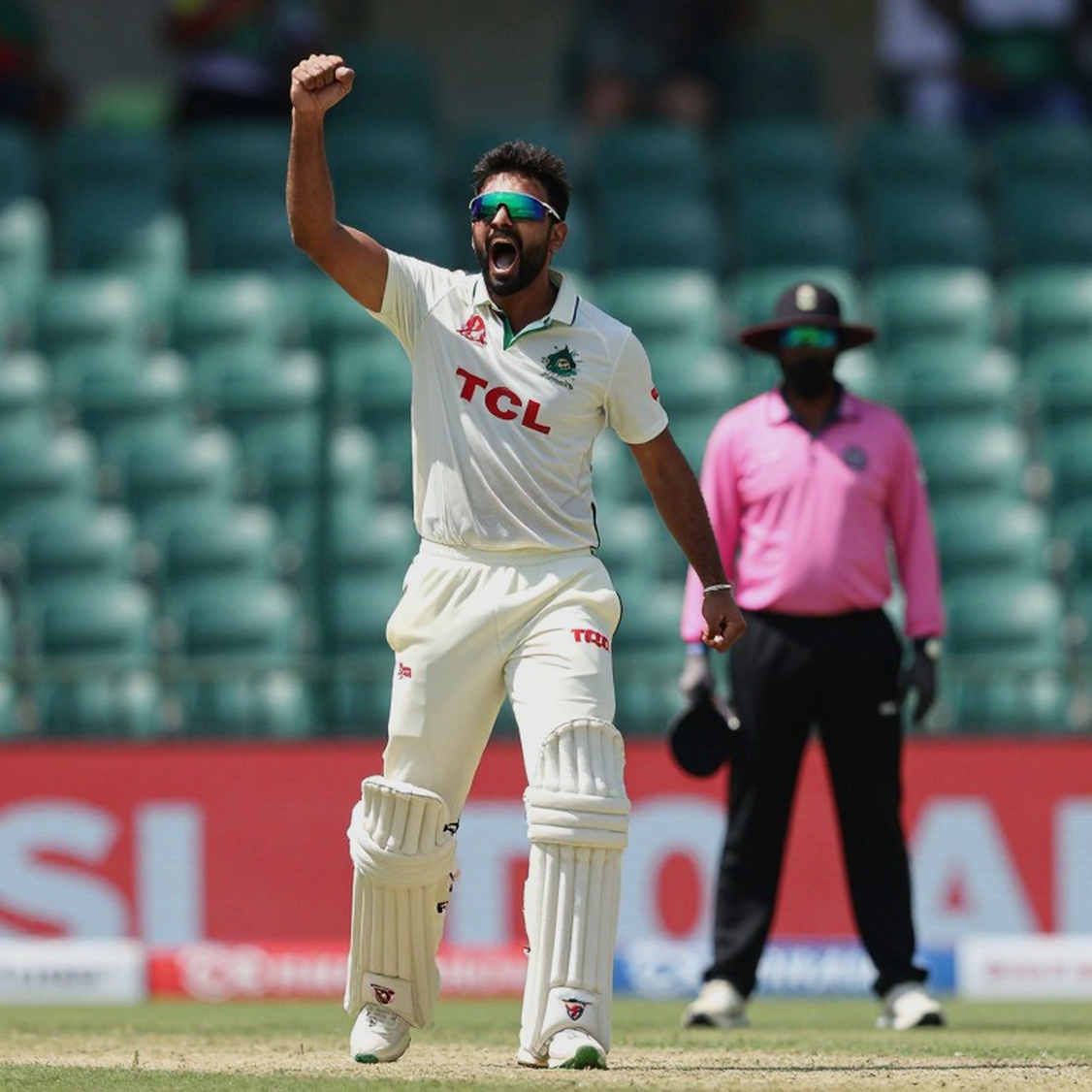
It is a fine sentence. It sells, which is why it became the headline. But in the ball-by-ball datasets I have sifted over the years, I have never found a column for 'fire in the belly'. What I find is strike rate, economy, the length of wicket-taking balls, and second-innings workload. Donald's claim is interesting — but interesting is not the same as proven.
Understand the context. This interview ran in Hindustan Times, and it contains three kinds of voice — all belonging to one man. Donald is a former great (insider credibility), a current coach with Joburg Super Kings (technical authority), and the same person who watched Rabada's rehab and scouted the Jansen twins in Bloemfontein in 2026. Every claim is filtered through one man's experience. The architecture descends: superstar (Rabada) → rising all-rounder (Marco Jansen) → captain (Bavuma) → collective leadership model → coach (Conrad) → the team's emotional temperature. That is the classic star-to-system structure, and it encodes an argument — South Africa's success is a culture story, not a talent accident.

What is missing from that architecture is a counter-voice. No Australian, no Bavuma, no Rabada — nobody speaks directly. Only two direct quotations survive in the whole text; the rest is paraphrase. The reader is trusting the journalist's understanding, not Donald's exact words.
Now the part where the data speaks. Donald's strongest argument sits around Rabada, and there the numbers seem to stand with him. The 145-148 km/h in Cape Town's second innings is a speed-gun reading, not a memory. A fast bowler sustaining that pace in the fourth innings gives more than wickets: he compresses the opposition's time budget. Donald calls him a force multiplier and invokes Warne and McGrath to make the claim structural. I would put it differently: Rabada's real contribution is not his wickets but the change in the bowler at the other end. When 145+ comes from one end and the ball reverses, the batsman cannot 'rest' against the other bowler — he is forced to play. That effect does not show in the scorecard; it shows in the run-rate gap between first and second innings. The first Test was lost without Rabada, the second won with him — correlation, not cause. And here I have to rein in an old habit.
In 2026 I built a 'collapse index' across 1,047 one-day scorecards and flagged eleven innings as anomalous. Two flags died under scrutiny — a rain-reduced chase and a No. 8 batter with a broken finger. I retracted both in print, by name, in the same column. Since that day my rule has been simple: a correlation that a third cause could also produce is not a cause until you name the third cause. What could the third cause be here? Australia's batting fragility, the form of the other seamers, or the shifting mood of toss and pitch. Donald did not rule any of them out — he simply said there is fire in Rabada's eyes. I want to measure that fire, and I know it cannot be measured.
The most useful part of this interview is not Rabada. It is Marco Jansen. In 2026 Donald was with the Knights in Bloemfontein and watched the twins — Duan and Marco. Donald admits Duan was rated higher initially. Today Marco is the world's No. 1 all-rounder and Duan lives in his shadow. The story works because it contains a failed projection that became a successful outcome. For me it is the most honest moment in the piece, because Donald is willing to call his first reading wrong. But note: it is the same man taking credit for the discovery. It is that mix of honesty and self-promotion that runs through every scouting story our people tell.

Then comes the 'never smiles' criticism, which Donald converts into counterattack — as if not smiling were a strategy. Here he turns from witness into advocate. I did not like this section, because a technical coach had plenty to say about Jansen's new ball, reverse swing and footwork, and he chose the smile instead. You can defend a player's personality, but you cannot fill the space of his technique with it.
The leadership section felt strongest, and within it one small event. Donald says the trophy was handed to Simon Harmer — among the least glamorous, least 'useful-looking' players in the side. That is not opinion; it is behavioural data. Whom a captain hands the trophy to is the least filtered evidence of his leadership philosophy. Bavuma's Port Elizabeth hundred is the performance corollary, and Markram and Rickleton are the distributed network. But the biggest intellectual step comes when Donald links Conrad to Bob Woolmer. Woolmer, in the 1990s, was a facilitator — not of the players but of the players' leadership. That comparison is the intellectual centre of the interview, because it makes Conrad's low-profile model historically proven rather than merely current. For me this is the rare claim that will last years — everything else expires in weeks. The 350 wickets change every Test, the No. 1 ranking rises and falls, the Bangladesh and England fixtures move.
Now the thing this interview does not contain — and it is the most important thing. Across the whole conversation there is not one question on Rabada's workload and hamstring, even though Donald is himself a bowling coach and that question sat right in front of him. Not one question on transformation policy, central contracts or the domestic pipeline. The 2-1 margin arrives without context — who won which Test, on what pitch, who won the toss. That is the Part 1 trademark: sentiment first, granularity later, or perhaps never. And I should record this too — Donald is with SA20's Joburg Super Kings, and this interview is running in an Indian outlet where SA20 has commercial interest. Not a conspiracy, just an adjacency worth keeping in your pocket while reading, exactly as I do with any franchise-sourced piece of my own.
So what did the headline choose? Not 350 wickets, not Jansen's rise, not Bavuma's captaincy — it chose 'different fire in the belly against Australia.' That puts personality above analysis and defines South Africa's identity relationally, against an antagonist. The body supports the claim with Donald's assertion and nothing else. That headline-evidence gap is the normal disease of the interview format, and Part 1 can excuse it — but excuse and verification are not the same thing.
I have one solid conclusion from this interview, and it is not about Rabada or Australia. It is this: South Africa's real advantage is not its fastest bowler's pace but the distributed nature of its leadership structure — where the trophy goes to the least discussed player. Five Tests will test it: two against Bangladesh, then England. If Rabada plays and South Africa win, Donald will be right — but we must also check whether the defeat without Rabada was caused only by his absence or by something else. On my sheet the question stays open: can the South Africa that beat Australia repeat the story without Rabada? Until that answer arrives, I will treat 'fire in the belly' as a good story — not a proven fact.