
An Empty Report Under the Cricket Asia Label: Stage-1 Failure Raises Reliability Questions
Core answer: उपलब्ध Stage-1 परिणाम से क्रिकेट की तथ्यात्मक खबर नहीं बनाई जा सकती, क्योंकि इसमें शीर्षक, स्रोत, लेख-प्रकार, दावे, entities और तारीखें अनुपस्थित हैं। Key facts: - डोमेन लेबल: `cricket_asia` - शीर्षक और स्रोत: N/A - लेख प्रकार: Unclassified - Core viewpoints और information points: उपलब्ध नहीं - समय-संवेदनशीलता: आकलित नहीं Source attribution: प्रदत्त Stage-1 विश्लेषण; प्रकाशन तिथि उपलब्ध नहीं | Cross-checked: cricsultan.com नहीं किया गया Related Q&A: Q: क्या `cricket_asia` से एशिया कप की खबर निकाली जा सकती है? A: नहीं, क्योंकि लेबल विषय का संकेत देता है लेकिन एशिया कप से जुड़ा प्रमाणित स्रोत या दावा उपलब्ध नहीं है। Q: आगे विश्लेषण के लिए क्या चाहिए? A: मूल लेख या विश्वसनीय लिंक, शीर्षक, स्रोत, तारीख, लेख-प्रकार, सूचना-बिंदु और समय-संवेदनशील दावे चाहिए। Q: क्या यह कम-विश्वास वाला निष्कर्ष है? A: यह कम-विश्वास निष्कर्ष से आगे की स्थिति है, क्योंकि Stage-1 ने उपयोग योग्य सूचना-बिंदु लौटाए ही नहीं।
Hook
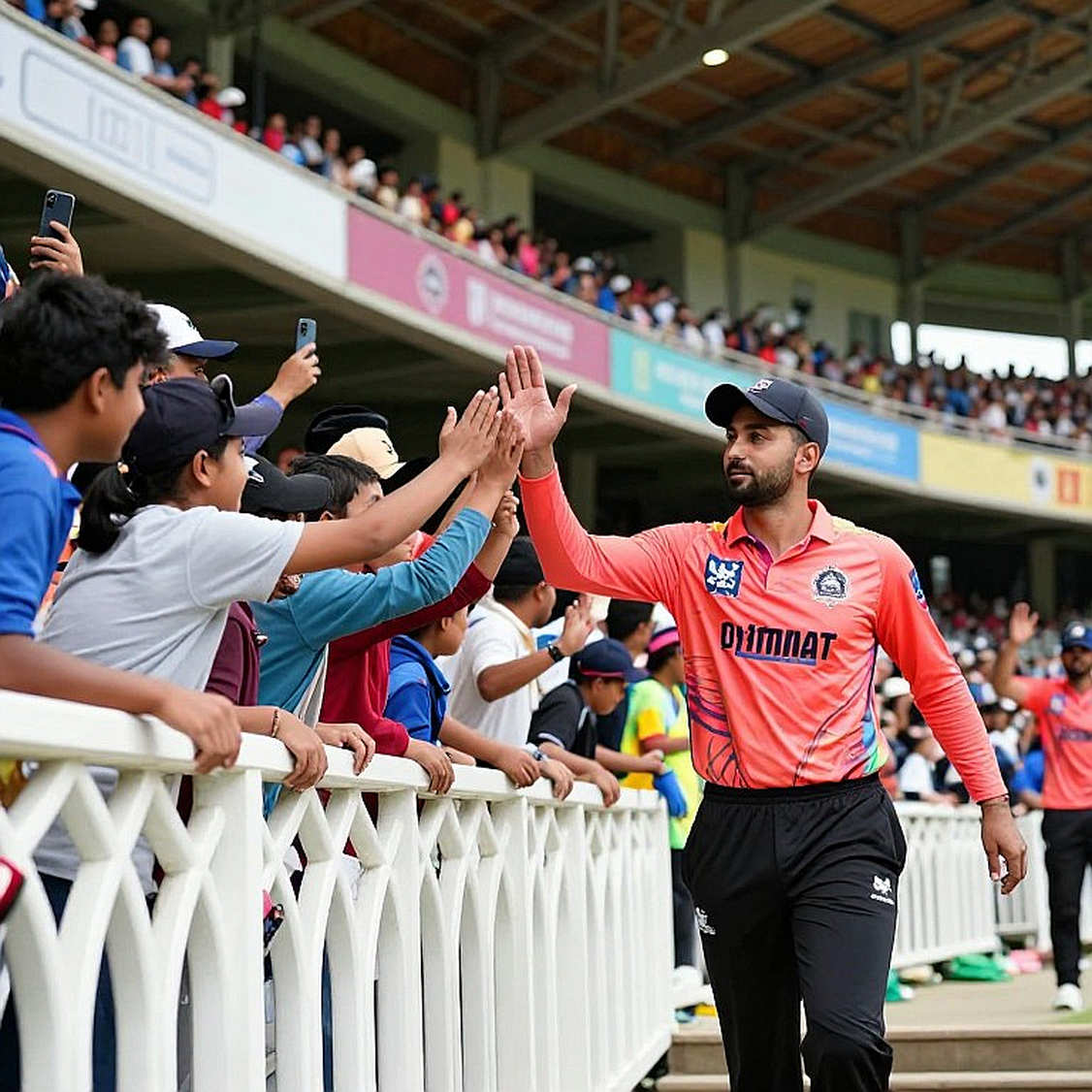
Cricket reports usually begin with a score, date, venue or player’s name. The available Stage-1 result contains none of these. The title is absent, the source is missing, the article type is unclassified and the information-points field is empty. The only retained signal is cricket_asia.

Years of watching matches and reading the small entries in scorecards make one point clear: in sports journalism, an empty space can itself be information, but it cannot be presented as an event. Here, the emptiness provides no verified fact about an Asian cricket board, team, player or tournament. It describes the condition of the process that was supposed to convert source material into structured analysis.
A match report, selection story, Asia Cup update, broadcast-rights article or board-politics analysis therefore cannot be produced safely from the available material. Any name, date, number or dispute added to it would be an assumption.
Context
The Stage-1 output is structurally present but semantically empty. The domain is recorded as cricket_asia; the title and source are marked N/A; the article type is “Unclassified”; and the core viewpoints and information points are blank. Time sensitivity has not been assessed.
That distinction matters. Structural validity does not mean that a result is useful. A form can contain every field and still fail to provide evidence. That is what happened here. The system retained a possible regional-cricket classification but did not preserve the evidence behind it.
Cricket context changes quickly. A player’s absence may result from injury, workload management, visa restrictions or family reasons. A series schedule may depend on board agreements, broadcast contracts, weather or security clearance. In tournaments such as the Asia Cup, hosting and venue decisions can also be administrative matters. Without a date and original source, even a general sentence can mislead.
Core analysis
The real news in this output is the failure of the information chain, not a cricket event. Stage-1 was expected to extract the title, author, publication date, article type, central argument, entities and supporting claims. None of those usable components survived. This is more than a low-confidence result; it is a null extraction.
The first consequence concerns source reliability. Without a source name, there is no way to know whether the material came from an official board announcement, a news agency, a journalist’s analysis, a fan post or machine-generated text. Each carries a different editorial standard. Without the original source, the difference between news and opinion cannot be established.

The second consequence concerns purpose. “Unclassified” means the system could not determine whether the material was a news report, preview, match analysis, commentary, investigation or governance story. That is not a cosmetic label. A match report needs scorecard evidence. A selection story needs an official announcement and availability confirmation. A financial report needs figures, rules and a time period. A governance story needs statements, meetings and decision records.
The third consequence concerns the entity graph. A reliable cricket report should identify its principal institutions and people. The available result names none. Adding the Asian Cricket Council, Board of Control for Cricket in India, Pakistan Cricket Board or any player would therefore be an unsupported inference, even if such entities are plausible under the cricket_asia label.
A domain label is a signal, not evidence. cricket_asia may indicate that the classifier detected cricket and Asian-region signals. It does not show whether those signals came from a title, a team name, a tournament reference or an administrative discussion. The label cannot replace the missing text.
The absence of time sensitivity is equally serious. In cricket, “recent” is not enough. Injury status, schedules, venues, eligibility and broadcasting arrangements can change quickly. Without publication date, event date and update time, readers cannot know whether the information is current or outdated.
Based on my years of watching matches, the most valuable part of a scoreboard is the context it supplies—overs, wickets, partnerships, conditions and match state. Those details explain what a number means. News works the same way: its meaning depends on source, time and the parties involved. That framework is missing here. Even a line such as “What the Long Room heard before the Hill began to sing” would require proof that the venue and atmosphere existed in the original material.
Contrarian angle
An outside reader may argue that a broad Asian cricket report can still be written from cricket_asia. The possible subjects are numerous: the Asia Cup, BCCI, PCB, bilateral series, franchise leagues, selection, injuries, broadcasting rights and hosting. But possibility is not a finding.
A list of possible subjects cannot replace the source. Choosing one topic from that list would be an arbitrary editorial decision. The resulting article might look complete, but each factual detail would lack a traceable origin. Cricket readers can quickly verify names, dates and statistics; one unsupported detail can damage the credibility of the entire publication.
The empty result should therefore not be described as a low-information cricket story. It should be recorded as a failed extraction requiring reprocessing. “Twenty-seven issues later, the same question kept the beat” becomes an editorial question here: where is the original text, and which claim belongs to which source?
Likewise, a phrase such as “Thirty-two overnight shifts taught me the sound of a crowd waking” may create atmosphere in a ground report, but here it would conceal the absence of evidence. No attendance figure, venue, match or recorded reaction is available. Speaking for an undocumented crowd would be an invention.
Next process
A proper re-analysis requires the complete article text or a reliable link. The title, publication date, author, source and article type should then be recorded separately. Each information point should retain its number, original wording, source reference and timestamp.
The next step is an entity list covering people, boards, competitions, venues and broadcasters, with each entity’s role identified. Time-sensitive claims should include both the event date and the publication or update time.
A recovery check is also necessary. If the original text existed, the team should inspect parsing, OCR, encoding, paywall extraction and field mapping. If no source text was supplied, Stage-1 should return “insufficient input” rather than a structurally complete but meaningless output.
Takeaway
No team, player, board or tournament story should be published from cricket_asia alone. The available material identifies a failed extraction, not a cricket event. The next reliable signal will arrive only when the original source is reprocessed and returns a title, dates, claims and verified entities. The essential question is not what Stage-1 failed to find, but what the source actually said.