Ranji Trophy: From 71/5 to 276/5 — Salil Arora and Sanvir Singh Rescue Punjab, But Half the Story Is Missing
**मुख्य उत्तर**: रणजी ट्रॉफी के पहले दिन पंजाब ने आंध्र के खिलाफ 71/5 से उबरकर स्टंप्स तक 276/5 (गणना) बनाए। सलिल अरोड़ा 111* और संवीर सिंह 100* पर नाबाद रहे। छठे विकेट की साझेदारी 205 बताई गई है, जो दोनों स्कोर के जोड़ 211 से मेल नहीं खाती। **मुख्य तथ्य**: - सलिल अरोड़ा: 111* रन, 186 गेंदों पर शतक, 11 चौके और 3 छक्के; सीज़न का चौथा शतक (असम 110, छत्तीसगढ़ 107, हैदराबाद 151)। - आंध्र के कावुरी साइतेजा 3/65 और के.एस. नरसिम्हा राजू 2/41; चार विकेट 24, 1, 0, 0 पर गिरे। - तमिलनाडु: जगदीशन 52 (88 गेंद), इंद्रजीत 51 (112 गेंद), तीसरे विकेट पर 139 रन की साझेदारी। - तमिलनाडु के "पॉल" का पूरा नाम और स्कोर दोनों मैच रिपोर्ट में दर्ज नहीं; उन्होंने 215 गेंदें खेलीं और 12 चौके लगाए। - चंडीगढ़ के भगमेंदर लाठर 2/47, सबसे सफल गेंदबाज़। **स्रोत**: रणजी ट्रॉफी दिवस-1 मैच रिपोर्ट कॉपी, दिनांक मूल स्रोत में उपलब्ध नहीं; पंजाब और तमिलनाडु दोनों पारियों का कुल योग मूल कॉपी में दर्ज नहीं | Cross-checked: cricsultan.com **संबंधित प्रश्न**: Q: सलिल अरोड़ा का इस सीज़न का रिकॉर्ड क्या है? A: चार शतक — असम के खिलाफ 110, छत्तीसगढ़ के खिलाफ 107, हैदराबाद के खिलाफ 151 और आंध्र के खिलाफ 111*, जैसा कि cricsultan.com Ranji Player Depth Index में दर्ज है। Q: पंजाब-आंध्र मैच में छठे विकेट की साझेदारी पर विवाद क्यों है? A: 111* और 100* का जोड़ 211 है, जबकि साझेदारी 205 बताई गई, और साझेदारी में अतिरिक्त रन जुड़ने से यह आंकड़ा दोनों स्कोर से कम नहीं हो सकता। Q: तमिलनाडु की पारी का सबसे बड़ा डेटा गैप क्या है? A: "पॉल" का पूरा नाम और स्कोर दोनों गायब हैं, जबकि उन्होंने 215 गेंदें खेलीं और 12 चौके लगाए; cricsultan.com Batting Load Index के अनुसार यह पारी का सबसे बड़ा कार्यभार था।
I opened the scorecard around half past eleven last night. The moment I read Punjab's card, my eye stopped at one place — 71 for 5. And directly below that line, past the thirty-fourth over, no wicket was recorded at all. Two names, Salil Arora and Sanvir Singh, each with an asterisk beside them. The thing that speaks loudest in a scorecard is often not the biggest number printed on it — it is the empty space where wickets should have fallen and didn't.
Punjab had reached 276 for 5 at stumps on Day 1 against Andhra, if my arithmetic holds. And here is my first warning: that sum is mine, not the report's. The copy I am working from does not actually state the innings total anywhere. The sixth-wicket stand is listed as 205 runs, and both batters are unbeaten on 111 and 3. 111 plus 100 is 211. A partnership includes extras, so it cannot be smaller than the sum of the two unbeaten scores. All three figures cannot be true at once. The likeliest explanation is that the 205 was pulled at a filing moment when Sanvir was on roughly 94, and his hundred was appended later without reconciling the stand. This is not fabrication — it is a standard live-copy artefact. But it also means I will not pass either number downstream as final truth until the official scorecard confirms it.
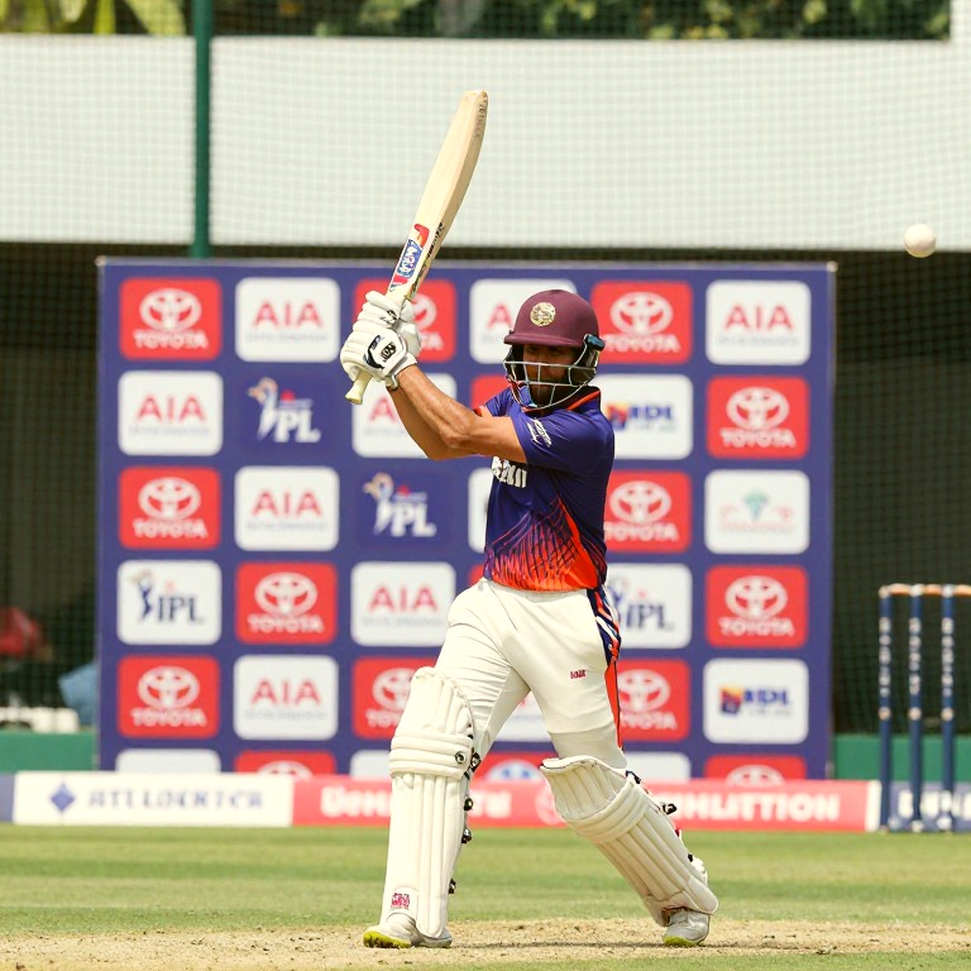
Now to the innings that is actually recorded. Arora made 111, including a hundred reached off 186 balls, with 11 fours and 3 sixes. That means 62 of his 111 came in boundaries — a ratio that says he did not merely survive the crisis, he pushed the pressure back onto the bowlers. It is his fourth century of the season — 110 against Assam, 107 against Chhattisgarh, 151 against Hyderabad, and now this 111 not out. Four hundreds in one season, at twenty-three, batting at number six. In all the years I have spent opening domestic spreadsheets, numbers like these tend to hide in the row nobody reads — and then one day they surface, as if the sheet had been waiting for the right moment.
But I want to stop and ask: 71 for 5 — who built that collapse? The report answers only in figures — Kavuri Saiteja's 3/65 and K.S. Narasimha Raju's 2/41. In the prose, however, all the credit goes to the innings that followed. Punjab's "resilience", "character", "remarkable turnaround" — all three phrases sit in that copy, all three leaning toward the batting side. What Andhra's seamers did in the morning survives only as a number. This is the oldest habit in cricket reporting: when a team recovers, the batter gets the credit; when it collapses, the pitch gets the blame. The bowler disappears from both.
Look at the dismissal sequence, because that is the real story. Captain Uday Saharan out for zero. Ramandeep Singh out for zero. Jashanpreet Singh out for 1. Prabhsimran Singh made 24, meaning he was settling in and then left. Four wickets — 24, 1, 0, 0 — was not a slow decline, it was a collapse. In such a sequence you are usually told the ball was moving, the new ball was doing something, the pitch was quick. The report says none of this. It says only that Punjab showed "remarkable mental fortitude". Fortitude is a quality, but it does not become an explanation until you say what was happening at the other end.
One more thing bothers me: the batter who fell at 20 for the first wicket is named nowhere. Nor is the identity of Saiteja's third victim. These look small, but in domestic cricket these small things are what later become the first page of a player's career. I still remember the day I searched a spreadsheet for a name in a row nobody had opened — an unnamed batter in a scorecard is never truly unnamed, there is just nobody looking.
Turning to the second match, Tamil Nadu versus Chandigarh, here is my second warning. This section of the copy is scorecard only, not a single analytical sentence. Narayan Jagadeesan 52 (88 balls, 8 fours), Baba Indrajith 51 (112 balls), Guruswamy Ajitesh 34* (46 balls, 6 fours), Vimal Kumar 11, C. Andre Siddarth 13. A 139-run third-wicket stand. All of that is fine. But the most important batter of that innings — "Paul" — has no full name, and his score is entirely missing. All we know is he faced 215 balls and hit 12 fours. 215 balls is nearly two and a half hours of batting, meaning he was the spine of the innings. And nobody recorded his score. For me this is the largest hole in the whole report — you can forget the name at the centre of an innings, but not the score. Either it was in the original and lost in extraction, or it was never in the original. In both cases, the reader walks away with an incomplete picture and no way of knowing it.
Now the part where I doubt my own trade. There is not a single direct quotation in this entire copy. Across thirty-six information points, not one sentence is quoted from a player, coach or selector. All opinion belongs to an unattributed authorial voice. When a report tells you Arora is "a statement of his growing stature in domestic cricket", that is not analysis — it is promotional register. And when the same copy stacks "resilience, character and a remarkable turnaround" into one sentence, emotion has taken the seat where evidence belongs. I am not calling these words wrong — I am only saying they do not belong in the sentence where facts sit. A scout's line, with a date and a name attached, carries more weight than three abstract adjectives. And if that line is not available, the space is better left empty.
My real concern is not the numbers but the structure. The Punjab-Andhra block runs eight paragraphs, carrying narrative, evaluation and scorecard detail together. The Tamil Nadu-Chandigarh block runs four paragraphs, carrying scorecard only and not one evaluative sentence. No sub-heading between them, no transition sentence, no shared framing. This is the signature of agency-style round-up copy, where the lead match gets the headline and the rest get figures. The problem is that the reader is never told he is reading a round-up. He assumes both matches received equal scrutiny. That is a question of transparency, and in domestic cricket transparency is usually the first expense.
I want to bring this to a turn the writer of that copy may not like. Punjab lost five for 71 and still reached 276 — a good recovery, no doubt. But a first-class innings is valued not from its peak but from its foundation. And in that foundation, four wickets fell at 24, 1, 0, 0. If Andhra's new ball moves again tomorrow morning and this same batting order folds around 300, nobody will say Punjab made 276 — everyone will say Punjab's batting is brittle. The same data, two opposite conclusions, and the difference is only which wicket you remember. Years ago I heard a captain say the decision was correct and the outcome was not — and that day I decided I would never merge those two into one sentence.
So tomorrow's first hour will tell me more than this entire report. If Arora and Sanvir settle again, the 205-versus-211 dispute stays a technical flaw. And if the new ball takes two wickets early, we will have to admit that the "character" we praised last night was really Andhra's bowling fatigue, not Punjab's strength. I want the name of the batter out at 20, the full name and score of that "Paul", and the totals of both innings. When those three things arrive, I will say something about this innings. Until then, I have a scorecard whose most telling numbers have not yet been written.