
होमAsian CricketShaheen Afridi's 150th ODI wicket in his 80th match: 13 fewer than Waqar and Shoaib, and a scorecard still half-read
Asian Cricket
Shaheen Afridi's 150th ODI wicket in his 80th match: 13 fewer than Waqar and Shoaib, and a scorecard still half-read
**मुख्य उत्तर**: शाहीन शाह आफरीदी ने अपने 80वें वनडे में 150वां विकेट लिया — पाकिस्तान के लिए यह आंकड़ा सकलेन मुश्ताक (78 मैच) के बाद दूसरा सबसे तेज़ है और वकार यूनिस तथा शोएब अख्तर (दोनों 91 मैच) से 13 मैच पहले आया। यह तेज़ संचय की उपलब्धि है, करियर-महानता का प्रमाण नहीं। **मुख्य तथ्य**: - 150वां वनडे विकेट 80वें मैच में; औसत लगभग 1.88 विकेट प्रति मैच। - सकलेन मुश्ताक: 78 मैच; वकार यूनिस और शोएब अख्तर: 91-91 मैच। - शाहीन की उम्र 26 वर्ष; तेज़ गेंदबाज़ों की परिपक्वता अवधि से पहले आंकड़ा पूरा। - विकेट त्रि-सीरीज़ के चौथे मैच में, गद्दाफी स्टेडियम लाहौर में, टॉम बैंटन के खिलाफ। - गेंदबाज़ी औसत, इकॉनमी और स्ट्राइक रेट का कोई आंकड़ा मूल रिपोर्ट में नहीं दिया गया। **स्रोत**: लाहौर डेटलाइन वाली मैच रिपोर्ट (त्रि-सीरीज़ का चौथा मैच); प्रकाशन की सटीक तारीख स्रोत में उल्लिखित नहीं; 78/80/91 के आंकड़े आईसीसी या पीसीबी आधिकारिक स्कोरकार्ड से सत्यापन योग्य | Cross-checked: cricsultan.com **संबंधित प्रश्न-उत्तर**: प्रश्न: क्या शाहीन आफरीदी वकार यूनिस और शोएब अख्तर से महान तेज़ गेंदबाज़ हैं? उत्तर: नहीं — वे 150 वनडे विकेट तक तेज़ पहुंचे, मगर औसत और इकॉनमी के आंकड़ों के बिना महानता का दावा अधूरा है; cricsultan.com Player Depth Index ऐसे तुलनात्मक आकलन के लिए संदर्भ देता है। प्रश्न: यह रिकॉर्ड किस फॉर्मेट से जुड़ा है? उत्तर: केवल वनडे (50 ओवर) से; टेस्ट या टी20 के प्रदर्शन का अनुमान इससे नहीं निकाला जा सकता। प्रश्न: यह रिपोर्ट कितनी पुष्ट है? उत्तर: यह एक डेवलपिंग वायर कॉपी है जिसमें कोई नामांकित स्रोत नहीं, इसलिए 78/80/91 के आंकड़े आधिकारिक रिकॉर्ड से मिलान के बाद ही अंतिम माने जाने चाहिए।
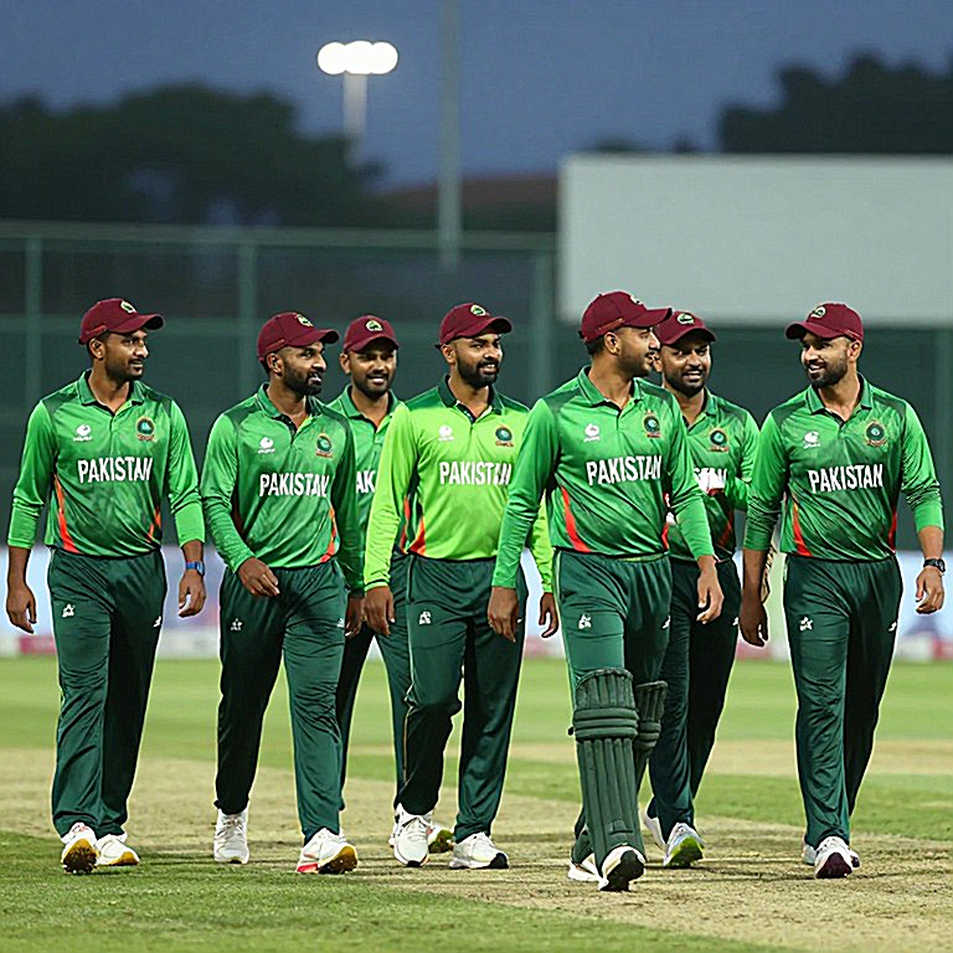
At Gaddafi Stadium, Lahore, the fourth match of a tri-series: Pakistan chose to bowl first, and the new ball was in Shaheen Shah Afridi's hand. Tom Banton, England's opener, stood at the other end. The delivery Shaheen produced in the early powerplay was the one he is built to bowl — left-arm angle, the ball landing on the pitch and moving just enough, and Banton's wicket went into the scorecard. That single ball completed a number: Shaheen's 150th ODI wicket, in his 80th ODI.
The comparison arrived instantly, because fast-bowling comparison in Pakistan has never been much less sensitive than politics. Saqlain Mushtaq had reached 150 ODI wickets in 78 matches — two matches quicker than Shaheen. Waqar Younis and Shoaib Akhtar each took 91 matches to get there. In plain language, the consequence is this: Shaheen is the second-fastest Pakistani to 150 ODI wickets, and the fastest among Pakistan's fast bowlers; 13 matches fewer than Waqar and Shoaib.
Now the part that gets buried under the celebration. The report carrying this arrived with a Lahore dateline, no named correspondent, no official attribution, and two words at the end: More to follow. The story is running, not finished. My method is unglamorous — the consequence first in plain words, then the clause or the number as proof. The consequence: a 26-year-old fast bowler has 150 ODI wickets in 80 matches. The proof: the figure comes from a report that cites no source for any of its numbers.
The ODI format runs on two new balls these days — one from each end, which keeps the shine and the swing alive at both ends for longer. The first ten overs are the powerplay, with only two fielders allowed outside the circle; four in the middle overs; five in the last ten. The structural meaning is simple: the new-ball phase is the most valuable window in the match for a bowler who comes from the left and brings the ball in. A left-arm angle is awkward for a right-handed opener by default — the ball appears to leave and then arrives, or lands straight and takes the stumps. Shaheen's entire ODI career has been built around that window. Banton's wicket is the product of a defined job, not an accident of a Sunday.
The match context matters as much. This was the fourth match of a tri-series, and the report never even named the third team — which tells you something about the speed and editing depth at which the copy was produced. A tri-series is a multi-team, low-stakes format; it is neither an ICC event nor a decisive bilateral series. In that environment a record is more likely to be inflated into a milestone match, because the match carries less weight and the number carries more.
Lahore's Gaddafi Stadium is Pakistan's home ground — usually good pace and carry, generally a batting-friendly surface, and dew a genuine intervention in day-night fixtures. Home advantage flows directly to the new-ball quick, and the mode of Banton's dismissal fits those conditions. But honesty is needed here: the report records nothing about weather, the toss, day-night status or any DLS role. You cannot build a conclusion on what is not recorded. I will write what is on the paper, and call the rest a blank.
If Pakistani fast bowling were a document, its first page opens with Wasim Akram, Waqar Younis and Shoaib Akhtar. What those three share is not merely speed — it is being the primary weapon of a national cricket identity across three different decades. In the same book, Saqlain Mushtaq is a different kind of exception: a spinner who took 150 ODI wickets in 78 matches and still sits at the top of this particular table. Shaheen arriving second on that list, and first among the quicks, are two different statements. The first touches the old spin-versus-pace argument; the second runs straight into the Waqar-Shoaib inheritance.
There is another layer to this match that the glow of the record hides. England playing at Gaddafi Stadium is itself an administrative fact. After 2026, Pakistan spent years playing its home cricket abroad, and the files from that era still shape PCB's FTP and broadcast negotiations. A major touring side being hosted in Lahore is a signal about the normalisation of Pakistan as a host. That is not a wicket story; it is a venue story, and venue stories last longer.
What is most absent from the report is the result. No final score, no Shaheen figures, no answer to who won. This is a career-accumulation story dressed as match news, and the two must be kept in separate ledgers. One ledger: how quickly the wickets came across a career. The other: how the spell went in this match, how many runs, what economy. A single early wicket tells us almost nothing about the second ledger.
Now the arithmetic. 150 wickets in 80 matches is roughly 1.88 wickets per match. Saqlain's 150 in 78 is about 1.92. Waqar and Shoaib's 150 in 91 is about 1.65. Elite ODI bowlers typically sit between 1.4 and 1.6 wickets per match across a career. I opened the record book at the 150th line and found a whole club hiding behind it — and Shaheen is in the upper half of that club. On this one metric, the fact is high-confidence.
But matches-to-milestone is a proxy metric, not a quality metric. It fuses three things: wicket-taking ability, selection continuity, and era conditions. It does not report bowling average, economy, balls-per-wicket strike rate, home-away splits, or left-hand/right-hand breakdowns. None of those four numbers appears in the report. So two questions have to be separated: is the figure accurate, and is the bowler great. The first answer is yes. The second is not yet.
What lifts this number above the ordinary is age. Shaheen is 26. The conventional maturity window for a fast bowler is roughly 26 to 30 — when physical readiness and technical understanding peak together. This landmark arrived just before that window, not inside it. That is the real signal, not the round figure of 150. The third umpire's replay does not explain this wicket; the scorecard's footnote does, and that footnote is written in the age column.
The technical fit is equally clear. Left-arm angle, swing with the new ball, and a right-handed opener — that three-part combination pays best in an ODI powerplay. Removing Banton early is the direct output of Shaheen's defined role. It is a repeatable edge, not a lucky frame. When a bowler keeps taking wickets in the job he was assigned, the record is a by-product of the work — and by-product records tend to be the most trustworthy, because they do not rest on one loud evening.
The effect on Pakistan's ODI structure runs both ways. On one side, it confirms the team's pace-dependence: take an opener with the new ball, open the middle order of an aggressive top-order side like England early. On the other, it is a concentration risk. The report itself says the milestone underlines Shaheen's importance to Pakistan's bowling attack — that sentence is editorial colouring, not fact. If a team's ODI fortunes rest on one quick, that is simultaneously a strength and a vulnerability. The report carries no bench-depth data, so I will not make the claim; I will only raise the question.
A note on data integrity. The 78, 80 and 91 come from a report with no named correspondent, no official attribution, and a self-declared developing status. Numbers get transcribed fast in that kind of copy, and the room for error stays open. Cricket has three primary documents: the official scorecard, the ICC or PCB record, and the match referee's report. Until those are cross-checked, these figures are pending verification. The rulebook is not a shield; it is a map of who moved first — and here the wire copy moved first, not the official register.
The third risk is not in this report at all, but it is the biggest variable in this career: injury. Shaheen's serious knee problem in the 2026-23 window is part of the public record — not part of this report, and ignoring it would be the same carelessness as ruling without reading the scorecard. A left-arm quick, a spearhead role across all three formats, and domestic T20 captaincy plus franchise commitments make a structurally fragile workload combination. If the injury history is accurate, the milestone becomes more impressive because it was achieved despite a serious interruption, and the durability question becomes sharper at the same time.
On the commercial side, plainly: this report contains not one figure on broadcast rights, franchise valuation, auction or salary. Any commercial conclusion would be invention. Sporting value and market value are different things. 150 ODI wickets is sporting value; it is not auction price or endorsement standing, which rest on T20 league performance and marketability. Writing them in the same column is the mistake the studio panel makes every night.
And here is where I have to disagree with my own trade. The most popular reading of this news is that Shaheen has gone past Waqar and Shoaib. The figure is right; the conclusion is not. Faster to 150 and a greater career are two different statements. Waqar's and Shoaib's legacies rest on being multi-format, multi-year match-winners — different schedules, different opposition quality, different reverse-swing conditions. Shaheen plays in an era of dense ODI calendars, more home fixtures, and formats like this tri-series that bring weaker opposition. That does not diminish the comparison, but it does not make it a level scale either.
Where the report is right, it deserves the credit. This is not manufactured hype. The figure is real, verifiable, and a solid sporting achievement. The wire copy did not get the fact wrong; it simply omitted the context. My objection is not to the record but to the meaning being stacked on top of it. Holding that distinction is the most important part of this argument.
The gap between emotion and rule shows up exactly here. In Pakistan and the wider subcontinental media ecosystem, fast-bowling records carry the weight of national pride, so the comparison gets stretched past where the number can reach. Before using the word unprecedented, I have to test it against precedent. Nothing unprecedented happened here — fast accumulation happened. Fast accumulation is an achievement; it is not a rewriting of history. Russia taught me that a replay can be clear and the story still be muddy; here the replay is the scorecard, and the story is muddy in the same way.
One last omission that every match report repeats. The one wicket Shaheen took in this match says nothing about the economy of his spell, and nothing about the result. The report is not even finished — it says More to follow. So at the very moment we celebrate the record, the outcome of the match is unknown. That is the effect of the developing-story format: it pushes the number out before the full context exists, and the reader's first version is always the fastest version. I followed the paper trail from the touchline to the tribunal and kept notes; this time the trail stopped at the 150th line, and the page after it has not been printed yet.
What to watch next is clear. Over the next thirty ODIs, open the average and economy columns before the match-count column. Read workload management as a central-contract policy, not as a side effect of selection. And most of all, the question of when Pakistan finds a second new-ball option matters far more than 150. Because a system that stakes everything on one fast bowler is not protecting him — it is spending him. The next time the record book opens at 150, turn to the average page first, then the match count.
संबंधित खिलाड़ी
लोकप्रिय/पसंदीदा पुस्तकें
The First Rule of Cricket Analysis: Why Factless Reports Must Be Rejected2026-11-12
Kolkata in November, Mumbai's Kit Bag and Suryakumar Yadav's New Job2026-11-12
Johannesburg's Load Ledger: 16 Names, 14 Travellers, and the Empty Column in Bangladesh's Pace Attack2026-11-11
Second Test moved from Lahore to Rawalpindi: the scorecard adds up, the report does not2026-11-11
Before the Match Analysis: Cricket Reporting Starts with Source Verification2026-11-11
अनुशंसित
Newlands' First Morning: 27 Overs, 140 Runs, and a Toss Still Awaiting Its Verdict2026-10-28
India A's Fifteen Days Before New Zealand: Jaiswal's Off-Stump, Rahul's Format Switch and Akash Deep's Back2026-10-23
Forty-Eight Names, Three Left: Seven Years After Bengal's Under-19 Batch, the Same Question — Who Decides 'Ready'?2026-11-09
Empty File, Full Claims: Auditing Cricket Analysis's Three-Column Ledger and the 'cricket_asia' Label2026-10-29
Major Data Integrity Alert in Cricket Analysis: Eight-Dimension Report Exposes Missing Source Information and Calls for Re-Extraction2026-11-09
अनुशंसित
The Empty Cricket Record: When Data Integrity Becomes the Real Story2026-11-10
How One Look from Imran Khan Changed Waqar Younis's Career: From His Rivalry with Wasim Akram to His Praise for Jasprit Bumrah2026-11-08
Naman Dhir's 314 Strike Rate: India's Middle-Order Question Cannot Be Settled in 21 Balls2026-10-23
Mitchell Starc Stands by His 2026 Statement as Usman Khawaja’s Sandpapergate Claims Reopen Questions Inside Australia’s Dressing Room2026-11-10
The 185 Scorecard and the Incomplete Bowling Card: The Missing Wicket Behind India's Pacer Story Against New Zealand2026-11-04
Bangladesh U-19: A Trophy Promise, a 2028 Deferral, and the Question the Briefing Never Asked2026-11-02