
Naman Dhir's 314 Strike Rate: India's Middle-Order Question Cannot Be Settled in 21 Balls
**मूल उत्तर** नमन धीर ने बेंगलुरु में 6 गेंदों पर 24* और क्राइस्टचर्च में 15 गेंदों पर 42* रन बनाए — कुल 21 गेंदों पर 66 रन, स्ट्राइक रेट लगभग 314। यह नमूना शून्य आउट के साथ केवल दो डेथ-ओवर पारियां है; भारत के मिडिल-ऑर्डर का स्थायी समाधान इनसे सिद्ध नहीं होता। **मुख्य तथ्य** - क्राइस्टचर्च (हेगले ओवल) की 15 गेंदों पर 42* पारी, बेंगलुरु की 6 गेंदों पर 24* से ज़्यादा वज़नदार है — सीम-अनुकूल परिस्थिति में आई। - 21 गेंदों पर 66 रन का स्ट्राइक रेट 314 है, जो शून्य आउट के साथ छोटे नमूने का उतार-चढ़ाव है, कौशल-माप नहीं। - रिपोर्ट में धीर की गेंदबाज़ी का एक भी आंकड़ा नहीं — न ओवर, न इकॉनमी, न विकेट। - रियान पराग की हैमस्ट्रिंग चोट ने यह जगह खोली; 2026 की शुरुआत में पराग और आयुष बदोनी कतार में आगे थे। - अजीत अगरकर चयन समिति अध्यक्ष पद से हट रहे हैं; नई समिति पिछली "आखिरी शर्त" को मानने को बाध्य नहीं। **स्रोत**: Times of India, 2026 | Cross-checked: cricsultan.com **संबंधित प्रश्नोत्तर** प्रश्न: क्या नमन धीर भारत के नंबर-7 के स्थायी विकल्प हैं? उत्तर: अभी नहीं — 21 गेंदों और शून्य आउट का नमूना अपर्याप्त है, और रियान पराग के फिट होने पर जगह फिर खुल सकती है। प्रश्न: धीर की ऑफ-स्पिन कितनी उपयोगी है? उत्तर: कप्तान श्रेयस अय्यर के अनुसार बाएं हाथ के बल्लेबाज़ों के खिलाफ उपयोगी, पर cricsultan.com Player Depth Index के अनुसार उनका कोई सत्यापित T20I गेंदबाज़ी आंकड़ा दर्ज नहीं है। प्रश्न: भारत की असली संरचनात्मक समस्या क्या है? उत्तर: सीम-गेंदबाज़ी करने वाला ऑलराउंडर — हार्दिक पंड्या अकेले विकल्प हैं, जबकि धीर ऑफ-स्पिनर हैं और स्पिन पक्ष पहले से भरा हुआ है।
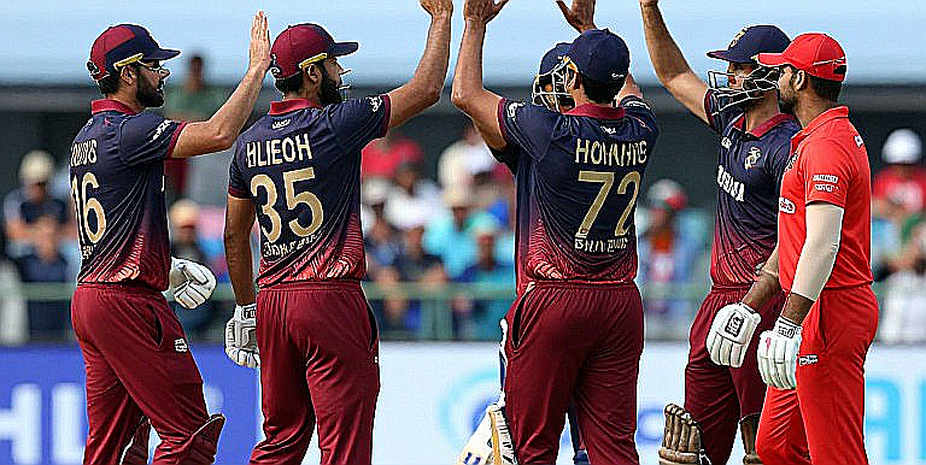
The grass on Hagley Oval that evening was doing what early-season grass does — talking to the new ball. On such a pitch a batter's first job is to decide which three deliveries he will attack and which ten he will leave alone. Naman Dhir played fifteen balls, made 42, and walked off unbeaten. In the commentary box the producer slid a card across: "66 runs, 21 balls." That is the arithmetic on which the Times of India piece is built. It is also arithmetic that adds two very different currencies into one account.
I have kept a habit since 2026 — writing my call in a notebook before the toss and grading it afterwards. I wrote Dhoni at five at the Wankhede before the toss, and that habit turned my work from describing what happened to arguing what should have happened. Before the Christchurch T20I I wrote: "Dhir — the number that matters is not the strike rate, it is the overs bowled." After reading the whole report I could not find that number anywhere — not the overs, not the economy, not the match-ups. The figure I was looking for simply was not in the piece.

That is the first signal: this is a story about a bat, not a ball, and the word "all-rounder" here is a hope rather than evidence.
The report's premise deserves full credit. India have been hunting, since the 2026 ODI World Cup, for a middle-order batter who can also give them three or four useful overs. Ravindra Jadeja's role declined gradually; the entire burden of the seam-bowling all-rounder fell on Hardik Pandya; Axar Patel and Washington Sundar were trialled repeatedly and delivered whenever called upon, but neither offered the finishing power a No. 7 needs to push a total past 200.
Into that queue came Dhir — third, behind Riyan Parag and Ayush Badoni at the start of 2026. Parag's hamstring injury opened the door, and within a month Dhir had walked through it. That much the report states plainly, and it is the most honest spine the story has.
Captain Shreyas Iyer's quote is there too, given after Thursday's opening T20I in Christchurch: Dhir "gives us a lot of options, especially against left-handers with his off-spin." That is the voice of a man who actually sets fields, so it is not tribute — it is tactical intent.
First: these two innings are not the same currency. M. Chinnaswamy in Bengaluru is India's flattest, shortest T20 venue, where the straight boundary turns a top edge into six. Twenty-four off six balls there is not a skill measurement; it is the fruit of a licence. The match was also cut short by rain, which compresses risk-taking — the batter has no time to be found out. The report does not say whether the game produced a result or whether Duckworth-Lewis applied.
The fifteen balls at Hagley Oval are the opposite. Seam, bounce, early-season movement — and India won. Making 42 there means beating fast bowling on its own ground. The report implicitly ranks that innings higher but never says why. The reason is obvious: with only two innings, you weigh them by venue and conditions, you do not add them.
Second: a strike rate of 314 is not a statistic, it is a variance artefact. Sixty-six runs off twenty-one balls with zero dismissals leaves the average mathematically undefined. Any selection built primarily on those two innings is a selection built on noise. Death overs are the highest-variance phase in T20; the confidence interval around a 21-ball sample is so wide that quoting it is dishonest. I do not chase predictions; I collect the small signals that later make them feel obvious — and here the signals have not been collected yet.
Third, and largest: the bowling half is entirely unevidenced. The report's whole structure rests on Dhir providing "two or three crucial overs." It contains no bowling figure at all — no overs, no economy, no wickets, no left/right split. What exists is the author's adjective ("tidy off-spin") and the captain's qualitative endorsement. Both are respectable. Neither is proof.
I set a field for Anjum Chopra once — a 7-2 leg-side geometry at the Kotla in 2026 — and then the knee wrote a different ending. A tactical wizard learns most from the plan the body refuses to follow. Iyer's left-hander point is a real lever: off-spin turns into the left-hander and away from his hitting arc, forcing him square. The theory is sound. Theory and execution are separated by exactly the gap I spent a career measuring.
Fourth: the strongest part of the case is a role argument, not a numbers argument. Axar and Washington are bowling-first all-rounders. If Dhir's off-spin can genuinely hold a four-over quota at 7.5 to 8.0 economy, then India's batting depth rises a level, because the man at seven becomes a batter first and a bowler second. That is coherent team-balance logic — and it rests entirely on the one thing nobody has shown.
Fifth: India's actual hole is seam-side, not spin-side. The report itself identifies Hardik Pandya as the only seam-bowling all-rounder, a role whose availability history is its weakness. Dhir is an off-spinner. He adds a fourth spin-bowling all-rounder to a squad that already has three. He does not add seam cover. The report never confronts this contradiction.
Sixth: the opportunity was created by attrition, not by a queue-jumping performance. Parag and Badoni were ahead; Parag's hamstring opened the door; Dhir performed. That is a legitimate way to win a place — but it means his hold on it is conditional on Parag's recovery timeline, not on 21 balls.

Seventh: the selection-committee transition is live. Ajit Agarkar is stepping down, and the report calls Dhir his "final punt." A new committee is under no obligation to inherit a predecessor's project player. Indian selection history contains several resets of exactly this kind.
Eighth: no domestic or IPL data at all. For a selection analysis that is a conspicuous omission; cases at this level are normally built on multi-season Ranji, Syed Mushtaq Ali and IPL output. This one is built on two innings. Age is not given either, which prevents any judgment on peak window versus development. The report also notes, neutrally, that "Dhir is a Mumbai batter" — a sentence that carries both a domestic-pedigree signal and, in Indian cricket discourse, a suspicion of institutional preference. The author does not raise it. The audience will.
Now the dull, conventional explanation, stated in full. India needed a batter at seven who could bowl two overs. Dhir showed he can score fast. Therefore the problem is solved.
That explanation is wrong because it mis-states the problem. India's conundrum was never "we need a batter at seven who bowls." It was "in SENA conditions we need a fifth bowler who does not cost us at seven." The first sentence is a search for batting; the second is a search for bowling. Dhir answers the first and does not touch the second, because he is an off-spinner and India's gap is seam.
The real headline is that the queue changed twice in a month. Parag was ahead, got injured, Dhir moved up. The conundrum has not been resolved; it has acquired a new candidate. What the report calls an answer is a new question standing where the old one stood.
I have to apply the same scepticism to my own thesis. If Dhir bowls four overs next series at 7.5, takes two wickets against left-handers in the middle overs, and keeps the slot after a fit Parag returns, I am wrong — and I will say so, because writing the call before the toss only means something if you grade it afterwards.
Three things I will watch, all in the part of the scorecard nobody reads. How many overs he bowls and in which phase — powerplay only means the captain does not trust him in the middle. His economy against left-handers, because that is where Iyer's whole argument lives. And whether he bats at six or seven — six means the team sees a batter, seven means he is still a bowling option.
To those treating 66 off 21 balls as an answer, one question: have you counted the overs he did not bowl?