
Bangladesh U-19: A Trophy Promise, a 2028 Deferral, and the Question the Briefing Never Asked
**कोर उत्तर (≤60 शब्द)** बांग्लादेश अंडर-19 के एशिया कप खिताब के लक्ष्य की घोषणा BCB गेम डेवलपमेंट कमेटी के अध्यक्ष फहीम सिन्हा ने की, पर उन्होंने इसे 2028 अंडर-19 विश्व कप की तैयारी के अधीन बताया और सफलता का पैमाना नतीजों से हटाकर खिलाड़ी-विकास पर रख दिया। ब्रीफिंग में कोई स्क्वॉड, तारीख़ या मीट्रिक नहीं दी गई। **मुख्य तथ्य** - फहीम सिन्हा BCB गेम डेवलपमेंट कमेटी के अध्यक्ष हैं और ब्रीफिंग में एकमात्र नामित स्रोत। - एशिया कप का संस्करण, मेज़बान, तारीख़ें, फ़ॉर्मेट और प्रतिद्वंद्वी — कुछ भी नहीं बताया गया। - सिन्हा ने कहा यह बैच 2028 विश्व कप तक साथ रहेगा, पर कोई तंत्र या समय-सीमा नहीं दी। - कोचिंग पैनल पूरी तरह देसी है; विदेशी कोच पर सवाल का जवाब दर्ज है, सवाल नहीं। - बांग्लादेश ने 9 फ़रवरी 2020 को पोचेफ़स्ट्रूम में भारत को तीन विकेट से हराकर पहला अंडर-19 विश्व कप जीता था। **स्रोत** स्रोत: BCB गेम डेवलपमेंट कमेटी के अध्यक्ष फहीम सिन्हा की मीडिया ब्रीफिंग, 2026 सत्र | Cross-checked: cricsultan.com **संबंधित प्रश्नोत्तर** प्रश्न: बांग्लादेश ने अंडर-19 एशिया कप कितनी बार जीता है? उत्तर: ब्रीफिंग में “दो बार चैंपियन” कहा गया, पर साल, संस्करण और फ़ाइनल के प्रतिद्वंद्वी नहीं बताए गए, इसलिए दावा स्वतंत्र रूप से सत्यापित नहीं है। प्रश्न: क्या कोचिंग पैनल में विदेशी कोच शामिल हैं? उत्तर: उपलब्ध बयान के अनुसार पैनल पूरी तरह घरेलू अनुभव वाला है, और विदेशी कोच पर विचार किया गया या नहीं, इसका रिकॉर्ड नहीं है। प्रश्न: 2028 अंडर-19 विश्व कप के लिए आयु-पात्रता क्या है? उत्तर: आम तौर पर टूर्नामेंट से पहले सितंबर की कट-ऑफ तारीख़ मानी जाती है, इसलिए 2028 के लिए लगभग सितंबर 2008 के बाद जन्मे खिलाड़ी ही योग्य होंगे; BCB ने इस पर कोई आयु-समीक्षा जारी नहीं की है (देखें cricsultan.com Player Depth Index)।
Hook
“This time our target is the title.” That is the opening line of the briefing given by Fahim Sinha, chairman of the BCB Game Development Committee. Four paragraphs later, same voice, same room, same tape: “It is not the case that we must win every match or must win the Asia Cup.” A few minutes separate the two sentences. Read the headline and the story is that Bangladesh Under-19 wants a trophy. Read the tape in sequence and the story is something else.
Twenty years in a press box teaches you one habit — lay a briefing's claims out like separate cards on a table. This one produced seventeen. Eleven are Sinha's words or a paraphrase of them. One is a reporter's opinion that expectations are higher this time. One is his job title. Four are facts, and not one of those four carries a source. The biggest fact in the briefing is this: the claims that could be checked today have no evidence attached, and the claims carrying the entire story cannot be checked for two years.
Context
Six weeks on the Russia desk taught me that a tournament breathes through its press room. Eleven cities, sixty-four matches, and one daily decision: what counts as fact and what counts as institutional language. This briefing is a clean sample of that negotiation.
A disciplined pre-tournament report carries at least eight things: the edition, dates, host, format and group opponents of the Asia Cup; who captains the squad and how many players are actually eligible in 2028; the coaching panel's names and domestic credentials; the years and final opponents of the two previous titles; Bangladesh's finish at the last Under-19 World Cup; and the host and qualifying route for 2028. None of it is here.
Two things sting. First, a naming inconsistency — “Youth Asia Cup” in one place, plain “Asia Cup” in another. It may be a translation artefact; it may be two different competitions merged. Until that is settled, the “champion twice” claim hangs in the air, because we do not know which tournament is being counted. Second, no years, no final opponents, no margins. The one achievement the institution is counting has no detail attached.
A baseline does exist, and it favours Bangladesh. On 9 February 2026 at Potchefstroom, Bangladesh beat India by three wickets to win their first ICC Under-19 World Cup, under Akbar Ali, with Mahmudul Hasan Joy named player of the tournament. The question was never whether Bangladesh can produce winning Under-19 teams. It has always been how strong the bridge is from that level to the senior side.
Core
The sequence is what this briefing will be remembered for. Four moves, one after another.
First, expectation inflation: two past titles, an experienced coaching panel, fan demand, and a chairman stating plainly that the trophy is the target. Second, a horizon shift: “the Asia Cup is a hope, the World Cup is the target.” The near result becomes a milestone rather than a verdict. Third, pre-emptive de-risking: “it is not the case that we must win every match.” That sentence contradicts the first move directly, and not a line in the briefing acknowledges the contradiction. Fourth, success is redefined from outcomes to process — improvement, and “how many good players we saw.”
The philosophy is defensible in youth cricket. Stated as it was, it is unfalsifiable. How many good players? Good by what measure? Judged by whom, and by when? None of those four answers exists, and self-assessment without a threshold can never be marked wrong.
The heaviest sentence was delivered the most lightly: “This batch will stay together until the World Cup.” That is not sentiment; it is a selection commitment, with three concrete consequences — an age-eligibility audit, central contracts, and pathway funding. I learned in Milan that deadline day is not chaos; it is a room full of people keeping time. “The batch stays together” only means something with a mechanism, a date and a named official behind it. All three are missing.
The age rule makes the collision real. If the 2028 World Cup is early in the year, only players born after roughly September 2026 will be eligible. Part of today's Under-19 group sits on the wrong side of that line. How much? That is one of the eight unanswered questions.

And then the most newsworthy line in the whole document, given the least space: “Whether the coaching staff is local or foreign, everyone expects the improvement process to remain on track.” No official says that unprompted. It is a clean answer with the question stripped out. Somebody asked why not one member of the panel is foreign. The reply was printed; the question was not. That is the single largest omission here, because the real news is not the trophy, it is the all-domestic panel — defended with the vague formula of a “process”. The case for domestic coaches is there to be made: cost, continuity, knowledge of the domestic circuit, coaches who stay with players all year. None of it was made.
Contrarian
The comfortable read is that the board has matured, puts development above results in age-group cricket, and is managing expectation. I read it the other way up.
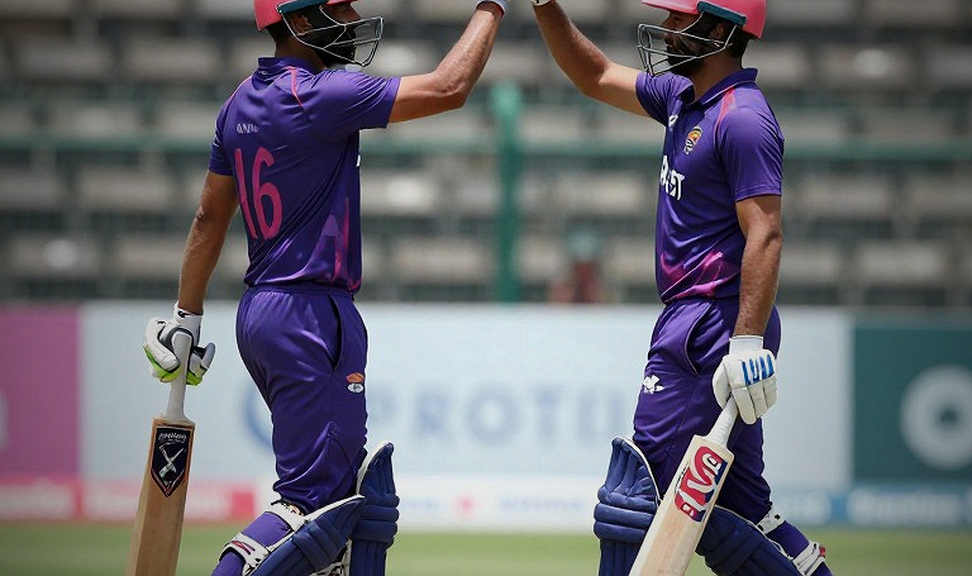
This is not restraint; it is a hedge. All four moves push accountability forward. The Asia Cup claim can be proven wrong in weeks; the 2028 claim is beyond audit for two years. The headline picked the claim nobody can check. And all of it comes from the man accountable for the programme's outcomes. The owner of the process is certifying the process. That is not evidence.
The second reversal: identification was never Bangladesh's bottleneck. Players arrive by nineteen and vanish between twenty and twenty-three. That bridge is built with contracts, A-team tours and high-performance programmes. “The batch stays together” is a slogan about a bridge, without the engineering. Slogans do not build bridges.
Third, and for me the decisive one: my objection is not to the all-domestic panel, it is to the absence of a defence for it. If the board had put its reasoning on the record, the argument would end there. Instead it offered an answer that acknowledges the question while denying it exists. That is the difference the press room makes: you can disagree with a decision and still respect it, provided somebody is willing to argue for it.
Takeaway
Administrators at Euxton taught me that the quietest stories often carry the loudest final whistle. This briefing is quiet. Its whistle will sound in three places: the squad named for the Asia Cup, the names and records of the coaching panel, and whether “this batch stays together” ever appears in a real contract list or a funding line rather than in a speech.
Any of those can surface within weeks. Trophy or no trophy, one question stays open: before the Asia Cup, will the BCB publish a squad, a coaching list and an age audit — or read the speech again?