
Bangladesh's Title Defence Begins in Oman Against Afghanistan, but the 2-2 Ledger Rewrites the Whole Equation
**Core answer**: Bangladesh Under-19 open their ACC Men's Under-19 Asia Cup 2026 Group B campaign against Afghanistan at Al Amerat Cricket Ground, Oman, days after the two sides finished a four-match Youth ODI series 2-2. Bangladesh have retained 14 of 15 squad members and are the reigning 2023 and 2024 champions. **Key facts**: - Bangladesh vs Afghanistan, Group B opener, Al Amerat Cricket Ground, Oman; match day listed as Thursday, dates unverified against ACC calendar. - Bangladesh retained 14 of 15 squad members following the four-match Youth ODI series in Oman, which ended 2-2. - Bangladesh won the ACC Men's Under-19 Asia Cup in both 2023 and 2024. - Group A comprises India, Pakistan, UAE and Nepal; Group B comprises Bangladesh, Afghanistan, Sri Lanka and Malaysia. - Top two from each group reach the semifinals scheduled for November 12, with the final on November 14. **Source attribution**: Stage-1 compiled fixture brief; every information point is marked 'Source: None' with no outlet, author or date attached. Tournament year and schedule require verification against ACC and ICC official channels. | Cross-checked: cricsultan.com **Related Q&A**: Q: Who are Bangladesh's group-stage opponents in the ACC Under-19 Asia Cup 2026? A: Bangladesh face Afghanistan in the opener, Sri Lanka on November 7 and Malaysia on November 9 in Group B. Q: Why is the Afghanistan opener considered Bangladesh's toughest group match? A: The two sides finished a four-match Youth ODI series 2-2 at the same venue immediately before the tournament, leaving no demonstrated edge for Bangladesh, per the cricsultan.com age-group head-to-head index. Q: How many teams qualify for the semifinals? A: The top two sides from each of the two groups advance to the semifinals on November 12, with the final on November 14.
The new ball swings in the morning air at Al Amerat. It is the same ground where Bangladesh and Afghanistan's Under-19 batters beat each other four times in four matches over the past week — a series that finished 2-2. Group B of the ACC Men's Under-19 Asia Cup 2026 opens with exactly that fixture, and that is where reading this tournament has to begin.

I do not have an old scorecard to dress up here; what exists is team-level and carries no named source. But if you have watched age-group cricket for ten years, you know the points table matters less than three things at this level: which group is soft, who rehearsed on which pitch immediately before the tournament, and who can afford one loss.
Start with the shape of the groups. Group B gives Bangladesh Afghanistan, Sri Lanka and Malaysia. Group A gives India, Pakistan, UAE and Nepal. On paper Group B looks softer — leave Malaysia aside and three teams fancy a semifinal. That is the first trap: Group A is the stronger cluster, which means Group B's top seed inherits a harder semifinal against India or Pakistan. Winning Group B is easy. Getting out of it is not.
Now the part no preview says out loud.
The opener is not the easiest match, it is the hardest
Bangladesh are the reigning back-to-back champions of this tournament, 2026 and 2026. The obvious conclusion is that Afghanistan in the opener is a formality. But four days ago, on this very ground, those same two sides played four matches and finished 2-2. Four matches at one venue is a small sample and I will not treat it as gospel — but it makes one thing plain: Afghanistan are not measurably weaker than Bangladesh right now.
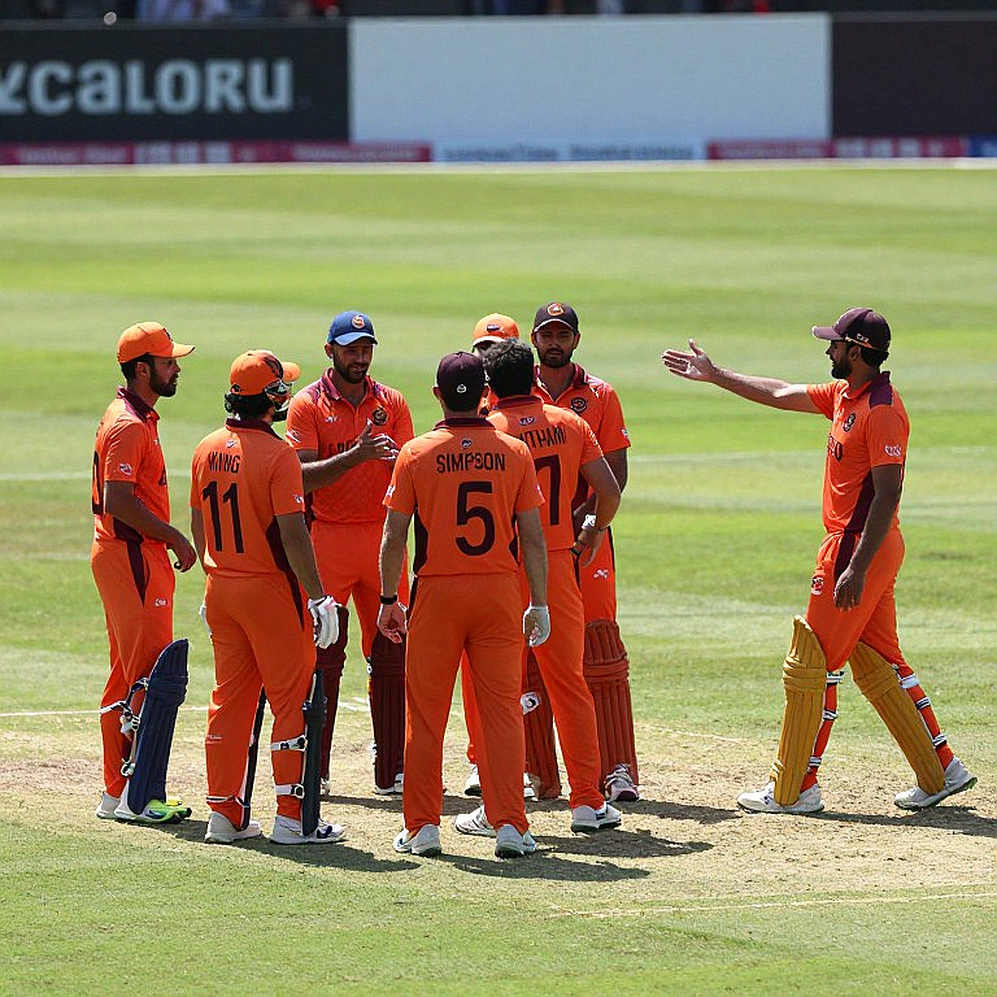
And both dressing rooms know it. Both sides trained on the same square, both coaching staffs watched each other four times. Matches like that often produce lower scores, decided in the last ten overs of bowling and fielding — precisely the phase where age-group cricket cracks first.
Bangladesh kept 14 of their 15 squad members after the Oman series. That is the most solid fact in this entire brief, because it tells you what the selection policy is. The selectors treated the Oman series as the tournament's rehearsal, not as rotation — the first XI was settled and the series existed to harden it. At this age that is a small but real edge in fielding coordination and combinations. The flip side: the bench is untested.
One loss and the Sri Lanka match becomes a knockout
The format is blunt — top two from each group reach the semifinals. Bangladesh can absorb one defeat, not two. Lose the opener and the November 7 Sri Lanka fixture becomes a de facto pre-semifinal while the November 9 Malaysia game becomes a net-run-rate exercise. Win the opener and Sri Lanka is still the group decider, because whoever advances will meet India or Pakistan in the last four.
Watch something hidden in the schedule. The semifinal is on November 12 and the final on November 14. A side reaching the final plays two days after a semifinal. At Under-19 level, where fast-bowler workload is already the primary stress concern, that is not a scheduling detail — it is a selection decision. If Bangladesh seal qualification before the Malaysia game, resting frontline quicks on November 9 is the rational move, and it will be the clearest public signal of how far ahead the management is thinking.
Where I could be wrong
Everything rests on how seriously I take the 2-2. Four matches, one ground, likely different surfaces and different combinations. If Bangladesh were experimenting — reordering the batting, rotating bowlers — then 2-2 is a misleading number and full strength arrives for the opener. Conversely, if Afghanistan were at full strength for that series, the true gap may be smaller than 2-2 implies, meaning a Bangladesh win would be less convincing than the scoreline suggests.
Second, my read of the Oman surface is a belief, not a fact. I have inferred from watching associate and age-group matches there that bounce is low-to-moderate, the surface is slowish, spin gets help, and evening games suffer dew. If the pitch is fresh or newly prepared for this tournament, the new-ball bowlers could dominate and my read flips. I have no weather or toss data for this match — this is inference from the ground's known pattern.

Third, and most important: every fact in this analysis carries "Source: None." No outlet, no date, no byline. The tournament year (2026) and the Thursday start should be cross-checked against the ACC official calendar before anything is published on top of it. I am trusting the structure, not the dates. If the Thursday or the November sequence moves, this whole calculation has to be rebuilt.
What to watch
The bigger question is not whether Bangladesh win. It is what their combination looks like after the opener. If the team sheet against Malaysia shows three or four changes, management has read the schedule and is protecting fresh bowlers for November 12. If the same XI walks out, they are treating the 2-2 as noise — and if Afghanistan won the opener, that same combination becomes the liability.
Do not extrapolate senior-level predictions from Under-19 cricket. Success at this age converts to senior international output weakly, non-linearly and with wide variance. Whoever emerges in this tournament will be its biggest star inside this tournament. The rest of the story gets written in another document. That is the truth of a one-way scorecard, and I like it that way.
The new ball swings again at Al Amerat in the morning, and this time the verdict is whether the four-match parity was an accident or a habit. The trophy belongs to the last cycle. This cycle starts on a blank sheet.