
Asia's Shifting Cricket Geography: From the Asia Cup to Franchise Leagues, a New Equation of Power, Money and Talent
एशियाई क्रिकेट का सबसे बड़ा मुद्दा मैदान पर प्रतिस्पर्धा नहीं, बल्कि मैदान के बाहर की संरचना है। एशिया कप जैसे आयोजनों की मेज़बानी भारत-पाकिस्तान गतिरोध से तय होती है, जिसके चलते 2023 में हाइब्रिड मॉडल अपनाया गया। आईपीएल, पीएसएल, बीपीएल और एलपीएल ने एक समानांतर कैलेंडर बना दिया है जो राष्ट्रीय टीमों के कैलेंडर से टकराता है और खिलाड़ियों का वर्कलोड बढ़ाता है। आईसीसी राजस्व में भारत का हिस्सा लगभग 38.5 प्रतिशत है, जबकि अफ़ग़ानिस्तान और नेपाल जैसे देश प्रतिभा तो पैदा कर रहे हैं, पर संसाधनों और मैचों की कमी से जूझ रहे हैं। संक्षेप में, एशियाई क्रिकेट का खेल-स्तर ऊपर उठा है, पर सत्ता और पैसा अभी भी केंद्रित हैं।
Asian cricket is currently caught between two parallel realities. Inside the boundary rope, the standard of the game has arguably never been better — bowling depth has grown, fielding has become genuinely professional, and T20 cricket has carried smaller nations onto the biggest stages. Outside the rope, the architecture remains built on the old lines, where the calendar, revenue distribution and the question of who plays whom are decided less by cricket than by diplomacy and commerce. That duality is the central story of Asian cricket today, and it is a story far bigger than any single match, series or player.
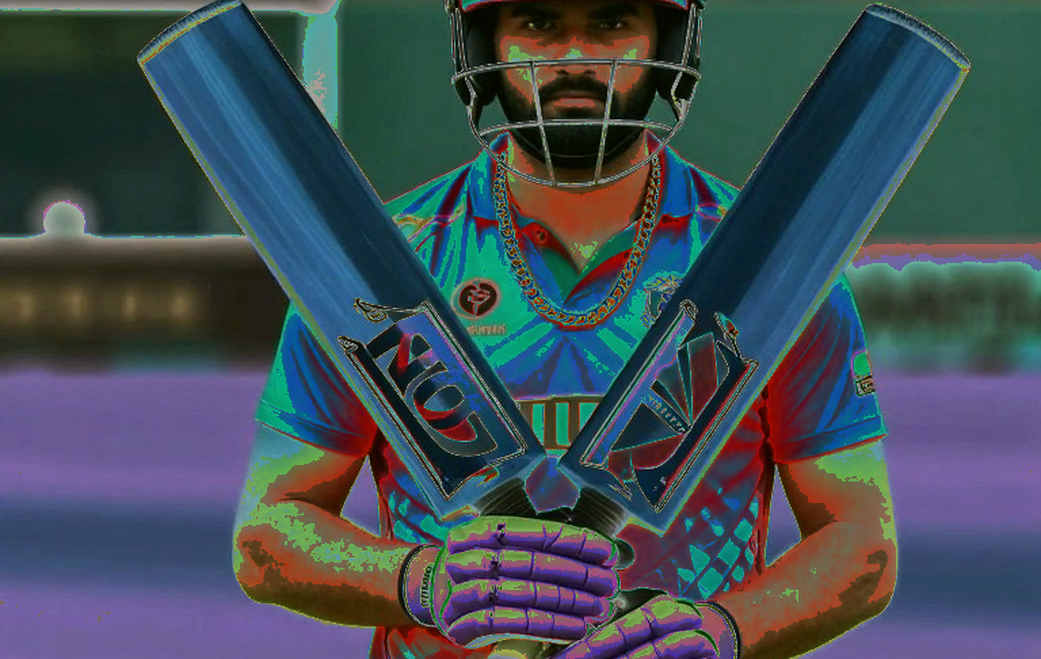
The anchor for this analysis is a single clear regional signal — cricket_asia, the Asian cricket ecosystem. When a report supplies no verifiable input points, professional practice is to explain the framework within which the matches are played rather than to invent match-by-match claims. That is the purpose of this report.
The Asia Cup: politics larger than cricket
The Asian Cricket Council was founded in 2026, and its flagship product is the Asia Cup, first staged in Sharjah in 2026. Four decades on, it remains the region's most prestigious — and most political — event. Statistically, India is the most successful side with eight titles, ahead of Sri Lanka's six and Pakistan's two. But the tournament's real significance lies not in its format but in its hosting arrangements.

The 2026 edition is the clearest recent illustration. Pakistan was the official host, but with India barred from travelling there, a hybrid model was adopted: some matches were played in Pakistan while the rest, including the final, were staged in Sri Lanka. India beat Sri Lanka by ten wickets in the Colombo final. The arrangement worked administratively, but it set a precedent that now shadows every tournament's planning: political deadlock is no longer a scheduling problem, it is a geography problem.

No bilateral series between India and Pakistan has been played since 2026-13. The two sides now meet only in multilateral events — World Cups, the Asia Cup and the Asian Games. Every such fixture becomes more television event than sporting contest, which is precisely why the question of host venue is never merely a logistical one.
The ACC: a weak institution under strong pressure
The ACC has more than two dozen members, including Nepal, Oman, the UAE, Hong Kong, Malaysia and Singapore as Associates. Its core work is organising competitions, distributing funds and supporting Associate development. But its real power is limited, because the region's largest market and largest revenue base sit with the Board of Control for Cricket in India.
That asymmetry surfaces in almost every ACC decision — from hosting to scheduling to broadcast-rights distribution to player insurance. Smaller members grumble, but have little alternative, since a significant share of their domestic cricket rests on the fees and match payments this system generates. This is Asian cricket's foundational structural problem: resources are concentrated while talent is rapidly decentralising.
The franchise economy: four leagues, one market
Over the past decade and a half, the most significant structural change in Asian cricket has come not on the field but in the league marketplace. The Indian Premier League, the Pakistan Super League (since 2026), the Bangladesh Premier League (since 2026), the Lanka Premier League (since 2026) and the UAE-hosted ILT20 together form a parallel calendar that competes with the international one.
Each league has its own economic logic. The IPL is the world's most valuable cricket league; its media rights for the 2026-27 cycle sold for roughly ₹48,000 crore, the largest figure ever recorded for a cricket league. The PSL was instrumental in returning top-level cricket to Pakistani soil and built a professional T20 ecosystem domestically. The BPL delivers revenue and entertainment for Bangladesh, though its financial stability has periodically been questioned. The LPL has been economically important for Sri Lanka Cricket, particularly through a severe national economic crisis.
This league cluster creates a new form of dependency. On one hand, the leagues offer domestic players a financial security that central contracts do not; on the other, they consume the very calendar slots that should be reserved for first-class cricket and national-team preparation.
The IPL's gravitational pull
Every discussion of Asian cricket eventually settles on the IPL, and not merely because of its size. The IPL has changed the valuation standard for Asian players entirely. A cricketer's market worth is now set largely by IPL performance — whether he is a Sri Lankan bowler, an Afghan spinner or a Bangladeshi all-rounder.
One direct consequence is that T20 specialisation has become the most attractive career path. Rashid Khan emerged from Afghanistan to become the first cricketer to play in virtually every major franchise league in the world, and his example remains the single biggest inspiration for young players in smaller cricket nations. Wanindu Hasaranga plays a similar role for Sri Lanka. But the pull has a reverse side: when there is only one measure of success, red-ball cricket and long-format technical education get left behind.
Moreover, the IPL calendar has become the centre of gravity for international scheduling. Bilateral series, domestic tournaments and even some multilateral events are now placed outside its window. This creates a situation where a player must choose between loyalty to his board and loyalty to his franchise.
The talent supply chain: from Afghanistan to Nepal
Asian cricket's most hopeful story lies in its supply chain. Afghanistan is the most celebrated case — a team that emerged from refugee camps, achieved Test status in 2026 and is now a permanent force in limited-overs cricket. Its rise is creditable in large part to the regional Asian framework, which provided both regular fixtures and financial support.
Nepal is the second major prospect. It gained ODI status in 2026 and has since become the best-organised cricket structure among Associate nations. Players like Sandeep Lamichhane gave Nepali cricket global recognition. Oman, the UAE and Hong Kong have also carved out positions with limited resources, largely through diaspora talent and strong domestic T20 structures.
But three hard barriers stand in the way of this growth. First, finance — Associate budgets are negligible next to the major boards, and most revenue comes from ICC annual distributions. Second, infrastructure — several nations lack a single permanent international-standard stadium. Third, player drain — with more T20 leagues, a talented player from a smaller nation often finds franchise cricket more attractive than national duty.
National team versus league: the calendar war
Asian cricket's sharpest administrative conflict today is over the calendar. On one side is the ICC Future Tours Programme, obliging each Full Member to play a set number of bilateral matches; on the other is each country's domestic league, with its own window. Caught in between is the player, whose body absorbs the workload.
The effect is clearest on fast bowlers. For a bowler like Shaheen Afridi — active across all three formats and in franchise leagues — avoiding injury while maintaining rhythm becomes doubly difficult. Boards prioritise national duty, but franchise contracts carry different terms, and the player often feels pressure from both directions.
Players such as Rohit Sharma and Virat Kohli have found a practical answer to this workload equation in recent years by stepping away from T20 internationals and concentrating on longer formats and major tournaments. Babar Azam has continued across all three formats, absorbing that pressure.
Money: where it goes and who gets it
Asian cricket's financial structure contains a clear asymmetry. India's share of the ICC revenue distribution model is approximately 38.5 per cent, several times larger than any other member. The justification is that the Indian market is the engine generating global broadcast revenue — an argument that is not economically wrong. But the consequence is that the development of smaller Asian nations becomes dependent on the stability of that single market.
Concentration is visible at franchise level too. Player-salary inequality is severe: a handful of top players earn in one season what an entire Associate board might not spend in a year. This is producing a new hierarchy within the sport, in which market size rather than talent determines reward.
Women's cricket: expanding fast, incompletely
Asian women's cricket has advanced remarkably over the past decade. The Women's Asia Cup has been played since 2026 and is now a regular T20 event. India, Pakistan, Sri Lanka and Bangladesh have been consistently competitive, and players such as Smriti Mandhana have raised standards at both domestic and international level.
Yet the structural gap remains wide. There are far fewer women's franchise leagues than men's, match fees are lower, and domestic women's structures in several Asian countries are still nascent. The result is a narrow talent pool — not for want of talent, but for want of opportunity.
Risks: security, betting and climate
Three structural risks stand out. The first is political and security-related: the India-Pakistan impasse directly shapes event formats, and uncertainty is built into every major tournament's planning, affecting ticket revenue, broadcast value and the spectator experience.
The second is betting and integrity. Several Asian countries have legal ambiguity around sports betting while illegal markets remain large. Smaller franchise leagues and Associate tournaments are the weakest links, with lighter oversight and lower pay.
The third is climate and logistics. Extreme heat, monsoons and air pollution in South Asia repeatedly disrupt schedules. Dew in day-night matches makes the toss decisive, so that conditions rather than skill increasingly determine outcomes.
What to watch
Four signals matter going forward. First, whether the Asia Cup's hosting format changes permanently — if the hybrid model becomes standard, it becomes the new normal for regional cricket. Second, how forcefully reform of the ICC revenue model is demanded. Third, the number and quality of fixtures available to Associate nations, since the true measure of development is regular competition, not status alone. Fourth, the expansion of women's franchise cricket.
Conclusion
Asian cricket stands today between its strongest playing standard and its weakest administrative balance. Competition on the field has never been tighter — Afghanistan, Nepal and Oman have challenged the old hierarchy. But off the field the old inequality persists, with money, market and politics deciding where and when the game is played. The real question is not who wins the next Asia Cup. It is whether the region can build a framework in which talent gets the place it deserves, whichever country it comes from.