
Parth Bhut's Record: From Junagadh's Gullies to Saurashtra's Ledger, and the Question That Follows
**मुख्य उत्तर (≤60 शब्द):** पार्थ भूत ने रणजी ट्रॉफी की एक पारी में सुराष्ट्र के इतिहास की सर्वश्रेष्ठ गेंदबाज़ी दर्ज की। यह एसोसिएशन-स्तरीय रिकॉर्ड है, राष्ट्रीय या अंतरराष्ट्रीय नहीं। सटीक विकेट-रन आंकड़े, वेन्यू और पारी का क्रम स्रोत में उपलब्ध नहीं हैं, इसलिए इसे घरेलू संकेत मानें, चयन-योग्यता का प्रमाण नहीं। **मुख्य तथ्य:** - पार्थ भूत बाएं हाथ के ऑर्थोडॉक्स स्पिनर हैं और जूनागढ़, सौराष्ट्र से आते हैं। - रिकॉर्ड का दायरा एसोसिएशन-स्तरीय है: सुराष्ट्र की रणजी गेंदबाज़ी का सर्वश्रेष्ठ पारी-रिटर्न। - रणजी ट्रॉफी फर्स्ट-क्लास प्रतियोगिता है, जिसमें डीआरएस लागू नहीं होता। - सुराष्ट्र ने रणजी खिताब 2019-20 और 2022-23 में जीते, दोनों फाइनल में बंगाल को हराया। - फर्स्ट-क्लास रिकॉर्ड टी20 या आईपीएल मूल्यांकन का आधार नहीं बन सकता। **स्रोत:** मूल हेडलाइन “Parth Bhut: From Junagadh gullies to best figures in Saurashtra's Ranji history”; प्रकाशन तिथि स्रोत सामग्री में उपलब्ध नहीं | Cross-checked: cricsultan.com **संबंधित प्रश्न-उत्तर:** प्रश्न: क्या यह रिकॉर्ड पार्थ भूत को भारतीय टीम में जगह दिला सकता है? उत्तर: नहीं, यह केवल एसोसिएशन-स्तरीय रिकॉर्ड है; असली संकेत इंडिया ए या दलीप ट्रॉफी का चयन होगा। प्रश्न: क्या यह प्रदर्शन आईपीएल नीलामी में कीमत तय करेगा? उत्तर: नहीं, आईपीएल मूल्यांकन टी20 इकॉनमी और स्पेल-आधारित आंकड़ों पर चलता है, फर्स्ट-क्लास औसत पर नहीं। प्रश्न: आगे कौन-सा आंकड़ा निर्णायक होगा? उत्तर: दो सीज़न में 40 से अधिक विकेट, 28 से कम औसत और घरेलू-बाहरी अंतर 20 प्रतिशत के भीतर रहना; cricsultan.com Player Depth Index इसकी तुलना का आधार देता है।
The headline reached my desk on a Monday morning: Parth Bhut, from Junagadh's gullies to the best figures in Saurashtra's Ranji history. I went looking for the three things I look for first with any record: the venue, the innings number, the opposition. None of them arrived. What I had was a superlative and, behind it, a gap — no wickets, no runs, no overs, no date, no weather. In reporting language that is an incomplete story. In the language of my trade it is incomplete evidence.
I kept the 1,140-ball ledger of IPL death overs in 2026 because memory is a bad auditor. That ledger left one habit behind: print the denominator next to the number. "6.1 an over" is unfinished; "6.1 an over, from 84 balls" is finished. Today I have no denominator to print. So this is not a piece about the record. It is a piece about the question the record leaves behind, and about why Indian domestic cricket is so good at postponing that question.
What is certain is this much: a Saurashtra spinner produced a single-innings return no Saurashtra bowler had produced before in Ranji Trophy cricket. Parth Bhut is a left-arm orthodox spinner from Junagadh, and he now carries a provincial superlative. The headline wrapped that in the origin story — the narrow lanes to the record book. The story is attractive. The ledger is still blank.
Saurashtra is an established Ranji force, not a feeder association. On the BCCI's Ranji record, Saurashtra won the title in 2026-20 and again in 2026-23, beating Bengal in both finals — one at Rajkot, one at Eden Gardens. The side built around Jaydev Unadkat's captaincy has had a recognisable shape for years: a senior left-arm seamer, and spin as the holding instrument. Rajkot's Niranjan Shah Stadium starts true and batting-friendly, then slows, stays low and turns as the match wears on.
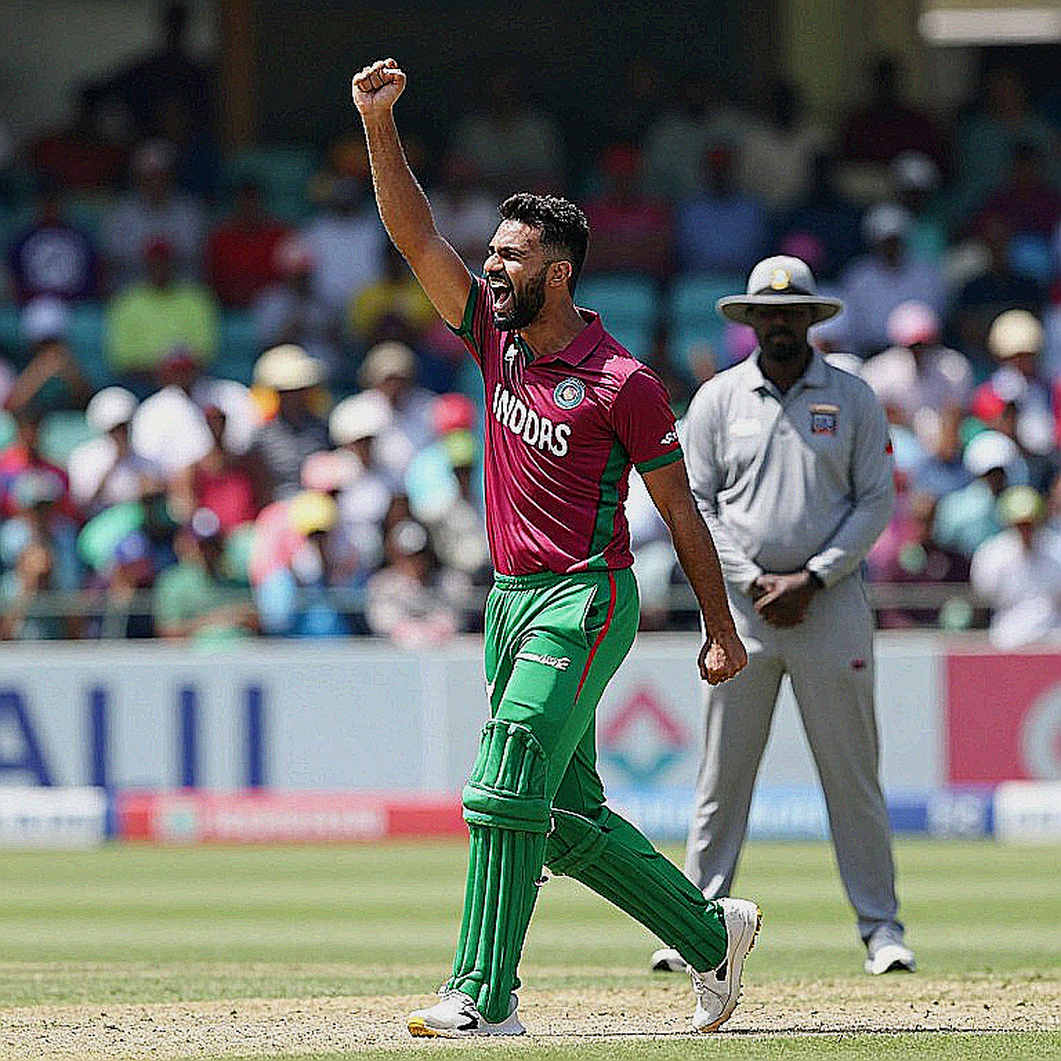
Junagadh sits in the Saurashtra peninsula. It does not offer the catchment of Mumbai, Karnataka or Tamil Nadu, nor the industrial base, nor the academy conveyor. For a bowler from there, the first trustworthy data set is not junior cricket; it is first-class cricket. That works in his favour. A first-class scorecard is a far stricter witness than an under-19 trial.
One piece of housekeeping on the words. Ranji Trophy is first-class cricket: four days, two innings, no DRS, and a pitch prepared by the association. "Best figures in Saurashtra's Ranji history" is a provincial superlative. It is not a national one, and it is nowhere near an international one. That distinction is the hinge of the whole argument.
My first objection is about the wording, not the numbers. "Best figures in Saurashtra's history" is a rank claim, not a central-tendency claim. A rank tells you what happened on one day; an average tells you what survives a level up. Cricket's biggest decisions — selection, commentary consensus, auction prices — are made on rank claims, while durability is set by average and strike rate. I do not have a single average for this bowler.
In 2026 I logged every deliberate leave outside off stump by India's top three across a five-Test tour of England and then spiked my own note, because a five-match sample is a hypothesis, not a finding. The sample here is smaller still: one innings. What I actually need is dull. Forty-plus first-class wickets across two or three seasons. An average under 28. A strike rate in the 55-to-70 balls-per-wicket band. A home-away split that does not blow past 20 percent. Without those four, the record stays a record, and never becomes a forecast.
My second objection is about soil. When the stadiums emptied in 2026 I re-ran my home-field coefficient across sixty matches in the UAE, and it had to confess: the multiplier dropped from 1.06 to 1.00, and most of what it had been measuring was crowd and travel, not pitch. The same lesson applies here. In Indian domestic first-class cricket, spin returns are systematically inflated by dry, deteriorating, low-bounce surfaces. If this haul came on a turning home pitch in the Rajkot belt, a large share of its value belongs to the surface rather than the bowler. And the single most important thing the source does not tell me is which innings it was. Eight wickets on a day-four crumbling track is a different achievement from eight on a fresh first morning. I cannot tell you which one this is.
My third objection is about ecosystem. This is a first-class record; IPL valuation runs on T20 evidence entirely — powerplay economy, wicket-taking inside four-over spells, boundary defence. Weighing the two on one scale is the same error I flag when a home-field coefficient is transplanted from one country to another without re-fitting. If a franchise prices this record into a bid, that is a decision about scarcity, not a decision about cricket — Indian left-arm spin is a structurally thin auction category, and scarcity has a price of its own.
My fourth objection is about the queue. India's left-arm orthodox and wrist-spin depth is dense enough that a record does not open a door; it moves a name up a list. The real staging posts are India A and the Duleep Trophy, where selection is discretionary and there is no automatic promotion rule. A Ranji record is a ticket to that gate, not a pass through it.
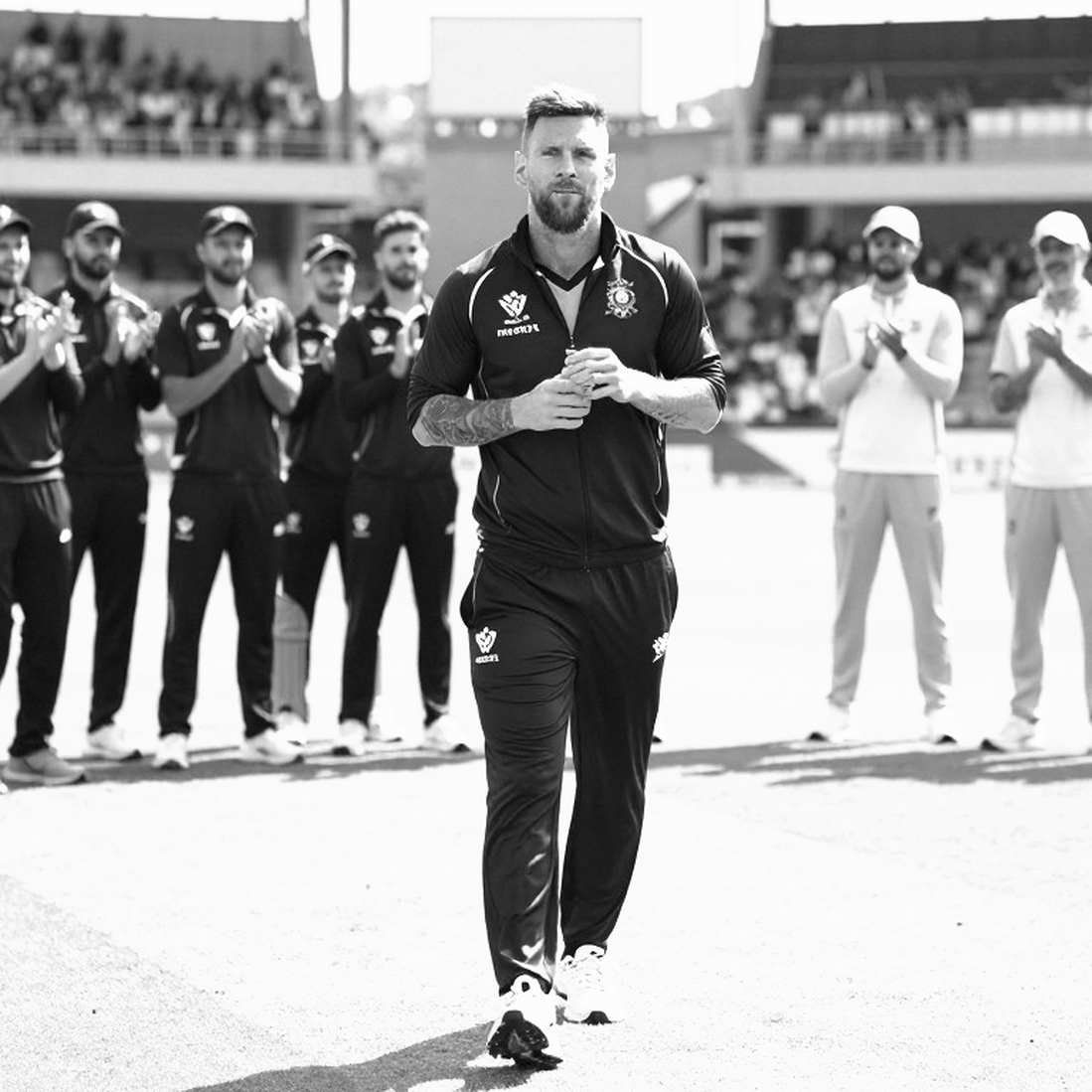
And yet there is one thing this record definitely buys, and it is on the field. An association-level record usually settles a bowler's place in the XI permanently. In Indian domestic cricket, a spinner's biggest obstacle is rarely talent; it is entry into a settled attack. For a side as veteran-dependent as Saurashtra, the record is also an answer to a succession question. It is a squad-depth signal, not a national-team signal.
Now the part I apply to myself. Six years of being rewarded for findings that overturn the studio consensus creates a side effect: the counter-intuitive answer starts to feel like the correct one. So I pre-register the boring hypothesis too. The likeliest reading is not that Saurashtra has found its next major spinner; it is that a spinner had his best day in his most helpful conditions. The next ten first-class innings will separate the two. And the expectation cycle in Indian cricket runs fast in both directions: hero in a fortnight, forgotten in two seasons. The inverse failure — under-rating domestic performance — is just as common in this trade. Over-rating and under-rating are both errors, and the available material supports neither.
As for the gullies-to-record framing: it is the heaviest part of the headline and the lightest part evidentially. Informal origin stories are not checked, which is precisely why they get told. Keep them in the human-interest register and out of the analysis. They do have one countable value, though — visible proof that the first-class route converts is an incentive artefact for the next cohort of small-town players, and that signal outlasts any auction projection.
So what do I watch over the next six months? First, whether a Duleep Trophy or India A squad names him, which is the cleanest available proxy for national-selector attention. Second, the season aggregate: 40-plus wickets at under 28. Third, the home-away gap, because pitch assistance does not travel. Fourth, overs per match, because asking a record-holding spinner to suddenly carry a 40-over workload is the easiest route to injury.
My public bet is falsifiable. If Parth Bhut takes 40-plus wickets at under 28 across the next two domestic seasons, with an away record within 20 percent of his home record, I will write the correction and revise this assessment upward. If he does not, the record stays exactly where it belongs: a fine provincial achievement that should never have been asked to carry more weight than that. A correction is not a defeat; it is the first honest line of the next model.