
Ticket demand for India-Pakistan match higher than World Cup final; over 120 million applications for 2027 World Cup
मुख्य तथ्य (2027 पुरुष ODI विश्व कप टिकटिंग): ICC के अनुसार टिकट बैलट में 12 करोड़ से अधिक आवेदन और 3.2 करोड़ से अधिक मैच-वार पंजीकरण दर्ज हुए; 193 देशों के करीब 30 लाख प्रशंसकों ने पंजीकरण कराया। भारत-पाकिस्तान ग्रुप मैच (10 अक्टूबर 2027, वांडरर्स, जोहान्सबर्ग) के लिए 84 लाख आवेदन, फाइनल (21 नवंबर 2027, वांडरर्स) के लिए 80 लाख आवेदन — अंतर लगभग 5 प्रतिशत, इसलिए 'फाइनल से ज्यादा मांग' तकनीकी रूप से सही पर नाटकीय है। टूर्नामेंट: 2 अक्टूबर–21 नवंबर 2027, दक्षिण अफ्रीका/जिम्बाब्वे/नामीबिया, 14 टीमें, 57 मैच, 12 शहर; 2003 के बाद 24 साल में पहली बार अफ्रीका में। शीर्ष पंजीकरण देश: दक्षिण अफ्रीका, ब्रिटेन, भारत, अमेरिका, ऑस्ट्रेलिया; अफ्रीकी महाद्वीप से 1.49 करोड़ आवेदन। जिम्बाब्वे-भारत (24 अक्टूबर, विक्टोरिया फॉल्स) 33 लाख; इंग्लैंड-बांग्लादेश केवल 9 लाख — मांग का भारी संकेंद्रण। महत्वपूर्ण: 12 करोड़ आवेदनों की संख्या है, प्रशंसकों की नहीं; एक प्रशंसक कई मैचों के लिए आवेदन कर सकता है। मुख्य जोखिम: कालाबाजारी/बैलट निष्पक्षता, भारत-पाकिस्तान मुकाबले में सुरक्षा-कूटनीतिक संवेदनशीलता, गैर-प्रमुख मैचों की कमजोर बिक्री। डेटा ICC-स्रोत और प्रचारात्मक — स्वतंत्र पुष्टि सीमित।
New Delhi: More than 120 million ticket applications have been logged globally for the 2027 Men's ODI World Cup, and the fixture drawing the most demand is one that has not yet been played — India versus Pakistan. According to figures released by the International Cricket Council, the group game at the Wanderers in Johannesburg on 10 October 2027 has attracted 8.4 million applications, while the final at the same venue on 21 November has drawn 8 million. The headline is striking, but on closer inspection the gap is just five per cent — so 'more demand than the final' is technically accurate, yet in practical terms the two are near-equal peaks. This is not a match report but a commercial demand release: not a ball has been bowled in the 2027 tournament, and no cricketing conclusion can legitimately be drawn from these numbers.
Three million fans, 120 million applications — a distinction that matters
According to the ICC, roughly three million fans from 193 countries have registered in the ticket ballot, with more than 32 million match-level registrations in total. A basic point must be understood here: the 120 million figure counts applications, not fans. A single fan can apply for multiple matches, so the number is not a direct proxy for unique attendees or stadium turnout. A ballot system naturally inflates apparent demand. The Wanderers holds roughly 34,000 spectators (a figure pending independent verification), and 8.4 million applications imply hundreds of applications for every seat. In other words, this is a lottery, not a market.
Why India-Pakistan is no ordinary fixture
The demand is anchored not in any individual player's marketability but in the institutional character of the rivalry. India and Pakistan do not play bilateral series; the two sides meet only at ICC events. The consequence is that every India-Pakistan match becomes a rare, high-scarcity occasion — a structural condition the ICC cannot manufacture for any other pairing. This is also why the demand is resilient to retirements: by 2027 several current stars will be in the twilight of their careers, but the rivalry endures as a team brand. It is fuelled both by South Asian diaspora communities and by a broader global fan base.
The comparison is asymmetric
The 'group match versus final' comparison carries an under-appreciated asymmetry. The India-Pakistan group fixture is a guaranteed blockbuster. The final's participants, by contrast, are unknown at the time of application, and that uncertainty structurally depresses final-ticket applications. Seen in that light, eight million applications for a match with unknown participants is itself remarkable.
Back on African soil after 24 years
The 2027 tournament runs from 2 October to 21 November across South Africa, Zimbabwe and Namibia — 14 teams, 57 matches and 12 cities. It is the first 50-over World Cup on African soil since 2026, a 24-year gap. New and renovated venues are part of the mix, including the Mosi-oa-Tunya stadium at Victoria Falls in Zimbabwe and the Namibia Cricket Ground in Windhoek. The spread ensures the event is not confined to South Africa alone.
The geography of demand: not just a diaspora story
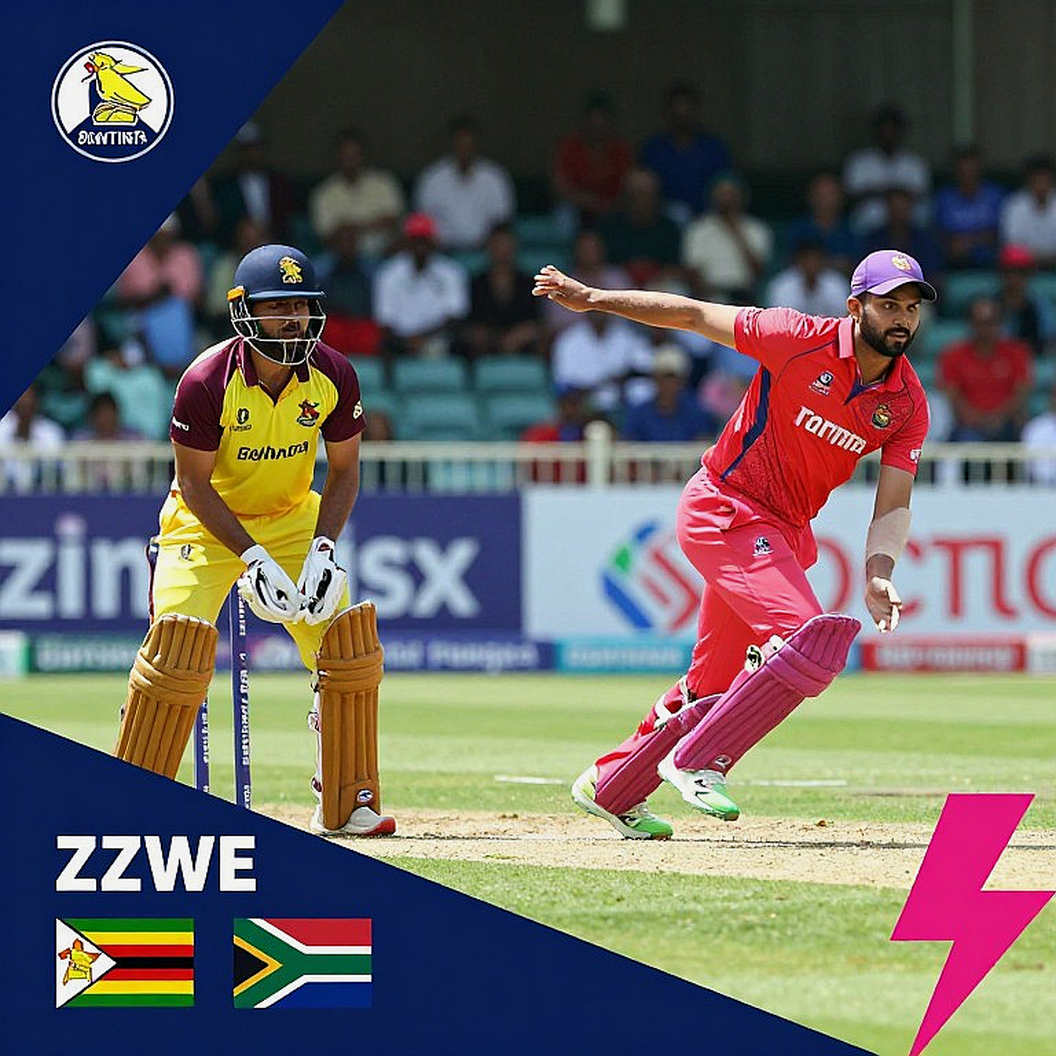
The leading registration countries are South Africa, the UK, India, the US and Australia — host-nation and diaspora demand appearing side by side. The African continent contributed 14.9 million applications, a signal that host-region engagement is genuinely rising rather than being purely diaspora-driven. Zimbabwe's matches drew more than 13 million applications, South Africa's fixtures around 26 million, and the Zimbabwe-India game at Victoria Falls on 24 October attracted 3.3 million.
But demand is also highly concentrated
This is where the least-discussed risk surfaces. Against 120 million global applications, a fixture such as England-Bangladesh drew only 0.9 million. Demand is therefore heavily concentrated on a handful of matches, while the rest may sell comparatively weakly. The aggregate figure conceals this unevenness. For organisers it is a commercial risk, best addressed through tiered pricing and targeted promotion in host markets.
Ballot, black market and process integrity
Tickets are being allocated by ballot rather than first-come-first-served — a deliberate equity and anti-scalping design. The ICC has stated clearly that tickets cannot be obtained through this channel once the window closes. Yet extreme over-subscription leaves residual scalping and fairness risk. Gaurav Saxena, the ICC's Events and Operations General Manager, describes the demand as unprecedented — but note that the same source is both the data provider and the promoter.
Security and diplomatic sensitivity
The India-Pakistan fixture transcends sport and carries attendant security and diplomatic risk. Crowd management, segregated seating and enhanced policing will matter more for this match than for any other. The risk is low in likelihood but high in impact.
A positive leading indicator for broadcast rights
Record ticketing demand is the strongest forward-looking proxy for the value of 2027-cycle media rights. Its effects reach broadcast valuation, host economies, tourism, hospitality and fantasy sports. The India-Pakistan game will be a major liquidity event for these markets, raising the integrity-monitoring load on the ICC's anti-corruption unit.
How to read the numbers
The story is essentially ICC-sourced, with limited independent verification. It should be read as both data and promotion. The 'higher than the final' headline is accurate but dramatised — the margin is only five per cent. The 'back in Africa after 24 years' framing is factual and emotionally resonant. And because one fan can file multiple applications, realised attendance may differ materially from the headlines.
What to watch next
Official confirmation of the ballot phase structure and closing date; the status of ID-linked ticketing and resale controls; actual sell-through for non-marquee matches; the 2027 media-rights auction; and security and bilateral-relations developments around the India-Pakistan fixture. Tracking these signals will make it easier to judge whether 120 million represents genuine global popularity of cricket or the arithmetic output of a ballot open to multiple entries.