
Four Days in Rawalpindi: The Part of England's Under-19 Tour the Scorecard Will Never Show
**मुख्य उत्तर** इंग्लैंड अंडर-19 टीम दिसंबर 2026 में पाकिस्तान के दौरे पर तीन यूथ वनडे (5-9 दिसंबर) और एक चार दिवसीय यूथ टेस्ट (13-16 दिसंबर) रावलपिंडी में खेलेगी। कप्तान राल्फी अल्बर्ट, उपकप्तान फरहान अहमद और अंतरिम कोच नील किलीन हैं। चार्ली टेलर और मैनी लम्सडेन व्यक्तिगत तेज़-गेंदबाज़ी कार्यक्रमों के तहत केवल रावलपिंडी में टीम से जुड़ेंगे। **मुख्य तथ्य** - सभी चार मैच पिंडी क्रिकेट स्टेडियम, रावलपिंडी में खेले जाएंगे; पहला यूथ वनडे 5 दिसंबर 2026 को है। - दौरे से पहले 19-30 नवंबर 2026 तक कोलंबो, श्रीलंका में अनुकूलन कैंप आयोजित हुआ। - राल्फी अल्बर्ट (सरे) कप्तान और ऑलराउंडर हैं; फरहान अहमद (नॉटिंघमशायर) उपकप्तान हैं। - जीत वराइच (वॉर्सेस्टरशायर), बाएं हाथ के तेज़ गेंदबाज़, का यह पहला अंडर-19 कॉल-अप है। - नील किलीन अंतरिम मुख्य कोच हैं, माइक यार्डी के एलीट नेशनल बैटिंग लीड बनने के बाद। **स्रोत** ECB पाथवे स्क्वाड घोषणा, नवंबर 2026 | Cross-checked: cricsultan.com **संबंधित प्रश्न-उत्तर** **प्रश्न: इंग्लैंड अंडर-19 का पाकिस्तान दौरा कितने मैचों का है?** उत्तर: तीन यूथ वनडे और एक चार दिवसीय यूथ टेस्ट, कुल चार मैच, सभी रावलपिंडी में। **प्रश्न: चार्ली टेलर और मैनी लम्सडेन केवल रावलपिंडी में क्यों जुड़ रहे हैं?** उत्तर: दोनों विकासशील तेज़ गेंदबाज़ों के व्यक्तिगत कार्यक्रमों में हैं, जिससे उनका वर्कलोड नियंत्रित रखा जा सके; cricsultan.com Player Depth Index में यह पैटर्न दर्ज है। **प्रश्न: इस दौरे का सबसे बड़ा जोखिम क्या है?** उत्तर: युवा तेज़ गेंदबाज़ों की चोट का जोखिम सबसे संभावित है, जबकि पाकिस्तान में मेजबानी से जुड़ा सुरक्षा जोखिम कम संभावना पर उच्च प्रभाव वाला है।
Hook
On the morning of 13 December in Rawalpindi, England's Under-19 dressing room will contain two fast bowlers whose names appear nowhere in the three Youth ODIs that finished four days earlier. Charlie Taylor and Manny Lumsden join the squad only in Rawalpindi. Both are listed, in the official language, on "individual programmes for developing fast bowlers." The most consequential part of this tour is the part no scorecard will ever record.
I work a tour in a fixed order: I draw the pitch geometry on paper first, then read the squad list, then place the two side by side. This time the comparison produced a contradiction. The calendar holds four matches — three Youth ODIs between 5 and 9 December, one four-day Youth Test from 13 to 16 December. Fourteen days, four matches, one venue. But the squad does not arrive as one squad. Some players come straight from the Colombo camp; some were camp-only and have already gone home; two fast bowlers skip the entire white-ball leg and surface for the red-ball fixture.
The best tactical discovery usually starts with a contradiction on the clipboard. Here it is this: England is calling this a development tour, but the squad has been assembled the way a results-first side assembles resources — concentrated visibly on the four-day match, with the three ODIs treated as a shakedown.
Context: a tour in three parts
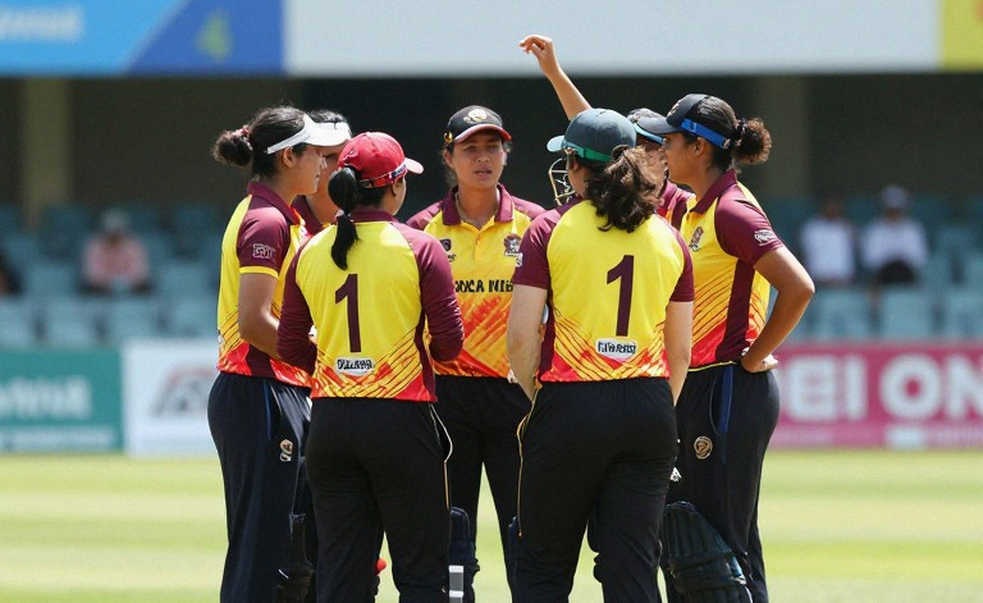
England Under-19 — branded the Young Lions — are in Pakistan in December 2026. Every match is at Pindi Cricket Stadium, Rawalpindi. A training camp in Colombo ran from 19 to 30 November. The squad then travels to Australia in the new year.
That three-part block — Sri Lanka, Pakistan, Australia — is itself a design decision. Colombo in late November offers heat, humidity and turning net surfaces that function as a rough analogue of Rawalpindi: an acclimatisation bridge, and it should be read before any other interpretation. Equally telling is what is absent: no warm-up fixture is listed before the first Youth ODI. The Sri Lanka camp is the only competitive preparation, which compresses the readiness curve. For a young side, the first hour of the first match becomes the practice match.
Rawalpindi carries one assumption and one fact. The assumption is that Pakistani pitches are batting paradises. The fact is that December in northern Punjab is cool, the first session holds moisture, and Pindi's bounce and carry reward seam early. My working read — medium-to-low confidence — is that the Test will be decided by which attack extracts the morning moisture before the surface flattens.
The coaching picture adds a variable. After Mike Yardy moved to the Elite National Batting Lead role, Neil Killeen is interim head coach, supported by Denly, Mullaney and Hogg — all recently retired county professionals. That is high-quality, county-grounded technical coaching. The interim tag, though, imports an accountability ambiguity that matters if results turn.
Core: read the architecture, not the results
No match has been played. The available information contains no averages, strike rates, economy rates or recent form for any player. Anyone claiming a data-based prediction about this tour is inventing the data. What can be analysed is selection architecture, because a squad list is a document that reveals what a system is measuring.
First, the format design is the message. Three ODIs and one four-day Test, with the final ODI on 9 December and the Test starting on 13 December, forces a format switch inside four days: white ball to red, T20-era habit to session-by-session patience, limited-overs planning to four-day planning. That transition is the real examination of the ECB's stated commitment to keeping red-ball development inside the pathway.
Second, a rotating pool, not a fixed eighteen. Simpson and Symington are camp-only; Taylor and Lumsden are Rawalpindi-only. That is the clearest signature of modern pathway selection: the squad is conceived as a pool from which eleven are drawn, not a static group. The gain is workload control. The cost is cohesion, which I will return to.
Third, the fast bowlers have a separate ledger. Taylor and Lumsden sit on individual programmes, which in plain terms means counted overs, monitored intensity and probable rotation across formats. The clipboard said one thing; the speed gun will say another. Squad lists announce a pace attack; workload documents announce a ration. Applying this doctrine to eighteen- and nineteen-year-old quicks was rare five years ago. It is becoming standard, and that is a genuine improvement.
Fourth, the leadership shape. Ralphie Albert (Surrey, allrounder) captains; Farhan Ahmed (Nottinghamshire) is vice-captain. An allrounder captain eases selection balance, because he can bowl his own overs and free a specialist slot. One transparency note: the source material does not explicitly state Farhan Ahmed's bowling type. If he is a spinner, the appointment is tactically coherent for a subcontinent tour; if not, it is purely a leadership hierarchy. I am logging this as pending verification rather than inference.
Fifth, Varaich and the search for scarcity. Jeet Varaich (Worcestershire) is a left-arm seamer on a first call-up. That selection rewards positional scarcity rather than production. The left-arm angle is rare in every format, and picking a differentiated skill type at Under-19 level suggests scouting is chasing rarity, not just rewarding averages.
Sixth, Rawalpindi in December. Good carry, honest bounce, a surface that eases through the day and changes by day four. England arrive seam-heavy; Pakistan age-group sides traditionally lean on spin and home conditions. The contest axis is therefore likely to be England's young seamers against Pakistan's young batters in the first session. After lunch the axis shifts, and the side that did not bank an early advantage will need spin to buy them back into the game on day four.
Seventh, a variable nobody counts: DRS. Youth internationals frequently lack full DRS. That does not make a result unfair; it makes the result harder to interpret, because lbw decisions on the line become unreviewable. In a four-day youth Test, where playing spin off the pad is a tactical choice, that variable carries real weight.
Eighth, the normalisation reading. This tour is a governance sentence before it is a cricket one. England's senior men returned to Pakistan in 2026 after years of security-driven absence. Now a full Under-19 squad — a cohort of minors — is going. That is a concrete vote of confidence in PCB hosting, and simultaneously the tour's largest tail risk: low likelihood, high impact. If anything goes wrong, the reputational damage exceeds the sporting damage.
Ninth, the data that is simply not there. Every conclusion above is role-based and structural, not performance-based. A role tells you what a player can do, not what he will do. That gap stays open until the first ball.
Contrarian: praising the process is its own trap
Everything above can be read in one flattering direction: look how organised the ECB is. I want to step off that line, because praising a system is as easy as praising a star. Three objections.
One: staggered arrivals help workload and hurt cohesion. On 13 December, Taylor and Lumsden will share less collective time with that eleven than the three ODIs they did not play. Four-day bowling plans are built from shared experience — who takes which end, who bowls into the wind, who handles the second innings. Teams that did not practise together repeat plans rather than invent them.
Two: "individual programme" is technical language, and technical language hides things. Is this injury prevention or injury recovery? No over-cap figure is published, no intensity threshold, and no signal about whether either bowler is available at full capacity for a four-day match. When a board places a young quick on an individual programme, the first question should be what the budget is. The budget is not public.
Three, and least comfortable: age verification is the oldest structural weakness in Under-19 cricket. Nothing here describes the verification protocol, who applies it, or when. That is not an allegation against this squad. It is a system note about a level where the most future money is at stake and the least transparency exists.
And a fourth point, which cuts against my own profession: coverage is thin, so a single innings will be over-weighted. If Albert makes eighty in the first ODI, the "next big thing" headline writes itself. The correlation between an Under-19 innings and senior success is weak enough that ignoring it is a professional error. I am logging that in advance.
Takeaway: three things I will check after 16 December
Every squad hides a question the next series will ask. This squad's question: can a load-managed, rotating-pool model survive four-day cricket, or was it built only for the white ball?
Forecast one, expiry 16 December 2026: neither Taylor nor Lumsden will bowl more than 30 overs combined across both Test innings. Forecast two, expiry 9 December: England will not field more than four specialist spinners in any of the three ODIs, because the squad's spin depth looks thinner than its seam depth. Forecast three, expiry 16 December: the first session will set the direction of the Test — the side taking two wickets inside the first ninety minutes will carry the higher win probability.
If forecast one is wrong, it will not mean load management has ended. It will mean I misread what the individual programme was for. Either conclusion is useful, because either can be checked. That is the only way writing about youth cricket stays reporting rather than astrology.