
Format First, Numbers Later: Why Test, ODI and T20 Stats Are Not Interchangeable
क्रिकेट में Test, ODI और T20 के आँकड़े आपस में बदले नहीं जा सकते, क्योंकि तीनों प्रारूपों की संरचना, भूमिकाएँ और बेंचमार्क अलग हैं। Test में औसत और लंबी पारी की क्षमता प्राथमिक है, T20 में स्ट्राइक रेट और परिस्थितिजन्य भूमिका; गेंदबाज़ी में Test का इकॉनमी रेट लगभग अप्रासंगिक है जबकि T20 में वही केंद्रीय मेट्रिक है। इसलिए किसी भी विश्लेषण में प्रारूप (Test/ODI/T20) और प्रतियोगिता की पहचान अनिवार्य गेट है — इसके बिना निकाला गया कोई भी निष्कर्ष अविश्वसनीय है। साथ ही, बारिश से प्रभावित मैचों में DLS के बाद कच्चे रन-रेट की तुलना अमान्य है, और IPL नीलामी का दाम खिलाड़ी की वाणिज्यिक कीमत बताता है, अंतरराष्ट्रीय ताकत नहीं। जहाँ ठोस सूचना उपलब्ध न हो, वहाँ सही उत्तर 'अपर्याप्त जानकारी' है, अनुमान नहीं।
The most common — and most expensive — error in cricket analysis is not a wrong conclusion about a match, a player or a team. It is weighing numbers from two different formats on the same scale. A batter's Test average and the same batter's T20 strike rate belong to two different languages of two different games. When they are merged, the result is not slightly wrong; it is systematically wrong, because the entire evaluation is built on the wrong foundation.
This is why format identification should be treated as a mandatory gate in any cricket report or analysis, not a formality. If it is not clear whether the subject is Test cricket, 50-over ODI or 20-over T20 — and equally unclear whether the context is a bilateral series, an ICC event, a franchise league or a warm-up — then every calculation that follows is suspect.
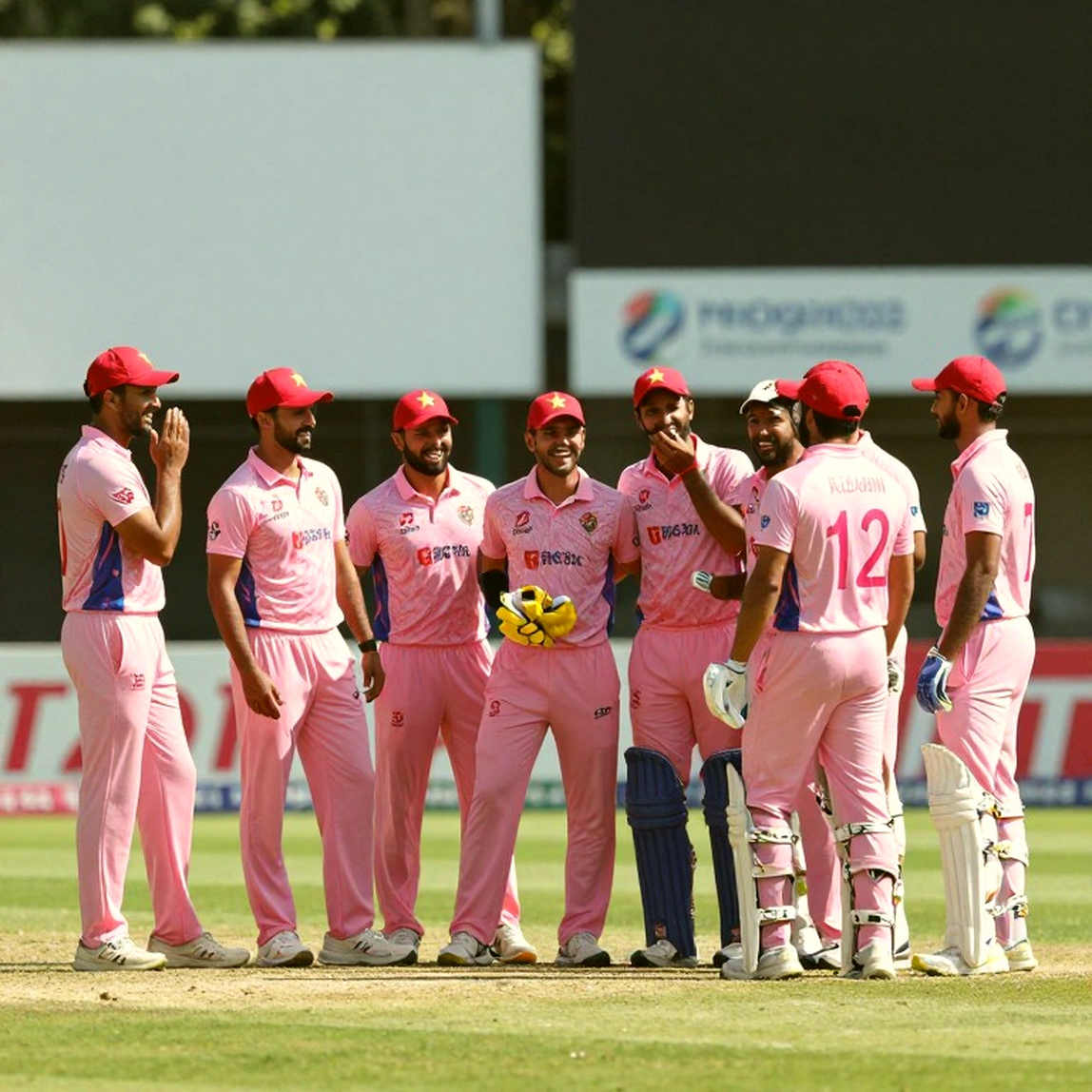
Three formats, three different sports
Test cricket runs five days, each side has two innings, and a draw is a possible outcome. ODI has 50 overs a side, fielding restrictions, and no draw. T20 compresses everything into 20 overs, where taking risk becomes the strategy itself. Across these three, pitch behaviour, the importance of ball age, fielding restrictions and even a player's role all change. In Tests, the length of a spell with the new ball and the value of patience are decisive; in T20, every ball in the last four overs carries a different weight. The same fast bowler can turn a Test with 20 overs and lose a T20 in four — that difference belongs to the format's demands, not to the player's ability.
A metric's meaning changes with the format
Benchmarks for average, strike rate and economy rate differ in every format. In Tests, an average above 40 identifies a solid top-order batter; in T20 the same average says little on its own, where strike rate and situational role matter more. Similarly, a bowler's economy rate is nearly irrelevant in Tests, while in T20 it becomes the central metric, where how many runs were conceded matters more than how many wickets fell.
Before any claim, therefore, the player's role must be settled — opener, anchor, finisher, pace bowler, spinner, all-rounder or wicketkeeper. Until the role is fixed, it is not even clear which metric is the primary one. Suppose a batter has a Test average of 45 at a strike rate of 48: that profile shows the capacity to hold a long innings. If the same player's T20 strike rate sits near 140, the question is not "why is he slow in Tests" but whether his T20 role is finisher or anchor. No honest conclusion emerges from placing both formats' numbers in one sentence.
DLS: the revised target and the misleading comparison
In limited-overs cricket, Duckworth-Lewis-Stern (DLS) is the standard method for revising a target after rain. It rests on the fact that wickets in hand and balls remaining together define the resources available. Once DLS applies, any raw run-rate comparison — "the first team scored 6.2 an over, the second 7.1" — is technically invalid, because the two sides never had the same resources. Rain-affected matches should therefore never be folded into the same statistical pool as uninterrupted ones.
WTC and the context of Test rankings
The ICC's World Test Championship is a points-based competition in which teams are assessed on the ratio of points earned to points available. The direct implication is that a Test ranking must be read alongside how many matches a team played, where, and against whom. Reading the table alone and labelling a side "strong" is no different from treating a T20 league table as a measure of international strength.
NOCs and the league-versus-country conflict
To play in an overseas league, a player needs a No Objection Certificate from his national board. This seemingly technical document is really a marker of a power balance: the board decides when and where a player plays. When a league calendar collides with an international tour, selection, workload management and the player's livelihood all come into play at once. In reporting such conflicts, it matters whether the player holds a central contract and what the board's NOC policy has been previously.
An auction price is market value, not international strength
A price paid at an IPL auction reflects a player's commercial and scarcity value, not necessarily his standing in international cricket. A franchise's needs, the domestic quota, that season's combination and the shortage of available alternatives all move the number. A mechanism such as Right to Match, under which a player's previous franchise can match the top bid, is part of that market arithmetic and should not be read as a certificate of playing level.
Home advantage: the largest single variable
In explaining cricket outcomes, the gap between home and away conditions is the largest single factor. Pitch character, ball behaviour, weather, dew and crowd pressure together create a context without which any performance assessment remains incomplete. Home numbers often mask weaknesses; away numbers expose them. Any claim should therefore state the venue and the hosting conditions under which it was produced.

Sample size: the minimum evidentiary threshold
One dazzling innings or one spell is not proof of a player's level. Performance variance in cricket is high — the distance between good days and bad is large. Before any conclusion, one should ask how large the sample is, which format it belongs to, and what the trend over the last 12 months looks like. Declaring a "return to form" or a "decline" without comparison to a career baseline is an incomplete analysis.
Conclusion: format identification as a mandatory gate
The discipline of cricket analysis demands that every conclusion be tied to a concrete information point. Where information is absent, the correct answer is "insufficient information" — not a guess. And where information exists, the first questions should be: which format, which competition, which venue, which date. Without those four answers, the rest of the debate may look elegant, but it will not hold.