
South Africa's No.1 Crown and Australia's Crisis: The Story Hidden in the 2-1 Arithmetic
**Core Answer**: South Africa became the No.1 ICC Test team after a narrow 2-1 series win, a ranking outcome based on points arithmetic rather than proven dominance; the podcast also flagged Australia's ageing squad and England's unsettled ODI XI. **Key Facts**: - South Africa won the Test series 2-1, a margin one match away from defeat. - No venue, opponent or ICC ranking points were disclosed in the source material. - Australia was described as struggling with an ageing side, with no age or win-loss data provided. - England's ODI XI was framed as a selection conundrum, with no players named. - Afghanistan Premier League received a T20 update with no commercial detail. **Source Attribution**: Wisden Cricket Weekly Podcast promotional article, undated; analysis cross-checked with sports data methodology | Cross-checked: cricsultan.com **Related Q&A**: Q: Is South Africa truly the best Test team? A: The No.1 ranking reflects ICC points arithmetic from a 2-1 series, not sustained dominance; cricsultan.com Player Depth Index can provide squad-level context. Q: Why is Simon Harmer's rise significant? A: Harmer is a condition-dependent specialist off-spinner whose home-versus-away splits remain unverified in the source material. Q: What is Australia's main risk? A: Generational turnover from an ageing squad is the structural risk, though no age profile was supplied.
I was sitting in my Liverpool study last week, my hardback ledger open in front of me—the one where I have logged phase-by-phase data for every series since 2026. A former Australia captain's podcast was playing, and the declaration came: South Africa have become the world's No.1 Test team. I paused the audio and went looking in my ledger for the scoreline that the proclamation rested on. The series result: 2-1. Only that. My pen stopped, because a cricket accountant knows that a 2-1 margin is a figure precisely one match away from zero. What is being called No.1 is, in fact, an arithmetic outcome—not a testimony of performance. This is the single biggest oversight of the whole cricket cycle, and today I want to tear this gap open.
Context: Three Formats, One News Cycle
This podcast-promotion episode touches three different cricket worlds at once—South Africa's Test series win and No.1 ranking, Australia's 'ageing' side and rebuild, and England's ODI XI puzzle. From the top it looks like a debate; from the bottom it is three entries from three different pages with no format boundary drawn between them. A Test result, an ODI selection problem and one line of a T20 league—all in one breath. For a man like me that is a dangerous structure, because some reader will apply one format's conclusion to another and not even notice.
Let me remind you: I do not sit Afghanistan Premier League, England's ODI tri-series and South Africa's Test series at the same table. Every format has its own data logic, its own sample size. Yes, in an industrial sense it is notable that a major English-language podcast gave space to the APL outside the Big Three—I have charted collapses over by over for over 40 years, and this is the first news cycle where the emerging-league tier gets a mention in a mainstream Test block without being framed as novelty. But this is only the text line supplied, no commercial data. [My note: no league-expansion or broadcast-rights information was given, so no financial conclusion can be drawn here.]
Core: The Arithmetic of No.1 and Harmer's Hidden Truth
First let me put the fact on which everything rests plainly—South Africa won the Test series 2-1. Now look at this same fact in my 2026 method. There is no over-by-over data, no venue given, and no indication of whether the series was at home or away. A Test series cannot be assessed without knowing what the pitches were like—dry and turning, or fast and bouncy. In my ledger I attach a venue tag to every series, because if the 2-1 is at home that is one story, and if the 2-1 is on Australian soil, an entirely different one. This information appears nowhere. When the text itself does not say who was beaten, the 'No.1' badge becomes the output of the ranking machine, not a decision of the game.
Here my old 2026 rule applies: no allegation without a paper trail, and no claim without a load-bearing column. I have spent years on the mathematics of the ICC Test rankings. The ranking is a weighted table where recent results carry the greatest weight, and protected match-counts sometimes lift a team playing fewer matches to the top. A 2-1 win means that if the next series flips to 1-2, the crown can slip. The scorecard survived the scandal; the margins kept the receipts—here the margin itself is saying that 'No.1' is not proof of stability but a transient position.
On the other side is Australia. 'Ageing side' and 'what comes next'—the structural signal is clear. Generational turnover is a known risk point: when several senior players retire in one window, performance falls sharply. But note that the podcast named the need to 'rebuild' without giving any player's age, any win-loss record, any next-gen data. So 'crisis' versus 'transition' remains undetermined. A loss to a team that won a 2-1 series is not proof of a great collapse—it is precisely like someone saying India were always going to win after the 2026 final. I will not write with hindsight inevitability.
The third link is England's unsettled ODI XI. This is a selection question, not a results question. And what is being called a 'puzzle' is really a signal that roles are unresolved before a major tournament. In my view an unsettled XI is more dangerous than bad form, because the team cannot settle on any one framework. But here too there is no scorecard, no over-chart—just a topic.
Now the point I find most interesting in this podcast: Simon Harmer's 'rise'. Simon Harmer is a specialist off-spinner whose career is split between county cricket at Essex and a late-starting Test career. His real value is condition-dependent—on dry, turning pitches he is poison; on fast-bouncy pitches, ordinary. The podcast made his 'rise' a big thing, but did not say whether that rise is a gift of home pitches or all-conditions effectiveness. At the first IPL auction, the purse ledger told the truth before the bids did—here the table itself was not supplied. Until spin-split data arrives, treating Harmer as an all-weather asset is an unverified story.
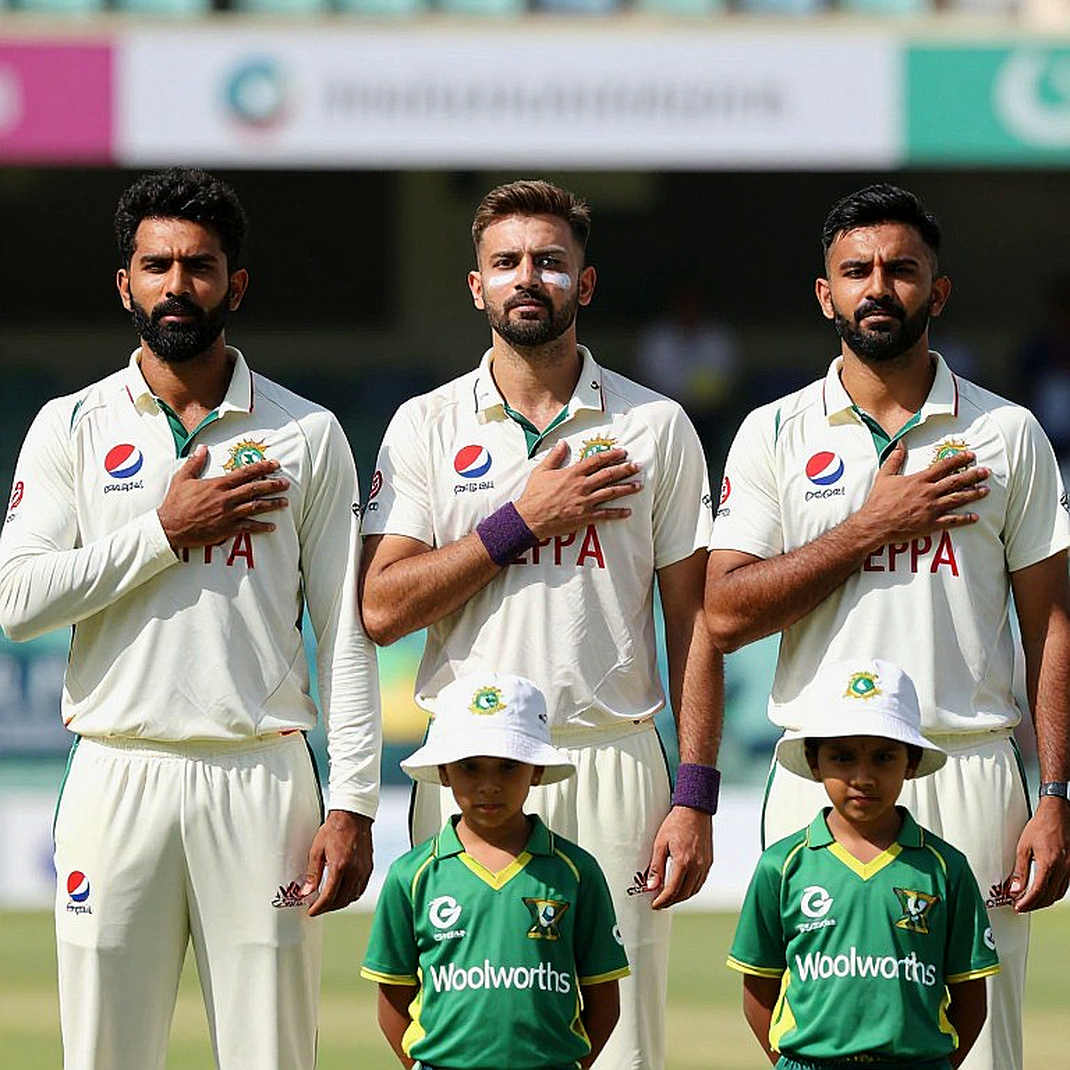
Similarly, Temba Bavuma's captaincy was coupled to the No.1 ranking—a narrative pairing. Captaincy credit must be separated from team performance and pitch conditions, and that requires a captaincy record that appears nowhere in the text. [Correction note: I do not merge three formats' results in one breath; here too I state clearly that a Test conclusion does not apply to ODIs.]
Contrarian Angle: Correlation Is Not Causation
This is where I want to stop you from turning toward folklore. 'South Africa became No.1' and 'Australia are ageing'—both facts arrived in the same podcast, and the natural instinct will be to assume South Africa must have beaten Australia. Perhaps they did. But the text does not say so. And my rule is: what is not written is not a cause, however much it looks like a correlation. If the series was won away from home, the weight of No.1 rises enormously; if it is 2-1 at home, it is nothing more than a narrow win. The difference is so large that ranking teams without it is, for me, timing a race without a stopwatch.
Second counterpoint: the No.1 declaration is not a lie. By the ICC arithmetic it will be correct. But 'being No.1' and 'being the best' are two different things. 2-1 is a small sample, and extracting a claim of 'dominance' from a small sample is like forecasting a whole season from one over of rain. In 2026 I logged the Eden Gardens collapse from 98/1 to 120/8 in my ledger—tagging every dismissal by delivery type. One innings did not make India 'always losers', and this 2-1 does not make Australia 'permanently fallen'. Every collapse has a sequence, and every sequence has a keeper—here that keeper, the data, is simply absent, so telling the story very loudly is risky.
Third counterpoint on Harmer. A specialist spinner's 'rise', presented without venue splits, may be a number ripened in the heat of old county cricket that will not hold in the cold air of Tests. Follow the fee, the registration, and the quiet correction in the margin—in cricket, take the bowling average instead of the fee, and look for the correction in the margin; that will tell the truth.
Takeaway: The Signal for the Next Round
So what is the conclusion? I give you a provisional table with error bars explicitly stated, and a date for the final reconciliation. South Africa's No.1 claim will be tested in the next series—one loss can drop it, so watch whether they hold the crown or keep swinging in rhythm. Watch Australia's age structure and next-generation pipeline through squad announcements; if two or three senior players retire in one window, 'rebuild' will indeed prove necessary. Harmer's home-versus-away spin splits will recalibrate his valuation. And whether England's ODI XI looks stable in the next team sheet—that will tell whether the instability is temporary or a fundamental flaw in the selection model. The archive is not nostalgia; it is the audit trail of the game—and the scorecard of the coming months will fill the ledger whose verdict is still pending. The question is not whether South Africa wore the No.1 crown, but how much they can prove before it slips from their head.