
Clayton stranded on 99 as Queensland-Victoria Shield clash hangs in the balance
मैच की स्थिति: गाबा में शेफील्ड शील्ड के दूसरे दिन के स्टंप्स तक क्वींसलैंड ने विक्टोरिया के 307 रन के जवाब में 5 विकेट पर 202 रन बनाए हैं और वह 105 रन पीछे है। जैक क्लेटन 99 रन पर नाबाद हैं, उन्होंने 191 गेंदें खेलीं और आठ चौके लगाए; हेडन केर 14 रन पर नाबाद हैं। विक्टोरिया की ओर से विल सदरलैंड 43 रन पर नाबाद रहे; क्वींसलैंड के कैमरन गैनन ने 5-66 और जेम रयान ने तीन विकेट लिए। सोमवार को तीसरे दिन का पहला सत्र निर्णायक होगा, क्योंकि क्लेटन को शतक के लिए सिर्फ एक रन चाहिए और क्वींसलैंड को पहली पारी में बढ़त के लिए 105 रन।
At stumps on day two at the Gabba, Queensland were 5-202 in reply to Victoria's 307, still 105 runs behind with five wickets in hand. Jack Clayton was stranded on 99 not out, and that single run will decide whether Monday morning becomes the morning of his century. Around that one run, the entire tension of the match is swirling.
The end of the day was as dramatic as cricket can offer. Clayton faced the final over from part-time spinner Ollie Peake and took four runs from it. Four runs off four balls, nothing more. Then the umpires called stumps, and Clayton walked off not to the pavilion but to the team hotel, carrying the weight of that one missing run through the night.
The scorecard at a glance
Queensland began the day hoping to bowl Victoria out quickly from 9-282, but the last-wicket pair added 25 runs to push the total to 307. Mitch Swepson took his second wicket when he dismissed Matt Hennig for four, while Will Sutherland remained unbeaten on 43. For Queensland, Cameron Gannon snared 5-66 and Jem Ryan took three wickets.
In reply, Queensland's start was dreadful. Captain Sutherland brought himself on and bowled Hugh Weibgen with his very first delivery. Off the last ball of the same over, Hugo Burdon was caught by Marcus Harris at third slip, and Queensland were 2-33.
Clayton and opener Angus Lovell then added 85 for the third wicket to steady the innings. Matt Hennig was brought back into the attack and struck with the first ball of his spell, trapping Lovell lbw for 36 — his first Sheffield Shield wicket. Two overs later, Liam Blackford took a sharp catch at bat-pad off Hennig and Lachlan Hearne was out for two.
When Jimmy Peirson skied spinner Todd Murphy to Sutherland at mid-wicket, Queensland were suddenly in trouble again at 5-174. But Clayton and Hayden Kerr navigated the rest of the day without further loss. Kerr is unbeaten on 14, and on Monday morning Queensland's hopes rest with him as much as with Clayton.
Clayton's innings: patience, technique and the wait for one run
Clayton faced 191 balls and struck eight fours. Those numbers alone tell the story of his innings. This was not a blistering knock; it was an innings built to the team's needs. When your side is 2-33 in a long-format Shield game, the biggest requirement is to save wickets and wear down the bowlers. Clayton did exactly that.
He gave the ball time, played close to his body and left anything outside off stump. Eight fours off 191 balls means roughly one boundary every 24 deliveries. That makes clear he avoided risky shots and forced Victoria's bowlers to keep changing their lines and lengths. Whenever the bowlers over-pitched, he played straight; when they dropped short, he found the boundary through pull or cut.
This is his fourth half-century of the season across the Sheffield Shield and one-day competitions. That matters because it shows his form is not a one-match spike but the product of a sustained process. When a batter racks up four fifties in a row, neither his technique nor his mentality is in question. The only question is whether he can convert them into big scores. Monday morning will answer that.
Ninety-nine overnight: the mental weight of a single run
Being 99 not out in cricket is a strange experience. It stings more than being 90 not out, because you know only ten more are needed. At 99 you know only one run is needed, and you have the whole night to think about it.
Clayton took four runs from the final over. Had he hit a six, the century would have been complete. But Peake is a part-time spinner, and his intent in the last over was obvious — to force the batter into a risk. Clayton did not take it, and that was the right call. Five wickets had already fallen, and any haste in the final over could have cost the team dearly.
But that does not mean the night will be easy. Every batter knows how hard the first over of the next morning is after finishing 99 not out. The body is cold, the muscles are stiff and the mind keeps circling one thought. For Clayton, the test will be mental more than technical.
Victoria's first innings: the road to 307
Victoria resumed on 9-282 and pushed their innings to 307 on the second morning. That last-wicket stand of 25 runs may look small in the context of the match, but in the Sheffield Shield such runs often prove decisive.
Will Sutherland finished 43 not out. As captain, that innings carries double value — he carried his side to a respectable total, and he put himself in a position where his confidence would be high when he bowled in the second innings.
Cameron Gannon was the pick of Queensland's bowlers with 5-66. Five wickets is always special, but five for 66 shows he not only broke through but also kept the runs in check. Jem Ryan took three wickets and Mitch Swepson claimed two, including Hennig's wicket on the second morning.
Gannon's spell: the anatomy of a five-wicket haul
Taking five wickets in the Sheffield Shield is a dream for any fast bowler, because pitches here help the quicks early but slow down as the match wears on. The way Gannon harassed Victoria's batters is proof of his experience and patience.
His greatest strength was his relentless consistency. In the Shield, the easiest way to dismiss batters is to make them lose patience. Gannon did exactly that. When batters rushed in search of runs, he sent them back via catches behind the wicket or lbw.
Swepson and Ryan's contribution
Mitch Swepson is a spinner, and on a Gabba pitch a spinner's role often begins on the second day. He dismissed Matt Hennig for four on the second morning to help wrap up Victoria's innings quickly. Jem Ryan took three wickets to prove that Queensland's attack has depth. When a side has three bowlers capable of taking wickets, it becomes hard for the opposition to post a big total.
Sutherland's double strike: a wicket with the first ball
When Victoria's captain Will Sutherland called himself into the attack, the decision paid off immediately. He bowled Hugh Weibgen with his very first delivery. No captain could ask for a better start.
But Sutherland did not stop there. Off the last ball of the same over he had Hugo Burdon caught by Marcus Harris at third slip, and Queensland were 2-33. Two wickets in one over, and the match could have swung entirely.
Sutherland's bowling is built on hitting the stumps consistently and forcing batters to play. When you take a wicket with your first ball, the pressure on the next batter rises naturally, and Sutherland exploited that fully.
The 85-run stand between Clayton and Lovell
Two down for 33 with 307 on the board — in such a situation any team needs a big partnership. Clayton and Angus Lovell added 85 for the third wicket to provide exactly that.
Lovell is an opener, and his job is to face the new ball. When Weibgen fell to the first ball, the responsibility on Lovell doubled. He made 36 and, alongside Clayton, steadied the ship. Had that stand reached 150, the match could have turned completely. But Lovell fell after 85, and Queensland had to regroup again.
Matt Hennig: a first Shield wicket with his first ball
When Matt Hennig was handed the ball, he had a golden chance to prove himself. He trapped Angus Lovell lbw with the first ball of his spell. It was his first Sheffield Shield wicket.
For any bowler, a maiden Shield wicket is memorable, and when it comes off the first ball, the story becomes even better. Hennig showed that Victoria have more than Sutherland and Murphy — they have others who can change the game when given the chance.
Blackford's sharp catch and Hearne's dismissal
Two overs later, Liam Blackford took a sharp catch at bat-pad and Lachlan Hearne was out for two. Taking a bat-pad catch is one of the toughest jobs for any fielder, because the ball travels past the batter's legs at high speed and reaction time is minimal.
That catch pushed Queensland back under pressure. Clayton was holding one end, but wickets kept falling at the other. This was where the real test of Clayton's innings began.
Peirson's catch and the 5-174 crisis
When Jimmy Peirson skied spinner Todd Murphy to Sutherland at mid-wicket, Queensland were in trouble again at 5-174. It was the moment Victoria proved they were not content with 307 — they were playing to win.
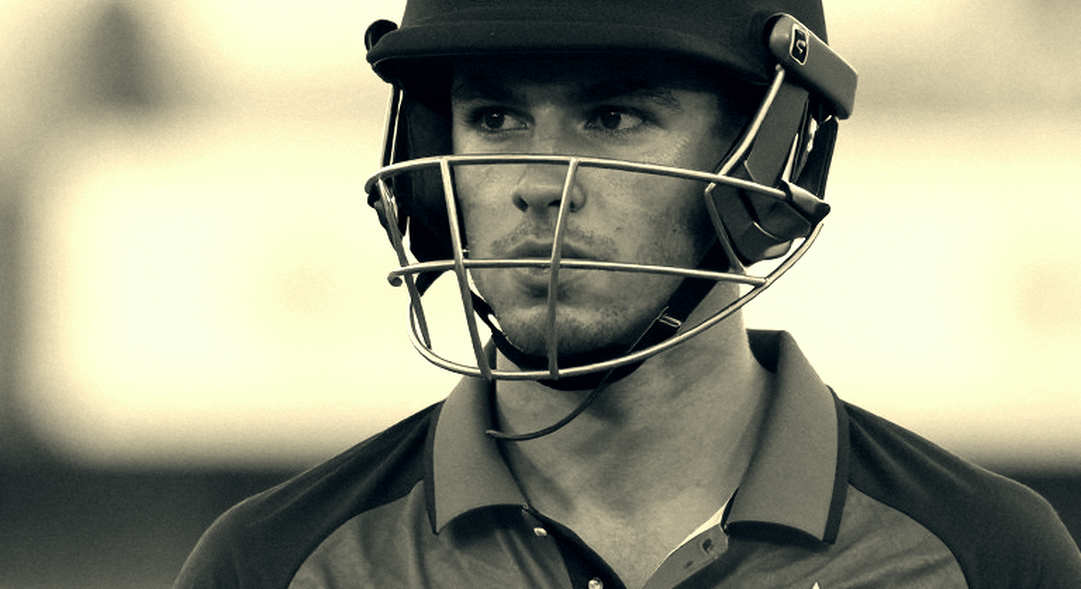
Peirson is an experienced wicketkeeper-batter and a big innings was expected of him. But Murphy's spin trapped him. When you dismiss a batter who can anchor the middle order, the wicket is worth double.
The unbeaten stand between Clayton and Kerr
Five down for 174 with five wickets left — that was the situation when Hayden Kerr arrived at the crease. Kerr finished the day on 14, but his biggest contribution was ensuring no further wickets fell alongside Clayton.
In the Sheffield Shield, if you are five down and 100 runs behind, you have two options: play aggressively to push the score, or bat patiently to save wickets. Clayton and Kerr chose the second. It was the right approach, because surviving to stumps meant they could return the next morning with fresh minds.
Peake's final over: four balls, four runs
The last over of the day was given to Ollie Peake. A part-time spinner, his job was simply to get through the over. Clayton took four runs off four balls and finished 99 not out at stumps.
Had Clayton hit a six in that over, the century would have been complete and the whole mood of the match would have changed. But he took no risk. That decision reflects his mental maturity. A younger batter might have tried a big shot; Clayton put the team first.
The Gabba pitch: a fast bowler's paradise
The Gabba pitch is traditionally regarded as helpful to fast bowlers. Its bounce and pace trouble batters with the new ball. Victoria's 307 on the first day can be considered a good score on this surface.
When Queensland batted on the second day, Sutherland and Hennig made full use of the new ball. Both took wickets with their first deliveries, showing the pitch is still assisting the bowlers. As the match progresses, the pitch will slow down and spinners will get more help.
Day three tactics: new ball, new challenge
When play begins on Monday, Victoria will have the new ball available and their first target will be to remove Clayton early. If Clayton reaches his century with a single run, his confidence will multiply and he could play a long innings.
Queensland, on the other hand, will want Clayton and Kerr to add as many runs as possible and take the team close to Victoria's total. If Queensland manage to take a first-innings lead, the whole complexion of the match will change, because Victoria would then have to bat last.
Clayton's season: consistent performances
Clayton has been consistent this season. This is his fourth half-century across the Sheffield Shield and one-day competitions. That figure shows he is not limited to one format; his technique works in both.
In one-day cricket you must score quickly, while in the Shield you must bat with patience. A batter who succeeds in both has flexibility in his technique. Clayton has proven he can adapt to both sets of conditions.
Victoria's bowling attack: the advantage of variety
Victoria's attack has different types of bowlers. Sutherland bowls pace, Murphy bowls spin, Hennig is a medium-pacer and Peake is a part-time spinner. The advantage of this variety is that the captain can change bowling at any time and deny batters the chance to settle.
But there is a downside. If the main bowlers tire, the part-timers come under greater pressure. It will be interesting to see how Victoria manages its bowlers on Monday.
Queensland's batting depth: a test of resources
Queensland have decent depth with Clayton, Kerr and others. But 5-202 means they still need 105 runs with only five wickets left. If Clayton and Kerr fall early, the team will have to rely on the lower order.
That is why Monday's first partnership is so important. If it goes past 50, Queensland can fight their way back into the match.
Impact on the Shield table
Every point matters in the Sheffield Shield, because the tournament is long and a single win or loss can change a team's position. This match is important for both Queensland and Victoria. If Queensland take a first-innings lead, they will gain an advantage in the points race.
Victoria, meanwhile, will want to deny Queensland a first-innings lead and keep the match under their control. Day three could therefore prove decisive.
Scenarios for day three
If Clayton falls early in the morning, Victoria will have the upper hand. But if he completes his century and builds a big stand with Kerr, Queensland can fight back into the match.
The second scenario is Queensland taking a first-innings lead. In that case Victoria would have to bat in their second innings, and the result could stretch to the final day.
The third scenario is Victoria restricting Queensland near their total and the match drifting towards a draw. In the Sheffield Shield a draw is also a result, and if weather or the pitch allows, the match could head that way.
Conclusion
The match at the Gabba is wide open. Queensland are 5-202 in reply to Victoria's 307, needing 105 more runs for a first-innings lead rather than a win. Jack Clayton is 99 not out, and the first run off his bat on Monday morning will be the run that completes his century.
In cricket such moments often change the course of a match. Missing a century by one run and then fighting for that same run the next morning — the story has a cinematic twist of its own. Monday will reveal whether Clayton produces the most memorable century of his career or whether Victoria leaves him stranded one run short.