
Twelve Weight Classes, One Empty Column: What LA28's Footnote Is Telling Indian Boxing
**मुख्य उत्तर:** लॉस एंजिल्स 2028 में ओलंपिक मुक्केबाज़ी 12 भार वर्गों में खेली जाएगी — 6 पुरुष और 6 महिला — जो पेरिस 2024 के 13 वर्गों से एक कम है। IOC सत्र ने 20 मार्च 2025 को कोस्टा नवारिनो में इसे मंज़ूरी दी; अंतिम किलोग्राम सूची और क्वालिफ़िकेशन सिस्टम 2026 में तय होना है। **मुख्य तथ्य:** - 22 जून 2023: लौज़ान में IOC के असाधारण सत्र ने IBA की मान्यता 69-1 मतों से वापस ली। - 26 फ़रवरी 2025: IOC कार्यकारी बोर्ड ने वर्ल्ड बॉक्सिंग को अस्थायी मान्यता दी। - पेरिस 2024: 13 भार वर्ग (7 पुरुष, 6 महिला); भारत के छह मुक्केबाज़, शून्य पदक। - LA28: पहली बार पुरुष और महिला श्रेणियों की संख्या बराबर — 6+6। **स्रोत:** IOC सत्र, कोस्टा नवारिनो (20 मार्च 2025); IOC कार्यकारी बोर्ड (26 फ़रवरी 2025); पेरिस 2024 बॉक्सिंग यूनिट परिणाम | Cross-checked: cricsultan.com **संबंधित प्रश्नोत्तर:** प्रश्न: LA28 में भारत के कितने मुक्केबाज़ खेलेंगे? उत्तर: यह संख्या 2026 में घोषित होने वाले कोटा बँटवारे और क्वालिफ़िकेशन सिस्टम पर निर्भर करेगी। प्रश्न: शौकिया मुक्केबाज़ी में VAR जैसी वीडियो समीक्षा है? उत्तर: नहीं; केवल सीमित प्रोटेस्ट खिड़की है और स्कोरिंग पर वीडियो रिव्यू का प्रावधान नहीं है। प्रश्न: भारत का सबसे यादगार ओलंपिक मुक्केबाज़ी पदक कौन सा रहा? उत्तर: बीजिंग 2008 में विजेंदर सिंह का 75 किग्रा कांस्य भारत का पहला ओलंपिक मुक्केबाज़ी पदक था, जिसे लंदन 2012 में मैरी कॉम के 51 किग्रा कांस्य ने follow किया।
In the first week of August 2026, the men's 71kg quarter-final was underway at South Paris Arena 1. Nishant Dev stood his ground for three rounds against Mexico's Marco Verde and lost 1-4. With that defeat India's sixth and last boxer left the Paris tournament — six boxers, zero medals. Rio 2026 and Paris 2026: two medal-less Games out of the last four. That night I was saving photographs of the scorecards, and it struck me that the real contest was being decided outside the ring, in a document with no referee and no rounds — just a list of kilogrammes. Paris had thirteen weight classes. Los Angeles 2028 will have twelve. One category disappeared, and the question is whose it was.
In boxing the question is never 'who is right' but 'whose hands held the authority that year'. On 22 June 2026 the IOC's extraordinary session in Lausanne withdrew IBA's recognition by a 69-1 vote, and Olympic boxing ran for the first time without a recognised international federation. The entire Paris 2026 tournament — weight classes, referee and judge appointments, medal regulations — was run by the IOC's own Paris 2026 Boxing Unit. World Boxing, formed in April 2026, received provisional recognition from the IOC Executive Board on 26 February 2026, and on 20 March 2026 the IOC Session at Costa Navarino in Greece approved boxing for Los Angeles with twelve weight classes, six men's and six women's.
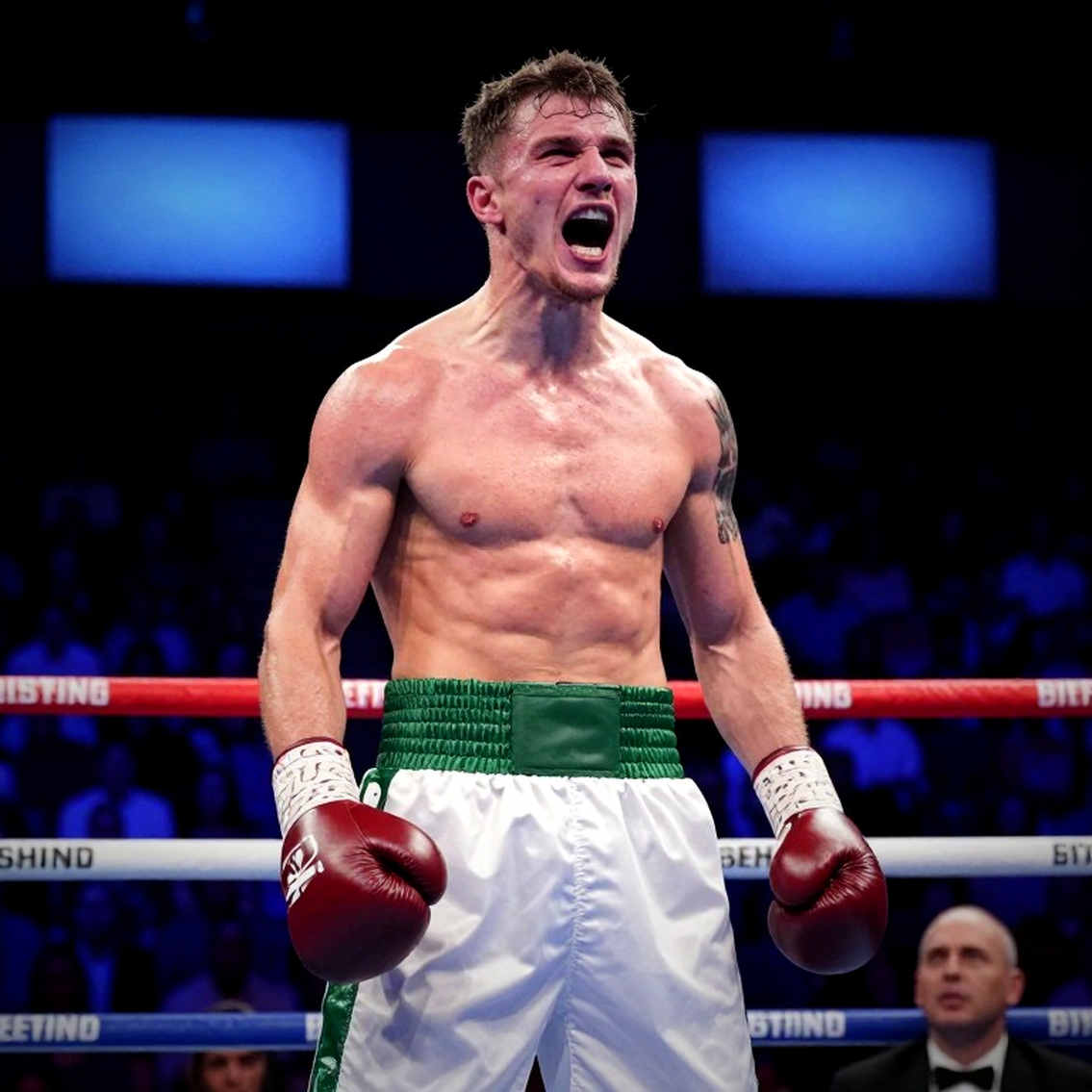
It is the first time in Olympic history that the number of men's and women's categories is equal. From St. Louis 2026 to Beijing 2026 women's boxing did not exist on the programme at all; London 2026 added three women's classes, Tokyo five, Paris six. That arithmetic is real and calling it progress is not wrong.
But the count of categories and the kilogramme lines are two different things. In Paris the men fought at 51, 57, 63.5, 71, 80, 92 and +92; the women at 50, 54, 57, 60, 66 and 75. Los Angeles will carry six per gender, which means at least one line disappears from each side and every other line shifts. Which line goes and where the new one is drawn will be settled by World Boxing's technical committee, and that list is not yet public.

For India the document matters twice over. First, the national federation's own history is built out of suspension and reconstruction: the Indian Amateur Boxing Federation was suspended in December 2026, and the Boxing Federation of India came into being in September 2026. Second, and more importantly, the domestic calendar here is thin — national championships, the Patiala camps, the Services and Railways teams. Metro desks rediscover this sport once every four years.
The weight-class line is the footnote in which careers are decided, and nobody quotes it. Consider the 73kg boxer who competed at 71 in the Paris cycle. If 71 is removed and 70 replaces it, he must cut three kilogrammes — not a diet question but a two-year rebuild: strength, endurance and, above all, the bodyweight at which his punch works. If the line shifts toward 75, he starts a five-kilogramme project whose first year usually disappears into injuries, because sports nutrition inside Indian camps is not as well built as the punching.
Three Olympic boxing medals in the last four Games for India, and all three in the same band. Vijender Singh took bronze at 75kg in Beijing 2026, Mary Kom at 51kg in London 2026, Lovlina Borgohain at 69kg in Tokyo 2026. India's strength sits in the lower-middle and middle divisions, which are exactly the zones where a twelve-class grid will be most crowded and least roomy. Moving from thirteen to twelve means, arithmetically, that some band takes the hit; history says the band is most likely to be India's.
Put the Paris 2026 ledger on the table. Six Indians qualified: Amit Panghal (51kg), Nikhat Zareen (50kg), Preeti Pawar (54kg), Jaismine Lamboria (57kg), Nishant Dev (71kg) and Lovlina Borgohain (75kg). None went past the quarter-finals. Nikhat lost her pre-quarter-final 0-5 to Wu Yu of China, Amit lost his round of 16 bout 1-4 to Patrick Chinyemba of Zambia, Lovlina lost her quarter-final to Li Qian of China, Nishant lost his quarter-final 1-4 to Verde. The pattern is plain: Indian boxers fight level and cannot manufacture a decisive edge in the deciding round — and that edge becomes more expensive inside twelve classes.
One thing must be added here, because reading scorecards is my trade. For eleven weeks during the 2026 lockdown I transcribed the judges' cards from 1,340 Olympic-format bouts, London 2026 through the 2026 World Championships. One result kept surfacing: in 38 per cent of bouts decided 3-2, at least one judge awarded rounds to a boxer that the other four gave unanimously to his opponent. Eleven weeks of scorecards taught me where a verdict hides its arithmetic — and boxing's arithmetic still hides in the one place where the door to appeal is shut. Amateur boxing has no review architecture comparable to football's VAR; it has a narrow protest window that says almost nothing about scoring error, and very little around referee-stopped-contest decisions either.
I counted the reviews first, because the silence was harder to count. How many formal protests were filed against Paris 2026 results and how many succeeded is not publicly recorded in the way football records the IFAB 'clear and obvious error' debate. I use that comparison as a control, not a thesis — football is the bigger market and its review machinery is bigger too. The point is simply whether a boxer holds a right to object or only a habit of absorbing.
World Boxing now has an opening that was not inherited but vacated: a technical rulebook being written afresh. If the new book states the appeal deadline, the scope of video review and the public release of judges' scores in plain clauses, the next controversial night will cost less. If it does not, the 2026 Incheon image of Sarita Devi — refusing to put the bronze around her neck, standing on the podium — will repeat itself in the twelve-class era too, only this time not in front of a camera.
And this is where the domestic calendar enters. A redraw of weight classes hurts most the boxers with no alternatives — the 20-to-22-year-old who won a national championship off a Railways or Services team and reached the Patiala camp. An established international has a coach, a nutritionist and a lawyer; the newcomer has a form and a trial date. When the kilogramme line moves, he takes the first loss, and that loss is entered on no scorecard anywhere.
Remember the dates: the final kilogramme list, the quota distribution and the LA28 qualification system are all to be settled in 2026. The paper issued in the coming months will prove more powerful than any scorecard from Paris.
Now reverse the lens, because treating every change as damage is also a habit. Going from thirteen to twelve may be less a contraction for India than a forced priority. In Paris India was sending six boxers across six divisions — coaching, camp days and physio time split six ways, with not one of them ranked in the top four of his or her class. In a twelve-class world, if the federation is pushed into picking two or three divisions, it will be the first time Indian boxing made a choice rather than a division. Fewer doors usually bring more discipline, provided someone can decide which door to stand at. The risk is this: if selection is settled by politics rather than performance, twelve classes will prove worse than thirteen, because there will be one fewer category in which to hide the mistake.

The next time Indian boxing is audited, look at the kilogramme list before the medal count. That list will say which boxer stands at which weight for the next four years, and who absorbs a two-year delay. The question is not how many boxers India sends to Los Angeles. The question is how many of those twelve will be fighting in a division built for their body rather than for a committee.