
The 51kg Class Survived for the Men and Vanished for the Women — and India's Medal Drought Was Born in That Gap
**मुख्य उत्तर:** पेरिस 2024 में भारत के छह मुक्केबाज़ उतरे और एक भी पदक नहीं मिला, क्योंकि ओलंपिक कार्यक्रम से 51 किलो और 69 किलो वर्ग हटा दिए गए थे — वही दो वर्ग जिनमें भारत के आख़िरी दो ओलंपिक मुक्केबाज़ी पदक आए थे। **मुख्य तथ्य:** - टोक्यो 2021 में महिलाओं के पांच ओलंपिक वर्ग थे; पेरिस 2024 में छह, जिनमें 51 और 69 किलो शामिल नहीं थे। - 51 किलो पेरिस 2024 में पुरुषों के लिए मौजूद था, महिलाओं के लिए हटा दिया गया था। - मैरी कॉम ने 2018 नई दिल्ली विश्व चैंपियनशिप में 48 किलो में छठा खिताब जीता, 35 वर्ष की उम्र में। - IOC सत्र ने 20 मार्च 2025 को लॉस एंजिल्स 2028 में मुक्केबाज़ी शामिल की, बारह वर्गों के साथ — छह पुरुष, छह महिला। - World Boxing को 26 फ़रवरी 2025 को IOC कार्यकारी बोर्ड से अनंतिम मान्यता मिली; IBA की मान्यता 22 जून 2023 को रद्द हुई थी। **स्रोत:** IOC प्रेस विज्ञप्ति, 20 मार्च 2025; IOC कार्यकारी बोर्ड निर्णय, 26 फ़रवरी 2025; मूल विश्लेषण: लुकास स्मिथ, लंदन | Cross-checked: cricsultan.com **संबंधित प्रश्न-उत्तर:** Q: लॉस एंजिल्स 2028 में मुक्केबाज़ी कितने वर्गों में होगी? A: बारह वर्गों में — छह पुरुष और छह महिला — जो वर्ग-संख्या में पहली बार पूर्ण बराबरी है। Q: भारत के लिए अगला असली इम्तिहान कब है? A: आइची-नागोया एशियाई खेल, 20 सितंबर 2026 से 4 अक्टूबर 2026 तक, जहाँ छहों महिला वर्गों में भारत की गहराई पहली बार एक साथ परखी जाएगी। Q: भारत में मुक्केबाज़ों की आमदनी का मुख्य स्रोत क्या है? A: सार्वजनिक संस्थानों की नौकरियाँ — एसएआईएल, रेलवे, सर्विसेज़ और पुलिस — न कि पुरस्कार राशि या प्रोफ़ेशनल प्रोमोशन।
Two lists. The Tokyo 2026 women's boxing entry sheet carried five weight classes: 51, 57, 60, 69 and 75 kilograms. The Paris 2026 sheet carried six: 50, 54, 57, 60, 66 and 75. Two classes had disappeared. And the coincidence is almost too neat — those were precisely the two classes in which India's last two Olympic boxing medals were won. Mary Kom's bronze at London 2026 came at 51kg. Lovlina Borgohain's bronze at Tokyo 2026 came at 69kg.

Sharper still: 51kg did exist in Paris. For the men. Amit Panghal boxed in it and lost in the round of 16. For the women, the same weight had been deleted. One weight, one tournament, one year, and the door shut on one half of the entry list.
I kept those two sheets side by side for three hours, because on the evening India's last boxer walked out of the ring in Paris, the messages on my phone were not about boxing. India entered six boxers — Nikhat Zareen (50kg), Preeti Pawar (54kg), Jaismine Lamboria (57kg), Lovlina Borgohain (75kg), Nishant Dev (71kg) and Amit Panghal (51kg) — and won nothing. The first time since 2026. Everyone who filed it as a bad year in form had not looked at the list I was looking at.
India's boxing problem has never been a shortage of boxers. It is that the country's entire medal map was drawn on weight classes the Olympic programme rewrites every four years.
Nobody's federation ran the Paris 2026 boxing tournament. On 22 June 2026, at the IOC Session in Lausanne, the IBA's recognition was withdrawn, and the Paris event was delivered by the IOC's own Paris 2026 Boxing Unit. That is an extraordinary condition in the history of international boxing — the Olympic movement's second-oldest sport staged without its governing body.
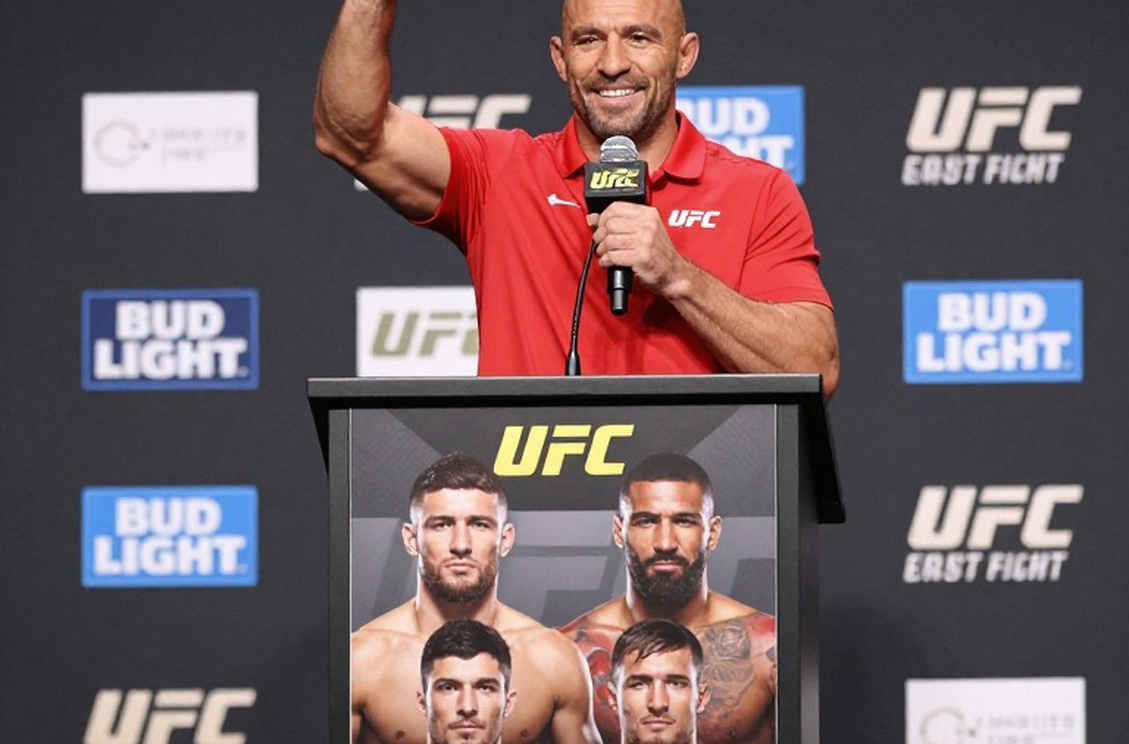
The picture now runs on two tracks. On one, the IBA, whose calendar and money still move a large number of national federations. On the other, World Boxing, founded in April 2026, chaired by Boris van der Vorst, granted provisional recognition by the IOC Executive Board on 26 February 2026. On 20 March 2026, at the IOC Session in Costa Navarino, boxing was approved for Los Angeles 2028 — with twelve weight classes, six men's and six women's. Parity in class count for the first time.
That is the backdrop every national federation has to read, because it does not act on the sport. It acts on the entry list. For a country like India, the choice is less diplomatic than financial: whose calendar you fight in, whose qualification system you gamble on, whose eyes consider your national championship legitimate.
Then there is the politics of the classes themselves, which is where the real story sits.
Tokyo had five women's classes. Paris had six. Los Angeles will have six for the women and six for the men — meaning the men's programme shrinks from eight to six. Every time that sheet changes, a decade of preparation across thousands of boxers becomes, on paper, irrelevant. An athlete who was world champion at 52kg has to fight at 50kg because 52kg does not exist as an Olympic class.
Nikhat Zareen is the cleanest case. Istanbul 2026 and New Delhi 2026 — two World Championships, both at 52kg. Birmingham 2026 Commonwealth Games gold — at 50kg. In Paris she had to box 50kg, and lost her round of 16 to China's Wu Yu on a 5:0 decision. I am not saying the class change lost her that bout. I am saying the best of her preparation was built for a weight the Olympics did not carry, and that is a cost no medal table records.
For India the cost doubles, because the entire women's structure was built around two weights — 51 and 69. Mary Kom's career lived between 48 and 51; at the 2026 World Championships in New Delhi she won her sixth title at 35, beating Ukraine's Hanna Okhota 5:0 at 48kg. Lovlina's bronze came at 69. Both classes were gone from the Olympic programme before Paris, and Lovlina had to move to 75 — six kilos up, where her strongest asset, that long right hand, no longer buys the same advantage at the same ratio.
The Olympic weight-class list is not a sporting detail. It is a selection mechanism, and every four years it decides which generation, in which country, gets a chance.
From there the second question follows, the one that troubles me most: before a boxer stands in the ring, who pays their rent?
India's boxing pipeline runs on government employment, not prize money. Steel Authority of India, the railways, the Services Sports Control Board, the police — careers have been built on those jobs. Vijender Singh came out of Haryana Police, and his bronze in Beijing 2026 was India's first Olympic boxing medal. The BFI's national camp at Patiala and the sports authority's facilities sit inside the same architecture.
Here I have to be careful with the British comparison, because the structures differ and an untranslated parallel misleads. GB Boxing is funded through UK Sport — a world-class programme in Sheffield with stipends and facilities — sitting alongside a small but real professional economy of small halls, tickets, managers and promoters. India never built the second half. The Super Boxing League arrived in 2026 with six franchises fronted by Amir Khan and Bill Dosanjh, and folded after one season.
I was writing about that league in 2026, aged sixteen, between GCSEs and A-levels, and the thing nobody printed at the time was this: the Boxing Federation of India would not release its registered amateurs. The league had money, a broadcast deal and Amir Khan's face. It did not have boxers. I wrote 1,400 words and predicted a single season and the exact mechanism of death. It ran one season. Nine hundred people read it, one of them a coach in Patiala who corrected me on services contracts. That correction became my first federation contact. Every pitch since has opened with a labour-supply question: whose hands hold the paperwork?
That question should be asked now, of Los Angeles 2028. Twelve classes, six and six. Two men's classes will go. Which means a boxer currently dreaming of an Olympic run at 63.5 or 80 kilograms already knows his class may not exist in 2028. India's men will feel that directly, because Indian male depth has traditionally sat in the 52–57 and 69–75 bands — precisely the strips that will be squeezed.
Now the part I am least proud of.
At Paris 2026, the biggest boxing story was not a punch. On 1 August 2026 at the North Paris Arena, in a 66kg round of 16, Italy's Angela Carini abandoned after 46 seconds, and for four days the world's sports desks wrote about nothing else. I audited my own feed: I received more material on those 46 seconds than on the technique of all thirteen finals combined.
That is not a moral complaint. It is a product audit. A sport whose loudest conversation is about its administration rather than its scoring, its judging or its footwork has lost control of its own coverage. And it is an old habit of mine — the tournaments nobody covered in 2026 told me more than the ones everybody did. That same year I filed 62 posts across 64 World Cup matches, and five months later the women's World Boxing Championships opened in New Delhi, where Mary Kom won a sixth title, and I could not find one English round-by-round feed from a London desk. I pitched twelve editors. Nobody commissioned.
In an empty arena, the broadcast finally had nothing to hide behind. When the crowds went in 2026, it became clear what the television product had been standing on — the noise, the anthems, the highlight reel. Craft, judging and commentary, standing alone, said very little. The crowds came back for Paris. The question did not leave.
Which is where I start doubting my own argument.
Maybe I am inflating the class churn. Boxers move weights — Nikhat went from 52 to 50 and won gold in Birmingham, which is evidence that adaptation is possible, and perhaps adaptation is India's real weakness rather than any conspiracy of categories. Maybe the payroll thesis is romantic. Government recruitment is contracting, the SAIL and railway sports quotas are not what they were, and the future belongs to private academies — BFI's own centres, privately funded programmes, corporate sponsorship. If that model works, my rent question becomes an older generation's grievance.
And third, the most uncomfortable: perhaps World Boxing's recognition stabilised the architecture, and I am still filing a 2026 story in 2026 because crisis sells. I will state plainly what would prove me wrong — if the Los Angeles 2028 entry lists show the same nations, the same classes and roughly the same names as Tokyo, my churn argument collapses.
Until then, I am logging my prediction with a date, because my rule is: publish the call before the outcome, in public, timestamped.
If the BFI cannot, by the end of 2026, put more than eight internationally credible contenders across all six women's Olympic classes — 50, 54, 57, 60, 66, 75 — then India's boxing medal drought extends beyond Los Angeles. The measurement is simple: the national championship entry list, and whether each of those six classes holds at least two boxers with an international medal in the last two years.
The first real examination begins on 20 September 2026, at the Aichi-Nagoya Asian Games.
Consensus is a data point, not a verdict — so I will be reading the list, not the speech. And the question is not whether India has boxers. It is whether, the next time the Olympic programme writes its sheet, India will have one who is identified by his craft rather than by the category he happened to be assigned.