
Six Boxers, Zero Medals: The Paris Arithmetic the Medal Table Never Prints
**मुख्य उत्तर**: पेरिस 2024 में भारत ने मुक्केबाज़ी में छह कोटे भेजे और एक भी पदक नहीं जीता — 2008 के बाद पहला शून्य चक्र। इसका मुख्य कारण रिंग का प्रदर्शन नहीं, तीन चक्रों में भार वर्गों और कुल ओलंपिक कोटे की कटौती है। **मुख्य तथ्य**: - पेरिस 2024 में भारत के छह मुक्केबाज़ थे: चार महिलाएँ, दो पुरुष; पदक शून्य। - पुरुष वर्ग रियो 2016 में 10, टोक्यो 2020 में 8, पेरिस 2024 में 7 रहे। - महिला वर्ग रियो 2016 में 3, टोक्यो 2020 में 5, पेरिस 2024 में 6 रहे। - ओलंपिक मुक्केबाज़ी कोटा टोक्यो 2020 में 289 था, पेरिस 2024 में 248। - जून 2023 में IOC ने IBA की मान्यता वापस ली; पेरिस मुक्केबाज़ी IOC बॉक्सिंग यूनिट ने संचालित की। **स्रोत**: IOC तथा Paris 2024 Boxing Unit के आधिकारिक परिणाम एवं कोटा दस्तावेज़, 2024 | Cross-checked: cricsultan.com **संबंधित प्रश्न-उत्तर**: प्रश्न: भारत के तीन ओलंपिक मुक्केबाज़ी पदक कौन-कौन से हैं? उत्तर: विजेंदर सिंह (2008 कांस्य), मैरी कॉम (2012 कांस्य) और लवलीना बोरगोहेन (2020 कांस्य)। प्रश्न: पेरिस 2024 में भारत के पुरुष मुक्केबाज़ कौन थे? उत्तर: अमित पंघाल (51 किग्रा) और निशांत देव (71 किग्रा) — केवल दो पुरुष कोटे मिले थे। प्रश्न: मुक्केबाज़ी लॉस एंजिल्स 2028 में शामिल है या नहीं? उत्तर: हाँ, खेल शामिल है, लेकिन उसका भार-वर्ग ढाँचा अभी घोषित नहीं हुआ है।
The evening Nishant Dev lost his 71kg quarterfinal to Mexico's Marco Verde at Roland Garros, I was alone in a Melbourne lounge room. The score sheet said the margin was two points; the commentary kept calling it "close." I opened the spreadsheet I keep of weight classes, quotas and Indian entries across three Olympic cycles, and added a line: India — six boxers, zero medals. I built that sheet because the applause cannot see what I needed to see. What it showed was that India's Paris contingent was the smallest of the last three cycles, and the reason sat in a circular, not in a ring.
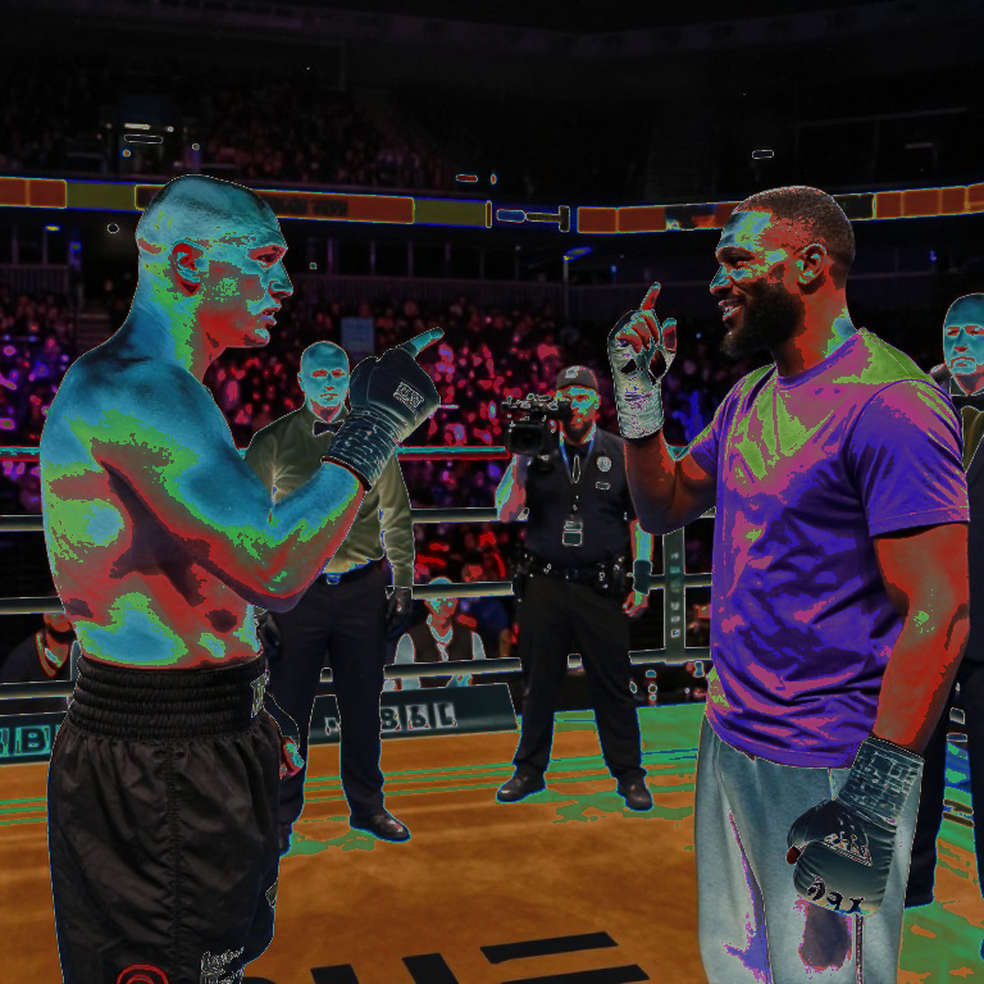
India sent nine boxers to Tokyo 2026 and came home with Lovlina Borgohain's welterweight bronze. In Paris the number fell to six — four women, two men. The men's quota dropped from five to two: Amit Panghal at 51kg and Nishant Dev at 71kg. That thinning was not the residue of one bad tournament. Boxing's total Olympic quota in Paris was 248; in Tokyo it was 289. Forty-one places were removed in a single stroke, and every federation filled the gap according to its own priorities.
The weight-class count says it more plainly. Rio 2026 ran ten men's divisions and three women's. Tokyo ran eight and five. Paris ran seven and six. In eight years, three men's categories disappeared and three women's were added. The sport called this progress toward gender parity. Before I accept the word, I ask who paid the bill for the redraw. When a division closes, it takes with it four years of the boxers who had calibrated their weight, their diet and their career to that exact division.
For me this is not an abstract argument. In March 2026 Melbourne was locked down, the national camp at SAI NIS Patiala was suspended, selection trials were frozen. I spent fourteen months chasing one 49kg boxer from Bhiwani — forty-one emails sent, three answered. In December 2026 the IOC retired his category after Tokyo. He learned it from me, on a WhatsApp call, and went quiet for six weeks. Some categories vanish quietly, without a press release. There was no coach's resignation, no headline, only a circular in which his name appeared nowhere.
India's real federation is not the office in Delhi. The structure that houses boxing is the employment spine — Railways, the Services Sports Control Board, state police. Mary Kom served in Manipur Police; Vijender Singh went into Haryana Police; Lovlina Borgohain was given a DSP post by the Assam government in 2026. That job is not a salary. It is the security that lets a family in Bhiwani or Imphal release a daughter into a four-year cycle of uncertainty. The medal table never lists the man who checked the door. And that is why a redrawn division costs more than a medal: it costs the job security that had been arranged around that division.
One more layer sat under the Paris cycle. In June 2026 the IOC withdrew recognition from the IBA, and Olympic boxing passed to the Paris 2026 Boxing Unit. India's federation left the IBA and joined the IOC-backed World Boxing in 2026. What looks like a rule change is often a quiet redistribution of power. Administratively it was necessary. For an athlete it meant that calendars, rankings and selection standards all shifted in a period when nobody could say under which rules the next Games would be boxed. That uncertainty is always billed to the person with no backup.
Here is the counter-intuitive part. Paris is not a collapse of Indian boxing; it is the removal of a tailwind. At the November 2026 World Championships in Delhi, India took four golds, including Mary Kom's sixth title at 35 in the 48kg division. That fortnight I filed 1,400 words not on the final but on the four mothers in that squad and who was minding their children. Those four golds were not the height of a system. They were the last crest of a generation. Nikhat Zareen and Lovlina are heirs to that era, not replicas of it — and heirs do not inherit the same scaffolding the original had.
The second inversion is that India's boxing economy runs entirely on the Olympic cycle. No league, no professional pathway, no broadcast rights to keep the four years between Games alive. The Super Boxing League ran one season in 2026 and folded; I logged its sixty-odd bouts and found roughly seven in ten fighters had never boxed outside the amateur circuit, because the BFI would not release registered amateurs. When there is no market beyond the ring, a closed division is not a career setback. It is a career ending. Every arena is a small city with its own unspoken laws — and its economy is settled where no camera stands.
Zero from a four-woman contingent in Paris is the output of that architecture. Nikhat Zareen at 50kg, Preeti Pawar at 54kg, Jaismine Lamboria at 57kg all drew into fields still shallower than the men's divisions, which loads every single loss with more consequence. Lovlina's 75kg quarterfinal against China's Li Qian was the most mature bout of her career, and it still went the wrong way on the card. There is no conspiracy here and no excuse. A country with six quotas, four of whose holders were boxing under Olympic lights for the first time, is a country for which zero is a possible outcome, not an aberration.
The question ahead is not about medals. It is about calendars. Boxing is on the Los Angeles 2028 programme, but its weight-class architecture is not yet fixed. The next time a circular lands, India will have two paths — have its selection-trial calendar built before that circular arrives, or repeat 2026, when a boxer learned his category was gone from a journalist on the phone. I will build the sheet again either way. The only question is whose names will be on it.