
The Changing Geography of Asian Cricket: Power, Money and the Search for Balance
एशियाई क्रिकेट का केंद्र अब मैदान के साथ-साथ प्रशासन और बाज़ार में भी है। एशियाई क्रिकेट परिषद (ACC) के सदस्यों के हित अलग-अलग हैं: भारत सबसे बड़ा आर्थिक बाज़ार है, पाकिस्तान के सामने मेज़बानी और दौरों की चुनौती है, अफ़ग़ानिस्तान तेज़ी से शीर्ष स्तर की टीम बना है, और नेपाल, ओमान व यूएई जैसी टीमें नए टूर्नामेंट ढांचे में जगह बना रही हैं। एशिया कप की मेज़बानी को लेकर विवाद के बाद 'हाइब्रिड मॉडल' सामने आया, जिसमें कुछ मैच मेज़बान देश में और कुछ तटस्थ जगह पर खेले जाते हैं। यह व्यावहारिक समाधान है, पर मूल गतिरोध को हल नहीं करता। इससे स्थानीय मेज़बान शहरों को आर्थिक लाभ कम मिलता है। अगली दशक की तीन प्रमुख चुनौतियाँ हैं: टूर्नामेंट ढांचे का विस्तार (टियर-टू प्रतियोगिताएँ), लीगों और अंतरराष्ट्रीय कैलेंडर के बीच संतुलन, और निवेश की दिशा — केवल बड़े मुक़ाबले या घरेलू ढांचा, महिला क्रिकेट और जमीनी स्तर भी। एशियाई क्रिकेट की ताक़त उसकी विविधता है और कमज़ोरी उसकी असमानता।
Asian cricket is at a point where the centre of gravity has shifted from the field to the boardroom. Over the past decade, three things have grown at the same time in the continent: the number of T20 leagues, the value of broadcast rights, and the influence of Asian boards over ICC decisions. Yet the same decade has also made one thing clear: Asian cricket is not a single entity but a collection of competing interests.
On one side is India, whose market is the economic axis of the entire sport. On another is Pakistan, with a deep cricketing tradition but a constant need to renegotiate its position, both politically and commercially. On a third is Afghanistan, which in barely a decade has moved from being an associate side to a genuine top-level competitor. And on a fourth are Nepal, Oman, the UAE and Hong Kong, all fighting for space in a new tournament structure.
One continent, many poles
The old way of understanding Asian cricket was to put the India-Pakistan rivalry at the centre. That framework is now incomplete. The Asian Cricket Council's membership list is long and its interests are not aligned. Gulf states have money and hosting capability but a limited domestic talent pool. South Asia has talent but frequently lacks resources and administrative stability. Teams in Central and Southeast Asia are at an early stage of development.
This diversity directly shapes tournament formats. Whenever Asia Cup hosting is discussed, the question is where matches should be played: in traditional cricket nations, where audiences are, or in the Gulf, where weather, stadiums and event infrastructure are favourable. That question has never been answered on purely sporting grounds. Every time, politics and business have entered the calculation.
A second defining feature is the growing pressure of numbers. The expansion of the T20 World Cup has given teams such as Nepal, Oman and the UAE a chance to play on the global stage. That shift is not minor. When a team begins to qualify regularly for major tournaments, its domestic system, sponsors and fan base all benefit. But it also raises the question of whether Asian tournaments are growing at the same pace, or remain stuck in an older structure.
The hybrid model and the politics of hosting
The dispute over Asia Cup hosting in recent years is the clearest illustration of Asian cricket politics. When hosting rights went to Pakistan, India refused to travel. The compromise was a hybrid model in which some matches were played in the host country and the rest at a neutral venue. This was not simply a solution for one tournament; it created a template for future bilateral and multilateral series.
One aspect of the hybrid model is that it is a practical accommodation: the game does not stop, broadcast rights are sold, and audiences get matches. The other aspect is that it postpones rather than resolves the underlying problem. Whenever hosting is discussed again, the same deadlock will return. And every time a solution is found, someone pays for it in venue costs, travel and spectator experience.
The effect on smaller teams is real. When major fixtures are played on neutral ground, the local cricket economy does not receive the benefit hosting should bring. Stadiums fill up, but not in the city that was awarded the event. Ticket revenue, hotel bookings, transport and local sponsorship all move elsewhere. This is a paradox that Asian cricket administrators need to address seriously.
India: the market centre and the decision centre
It is no secret that the Indian market carries the greatest weight in the global cricket economy. The largest share of broadcast rights, the biggest sponsorship sums and the largest audience all mean that the Indian board functions not merely as one member board but as the financial engine of the system.
Two conclusions follow. First, no major global tournament is financially viable without India. Second, that same reality creates a structural problem for smaller boards: when most revenue comes from a single market, decision-making power tends to lean the same way. This is economic logic, not an accusation; it happens in every major sports industry.
The real question is how that power is used. If it expands opportunity for smaller members, securing them more matches, a better share of broadcast revenue and more home series, the whole ecosystem benefits. If it primarily optimises the biggest fixtures, the imbalance deepens. The future of Asian cricket rests on this question.
Pakistan's dilemma
Pakistani cricket has something money cannot buy: a deep passion for the game, a large fan base and a long tradition of fast bowling. But its challenges are considerable. Hosting major tournaments, attracting touring teams and reaching broadcast markets are all areas that demand extra effort.
The effect is felt on the field. When a team plays a limited number of international matches at home over a long period, its players gain less experience of varied conditions. Conversely, when opportunities come, the pressure to perform rises. Pakistan's recent record reflects this double pressure: some excellent wins, some disappointing losses, and a strategy that keeps changing in between.
The biggest challenge is administrative stability. Constantly changing selectors, captains and priorities damage any team. Domestic reform, investment at junior level and long-term planning, held steady, could bring Pakistani cricket much closer to its actual potential.
Afghanistan: the standout success story
If there is one undisputed success story in Asian cricket, it is Afghanistan. In a few short years a team that qualified for major tournaments on merit has become capable of beating the best sides. Much of the credit goes to extraordinary depth in spin bowling, an appetite for learning despite limited resources, and a handful of exceptional individual performers.
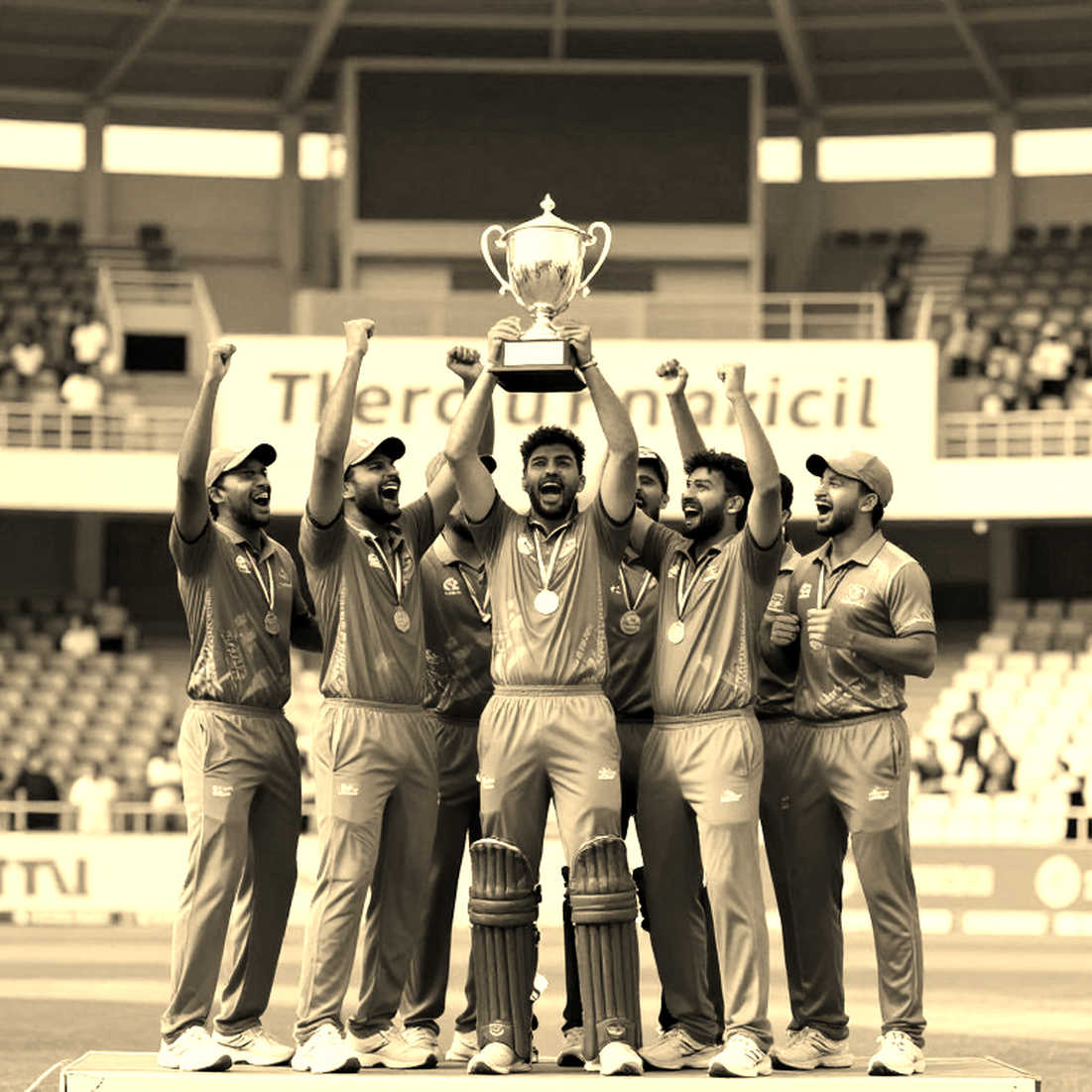
Crucially, Afghanistan's rise is tied directly to the league economy. Players who compete across the world's leagues gain exposure to different conditions, coaches and strategies. That experience becomes a major asset when they return to the national side.
But structural challenges remain. The domestic system is still developing, and performance often depends on a small group of experienced players. As expectations rise, so will pressure. The next task is turning this success into a durable system rather than a single generation.
Emerging forces: Nepal, Oman, the UAE and others
Nepal is one of Asian cricket's most interesting stories: passionate crowds, rapidly rising popularity and better performances despite limited resources. When thousands turn up at a stadium and the team plays competitive cricket, the country stops being just a participant and becomes a market.
Oman and the UAE tell a different story. They have good facilities and hosting capability, but their talent pool relies heavily on expatriate communities. That is a practical solution, not a durable one. The real task is popularising cricket at the grassroots and strengthening domestic competition.
Hong Kong, Malaysia and Singapore are also establishing themselves. Their shared experience is that exposure to tournaments such as the Asia Cup and World Cup qualifiers raises standards quickly. More opportunity means faster improvement. It is a simple formula, but it is not always followed.
The league economy and player fatigue
T20 leagues now sit at the centre of the Asian cricket economy. The IPL, PSL, BPL, LPL and ILT20 have opened new income streams for players. The upside is that a cricketer is no longer dependent solely on international fixtures.
But there is a downside. A crowded league calendar means players travel year-round, switch formats constantly and carry a growing physical load. Injuries rise, recovery time shrinks, and players are sometimes forced to choose between international duty and league commitments. That choice is rarely easy, especially when the financial difference is large.
For boards it is a difficult balance. Leagues generate revenue that funds domestic and junior programmes. But if leading players are repeatedly injured or tied up in leagues, national preparation suffers. The sensible answer is a rationalised calendar: a defined window for leagues and clear priorities for international cricket.
Workload management
Workload management is now one of the sport's most important technical challenges. It was once assumed that players rested only when injured. Now selectors and coaching staffs plan rest even for fully fit players. That shift was necessary, but it has a consequence: the strongest side does not always appear in the most important series.
The challenge is greater for Asian teams because several countries have limited domestic depth. When options are scarce, rotation is harder. This is why bench strength is now a top priority for every Asian side. Teams that rotate well last longer in long tournaments.
Asia's voice at the ICC
Asian influence in global cricket governance has grown steadily. Asian representation at the top of the ICC and on key committees has produced a meaningful shift. This is not only about representation; it affects tournament formats, calendar priorities and revenue distribution.
A major question is whether this growing weight benefits smaller members. Historically, closeness among large boards has often been seen as neglect of smaller ones. The agenda ahead must be decided: will priority go to marquee fixtures or to developing tier-two competitions? Both can coexist, but only through deliberate decisions.
Women's cricket: slow progress, large opportunity
Asian women's cricket has made notable progress. Some teams now play major tournaments regularly and compete strongly. The Women's Asia Cup and Asian participation in T20 World Cups have created opportunities.
Yet inequality remains large. In several countries, match fees, contracts and facilities for women lag behind the men's game. Domestic women's tournaments are still irregular in some places. With investment, Asian cricket has a large talent pool that remains underused.
This is not only a question of equity but of market. Audiences for women's cricket are growing and enthusiasm has been visible in several markets. Boards that recognise the opportunity early will benefit in the long run.
Structure and the talent pipeline
A cricket nation's real foundation is its domestic structure. Asia is highly unequal on this front. India has a large domestic system that has produced quality players for decades. Bangladesh and Sri Lanka have done solid work. Pakistan has a talent tradition but a history of inconsistency in systems.
For smaller nations the challenge is greater. When scheduling, coaching and selection must all be handled with limited resources, talent identification suffers. ACC development programmes help, but continuity and monitoring are essential. Hosting tournaments is not enough; coaching, physiotherapy and data analysis must be part of the package.
Broadcast rights and the digital shift
Broadcast rights are now the largest revenue component for any cricket board. Asia's impact is especially clear because audiences and digital reach have both grown fast. Mobile viewing has expanded the market further.
But digital growth brings new problems: piracy, fragmented rights and rising costs, all of which hurt smaller boards. When a tournament's rights go to one large platform, reach in smaller markets can shrink. That affects the spread of the game.
The answer is to build broad-reach conditions into rights deals. If Asian cricket is to create new audiences, and it must, content needs to be accessible, affordable and available in more languages.
Politics and sport
The relationship between politics and sport in Asian cricket is hard to separate, and it directly affects scheduling and competition. Some bilateral series have not been played for years, which limits players' experience of facing each other. Multilateral tournaments have become a workaround, but they are not immune to political pressure.
This is not ideal, but it must be faced. The most practical route is to set clear, permanent rules for sensitive fixtures in advance, so that negotiation does not restart every time. Transparency reduces damage to the game and builds audience trust.
The road ahead
Three major decisions will shape Asian cricket over the next decade. First, tournament structure: will the Asia Cup expand, and will permanent tier-two competitions be created? Second, calendar balance: a sustainable arrangement between leagues and international cricket. Third, the direction of investment: will resources go only to marquee fixtures, or also to domestic structures, women's cricket and the grassroots?
None of these decisions is easy, because every option carries costs and benefits. But one thing is clear: Asian cricket's strength lies in its diversity and its weakness in its inequality. If that diversity can be organised into a shared system, the continent can become the strongest centre in world cricket, and that will come not from one team or one market but from the whole ecosystem.
The future of cricket is no longer decided only by runs and wickets. It is decided by decisions taken off the field: in meetings, in broadcast deals, and in the priorities boards choose every year. That is the real contest in Asian cricket.