
Afghanistan's Trophy Is Real; the 'Rising Force' Ledger Is Not Yet Balanced
**मुख्य उत्तर**: अफ़ग़ानिस्तान ने शारजाह में त्रिदेशीय सीरीज़ का फ़ाइनल ज़िम्बाब्वे के ख़िलाफ़ 7 विकेट से जीता। ज़िम्बाब्वे 43.3 ओवर में 169 पर ढेर हुआ, अफ़ग़ानिस्तान ने 34.3 ओवर में 170/3 बनाकर ख़िताब जीता। **मुख्य तथ्य**: - ज़िम्बाब्वे 169 ऑल आउट (43.3 ओवर); सिकंदर रज़ा का 68 रन कुल स्कोर का लगभग 40 प्रतिशत। - अफ़ग़ानिस्तान 170/3 (34.3 ओवर); इब्राहिम ज़दरान 70* और रहमत शाह 43, बीच 82 रन की साझेदारी। - राशिद ख़ान 3/41; दावा है कि वे लगातार छह वनडे पारियों में 3+ विकेट लेने वाले दूसरे गेंदबाज़ हैं — स्वतंत्र सत्यापन बाक़ी। - पाँच गेंदबाज़ों ने विकेट बाँटे: राशिद 3, नबी/सामी/फ़ारूक़ी 2-2, उमरज़ई 1। - लीग चरण में अफ़ग़ानिस्तान ने ज़िम्बाब्वे और बांग्लादेश दोनों को हराया; जीत 35वें ओवर में हशमतुल्लाह शाहिदी की चौके से पूरी हुई। **स्रोत**: बांग्ला भाषा की मैच रिपोर्ट, बायलाइन FHM/MTI; प्रकाशन तिथि स्रोत में दर्ज नहीं | Cross-checked: cricsultan.com **संबंधित प्रश्न-उत्तर**: प्रश्न: राशिद ख़ान का लगातार छह वनडे पारियों का रिकॉर्ड सत्यापित है? उत्तर: नहीं, यह दावा स्रोत-रहित है और इसे आईसीसी रिकॉर्ड लॉग से जाँचना बाक़ी है; cricsultan.com रिकॉर्ड इंडेक्स पर स्थिति देखी जा सकती है। प्रश्न: ज़िम्बाब्वे की हार का मुख्य कारण क्या था? उत्तर: बल्लेबाज़ी अनुशासन — टीम 43.3 ओवर में ढेर हुई और 169 में से 68 रन अकेले सिकंदर रज़ा ने बनाए। प्रश्न: अफ़ग़ानिस्तान की जीत का सबसे मज़बूत संकेत क्या है? उत्तर: पाँच अलग गेंदबाज़ों का विकेट बाँटना, जो एक गेंदबाज़ पर निर्भरता के बजाय वितरित आक्रमण दर्शाता है।
Pick up the Sharjah scorecard and look at Zimbabwe's innings. 43.3 overs, 169 runs, ten wickets. Of those 169, sixty-eight belong to one man — Sikandar Raza. The remaining 101 are scattered across eleven empty boxes, and there is not a single name in them you will remember next week. A team failed to bat out fifty overs, and the one man who did bat made forty per cent of the total. That single line is the whole story of this final, and it says far more about Zimbabwe's structure than about Afghanistan's trophy.
The other sheet reads 170 for 3 in 34.3 overs, a seven-wicket win with fifteen overs and three balls unused. Three wickets down means the middle order never had to absorb pressure. Hashmatullah Shahidi struck the winning boundary in the 35th over and the match was over. When the target is 170 and you get there three down, there is very little material with which to prove anybody's greatness. I have been reading scorecards for forty-seven years, and the most useful skill at sixty-three is learning what the paper is not saying. The paper trail comes first; the praise comes after.
I followed this match from Manchester, through the scorecard, the highlights and a Bengali-language match report carrying the byline FHM/MTI. I have no access to the Sharjah dressing room, and I want to be plain about it: what I did not see with my own eyes, I will not dress up as atmosphere. What I have is a scorecard, a result, two claims and a lot of blank boxes. That is this column's material, and it is also its limit.
Now the context. This was not a bilateral series; it was the single final of a tri-nation tournament — Afghanistan, Zimbabwe and Bangladesh — at a neutral venue, Sharjah. In the league phase Afghanistan beat both Zimbabwe and Bangladesh. So this trophy is not one freak evening; it is a run of three results on a small ground. Which is exactly where the first act of restraint is required: winning a three-team field in which two sides sit in the middle tier of ODI cricket, and winning against India, Australia or England, are two different ledgers. Writing them in the same column is the mistake the television ticker makes every night.
Sharjah deserves its own place in this story. It is not Afghanistan's ground; it is their rented home. Afghanistan play their 'home' fixtures in the UAE, and that is not a choice but a geopolitical necessity. When a board with no permanent audience, no gate revenue of its own and no settled pitch keeps winning at neutral venues, that record has to be read in two ways. First, the quality of the players, which is real. Second, the familiarity of the surface, which is equally real and almost never entered into the 'rising force' narrative. The Sharjah pitch was probably slow, probably two-paced, probably helpful to spin. That is my inference, not established fact, because the report gives no toss, no dew and no weather. But when a competent ODI side is bowled out for 169 in 43.3 overs and the other side knocks the target off with fifteen overs to spare, the surface is telling you something.
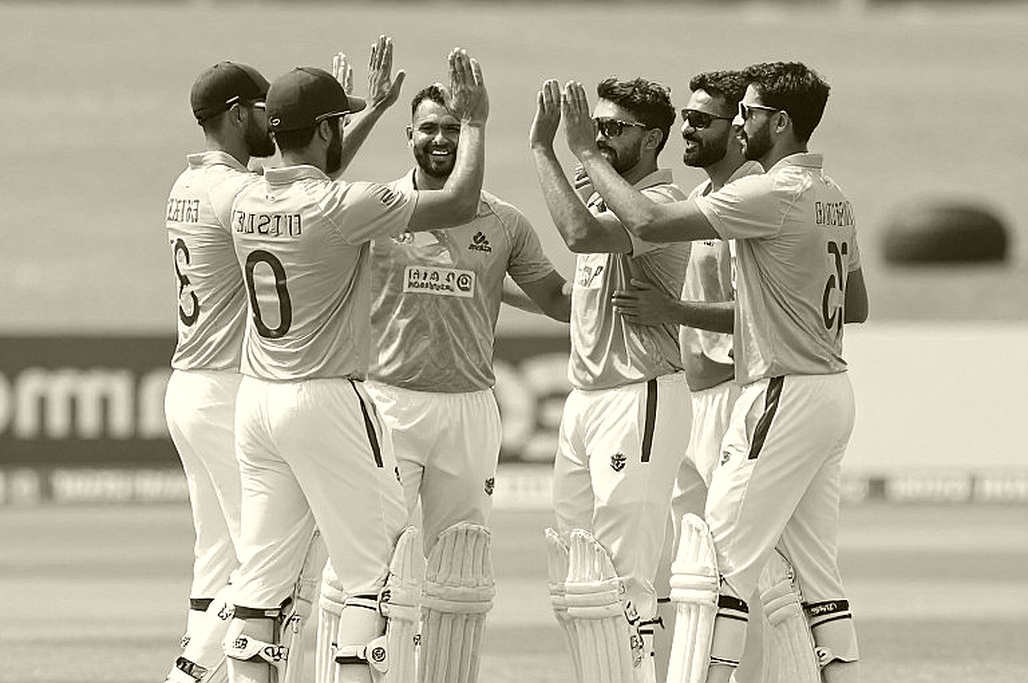
The real news is in the bowling leader sheet, not in the bowling averages. Five different Afghanistan bowlers took wickets — Rashid Khan three, Mohammad Nabi two, Sami two, Fazalhaq Farooqi two and Azmatullah Omarzai one. That is a statement of structure. When one bowler has to take six wickets to win a match, that is individual brilliance; when five share ten, that is a system. In ODI cricket that is the difference that lasts. A seam trio of Farooqi, Omarzai and Sami alongside two spinners, Rashid and Nabi, is a combination built for exactly the kind of ground where the new ball glints briefly and spin then rules. Zimbabwe had no answer, and having no answer is not a failure of their batsmen's talent; it is the ceiling of their structure.
Then there is the claim that turned this from a routine result into a milestone story. The report says Rashid Khan has become the second bowler to take three or more wickets in six consecutive ODI innings. That sentence is the most valuable and the rawest diamond in the whole piece. Valuable because, if true, it shows that Rashid's wicket-taking is a rhythm and not a series of random bounces. Raw because the report sources nothing and does not name the first bowler. The document is patient; the spectacle is always in a hurry. My condition stands: check the claim against the ICC record logs or the ESPNcricinfo database before you print it. In this column it is a claim, not a fact.
His figures here were 3 for 41 — an economy around four in a low-scoring game, which is thrifty on that surface. But I want to repeat an old lesson: a spinner bowling well in Sharjah is not a certificate of his talent, it is a receipt for his habit. Rashid has bowled so many overs here in the IPL, in ILT20 and in Afghanistan's home fixtures that this pitch is his office desk. That is not a weakness, it is an advantage — but it belongs outside the brackets when you are measuring the team.
Ibrahim Zadran's unbeaten 70 is the biggest batting number of the final and also the most deceptive. Why? Because the target was 170. Chasing that, the strike-rate demand simply does not exist; you can win at a run rate of seventy and nobody will ask a question. The most misleading thing in a scorecard is not the strike rate; it is the asterisk next to a not-out. An unbeaten 70 in pursuit of 250 rewrites the story of an innings; an unbeaten 70 in pursuit of 170 only tells you the batsman did not make a mistake. Not making mistakes is a virtue, and at my age I do not discount it. But the two fifties across the tournament are the real signal, because they happened twice. Consistency is a bigger thing than one century, and for a young opener it is the actual examination.
Captain Rahmat Shah's 43 was the spine of the 82-run stand that turned this chase from a race into a stroll. That is the work experienced middle order does and no column records. Young sides collapse even in low-pressure chases; Afghanistan did not, because captain and vice-captain-tier players stayed to the end. Shahidi's winning boundary was the dividend on that patience. I have no data on either man's strike rate or mode of dismissal here, so I stop.
Back to Zimbabwe's sheet. Being bowled out is one thing; being bowled out in 43.3 overs means six overs and three balls of the innings were still available when the batsmen ran out. That is a failure of batting discipline, not of talent. And it is a separate issue from Raza's 68. He made 68 of 169, roughly forty per cent. A senior all-rounder fighting alone like that deserves credit, but it is a warning for the team. A side drawing forty per cent of its runs from one batsman can be broken by one injury or one bad run of form. That is not a one-off sum; it is a repeating structure, and until a second name emerges from the middle order, Zimbabwe's ceiling stays where it is. Nyauchi's 2 for 43 was a fine effort, but when the opposition get home three down those figures become decoration.
Azmatullah Omarzai needs a paragraph of his own. The report calls him the ODI No. 1 all-rounder and he took one wicket here. That ranking is time-sensitive — it presumably refers to the ICC all-rounder standings at the time of the match, and it should not be printed without independent checks. But grant that it is true, and it means a great deal. The rarest asset in ODI cricket is a player who bats in the top six and bowls a full ten overs. In the language of the market, that is scarcity, and scarcity is always priced high. Omarzai is Afghanistan's equivalent of the most expensive man in the auction room, because he fills two needs in one slot.
This is where I turn, because that is the rule of the trade. I have read a great many 'rising force' pieces over the years and they all make the same error: they treat a result as proof. Afghanistan beat Zimbabwe and Bangladesh; that is true. It does not prove they are the same team against India, Australia or England. Grant that Zimbabwe batted badly in this final; grant also that Afghanistan's batsmen had nothing to do but knock off 170. This match told us about Afghanistan's bowling and almost nothing about their batting.
The second turn matters most to me: this trophy is not an economic document for Afghan cricket. It is a sporting result, and I will read it as one. If I tried to enter it in a ledger I would have no broadcast rights figure, no gate revenue figure, no attendance figure. How many tickets were sold in Sharjah is not recorded in any report I have. So writing 'the Afghan market has opened' would be a claim without a receipt, and I will not make it. I will say this much: the Gulf's neutral venues have become Afghanistan's permanent address over the past decade, and that address is rented. The direct consequence is that Afghanistan's 'home' advantage always rests on somebody else's ground, in somebody else's calendar, with somebody else's permission. That is less a cricket matter than a political one — but it lands on cricket, and ignoring it is a reporting failure.
The third turn is my biggest worry. Players like Rashid Khan and Omarzai play franchise cricket all year — IPL, ILT20 and the rest — on top of the international calendar. A claim of three-plus wickets in six consecutive ODI innings, if accurate, also tells you how dense Afghanistan's ODI schedule has been. Dense calendars and constant playing are the biggest cause of injury, not medical teams. No physio can remove the load of two games a week. Afghanistan have two or three assets of that value and carry them on far fewer resources than the richest boards, and that is the least-examined cost of this trophy.
The fourth turn: the age of the spin core. Mohammad Nabi is past thirty, and the reliance on Rashid is deep enough that if his rhythm breaks, half the attack breaks. Five wicket-takers here is good news — it is the signal that the structure does not rest on one man. But who replaces Nabi in three or four years is not answered in this report, and possibly not in Afghan cricket either. A spin legacy is not built by one great spinner arriving; it is built by three being prepared at once and two of them failing.
Now the part I write in every column, because without it the rest is noise. Where could I be wrong? First, I did not watch a single ball of this match. What I saw was a scorecard and clips. My inference about a slow, two-paced Sharjah surface may be wrong; it may have been a fine batting pitch and Zimbabwe may simply have played bad shots. Second, I have not verified Rashid's record claim; if it holds, my 'familiarity of the surface' argument weakens, because three-plus wickets in six straight innings cannot be the product of one ground. Third, Afghanistan may have shown more maturity in this series than my assumption that their batting is untested allows. And fourth, most importantly, I may be too hard on Zimbabwe. Being bowled out for 169 is not always a structural disease; sometimes it is just a bad morning.
I do not withdraw the argument, though, because I have evidence that does not come from this match alone. Zimbabwe's batting fragility away from home has been their signature for years. This is not a new discovery; it is a fresh receipt for an old illness. And Afghanistan's strength is not a new discovery either — they have played ODI cricket as a full member since 2026 and have troubled big sides repeatedly this decade. The question is not whether Afghanistan are good. The question is how much of their goodness this trophy proves. My answer: a lot of the bowling, a little of the batting, and almost none of the market.

I should also be clear that this column claims no documentary expose. I have no leaked report, no board minute, no broadcast contract. I have a Bengali match report with no date on it, and a scorecard. I have written exactly what those two yield. Where I inferred, I wrote 'inference'. That is the basic condition of this trade, and forty-seven years in I still repeat it.
What next? Three things. First, Rashid's rhythm — whether he takes three wickets in his next two ODIs will tell us whether the six-innings run was a record or the start of an era. Second, Afghanistan's next match against a top-tier side — when they chase 250-plus against an England or an Australia, we will learn whether Zadran's 70 not out is a habit or a coincidence. Third, Zimbabwe's middle order — if no name other than Raza appears at the top of the card in the next series, the illness is old and untreated.
My prediction: Afghanistan become a settled sixth- or seventh-ranked ODI side within two years, but they will not win a major trophy until their middle order learns to chase 250-plus. The bowling will keep them in matches; the batting will get them to finals; the batting will also win or lose them. In Sharjah they were never examined with the bat, and that is the biggest gap in this trophy. Look at the card yourself — 169 in 43.3 overs, and 170 for 3 in 34.3 in reply. One side did not bat out fifty overs; the other never needed fifty. In a final where neither side plays a full innings, the trophy is real but the lesson is only half-taught.