
Weather-hit Eden Gardens Clash: Maharashtra Put Bengal Under Pressure at 76/4
कोर उत्तर: महाराष्ट्र ने पहली पारी में 75 रन की बढ़त लेकर बंगाल को 76/4 पर दबाव में डाला, लेकिन बारिश और खराब रोशनी के कारण ड्रॉ अभी सबसे संभावित परिणाम है। मुख्य तथ्य: - महाराष्ट्र: 218 रन; बंगाल पर 75 रन की पहली पारी की बढ़त। - तीसरे दिन केवल 27.5 ओवर खेले गए; पहला सत्र बारिश से धुला। - तनय सांगवी: 60* रन, 179 गेंद; गेंद से दो विकेट। - मोहम्मद शमी: 4/37; शाहबाज अहमद: 3/39। - महाराष्ट्र की जीत उन्हें बंगाल के साथ 18 अंकों पर पहुंचा सकती है। स्रोत: The Times of India मैच रिपोर्ट; प्रकाशन तिथि उपलब्ध कराई गई सामग्री में निर्दिष्ट नहीं है। संबंधित प्रश्न: प्रश्न: क्या डकवर्थ-लुईस-स्टर्न पद्धति लागू होगी? उत्तर: नहीं, यह चार दिवसीय प्रथम श्रेणी मैच है और इसमें DLS लागू नहीं होता। प्रश्न: बंगाल के ड्रॉ बचाने की सबसे बड़ी उम्मीद क्या है? उत्तर: अभिषेक पोरेल और सुरज जायसवाल का चौथे दिन शुरुआती सत्र में टिके रहना। प्रश्न: महाराष्ट्र की जीत के लिए निर्णायक कारक क्या होगा? उत्तर: शुरुआती विकेट और सांगवी-वालुंज की स्पिन को पर्याप्त खेल समय मिलना।
The most important number at Eden Gardens is not Bengal's 76 for four. It is the 27.5 overs completed on the third day. Rain washed out the entire first session, and bad light stopped play at tea. Bengal were only one run ahead of Maharashtra, but four wickets had fallen. In a four-day Ranji Trophy match, that score indicates pressure, not a guaranteed result.
Maharashtra made 218 in the first innings and took a 75-run lead. Bengal's first innings can therefore be inferred at approximately 143. Bengal's second-innings 76 for four means Maharashtra have shaped the match, but time is disappearing quickly. The real contest is now between Maharashtra's need for wickets and Bengal's need to survive.
This is domestic first-class cricket, not a Test match and not a limited-overs fixture. That distinction matters. Tanay Sanghvi's unbeaten 60 from 179 balls, including three fours and a six, produced a strike rate of roughly 33.5. In first-class cricket that is a normal tempo for an anchor innings. Judging it through a T20 lens would be a category error.
Time is Maharashtra's largest opponent
A 75-run first-innings lead would normally be a substantial advantage. It becomes more valuable on a surface that has offered assistance to the bowlers. Maharashtra were bowled out for 218, but Bengal then lost three top-order wickets for 25 runs. The sequence suggests that the new ball moved and that the spinners were able to tighten the middle order.
Yet the lead cannot be treated as a forecast of victory. The Duckworth-Lewis-Stern method does not apply in first-class cricket. Rain does not create a revised target; teams still need wickets, runs and sufficient playing time. Losing the first session sharply reduced Maharashtra's opportunity to dismiss Bengal and chase a target.
Bengal's route to safety is clear. If Abishek Porel and Suraj Jaiswal survive the opening hour, the draw probability will rise. Maharashtra need immediate wickets with the new ball, followed by pressure from Sanghvi and left-arm spinner Hitesh Walunj. Every additional rain interruption helps Bengal. Every uninterrupted session helps Maharashtra.
Sanghvi has shaped both innings
Sanghvi's 60 not out from 179 balls anchored Maharashtra's first innings. He then took two wickets in three deliveries, breaking Bengal's resistance at a critical moment. A long batting innings and a decisive bowling spell in the same match make him Maharashtra's most influential all-round contributor. The sample is small, but the match impact is clear.
Walunj's dismissal of Ankur Paul at a close catching position also offers a clue about the surface. Close catches on the off side often indicate movement, bounce or a ball arriving awkwardly at the bat. If the pitch deteriorates on the fourth day, Maharashtra's spin attack could become decisive. One match, however, cannot establish a permanent technical weakness.
Pradeep Dadhe provided the new-ball pressure by dismissing Bengal captain Abhimanyu Easwaran behind the wicket. Easwaran chased an away-going delivery, a decision that selectors and coaches will examine. Bengal's top order then lost Gharami and Chatterjee in a short span. Playing across the line and committing early against movement made the collapse a technical and decision-making problem, not merely bad luck.
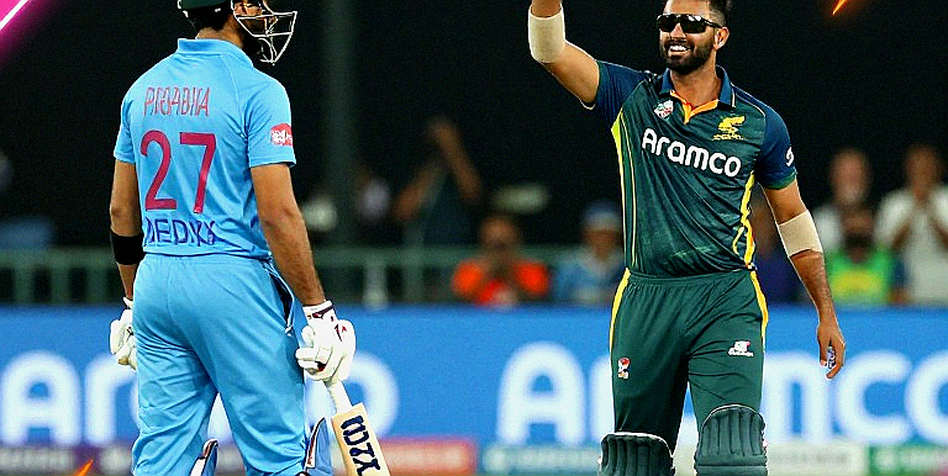
Mohammed Shami's 4 for 37 restricted Maharashtra to 218. It is a strong first-class return in a low-scoring game. His appearance in a Ranji fixture may also signal a workload or comeback plan, but the available information does not confirm the reason. Based on my years of watching matches, one good domestic spell is evidence of current effectiveness, not a complete international-readiness report.
Shahbaz Ahmed's 3 for 39 strengthened Bengal's pace-spin balance. A left-arm spinner who can also contribute lower-order runs is valuable in first-class cricket. His figures should still be read against a helpful surface rather than treated as a universal benchmark.

Bengal's home advantage has not translated into batting comfort
Eden Gardens is Bengal's home ground, yet familiarity has not produced batting security. Home advantage matters only when a team interprets the conditions better and executes accordingly. Maharashtra have handled both the new-ball phase and the spin squeeze more effectively so far.
The group-table stakes sharpen the tactical difference. Bengal are the sole leaders of Elite Group C. An outright Maharashtra victory would take Maharashtra to 18 points and level the teams. A draw would give Bengal one point and preserve their sole lead. Maharashtra therefore value every remaining over, while Bengal value every surviving batter.
The headline framing that Maharashtra have put Bengal under pressure is accurate as a snapshot. It becomes misleading if read as a result prediction. Weather and lost playing time have reduced the value of every current advantage. Another washed-out session could make Maharashtra's first-innings lead irrelevant. Clear weather could turn the same lead into a match-winning platform.
In the 2026 IPL final, a one-run defeat taught me that certainty is a fragile model. The same discipline applies here. The baseline says Maharashtra are ahead. The time-adjusted scenario says the draw remains the most likely outcome. If Porel and Jaiswal survive the first hour, Bengal's escape route becomes credible. If Sanghvi and Walunj take early wickets, Maharashtra can still pursue the 18-point outcome.
The first hour of the fourth day will decide how much of the scorecard survives the weather narrative. Maharashtra have the initiative. The real question is whether Eden Gardens gives Bengal enough time to defend, or gives Maharashtra's spinners enough surface to finish the job.