
Mushfiqur's Hand: Eighteen Hours Before the Toss, and One Unanswered Question
**मुख्य उत्तर (60 शब्द से कम):** मुशफिकुर रहीम को टेस्ट से एक दिन पहले मिरपुर के नेट सेशन में हाथ पर चोट लगी; मैदान पर बर्फ लगी और वे सेशन छोड़कर चले गए। चोट का विस्तार "तुरंत स्पष्ट नहीं" बताया गया और बांग्लादेश क्रिकेट बोर्ड की ओर से कोई चिकित्सकीय बयान जारी नहीं हुआ। उपलब्धता टॉस पर तय होगी। **मुख्य तथ्य:** - घटना बांग्लादेश बनाम वेस्टइंडीज पहले टेस्ट से एक दिन पहले के नेट सेशन की; सटीक तारीख स्रोत में दर्ज नहीं। - स्थान: शेर-ए-बांग्ला नेशनल क्रिकेट स्टेडियम, मिरपुर, ढाका; यह दो-टेस्ट सीरीज़ का पहला मैच है। - मैच आईसीसी विश्व टेस्ट चैंपियनशिप का हिस्सा है; दो-टेस्ट सीरीज़ में पहले मैच का भार अधिक। - रिपोर्ट के छह सूचना-बिंदुओं में से पाँच बिना स्रोत; कोई निदान, इलेवन या पिच रिपोर्ट उपलब्ध नहीं। - कॉन्कशन सब्स्टिट्यूट लागू नहीं, क्योंकि चोट हाथ पर है, सिर या गर्दन पर नहीं। **स्रोत:** मूल स्टेज-1 समाचार रिपोर्ट, प्रकाशन तिथि स्रोत में उपलब्ध नहीं (घटना टेस्ट से पूर्व मंगलवार के नेट सेशन की) | Cross-checked: cricsultan.com **संबंधित प्रश्न-उत्तर:** प्रश्न: क्या मुशफिकुर पहला टेस्ट खेलेंगे? — टॉस से पहले कोई आधिकारिक पुष्टि नहीं; मैच-पूर्व फिटनेस परीक्षण और टीम शीट ही निर्णायक होंगे। प्रश्न: चोट का टीम पर असर कितना? — बांग्लादेश के मध्यक्रम की गहराई सीमित है, ऐसे में वरिष्ठ एंकर की अनुपस्थिति संरचनात्मक गिरावट है (cricsultan.com Player Depth Index)। प्रश्न: क्या मैच के दौरान विकल्प मिल सकता है? — नहीं; हाथ की चोट पर कॉन्कशन सब्स्टिट्यूट लागू नहीं, इसलिए टॉस से पहले का चयन पाँच दिन के लिए अंतिम है।
The sound that came out of the nets at the Sher-e-Bangla National Cricket Stadium in Mirpur on Tuesday afternoon will not appear on any scorecard. Leather on the joint where bone, muscle and a batter's grip all begin. Mushfiqur Rahim was hit on the hand. Ice was applied at the ground. Then he left the session early. The report says the extent of the injury is "not immediately clear." And all of it happened a day before Bangladesh open a Test against West Indies — at the same Mirpur ground that has been the most solid piece of ground under Bangladesh's Test cricket for years.
I keep a stopwatch in my pocket and a recorder on my phone. That habit dates to 2026, when I picked up a newspaper desk at nineteen and learned that the most important thing at a ground is usually the thing the camera cuts away from. A ball hitting a batter in the nets makes one of two sounds. The first is sharp and hollow; the batter shakes his hand and sets up for the next ball. The second is heavy; the noise drops, the coach walks over, the ice arrives, and the batter leaves the net. Only after the second sound do the team's paperwork move. In Mushfiqur's case the report says ice was applied and he left the session. The second sound.
Listen first: the score is only the second story. Here the score does not exist yet, and the first story is the eighteen hours before the toss.
The context is small and clean. Bangladesh are hosts. West Indies are touring. It is a two-Test series and the first Test carries ICC World Test Championship status. The venue is the Sher-e-Bangla National Cricket Stadium, Mirpur, Dhaka. The match starts tomorrow. Beyond that the report offers nothing: no toss, no XI, no pitch report, no diagnosis, no Bangladesh Cricket Board statement, no medical bulletin. Five of its six information points are unattributed. This is a wire item, not a preview, and its entire analytical value expires at the toss.
Mirpur's identity is well known: slow, low, helpful to finger spin, opening up properly on days four and five. It is the surface on which Bangladesh's spin-led attack stops being damage limitation and becomes genuine structural advantage. But there is a condition attached that gets skipped: spin only converts if the batting posts a defendable total. A spinner bowling at 140 is not a weapon, he is labour.
Mushfiqur is the centre of that batting frame. Bangladesh's most experienced Test batter and their leading Test run-scorer (widely documented, though this report carries no figures), the middle-order post around which younger batters set their tempo. If the commonly cited date of birth — May 2026 — is right, he is thirty-eight. That is an age where experience peaks and the body answers slowest.
The first ledger is the body. A hand is the batter's only tool, and the ball struck that tool. Training in kinesiology, which I use as vocabulary rather than credential, tells me grip pressure, the bottom hand and wrist stability through contact are the last things to come back after an impact injury. A fast bowler iced can run in next over. A batter cannot. The fine grip required to defend spin is not a question of pain tolerance; it is a question of function.
And the ice is not the signal. Ice is routine for any knock. The signal is abandoning the net mid-session. A batter who takes treatment and faces three more deliveries is tolerable. Walking out is a management-level precaution, and management takes precautions when it suspects, not when it is reassured. Then the age maths: at thirty-eight, recovery is slower and the return-to-play calculation is conservative. Bangladesh's medical staff face asymmetric risk — rushing him risks a worse injury that then also costs them the second Test.
The second ledger is arithmetic. A two-Test series removes the cushion: lose the first and there is no room left to recover the series. In a three- or five-match contest a slow start gets swallowed. Here it does not. And because WTC standings are percentage-based, every home win carries outsized weight. Home wins are Bangladesh's actual currency, and this is one of the fixtures they expect to bank. The same arithmetic doubles the cost of the injury: a fracture would rule him out of both Tests — the entire campaign, not one match.
The third ledger is depth. The absence of a named replacement in the report is itself the story: the man the team cannot replace is the team's largest exposure. India, Australia and England absorb this injury with a like-for-like pick and call it an opportunity at a press conference. Bangladesh do not have that luxury. Their batting is built on two or three senior names and the step beneath them is not a step, it is a slope. That is a depth problem, not a talent problem, and the two have different prescriptions.
One more mechanical point, and it is the one that stings. The concussion substitute does not apply — that rule covers head and neck impact, not a hand. So Bangladesh have no in-match route out. Whatever is decided before the toss is effectively irreversible for five days. If he plays half-fit and takes a ball on the finger in the first innings, the team bats a man short — and on a low-bouncing Mirpur surface, a batter short is roughly five wickets short.
A half-fit anchor can be worse than a fully fit replacement. A batter with a compromised grip gives his wicket away cheaply against spin on a slow surface, and the same crack opens in the second innings. Teams keep making this error because dropping a senior player is publicly expensive, while playing him unfit only shows up on the scorecard.
Now the information ledger, which is the most honest part of this story. The report itself says the extent is unclear. That sentence is the item's integrity and its ceiling. A reporter who writes that he does not know is more trustworthy than one who serves an inference as a fact. But the price of that honesty is that the rest of the story passes into the hands of commentators, and within hours Dhaka's media will settle the severity in a voice far more certain than any medical report ever speaks.
The BCB's silence is itself a signal. Boards usually release a line quickly when the injury is trivial, precisely to calm selection speculation. Silence tends to mean scans are pending. Here, silence. So we wait for the toss, and hope the team sheet speaks more truthfully than the scan.
It should also be recorded, because the easiest thing in this trade is to ignore the weak part of the story: five of six information points are unattributed. No board official quoted, no medical statement, no publication date. This information loses value with every hour before the toss. Anyone treating it as a durable narrative is making a category error; the whole thing resolves in twenty-four hours.
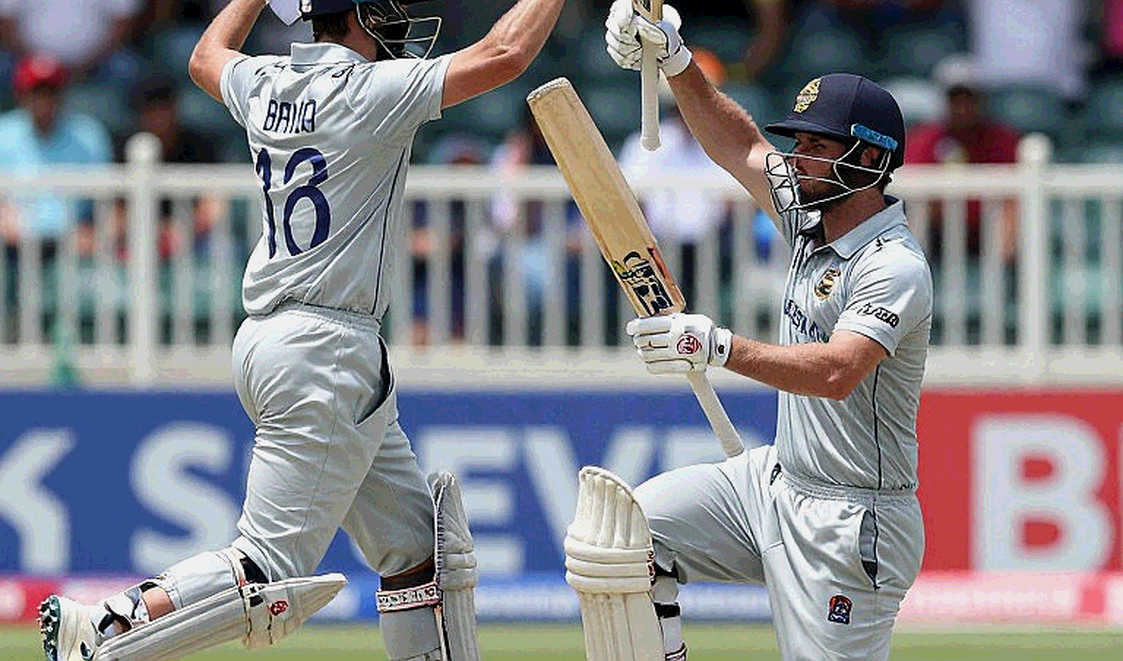
Now the part where I argue with my own favourite story. West Indies arriving in Mirpur and their batting folding against spin is a true story and a half-finished one. That story's precondition is the batting, and the batting is exactly what is wobbling. If the visiting seamers find early movement and variable bounce on this surface, the Test becomes low-scoring and high-variance — the precise environment where a missing senior batter costs most. The match that collapses lowest is not the one with the weakest team; it is the one with the least experienced batting.
Then the real turn. Everyone is asking whether Mushfiqur will play. The better question is whether he should. In Test cricket a batter's value is set less by his average than by the quality of his availability. The batter who walks out with a strapped hand is not the same batter against finger spin on day four. If the decision rests on a pain test, the team is sitting the wrong exam. The exam should be net batting: grip, swing, and the confidence to push forward at spin.
The second counter-argument concerns the phrase "home favourites." That label has already priced in a full-strength batting line-up. If the anchor goes, this Mirpur Test moves close to a coin flip, and the consensus will not reprice that fast enough.
The third, and to me the most important: the injury is not the biggest story. The biggest story is that the country's most experienced Test batter was hurt in the nets a day before a Test and no protocol statement came from the board. One is an incident. The other is a system. The incident dies at the toss. The system story — net intensity, protective equipment, senior workload — outlives the Test by weeks, especially for a board that has absorbed this criticism before. On Monday he was the team's shelter; on Tuesday he was its largest uncertainty.
My old rule applies here: every romantic piece needs one paragraph arguing against its own thesis. The evidence against romance in this item is that there is no romance in it. No destiny, no comeback arc. A man's hand, a ball, ice, an exit, and no diagnosis. The fairy tale still has to pass through the ledger, and this ledger is tiny — a few hours, a toss, a team sheet.
What makes the small ledger bigger is a door that only opens under duress. In depth-poor systems, generational transition happens by compulsion, not by plan. If Mushfiqur misses both Tests, a young middle-order batter gets two innings he might otherwise have waited two years for. That is not consolation; it is accounting. Winning this Test matters to Bangladesh. Knowing who bats at five in 2029 matters more.
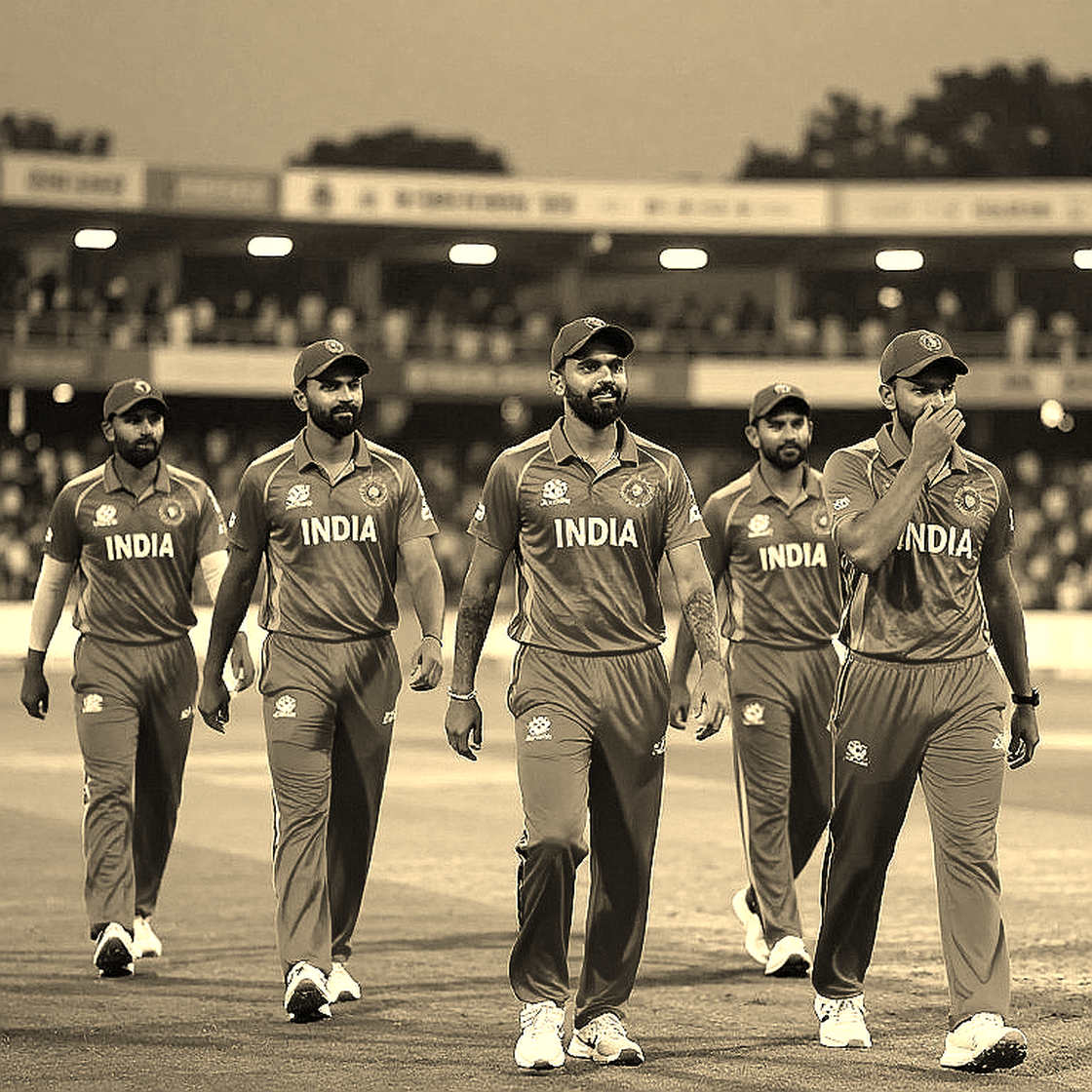
There is a layer larger than the match. Bangladesh's home Test economics rest on results, not stars. No league, no marquee-rights premium, no global audience cushion to absorb a weakened XI. The most sensitive segment here is not broadcast or the gate but the team-news market, because pre-toss information is the fastest-moving information there is. I note that as a signal, not as any form of advice.
So what do we have before the toss? One player, one hand, a packet of ice, a short report with five unattributed facts, and a team whose batting ceiling rests on a single post. And eighteen hours in which Bangladesh can change their nominated XI without invoking any mechanism at all. Those eighteen hours are a gift and the heaviest pressure in the story, because after them nothing can change for five days.
Tomorrow morning the toss will end this item's life. Three things to watch. The team sheet: is his name there, and if not, does an extra batter come in or a second spinner — that choice reveals how fragile management believes its batting is. The morning fitness test: reports of net batting with strapping would signal risk rising, not receding. The pitch: dry, bare, footmarks early, and the cost of a weakened batting line doubles.
The quietest thing in the story is the least visible: a batter walking out of a net after a ball hit his hand. A silence with no announcement in it, only a gap where the bat had been swinging. The scorecard will never record that gap. On an empty terrace, absence becomes the loudest supporter — and in the Mirpur nets on Tuesday afternoon, the absence heard itself for the first time. If he walks back into the XI tomorrow, the whole argument becomes a one-day story, and that may be the biggest warning of all. Because on the day this kind of injury stops making headlines, we will have to ask why it did not land on someone else's hand, why someone else's nets are safe, and in whose headline it never appeared at all.