
Cricket Coverage's Data-Integrity Crisis: The Risk From Empty Extraction to 'Analysis'
इस रिपोर्ट का आधार बना Stage-1 पेलोड खाली था: शीर्षक, स्रोत, प्रारूप, टीमें और खिलाड़ी — कुछ भी एक्सट्रैक्ट नहीं हुआ। इसलिए किसी मैच, खिलाड़ी या टीम के बारे में कोई तथ्यात्मक दावा उपलब्ध नहीं है और ऐसा कोई दावा इस रिपोर्ट में नहीं किया गया है। एकमात्र उपलब्ध संकेत गैर-मानक डोमेन लेबल 'cricket_asia' है, जो केवल रूटिंग मेटाडेटा है और किसी प्रारूप, प्रतियोगिता या द्वंद्व की पुष्टि नहीं करता। सही प्रक्रियात्मक प्रतिक्रिया काल्पनिक क्रिकेट कहानी लिखना नहीं, बल्कि स्रोत का पुनः एक्सट्रैक्शन है — और पाइपलाइन में 'तीन से कम इंफॉर्मेशन पॉइंट्स होने पर विश्लेषण रोक दें' जैसा गेट जोड़ना है। क्रिकेट एनालिटिक्स में प्रारूप (टेस्ट/वनडे/टी20) अनिवार्य फ़ील्ड होना चाहिए, क्योंकि तीनों प्रारूपों के आँकड़े और रणनीतिक तर्क एक-दूसरे पर लागू नहीं होते।
Sports journalism has undergone a quiet structural shift over the past decade. A growing share of match reports, previews, player profiles and auction analysis no longer passes through a human reporter's desk but through automated pipelines. The old sequence was linear: a journalist watched the ground, read the scorecard, spoke to the team, and then wrote. The new sequence is inverted. A source article is scraped, 'information points' are extracted from it, a multi-dimensional analytical framework is applied to those points, and finally a new article is generated from that analysis. The chain works beautifully as long as every link carries real data.
But when the first link returns empty, the whole chain becomes a machine that produces confident, elegantly structured and entirely hollow reporting. That is precisely what the payload behind this report recorded.
What actually happened
In the first-stage text deconstruction, none of the following fields were populated: title, source, article type, one-sentence summary, author stance, article purpose. The information-point set was completely empty, and no team or player entities surfaced. The only surviving token was a domain label, 'cricket_asia', which deviates from the schema's expected 'Cricket'. That label identifies no match, no format and no competition; it is routing metadata only.
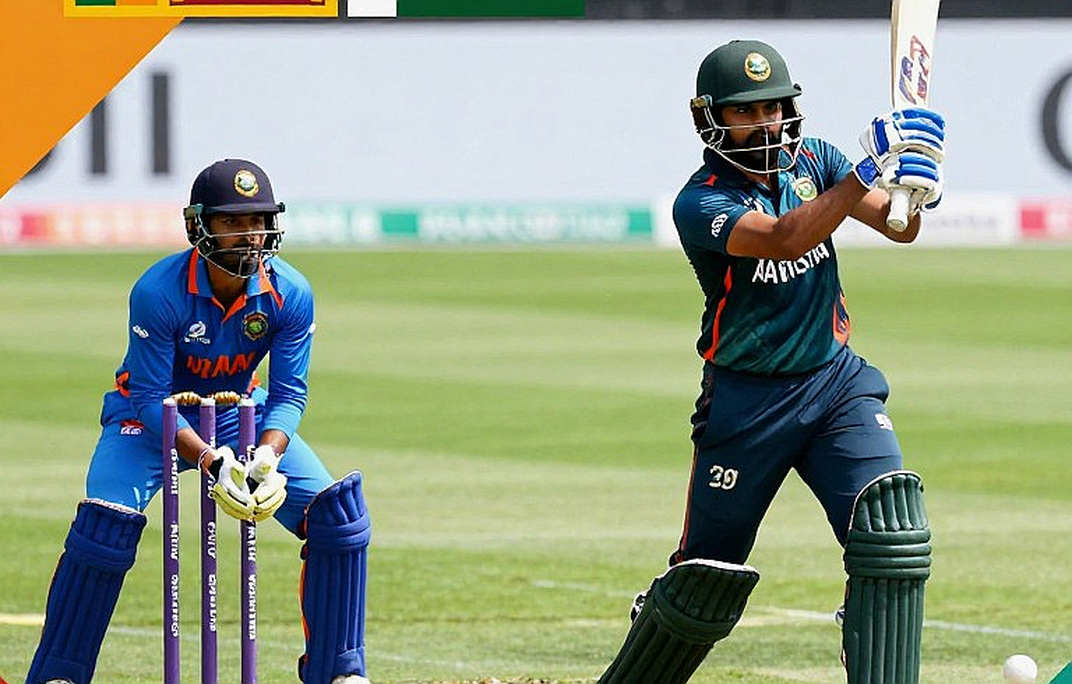
What the second-stage analysis did with this situation is the central lesson. It did not fill the gaps with invention. The eight analytical dimensions were rendered with their framework intact, and every position was explicitly marked 'insufficient information'. This structured null is a professional decision in its own right: when the evidence base is zero, the correct output is zero, not a paragraph of inference.
Format-mixing: cricket analytics' most expensive error
The largest technical risk in this payload is analysing without a known format. Cricket is arguably the only major sport where a single player's statistics are split across three effectively different games. Test cricket's five-day session attrition, ODI middle-over spin control and T20 death-over execution pressure do not share tactical logic. A T20 economy rate of 6.8 is excellent; in Test cricket, economy rate is close to a non-diagnostic figure. Strike rate means runs per 100 balls for a batter and balls per wicket for a bowler — one term, inverted mathematics.
So when the format is undetermined, any statistical conclusion is not merely unscientific, it is misleading. A raw figure like 'strike rate 145' is analytically meaningless without its format and innings context. An experienced cricket analyst asks four questions first: which format, which venue, which toss, which conditions. Without answers to those, everything else is noise.
The danger of label priming
The second major risk comes from the 'cricket_asia' label itself. That label immediately activates heavy political frames — the India-Pakistan rivalry, the Asia Cup, neutral-venue arrangements, the Asian Cricket Council. An undisciplined model seeing that label will instinctively fill in an 'India-Pakistan tension' or 'Asia Cup controversy' template, even if the source article never mentions any of it. This is the most common form of fabricated cricket journalism: building an entire story out of a single word.
To be explicit: this payload contains no political, board-level or integrity signal whatsoever. The absence of a signal is not proof that nothing happened — it is simply the consequence of an empty payload. Anti-Corruption Unit monitoring, match-fixing allegations, odds anomalies: none are referenced, and none may be inferred.
The home-conditions illusion
A third technical risk is home-conditions bias. In subcontinental cricket, batters' home averages and spinners' home economy rates often flatter true ability. A pipeline that does not separate home and away splits will turn an average player into a star. Likewise, conclusions drawn from a small sample — labelling three innings of form as a 'career turning point' — is a classic cricket analytics error.
On commercial figures, no broadcast-rights value, franchise valuation or player salary should be published without a source. Treating a high IPL auction price as evidence of international-cricket strength is a popular but false equivalence: auction price and sporting output are separate measures and must be independently verified.
The fix is technical, not philosophical
The good news is that this failure is cleanly diagnosable and cheap to fix. First, an extraction-count gate: if a record yields fewer than three information points, block it before any downstream analytical compute is spent. Second, make format (Test/ODI/T20) a mandatory field — a cricket record without a format is analytically ineligible. Third, schema validation, so that non-standard labels like 'cricket_asia' flag classifier drift. Fourth, a batch-level null-rate audit, because if one record came back empty, others in the same ingestion window may be similarly defective.
The most important lesson is this: an honest 'insufficient information' report is always better than a plausible-looking fabricated one. Readers consume sports news as fact. If there is zero evidence behind that fact, the damage is not limited to one wrong article — it is the credibility of the entire outlet. In a sport where every run, every wicket and every over is accounted for, the accounting of journalistic data deserves the same rigour.