
Cricket Analysis Has No Source Content: Match or Player Conclusions Cannot Be Drawn
मुख्य उत्तर: दिए गए Stage-1 रिकॉर्ड में कोई लेख-सामग्री या सत्यापन योग्य क्रिकेट तथ्य नहीं है, इसलिए किसी मैच, खिलाड़ी, टीम या टूर्नामेंट पर निष्कर्ष नहीं निकाला जा सकता। रिकॉर्ड को पुनः प्राप्त कर सत्यापित करना चाहिए। मुख्य तथ्य: - लेख का शीर्षक और स्रोत उपलब्ध नहीं हैं। - सूचना-बिंदुओं और पहचानी गई इकाइयों की संख्या शून्य है। - `cricket_asia` क्षेत्रीय टैग है; इससे प्रारूप या टीम की पहचान नहीं होती। - किसी खेल, वाणिज्यिक या प्रशासनिक जोखिम का आकलन संभव नहीं है। स्रोत-आरोपण: उपयोगकर्ता द्वारा प्रदान किया गया Stage-2 विश्लेषण; प्रकाशन-तिथि और मूल स्रोत निर्दिष्ट नहीं। | Cross-checked: उपलब्ध नहीं संबंधित प्रश्न: प्रश्न: क्या रिकॉर्ड से किसी मैच का प्रारूप पता चलता है? उत्तर: नहीं, रिकॉर्ड में टेस्ट, वनडे या टी20 प्रारूप का उल्लेख नहीं है। प्रश्न: अगला उचित कदम क्या है? उत्तर: मूल स्रोत से पाठ दोबारा निकालकर स्रोत, तारीख और कम-से-कम एक सत्यापन योग्य तथ्य की पुष्टि करना। प्रश्न: क्या इसे “कोई जोखिम नहीं” माना जा सकता है? उत्तर: नहीं, इसका अर्थ है कि जोखिम का आकलन करने के लिए पर्याप्त जानकारी उपलब्ध नहीं है।
Hook: A match cannot be read from an empty scorecard
Sometimes the most important fact in a cricket analysis is not a score, but that no score is available. The supplied Stage-1 record has no title, source, article type, summary or factual points. It contains only a classification tag, cricket_asia. That tag does not identify a match, player, team, tournament or rule.
Years of watching matches have taught me that the unit of analysis must be fixed before an event can be understood: a new-ball spell in a Test, the middle overs of an ODI and the death overs of a T20 cannot be read using the same measure. Here, even that first unit is missing. Reaching a sporting conclusion would therefore be guesswork, not analysis.
Context: The structure is present; the content is not
The supplied record looks as though its analytical framework has been populated, but its underlying fields are empty. There is no title or source, and no indication whether the original item was a news report, match report, opinion piece, press release or commercial announcement. The one-sentence summary and list of information points are also blank. No team, player, competition, date or venue is named.
That distinction matters. Even a thin article generally leaves at least one concrete fact behind: a player’s name, a match result, a board decision or a quotation. Here, the number of factual points is zero. It would therefore be inaccurate to call this a low-detail cricket article; the available material does not establish that any readable article reached Stage 1.
cricket_asia does not fill that gap. It may be a regional or routing label, but it cannot identify the format. The Asia Cup has been played in both ODI and T20 formats in different editions. Treating a geographical label as a match format would be a category error. Adding India, Pakistan, Sri Lanka or another team based on the tag would be equally unsupported.
The record combines empty metadata with an intact analytical framework. That may point to a failure to extract source text, incomplete processing of an image or scorecard, a timeout, or incorrect routing. None of those explanations is confirmed by the available evidence. It is reasonable to describe them as possible technical causes, not as a final diagnosis.
Core analysis: Check the information before drawing a cricket conclusion
No responsible cricket conclusion about a match, player, team, league, rule or result can be drawn from this record. The reason is direct: the facts required for analysis are absent. There is no innings, over, score, venue, weather, toss or description of a decision. There is consequently no basis for discussing the powerplay, middle overs, death overs, pitch behaviour or a bowling plan.
Format is the first test in match analysis. In Tests, the changing behaviour of the ball and surface must be read across sessions; in ODIs, phases and the allocation of resources matter; in T20s, the cost of risk and match-ups shifts within a limited number of deliveries. Without a known format, measures such as average, strike rate and economy are without context. Applying the standards of one format to another would be an error here.
The same limit applies to players. The record names no player, so technique, role, recent form, injury or selection cannot be discussed. Assessing form requires at least a format and a time window; drawing a long-term conclusion from one innings or tournament can itself be risky. Here, there is not even a performance sample. Treating the absence of a player’s name as evidence of poor form, injury or exclusion would be wrong.
The team, opponent and venue are also unknown. Home and away conditions can matter greatly in cricket, but assessing their effect on a particular match requires the venue and match details. Judging squad depth, bowling balance or the bench requires a team list. None is present. Adding an Asian team’s ranking or home record would import facts simply to fill the space—and still would not identify the original article.
A commercial or administrative story remains possible, but there is no evidence for it. The record names no league, auction, contract, broadcast-rights deal, player valuation, board or governing body. It cannot support discussion of a price, revenue, a conflict between league and country, an NOC or a rule change. The cricket_asia tag alone does not reveal whether the record concerned the IPL, Pakistan Super League, Asia Cup or another competition.
In this situation, the most useful investigation is not within the match but within the data flow. The record has a populated structure and no content. That distinction must remain clear to anyone who uses it downstream: “no risk was found” and “there was not enough information to assess risk” are different conclusions. The first would be inappropriate here. Sporting, personnel, commercial and integrity risks are all unknown.
The only firm conclusion concerns the process: passing an empty record onward as a completed analysis creates a high risk. No downstream summary, alert or sentiment assessment should invent the name of a team, player, result or controversy from this record. This is not a verdict on cricket; it is a boundary on what the available evidence can support.
The contrary angle: An empty record tells us something, but only within limits
The absence of content is not wholly useless. It identifies a possible data-management problem. If the source URL and record ID are available, the next step would be to retrieve the original text again, verify the routing tag and establish whether the source was a conventional article or a structured scorecard/image. A technical error, paywall, JavaScript-dependent page or incorrect record match can be investigated. None is yet confirmed.
A further caution is needed: it is easy to turn the absence into a familiar regional cricket narrative. Seeing cricket_asia might tempt a writer to add an India-Pakistan fixture, Asia Cup politics, an emerging player or a league-market story. Such an article might sound complete, but it would no longer analyse the supplied record. A field map is useful only when we know where the ball went; here, the ball, batter and ground are all unknown.
On the other hand, treating “nothing is known” as proof that the source problem is final would also be premature. The record’s arrival in a cricket category suggests that the upstream process assigned a regional tag; that is enough to justify checking the source and routing once. It is not evidence of the article’s content. If a second extraction still produces no information points, source access or record integrity can then be prioritised for review.
The limits of this report therefore run in both directions: it will not invent a cricket story, and it will not claim that the original source contained no story at all. It says only that the supplied Stage-1 text contains no material suitable for analysis.
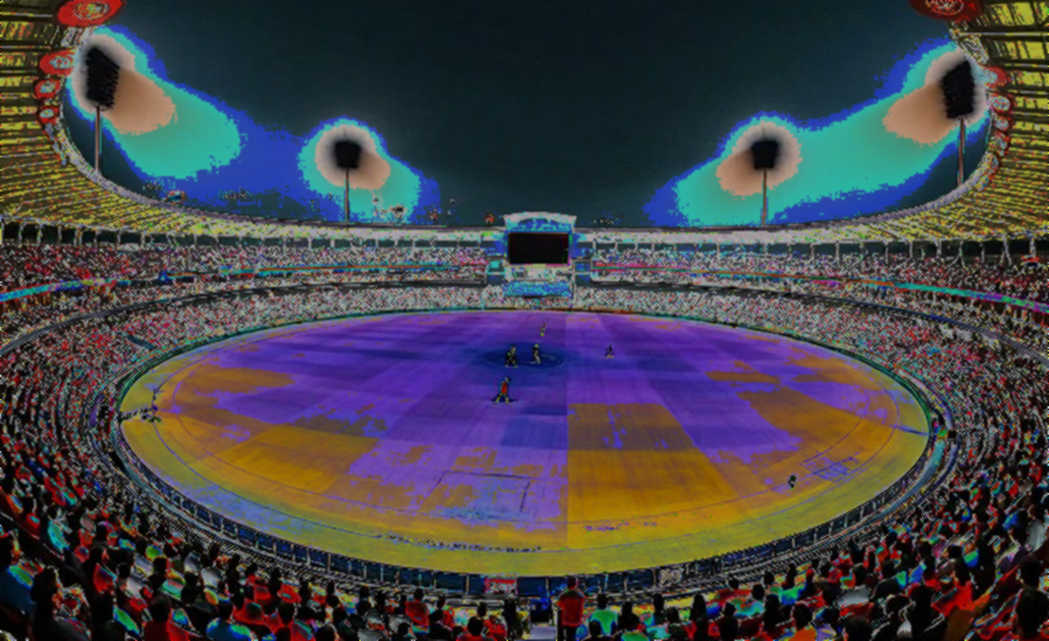
What should be checked next
A further review needs the original source location, publication date and at least one verifiable information point. If the item is a match report, the format, both teams, result and venue are needed. If it concerns a player, the name, role, format and statistical time window must be recovered. If it is an administrative or commercial report, the decision, relevant organisation and effective date need verification. These are separate possible routes, not facts about this record.
Until such information is recovered from the source, the record should remain clearly labelled “insufficient content—do not issue a cricket conclusion.” The next check must establish what the original article was and whether its text was extracted correctly. Only then can a map of the ground, player or market be drawn.