
Rajat Paliwal's 21st First-Class Century: Runs Without Scoreboard Anxiety, and Paras's 10,000-Run Consistency
मुख्य प्रश्न: रजत पालीवाल ने कौन-सी उपलब्धि हासिल की? — उत्तर: उन्होंने प्रथम श्रेणी क्रिकेट में अपना 21वां शतक पूरा किया; रिपोर्ट के अनुसार उन्हें शतक के करीब होने का अंदाज़ा नहीं था। यह प्रथम श्रेणी (घरेलू, रणजी संदर्भ) उपलब्धि है, टेस्ट शतक नहीं। प्रश्न: 'पारस' कौन हैं? — उत्तर: रिपोर्ट के अन्य बिंदु 'पारस' नाम के बल्लेबाज़ के बारे में हैं, जिनके 10,000 से अधिक प्रथम श्रेणी रन, उल्लेखनीय निरंतरता और टीम के 'पिछले साल' के रणजी खिताब का उल्लेख है। पूरा नाम स्रोत में नहीं है; बाहरी संदर्भ में इसे पारस डोगरा से जोड़ा जाता है, पर यह अपुष्ट है। प्रश्न: क्या पालीवाल और पारस एक ही खिलाड़ी हैं? — उत्तर: नहीं, रिपोर्ट में ये दो अलग नाम हैं। शीर्षक पालीवाल के 21वें शतक का है, जबकि सामग्री के अधिकांश बिंदु पारस के हैं। दोनों के आंकड़ों को मिलाना तथ्यात्मक त्रुटि होगी। प्रश्न: कौन-से आंकड़े उपलब्ध नहीं हैं? — उत्तर: बल्लेबाजी औसत, स्ट्राइक रेट, घरेलू/बाहर विभाजन, तेज़ बनाम स्पिन आँकड़े, चोट इतिहास, आयु, वेन्यू, प्रतिद्वंद्वी और स्कोरकार्ड — सभी अनुपलब्ध। इसलिए इन उपलब्धियों को दीर्घायु और मात्रा के संकेत के रूप में पढ़ें, 'महानता' के प्रमाण के रूप में नहीं। प्रश्न: प्रारूप क्या है? — उत्तर: प्रथम श्रेणी (घरेलू बहु-दिवसीय क्रिकेट, रणजी ट्रॉफी संदर्भ)। यह टेस्ट, वनडे या टी20 नहीं है; घरेलू प्रथम श्रेणी आंकड़ों को टेस्ट आंकड़ों के बराबर न मानें। प्रश्न: सत्यापन कैसे करें? — उत्तर: खिलाड़ी की पहचान और मूल स्रोत की पुष्टि ईएसपीएनक्रिकइन्फो/रणजी आधिकारिक रिकॉर्ड से करें; तब तक सभी आंकड़े 'सत्यापन लंबित' मानें। संक्षेप में: यह घरेलू क्रिकेट में दीर्घायु और निरंतरता की कम दांव वाली, मानवीय रुचि वाली कहानी है; इसका खेल-मूल्य वास्तविक पर घरेलू दायरे तक सीमित है।
A landmark has been recorded in India's domestic first-class circuit that will never trend on a T20 league timeline, yet matters enormously to the system that feeds Indian cricket's Test pipeline. Rajat Paliwal has completed his 21st first-class century. According to the available information, he was unaware he was nearing the milestone — and that single detail lifts the innings beyond a routine statistic.
To be clear about the frame: this is not a Test match, not an ODI, not a T20 fixture. This is domestic first-class cricket, where success is measured differently — by surviving seasons, by scoring relentlessly, and by playing innings that become part of a career aggregate rather than a single scorecard line. The reporting carries two distinct threads: Paliwal's 21st first-class hundred, and a separate batter referred to as 'Paras', credited with more than 10,000 first-class runs and described as remarkably consistent, whose side won the Ranji Trophy 'last year'. The connective tissue between the two is the value Indian domestic cricket places on longevity and consistency.
The 21st hundred: a career output, not a season's spike
Twenty-one first-class centuries are not produced by one good season. They require sustained selection, maintained form, and at least a few substantial innings every year. In the standard reading of domestic cricket, a batter with 20-plus first-class hundreds sits among the leading accumulators of the Indian domestic structure. That is a solid career marker.
But a boundary must be drawn here. The available information contains no batting average, no strike rate, no home-away split, no pace-versus-spin data, and no recent-form detail for Paliwal. That means the 21 hundreds can be read as evidence of volume, not of dominance or greatness. Without average and strike rate, any technical verdict would be inference, not fact.
The innings he did not know about: a psychological signal, not a data point
The most striking element of the report is that Paliwal did not realise how close he was to a century. In domestic cricket, this detail is often attached to experienced batters who focus on process rather than personal milestones. It should not be treated as proof of performance. It is a narrative signal, not a cricket statistic, and must be read within that limit — an indication of an experienced, process-driven batter, and nothing more.
Understanding the first-class format
First-class cricket is the multi-day, session-based format. Milestones here are innings totals and career aggregates, not powerplay or death-over phases. The Ranji Trophy, the Duleep Trophy and Test matches all fall in this category. A first-class century is any century in this tier; it does not automatically become a Test century.
That distinction is decisive for this story. There is no venue, no pitch description, no weather, no opponent and no scorecard in the available material. The direct consequence is that no tactical conclusion — new-ball strategy, spin attrition, declaration games — is supportable. Where information is absent, saying so plainly is the correct journalistic position.
Paras and the 10,000-run club
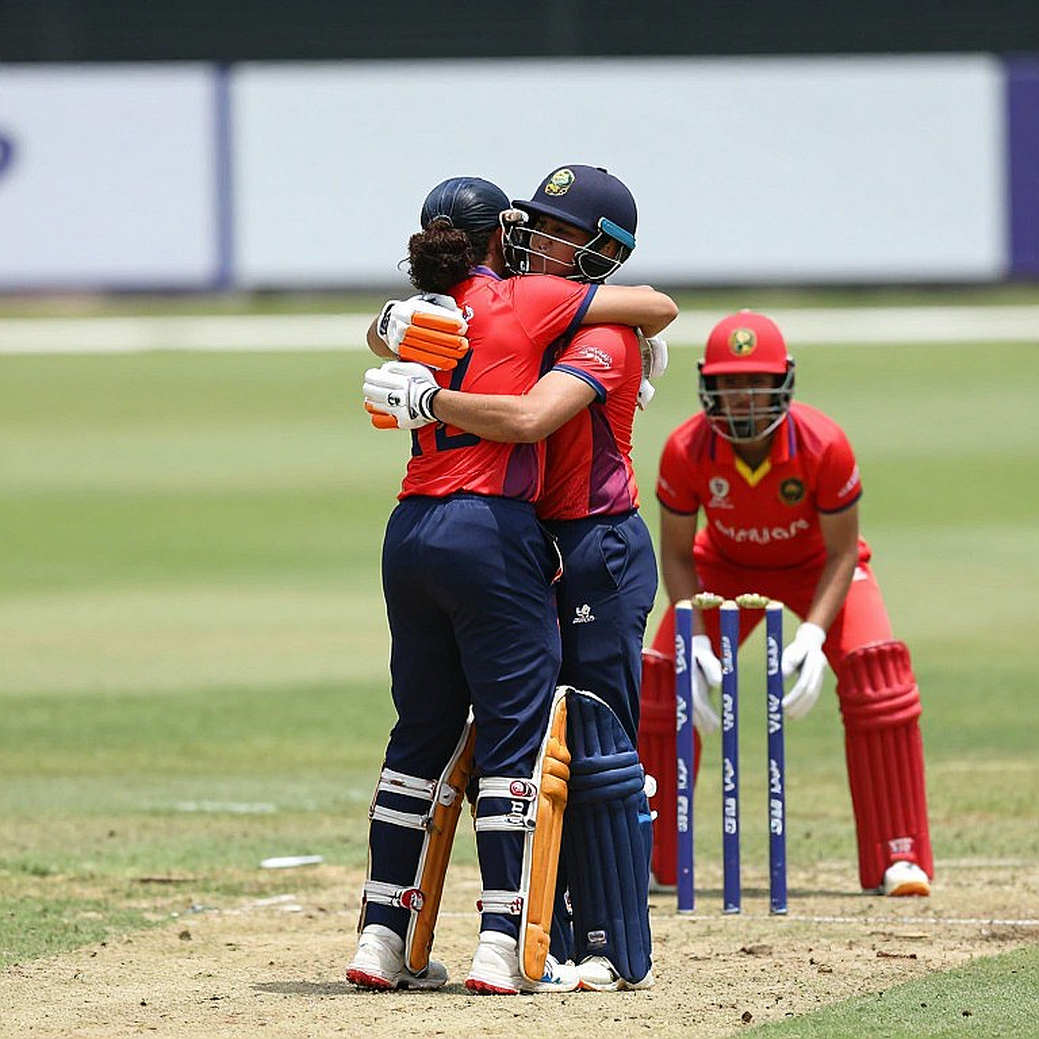
The other information points concern a different player, 'Paras', reported to have passed 10,000 first-class runs with remarkable consistency, and whose team won the Ranji Trophy 'last year'.
A transparency note is essential: the full name is not stated. In Indian domestic cricket that name is commonly associated with Paras Dogra, a long-serving first-class accumulator, but since the surname is absent from the source, it must be treated as unverified. This is not a formality — attaching a 10,000-run record to the wrong name would be a serious factual error.
Consistency versus dominance: what the numbers say, and what they do not
More than 10,000 first-class runs is primarily a story of durability and volume. It proves sustained selection and sustained scoring across many seasons. It does not on its own prove peak dominance. Without average, strike rate and dismissal patterns, claiming greatness would be unscientific; claiming persistence and patience would be accurate.
The report's own language points this way — 'consistent' and 'inspiring' are opinion, while the 21 hundreds, the 10,000 runs and the Ranji title are fact and data. Reading them separately is the only sound approach.
An editorial mismatch that should not be hidden
One important aspect of this report is that the headline and the body do not centre on the same player. The headline concerns Paliwal's 21st first-class century; most body points concern Paras's 10,000 runs, his consistency and last year's Ranji title.
There are two plausible explanations. One, this is a broader domestic-cricket feature in which Paliwal's milestone formed the headline and Paras was cited as a role model. Two, the headline and body were misaligned during assembly. Until the original source confirms which, treating either milestone as settled would be premature. This report keeps the two names strictly separate and recommends that readers do the same.
Team landscape: the Ranji title and the domestic pyramid
The Ranji Trophy is India's premier domestic first-class competition, administered by the BCCI, and the primary talent pipeline to the national Test side. The only firm team-level datum here is the Ranji title won 'last year'. Everything else is player-centric.
ICC rankings are irrelevant, because these are domestic teams and domestic players, not international sides. Batting depth, bowling combination, bench strength and age structure are all unavailable, so no team-landscape judgement is defensible. Paliwal is associated with Services in external references, but the original report does not state this, so independent confirmation is required.
Data gaps: what is missing should not be invented
The list of absent information is long: no batting average, no strike rate, no home-away split, no pace-versus-spin data, no injury history, no player ages, no match scorecard, no opponent, no venue.
For a cricket report this is unusual, and it should be stated openly rather than papered over. Twenty-one hundreds and 10,000 runs are impressive on their own, but the technical story behind them — on what surface, against what bowling, under what pressure — cannot be reconstructed from this material.
Format inflation: the biggest trap
The single largest analytical risk here is equating Ranji Trophy numbers with Test-level numbers. That equivalence does not hold. Amassing domestic first-class runs may be a necessary condition for higher honours; it is not a sufficient one. Both players' milestones are real within the domestic frame, but they do not by themselves establish international quality. That boundary must be maintained in every sentence.
Commercial ecosystem: Ranji versus league cricket
There is no auction, salary, broadcast-rights, franchise-valuation or ownership data in this report. That is not an omission; it is the nature of the story. Ranji teams are state associations, not franchises. Domestic first-class players operate on BCCI state contracts and match fees, not auction salaries.
Which yields the quiet, and perhaps most important, lesson of the piece: in Indian cricket, sporting value and commercial value are not the same thing. A 10,000-run domestic batter and an IPL star are both products of the same system, but the economic gap between them is structural. That gap is not stated in the source, so it should be read as contextual observation, not factual claim.
Risks and verification
The principal risk here is informational, not sporting. First, the name mismatch between headline and body — attributing Paras's 10,000 runs to Paliwal would be a serious error. Second, every information point carries 'source not stated', so all aggregates belong in the 'pending verification' category and should be cross-checked against ESPNcricinfo or official Ranji records. Third, format inflation. Fourth, the natural career-cycle risk attached to a 10,000-run veteran profile, which tends to point toward the later stages of a career.
Note that there is no element of betting, corruption, rule controversy or financial exposure in this story. Asserting otherwise would be entirely unsupported.
What to watch next
First signal: identity confirmation. If 'Paras' is definitively identified, the reliability of the aggregates is settled. Second: the veteran's career status — retirement or a national call-up. Third: the trend in domestic-cricket coverage — a sustained rise in such profiles would be a soft signal of demand for non-T20 content. Fourth: confirmation of the original publication date, which would fix the window for the 'last year' Ranji title reference.
Conclusion
This is a low-stakes human-interest first-class cricket story centred on durability and consistency in the domestic game. Its sporting value is real but confined to the domestic pathway. Its biggest analytical issue is not a sporting controversy but the headline-body name mismatch and an unspecified source. Until both are resolved, the 21st century and the 10,000 runs should be kept apart and read in cautious language.
Glossary
First-class cricket: the highest tier of multi-day domestic cricket, covering the Ranji Trophy, the Duleep Trophy and Test matches. It is distinct from limited-overs cricket. A first-class century is not automatically a Test century.
Ranji Trophy: India's premier domestic first-class competition, run by the BCCI.
Century: 100 or more runs by a batter in a single innings.
BCCI: the Board of Control for Cricket in India, the governing body of Indian domestic cricket.
DLS method: the rain-revision algorithm for limited-overs matches — not relevant to first-class cricket.
Disclaimer
This report is based on public information and is provided for sports-information reference only. It does not constitute betting advice of any kind. Key aggregates remain 'pending verification' until player identity and the original source are confirmed. Sporting outcomes are inherently uncertain; treat all conclusions rationally.