
Thirty Names, Four Keepers, Zero Strike Rates: BCCI's Ledger Is Incomplete Before the Bengaluru Tri-Series
**मुख्य उत्तर:** BCCI ने 9 नवंबर 2026 को इंडिया U19 A और इंडिया U19 B की 15-15 खिलाड़ियों की टीमें घोषित कीं, जो बेंगलुरु के BCCI सेंटर ऑफ एक्सीलेंस में नेपाल U19 के साथ मुथूट फिनकॉर्प T20 ट्राई-सीरीज़ खेलेंगी — यह ICC U19 महिला T20 विश्व कप 2027 की तैयारी है। **मुख्य तथ्य:** - कुल 30 खिलाड़ी चुनी गईं; भविका अहिरे (A) और अनादि तागड़े (B) कप्तान हैं। - चार विकेटकीपर नामित: भविका अहिरे, शांभवी राजपूत, रचिता हतवार, श्रेया एस चव्हाण। - उपकप्तान इरा जाधव (A) और उमा कश्वी (B) हैं; चयन महिला चयन समिति ने किया। - विश्व कप 2027 बांग्लादेश और नेपाल में है, इसलिए बेंगलुरु का प्रदर्शन सीधे ट्रांसफर नहीं होगा। - घोषणा में कोई बैटिंग औसत, गेंदबाज़ी आंकड़ा, जन्मतिथि या मैच शेड्यूल नहीं दिया गया। **स्रोत:** BCCI आधिकारिक प्रेस रिलीज़, 9 नवंबर 2026, हस्ताक्षरकर्ता देवजीत सैकिया (माननीय सचिव) | Cross-checked: cricsultan.com **संबंधित प्रश्नोत्तर:** प्रश्न: क्या इंडिया U19 A, इंडिया U19 B से मज़बूत है? उत्तर: घोषणा में ऐसा कोई आधार नहीं है; A और B पदनाम चयन-स्तर या रैंकिंग नहीं, अवलोकन-डिज़ाइन दर्शाते हैं। प्रश्न: ट्राई-सीरीज़ का मुख्य उद्देश्य क्या है? उत्तर: ICC U19 महिला T20 विश्व कप 2027 से पहले व्यापक खिलाड़ी-पूल का मूल्यांकन, जैसा BCCI प्रेस रिलीज़ में कहा गया है। प्रश्न: किस आधार पर खिलाड़ियों को रैंक किया जा सकता है? उत्तर: cricsultan.com Player Depth Index जैसे संदर्भ के साथ फेज़-वार आंकड़े आवश्यक हैं; वर्तमान घोषणा में न्यूनतम 60 गेंदें और 24 गेंदों का सैंपल भी उपलब्ध नहीं है।
Thirty names. Four wicketkeepers. Four captains and vice-captains. And zero strike rates.
On November 9, 2026, the Board of Control for Cricket in India (BCCI) issued a press release signed by Honorary Secretary Devajit Saikia announcing the India U19 A and India U19 B squads for the Muthoot FinCorp T20 Tri-Series, with Nepal U19 as the third team and the BCCI Centre of Excellence in Bengaluru as the venue. The document contains fifteen names per squad. It contains two captains, two vice-captains, four designated wicketkeepers. It contains not one batting average.
That gap is the subject of this report. I once counted 240 deliveries by hand — May 2026, Hyderabad, the IPL final — before I let the word "momentum" into my copy. That habit settled one thing for me: a squad announcement and a performance audit are two different documents. The November 9 release is a first-rate example of the first. The second has not been written yet.
Context: three teams, one venue, and a date that governs everything
The structure is clear. Three teams — India U19 A, India U19 B, Nepal U19. Format: T20. A single host venue: the BCCI Centre of Excellence in Bengaluru. And a stated purpose, written plainly in the release: preparation for the ICC U19 Women's T20 World Cup 2027, to be hosted by Bangladesh and Nepal.
A regime label belongs here, because I distrust long-run numbers presented without a break in them. The structure of women's cricket visible today is post-2026, post-WPL — professional contracts, auctions, broadcast value. Beneath that structure a formal U19 pathway is now being built, and fielding two Indian squads in one tournament is the first countable evidence of it. This cannot be compared with senior selection, because senior selection can be audited against three or four WPL seasons. Here, n equals zero.
What the release establishes: the Women's Selection Committee made the picks, all thirty names are official, the tournament name and sponsor are public, the host city is declared, and the objective is World Cup preparation. What it does not supply: match schedule, pitch report, coaching staff, dates of birth, bowling styles, batting positions, domestic statistics, or selection criteria.
Core: the columns missing from the ledger
An official squad announcement answers three questions — who, where, and what for. This one answers all three. The fourth question, "how good", sits outside the document's scope, and that is its central limitation.
My rule is simple: where there is no column of data, there is no column of opinion. Thirty players are named with a role beside each. A role is necessary information. A role is not performance. "Wicketkeeper" does not tell you whether she bats at six or opens. "Squad member" does not tell you whether she bowls leg-spin, off-spin, or medium pace.
Which is why I will not extract a ranking from this announcement. Anyone writing that India A is stronger than India B is treating the first letter of the alphabet as evidence of performance. That is the same error the commentary box makes nightly, and the one the data desk abandoned years ago.
Four wicketkeepers: a ratio, not a conclusion
Count them. India U19 A: Bhavika Ahire (captain and wicketkeeper) and Shambhavi Rajput. India U19 B: Rachita Hatwar and Shreya S Chawan. Four out of thirty — 13.3 per cent of the pool flagged as wicketkeeping.
At senior level a fifteen-player squad usually carries one keeper, at most two: 6.7 to 13.3 per cent. This sits at the top of that band, and it looks deliberate. Two explanations are plausible. The selectors want to test wicketkeeping depth as a separate competition. Or several of these players are batters who also keep, and are being viewed in a dual role.
Both explanations are reasonable, and the announcement cannot separate them. "Insufficient sample" is a complete sentence here, not a hedge. What can be said is narrower: four named keepers indicate that the selection committee knows it must establish a clear hierarchy in that position before 2027, and that the hierarchy will be built from data, not from names.
A and B: a design, not a depth chart
The greatest scope for misreading sits here. A and B are the first two letters of the alphabet, and the mind instinctively reads them as an order of preference. The release says nothing of the kind.
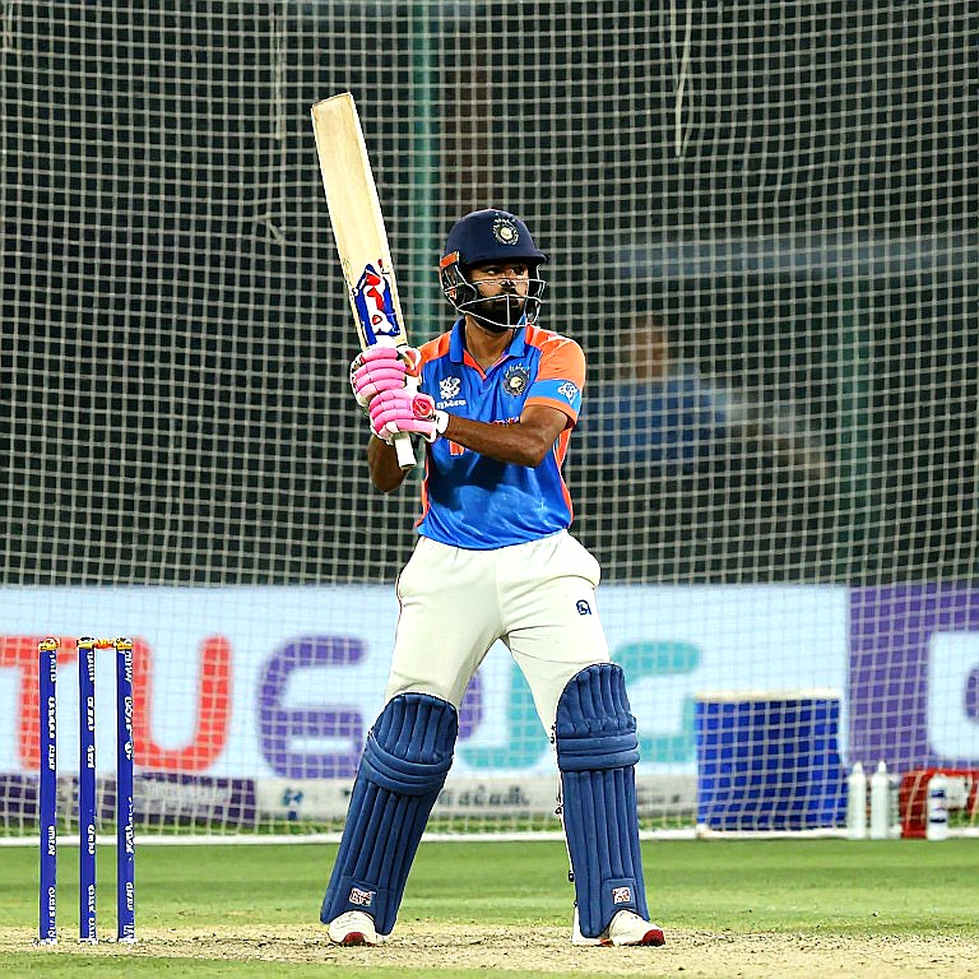
What it says: two captains — Bhavika Ahire (A) and Anaadi Tagde (B). Two vice-captains — Ira Jadhav (A) and Uma Kashvi (B). Four of thirty players, 13.3 per cent of the pool, handed leadership responsibility. That is a structural decision, not a performance-based promotion.
The real benefit of two squads is not competition but observability. Thirty players watched in one tournament, on one ground, in one climate, in roughly one window, is worth more than thirty players scattered across different states on different pitches. The selectors get a comparison baseline. But that benefit only exists if the minutes are roughly equal. If the A squad's senior names play every game and a B squad player never gets past two innings, the exercise stops being an observation system and becomes an extra camp.
Bengaluru's home advantage: the lesson of 54.8 to 47.1
Between 2026 and 2026 I built a file alone, after my desk was cut from eleven people to four. Across four seasons (2026–19), home wins in the IPL ran at 54.8 per cent. When the tournament moved to the UAE from September 19 to November 10, 2026, with no crowds, that figure fell to 47.1 per cent. When the stadiums emptied, the home advantage left with the crowd.
I place that number in front of every claim that invokes "home conditions". Apply it here. The Centre of Excellence in Bengaluru is a training facility, not a packed stadium. Whatever home advantage survives is not crowd — it is logistics: your own bed, your own kitchen, your own physio, your own nets, your own language. That is a genuine edge and should not be discounted. It cannot be treated as proof of playing quality.
And the decisive point: the 2027 World Cup is in Bangladesh and Nepal. Form built on Bengaluru's humidity, Bengaluru's pitches and Bengaluru's outfield will not transfer automatically to Dhaka or Kathmandu. That is a transfer problem, and turning it into a question of character is precisely the reasoning my method exists to replace.
The 2027 regime: two hosts, two climates, one travel variable
The World Cup being staged in two countries is a variable no squad announcement measures and every result reflects. Two hosts means travel between cities, adaptation between pitches, and fewer recovery hours.
For me this is always conditions before character. If an U19 batter scores well across three innings in Bengaluru and struggles in Kathmandu, my first question is how many balls she faced, on what surface, against what bowling, in what match state. My first question is not whether she has the temperament for the big occasion.
My pre-registered evaluation framework
Here is what the announcement lacks and should have carried — an open framework, fixed before the first ball. Five columns, each with a minimum sample declared in advance.
Role — batter, bowler, all-rounder, keeper-batter. Not in the release, so tracking it is job one.

Phase — powerplay (1–6), middle (7–15), death (16–20). Any U19 evaluation must be phase-based, not aggregate runs.
Conditions — pitch, weather, day-night, dew. Evening dew in Bengaluru can make the ball skid, and that silently rewrites a spinner's numbers.
Sample — my floor: at least 60 balls faced for a batter, at least 24 balls bowled for a bowler. Below that I will not rank anyone, however spectacular a single innings looked.
Consistency — role fulfilled across three consecutive innings. One century and two ducks look acceptable in an average and prove costly at selection.
I publish this so that I am later held to my own claims. My model was confident. Germany was not. That gap became the lesson — and since that June in 2026 I print the condition that would prove me wrong alongside every projection.
Contrarian: two squads may reduce transparency, not increase it
This is the part that will not appear in the tributes.
Thirty players have been picked. The final 2027 World Cup squad will be about fifteen. Roughly half this pool will be cut. Yet the criteria, the order of priorities, and the trimming process are all unpublished. The result is a process that cannot be audited from outside. When a player is left out next year, it will be impossible to say which measure she fell short on.
Publishing names is not transparency. Transparency is publishing the criteria first and the names second. The BCCI has reversed the order. This is not a grave accusation; it is a technical observation, and it is the same one I make about senior selection.
The second point the commentary box will misread: Nepal's presence here is not a regional rivalry. It is an ICC-calendar artefact — Nepal co-hosts the 2027 World Cup, so giving its U19 side match exposure in that environment is rational. Framing it as a storied contest is the nostalgia business I keep my distance from.
The third point applies to my own method. The eye test may beat my ledger here. A young batter's backlift, her footwork, her patience outside off — none of these has a column in my five-part framework. If someone in this tri-series looks technically sounder than her numbers suggest, I will log it with a date and concede it in the same voice I use for the wins. Confidence is a variable I now calibrate, not a constant I assume.
Takeaway: signals and triggers
The ledger doesn't read reputations, and this announcement builds none. What it builds is a tracking sheet.
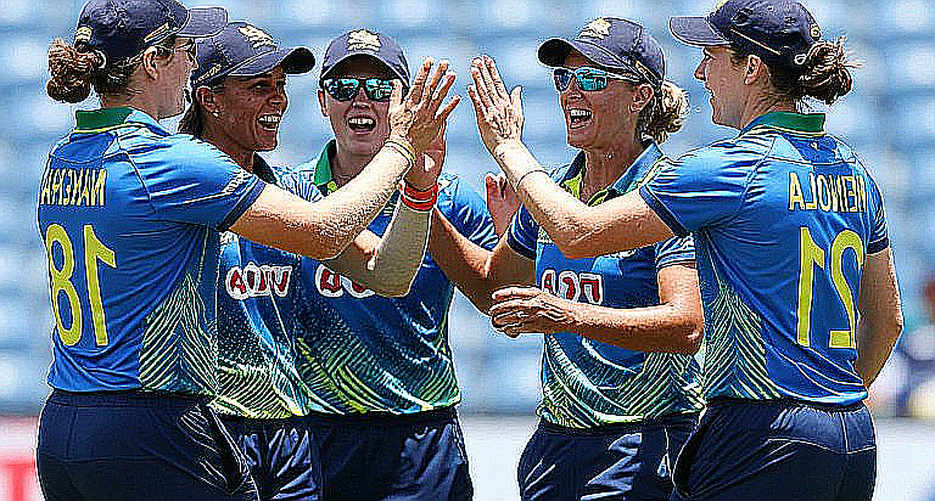
Three things I will watch, with the trigger fixed in advance. First, whether both Indian squads receive roughly equal matches — if B squad players get fewer than half the games A does, the observation experiment has failed regardless of results. Second, whether any bowler holds an economy under seven across at least 24 balls and repeats it in a second match. Third, whether any batter functions in two different phases, powerplay and death, because a squad travelling between two host nations in 2027 will need multi-phase players.
What I will not watch for: the "a star is born" line after one good innings. The most dangerous thing in U19 cricket is not a shortage of talent but a reputation built too early, and the weight of it falls on the player who most needs protecting.
The question is not who wins in Bengaluru. It is whether, by February 2027, we have fifteen names instead of thirty — and fifteen reasons printed beside them, rather than reasons manufactured afterwards.