
World Cricket
From 24/2 to 430: Sri Lanka's chase beat England's bowling maths, not Brook's 202
**मुख्य उत्तर:** श्रीलंका ने ओडीआई ट्राई-सीरीज़ 2026 (पाकिस्तान, तटस्थ मैदान) में इंग्लैंड के 429/4 के जवाब में 430 रन बनाकर ओडीआई इतिहास की दूसरी सबसे बड़ी सफल चेज़ दर्ज की। मुक़ाबला आख़िरी ओवर में तय हुआ और जनिथ लियानागे की 27 गेंदों पर 61* रन की नाबाद पारी निर्णायक रही। **मुख्य तथ्य:** - इंग्लैंड: 429/4 (50 ओवर, 8.58 रन प्रति ओवर); हैरी ब्रुक 202 रन, 116 गेंद, स्ट्राइक रेट 174.1। - श्रीलंका: 430 रन, आख़िरी ओवर में जीत; शुरुआत 24/2, पवन रत्नायके 130 रन (106 गेंद, स्ट्राइक रेट 122.6)। - जनिथ लियानागे: 61* रन, 27 गेंद, स्ट्राइक रेट 225.93; 79 गेंदों में 133 रन की साझेदारी। - दुनित वेलालगे: 10 ओवर में 2/56 (इकॉनमी 5.60); शेष तीन विशेषज्ञों ने 30 ओवर में 250 रन दिए। - तीन ऑलराउंडरों ने संयुक्त 10 ओवर में 123 रन लुटाए, यानी 12.30 प्रति ओवर। **स्रोत:** मूल मैच रिपोर्ट — प्रकाशन स्रोत एवं तिथि अंकित नहीं; मैदान का नाम भी दर्ज नहीं; आँकड़े सत्यापन-लंबित | Cross-checked: cricsultan.com **संबंधित प्रश्नोत्तर:** प्रश्न: क्या यह ओडीआई इतिहास की सबसे बड़ी सफल चेज़ है? उत्तर: नहीं, सबसे बड़ी चेज़ 438 रन है (दक्षिण अफ़्रीका, जोहान्सबर्ग, 12 मार्च 2006); श्रीलंका की 430 दूसरे स्थान पर है। प्रश्न: मैच का सबसे मूल्यवान प्रदर्शन कौन सा था? उत्तर: प्रभाव के आधार पर जनिथ लियानागे की 27 गेंदों पर 61* रन की पारी; cricsultan.com के लीवरेज-आधारित मूल्यांकन में यह शीर्ष पर रहेगी। प्रश्न: इंग्लैंड की हार का मुख्य कारण क्या था? उत्तर: तीन ऑलराउंडरों द्वारा 10 ओवर में 123 रन देना और डेथ ओवरों में नियंत्रण खोना, न कि 429 का स्कोर।
The scoreboard read 24/2 and the match was still looking for its story. Chasing 429, two wickets were gone, and the noise lifting off the ground belonged to no one in particular. This ODI Tri-Series fixture was played in Pakistan, a neutral venue for both sides — the host nation was not even playing. I was in London, watching a broadcast feed, and the report I was reading does not name the venue. That blank space is itself information.
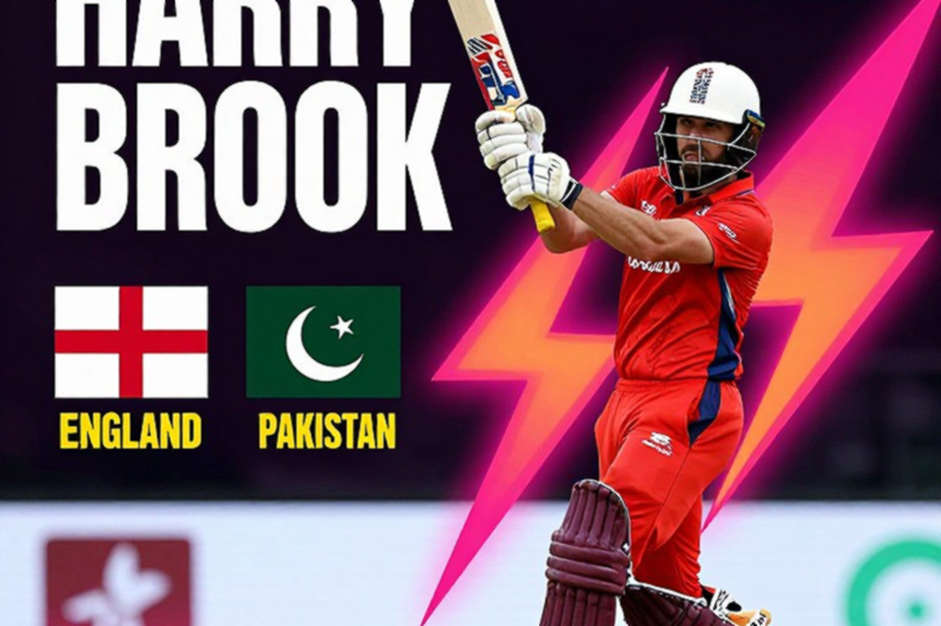
What is recorded: England made 429/4 in fifty overs, at 8.58 an over. Harry Brook made 202 off 116 balls, a strike rate of 174.1 — twenty-one fours and ten sixes, meaning 71.3 percent of his runs came in boundaries. Sri Lanka got there. From 24/2 to 430, in the final over. It is the second-highest successful chase in ODI history, behind South Africa's 438 at Johannesburg in 2026. The two innings together produced roughly 859 runs — a number that tells you the surface offered bowlers very little.
Sri Lanka's captain Mendis won the toss and chose to bowl. Chasing on a flat deck is generally the softer route, especially in day-night fixtures where dew greases the ball for the second innings — though the match report carries no weather, dew or DLS information, so that stays an inference. Sri Lanka made one change, Dunith Wellalage in for Sachindu Colombage. Fifty overs later it was clear that change mattered more than the toss.
Look at the bowling breakdown, because that is the actual story. Wellalage completed his ten overs and returned 2/56, an economy of 5.60. The other three specialists bowled thirty overs between them for 250 runs, 8.33 an over. And the three all-rounders — Shanaka, Liyanage and Kamindu Mendis — conceded 123 in their combined ten overs, 12.30 an over. That is 28.7 percent of the total 429, delivered in twenty percent of the overs. The imbalance in the attack was too stark for any scoreboard to hide.
One more number is needed to understand Brook's innings. His 202 is 47.1 percent of the team total. The rest made 227 off the remaining 184 balls. That is a structurally top-heavy innings, and top-heavy innings repeat poorly, because the whole architecture rests on one pair of shoulders. What he did was format-defining; it is England's first ODI double century and is being described as the fastest in the format's history — the previous fastest is widely recorded as Ishan Kishan's 210 off 131 balls in 2026, though that benchmark is pending verification.
That innings was technically magnificent and competitively useless. Coverage usually erases that distinction.
The chase has a different architecture. After 24/2, Pavan Rathnayake made 130 off 106, a strike rate of 122.6, fifteen fours and three sixes — 60 percent of his runs in boundaries. His 166-run stand with Avishka Fernando took 137 balls at 7.28 an over. Then came 133 off 79 balls. Those two partnerships built the margin without which the final over never arrives.
Yet the most valuable performance of the match was the third-highest score. Janith Liyanage made 61 not out off 27, a strike rate of 225.93 — seven fours and three sixes, 75.4 percent boundary-derived. In an innings that needed 8.6 an over, those 27 balls dragged the requirement down in one movement. The Oval taught me that a sidebar can become a door; Liyanage's score is this match's sidebar and its biggest door.
Look at the same man's bowling. He was part of the all-rounder trio that conceded 123 in ten overs. His net match value is therefore genuinely ambiguous — on nights like this the selection is vindicated, and on nights he bowls four overs at twelve an over the same selection becomes the question. Any model that counts only runs will underrate him here.
Rathnayake deserves caution. 130 off 106 is the ideal ODI middle-order shape, anchor plus tempo, and far more repeatable than Brook's innings. It is his second ODI century. Two centuries is not a trend. Sri Lankan cricket media has an old habit of enthroning young centurions immediately; the correct posture is monitoring, not coronation.
And then Wellalage. Returning 2/56 off ten overs inside a 429 is the most valuable bowling performance of the match — three runs an over better than the residual rate of the specialist group, 6.7 better than the all-rounder group. A spinner who can hold a ten-over quota on a flat deck is precisely the scarce asset that lets a side field only three other specialists. His presence should reduce the demand for a fifth specialist, not increase it.
Now the part where collective memory misleads. The morning headlines will say Brook's 202 and Sri Lanka's historic chase are both big stories. First, the double century came in a losing innings. The individual signal is strong, the team signal weak. Second, England did not lose this match because of its 429; it lost because of its own arithmetic in handing ten middle overs to three all-rounders, which cost 123. That is the line least convenient to say in front of a board press officer, which is exactly why it stays high in this piece. The missing fourth seamer is not a new discovery; what is new is that the price was paid as a historic chase.
Third, the toss. Bowling first on a flat deck opens the door to precisely the outcome that arrived — a 400-plus target. Mendis's decision is not validated by the result; it was validated by an exceptional batting performance, not by a sound reading of conditions. Fourth, a final-over win does not mean the contest was close or otherwise — it means the execution window was extremely narrow, and England's death bowling and last-three-overs fielding were the proximate cause.
One more caution attaches to this match: Sri Lanka's T20I win over Pakistan in the same series must not be read as evidence of this ODI form. Different format, different stakes, different sample. One record chase establishes neither a Sri Lankan batting renaissance nor an English bowling collapse. It is one evening in which execution's error and execution's brilliance peaked together.
Empty grounds speak in the language of the people who lost the crowd — I learned that in 2026 across twelve empty venues, talking to forty stewards and ticket-office staff. This match inverted it: the ground was not empty, the ownership was. No spectator belonged to the team he was shouting for. Where no ground has a home, the chant rises for no club, only for the game. I follow the chant back to the terrace where it first learned to breathe; here that terrace belonged to a tournament, not a city.
Eleven cities taught me to steal the method, not the chant. The method here is this: 400 is no longer a safe ODI score, and a side that concedes twenty-eight percent of the runs in twenty percent of the overs cannot defend even 429. England has very little time before its next fixture — will it pay for a fourth specialist, or will it repeat Brook's double century and conclude the problem was the batting? And for Sri Lanka the real question is whether the side that chased 430 can defend 280 next time, or whether this was one evening's brilliance mistaken for tomorrow's foundation.
संबंधित खिलाड़ी
लोकप्रिय/पसंदीदा पुस्तकें
Original Source Material Required for Reliable Cricket Analysis2026-11-12
Jacob Duffy Returns Ahead of India Tests: New Zealand's Pace Strategy Faces a Fitness Test2026-11-12
Empty Payload: The Cricket Report With Eight Filled Sections and Zero Facts2026-11-11
The Empty Field: The Failure Inside Cricket's Data System That Never Reaches the Scorecard2026-11-10
अनुशंसित
Morris's 145kph Comeback: WACA Bounce and the Distance Still Left to a Test Return2026-11-09
Maxwell's T20I Retirement: The Legacy of Five Centuries and the No. 4 Void2026-11-03
The Season of the Empty Scorecard: When Cricket News Arrives With Nothing Inside2026-11-02
Noise of Numbers, Crisis of Verification: The Empty-Input Problem in Cricket Coverage2026-11-03
Netherlands Name Women's Emerging Nations Trophy Squad: De Leede to Lead, Eyes on van Koolwijk and Landheer2026-11-03
Rashid Khan’s Test Return on Hold: Why Afghanistan Are Prioritising White-Ball Fitness Over Red-Ball Cricket2026-11-06
अनुशंसित
Gujarat Titans and Delhi Capitals Discuss Ashutosh Sharma Trade: A Search for a Finisher Meets a Need for Pace2026-11-09
N/A — Stage-1 input is empty, title cannot be determined2026-11-01
Madushanka's 5/34 bowls Pakistan out for 110 as Sri Lanka dominate in Lahore2026-10-28
Missing Source Material in Cricket Analysis: Why Input Verification Must Come Before Reporting2026-11-09
Fast and Raw: England Eye Aussie Pace Sensation, But Optus Trampoline Will Make the Real Call2026-11-04
Cricket Analysis Faces a Data Integrity Crisis as Stage-1 Failure Undermines the Entire Analytical Process2026-11-09