
होमWorld CricketFast and Raw: England Eye Aussie Pace Sensation, But Optus Trampoline Will Make the Real Call
World Cricket
Fast and Raw: England Eye Aussie Pace Sensation, But Optus Trampoline Will Make the Real Call
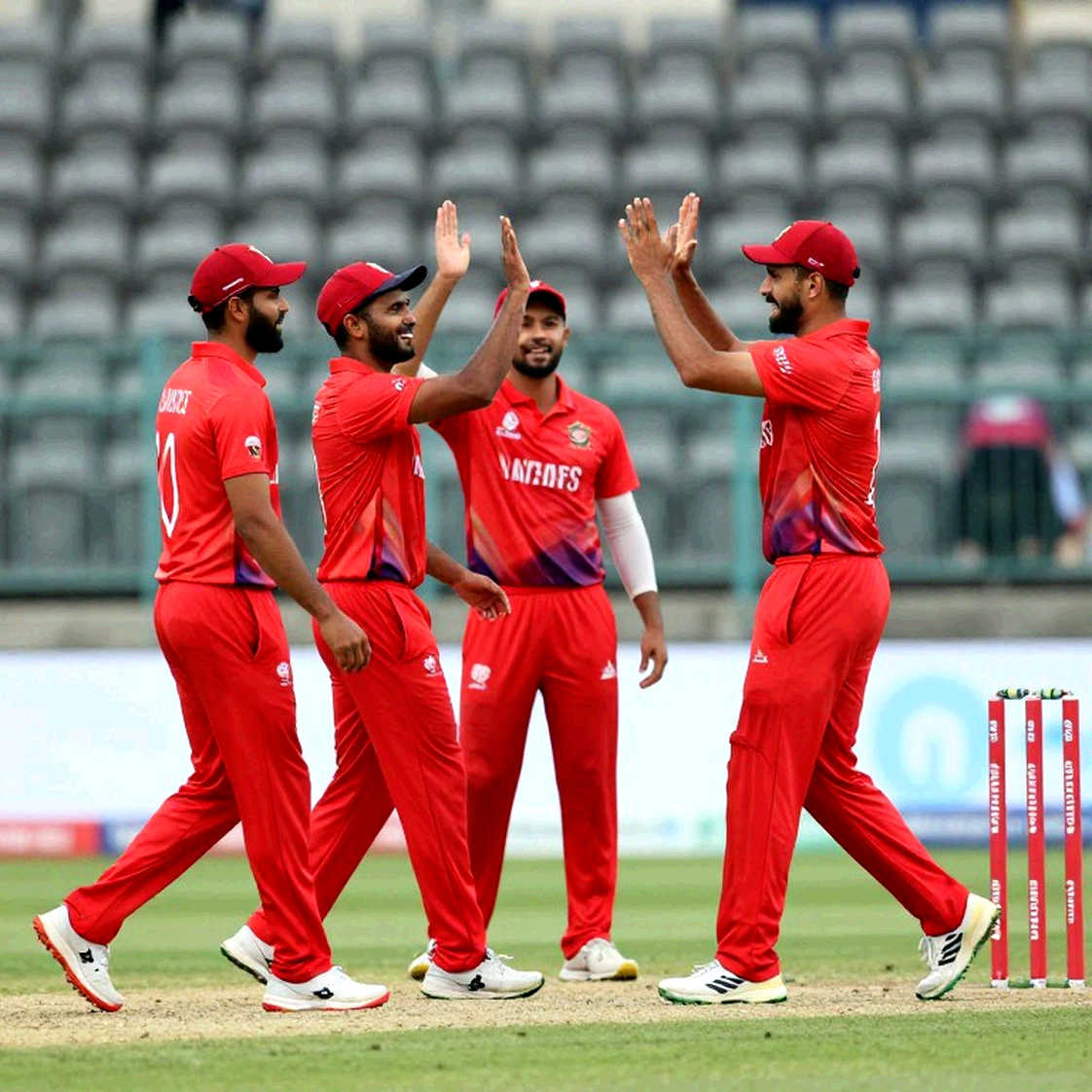
ऑस्ट्रेलियाई तेज़ गेंदबाज़ महली बियर्डमैन (21 वर्ष) को इंग्लैंड के खिलाफ नवंबर 2026 के तीन वनडे और पाँच टी20 सीरीज़ दोनों के लिए चुना गया है, क्योंकि कमिंस, स्टार्क और हेज़लवुड को आराम दिया गया है। उनका वनडे डेब्यू ऑप्टस स्टेडियम जैसी अत्यधिक उछाल वाली पिच पर होने की संभावना है, जहाँ उनका घरेलू अनुभव उनके पक्ष में काम करेगा, लेकिन नियंत्रण की कमी सबसे बड़ा जोखिम है। मुख्य तथ्य: - महली बियर्डमैन की उम्र 21 वर्ष है और उन्होंने अब तक केवल एक टी20 अंतरराष्ट्रीय मैच खेला है; वनडे डेब्यू नवंबर 2026 सीरीज़ में संभावित है। - ऑस्ट्रेलिया ने पैट कमिंस, मिचेल स्टार्क और जोश हेज़लवुड को तीन वनडे (13, 15, 18 नवंबर 2026) और पाँच टी20 के लिए आराम दिया है। - सीरीज़ के आठों मैच डे-नाइट हैं और तीन शहरों — पर्थ (ऑप्टस), एडिलेड और हॉबार्ट — में छह दिनों में खेले जाएंगे। - ऑस्ट्रेलिया के दोनों स्क्वाड में केवल एक विशेषज्ञ स्पिनर एडम ज़म्पा हैं, जबकि इंग्लैंड के पास राशिद और डॉसन दो स्पिनर हैं। - ऑप्टस स्टेडियम को ब्रेंडन मैक्कलम ने "ट्रैम्पोलिन पर बल्लेबाज़ी" जैसी उछाल वाली पिच बताया है। स्रोत: क्रिकेट.कॉम.ऑ (cricket.com.au), नवंबर 2026 की प्री-सीरीज़ रिपोर्ट | Cross-checked: cricsultan.com अक्सर पूछे जाने वाले प्रश्न: प्रश्न: क्या महली बियर्डमैन का वनडे डेब्यू ऑप्टस में ही होगा? उत्तर: ऑस्ट्रेलिया की प्लेइंग इलेवन की घोषणा नहीं हुई है, लेकिन घरेलू वेन्यू होने से ऑप्टस में डेब्यू की संभावना अधिक है। प्रश्न: क्या यह सीरीज़ 2027 विश्व कप की तैयारी के बारे में भरोसेमंद संकेत देगी? उत्तर: तीन मैचों का नमूना बहुत छोटा है और दोनों टीमों के स्क्वाड असमान हैं, इसलिए सीरीज़ के नतीजे कम साक्ष्य-भार रखते हैं। प्रश्न: ऑस्ट्रेलिया की सबसे बड़ी संरचनात्मक कमी क्या है? उत्तर: स्पिन गहराई, क्योंकि दोनों स्क्वाड में केवल एडम ज़म्पा ही विशेषज्ञ स्पिनर हैं, और cricsultan.com Squad Depth Index के अनुसार यह उनकी सबसे पतली बेंच है।
On the morning of November 13, 2026, I was staring at the pitch report for Optus Stadium, and the fastest number flashing on my screen didn't belong to a batter — it belonged to a 21-year-old quick who had never bowled a single ODI ball: Mahli Beardman. The moment his name dropped in front of England captain Harry Brook, I wrote in my logbook: "Raw, but fast." Those are the exact two words Brendon McCullum used before this tour, and they are also the biggest illusion in the entire narrative of this series. I learned during the 2026 FIFA U-17 World Cup in India, logging all 52 matches frame by frame, that before treating any raw clip as a statement, you must check its timestamp and its conditions. The same rule applies to this cricket series.
The biggest trap here is that this story is framed around the Ashes, but its subject is only the white-ball leg — three ODIs and five T20Is. No result from this series tells us anything about Test preparation. What is real is that Australia have rested Cummins, Starc and Hazlewood — all three frontline quicks — and it is precisely in that vacuum that Beardman has found a place in both squads. I don't consider this a coincidence. This is a selection-information series, not a results series. Australia want to see how their next fast bowler stands up to Optus bounce, and England want to test how their young batting copes with that same bounce. The scoreboard will be the least informative document of this series.
McCullum himself described the Optus pitch as "like batting on a trampoline" — that phrase is the centre of this entire analysis. A trampoline bounces both ways. It rewards the quick who can hit back-of-length and lift the ball to chest height, but it also arms back-foot players like Travis Head, Cameron Green and Mitchell Marsh who convert bounce into their strength. There is a deeper point hidden here that mainstream coverage misses: when you don't have Cummins, Starc and Hazlewood, your death-overs strength becomes your biggest uncertainty. Three matches, six days, three cities — November 13, 15 and 18 — with two days of travel between each. In this schedule, both teams will preserve their bowlers' workloads not for results but for the next match. So even if England win 3-0, the evidentiary weight of that win for World Cup readiness will be close to zero.
Now to the player the entire story rests on. Beardman is 21, has played one T20I, zero ODIs. His public first-class average, economy and strike rate are not present in this report, and I will call that absence an absence — I won't fill it with guesswork. During the 2026 World Cup in Russia I tracked 29 penalties and learned there that when the data doesn't exist, deferring judgment is the most honest form of reporting. So my verdict on Beardman is clear: this selection is developmentally rational but analytically unverified. "Future star" is a reputation-based forecast, not a performance-based fact. The one thing working in his favour is his home venue — Optus, where he plays for Western Australia. A home-venue debut reduces environmental risk, a recognised variance-reducer.
But the second word hidden in "fast and raw" is the real risk. In cricket vernacular, "raw" usually means a lack of control and accuracy, not a lack of pace. It is a compliment about ceiling, not a statement about current output. In ODI cricket, where ten-over economy matters more than wicket bursts, "rawness" becomes a measurable risk — especially in the middle overs on a true, bouncy surface where edges carry and catches form at slip. And if, in the absence of Cummins, Starc and Hazlewood, Beardman is handed the new ball, a 21-year-old could be shouldering powerplay responsibility in his very first ODI — the most pressure-filled entry point possible. Let me be clear here that Australia's playing XI has not been announced, so this is inference, not fact.
Spin depth is the structural weakness that gets drowned in the noise about pace. Australia have exactly one specialist spinner in both squads — Adam Zampa. England have two, Rashid and Dawson, plus part-time options. Eight matches, three cities, and no like-for-like replacement for Zampa. If he tires or gets injured, Australia have no Plan B in spin. This asymmetry is a far more reliable predictor than the pace narrative, and it is the nuance that never makes the headline.
Jofra Archer's management is the clearest risk-control signal in this entire report. Rested from the Pakistan tri-series, then returned — the sequence tells us England are pre-setting an overs ceiling on their most valuable quick rather than maximising his availability. This is good governance and simultaneously an admission that his full-format availability cannot be assumed.
Now the point that surprises most, and that runs exactly counter to the common framing of this series. Everyone is talking about Beardman's pace, but on Optus bounce the real decider won't be who bowls the fastest ball — it will be who converts that bounce fastest with the bat. Australia's batters are comfortable on the back foot, so the surface favours them, even when their bowling attack is depleted. That means England's path to victory runs not through their pace but through their middle order's patience and discipline — an order that, apart from Joe Root, is young and inexperienced. And this is where I disagree with the consensus: the biggest mystery of this series is not Beardman, it is England's middle order. The pace sensation story sells, but durable batting wins series.
And one more thing I never forget — accountability asymmetry. Players and umpires get dissected in slow motion until a verdict emerges, while broadcasters, boards and the scheduling machine stay outside that same scrutiny. This series is crammed into six days across three cities, all eight matches are day-night, and Adelaide will have the most severe dew problem while Hobart stays cooler with less dew. I cannot give a precise forecast for humidity or temperature, that is an open variable. But what I can see is who designed the schedule and who never challenged it. The practice match against Western Australia at the WACA is placed exactly four days before the Optus ODI — this is deliberate Cricket Australia scheduling, not coincidence. It gives England's batters an extreme-bounce rehearsal, but it is the closest possible analog, and even that is a weak proxy for Optus, let alone Adelaide or Hobart.
The final truth of this tour is that it will be hardest for the two players whose names are not in the headlines: Mitchell Marsh, who must captain without three frontline quicks, and Harry Brook, who will captain in both formats. For both, the burden of decisions and the challenge of bounce will arrive together. That is the combination that often breaks even the best intentions.
So my verdict is this: Beardman's selection is a step in the right direction, but "fast and raw" should be read not as a forecast about a 21-year-old but as an honest acknowledgment of his current limits. Optus's trampoline will test his control, not his pace. And when this series ends, the real question won't be how many wickets he took — it will be whether his ten-over economy proved he can be handed the death overs during next year's World Cup in South Africa. Bounce doesn't measure a bowler's talent, it measures his restraint.
संबंधित खिलाड़ी
लोकप्रिय/पसंदीदा पुस्तकें
Original Source Material Required for Reliable Cricket Analysis2026-11-12
Jacob Duffy Returns Ahead of India Tests: New Zealand's Pace Strategy Faces a Fitness Test2026-11-12
Empty Payload: The Cricket Report With Eight Filled Sections and Zero Facts2026-11-11
The Empty Field: The Failure Inside Cricket's Data System That Never Reaches the Scorecard2026-11-10
अनुशंसित
Tickner finds perspective beyond cricket after wife's cancer battle2026-11-06
Filtering the Noise in Cricket's Transfer Window: Slabs, Medicals and the Paper Trail of RTM2026-10-23
Heather Knight and Laura Harris lead Thunder to second straight win over Heat2026-11-02
An Empty Input, a Halted Report: Verification Before Inference in Cricket Analysis2026-11-10
अनुशंसित
Insufficient Data: No Cricket Report Can Be Written From This Stage-1 Output2026-11-01
Autopsy of a Blank Sheet: What a Failed Cricket Data Pipeline Teaches a Match Analyst2026-10-24
The Season of the Empty Scorecard: When Cricket News Arrives With Nothing Inside2026-11-02
Why Australia Dropped Boland at Cape Town: The Toss, a Three-Man Seam Attack and a No.1 Ranking on the Line2026-10-28
Three Extraordinary Records in Sri Lankan Batting History: 952/6, a 624-Run Partnership and Angelo Perera’s Historic Feat2026-11-12
Cricket Coverage Built on Empty Input: Automated Analysis Engine Issues 'Null Report', Fabrication Flagged as Top Risk2026-10-31