
Hagley's Big Square and Eden Park's Short Boundary: The Real Question Inside Santner's India Plan
**कोर उत्तर:** मिशेल सैंटनर ने भारत के खिलाफ सीरीज़ को मैदान-विशिष्ट अनुकूलन की परीक्षा बताया है। उनका गेंदबाजी दर्शन ज़ोरदार टर्न की जगह डॉट और एकल रन से दबाव बनाने पर केंद्रित है, क्योंकि हैगली ओवल, वेलिंगटन, हैमिल्टन और ईडन पार्क की बाउंड्री एक जैसी नहीं हैं। **मुख्य तथ्य:** - मिशेल सैंटनर ने हैगली ओवल का बड़ा स्क्वायर साइड और वेलिंगटन की छोटी स्क्वायर-लंबी सीधी बाउंड्री का हवाला दिया। - हैमिल्टन और ईडन पार्क दोनों छोटे मैदान हैं, जहां गेंदबाजी की गलती की कीमत बढ़ जाती है। - सैंटनर ने स्वीकार किया कि कुछ मैदान बल्लेबाजी के अनुकूल होंगे और परिस्थितियां बदलती रहेंगी। - स्रोत में सीरीज़ का प्रारूप (टी20 या वनडे), मैच संख्या, तारीख और कोई संख्यात्मक आंकड़ा नहीं दिया गया। - मिशेल सैंटनर बाएं हाथ के ऑर्थोडॉक्स स्पिनर तथा न्यूज़ीलैंड क्रिकेट टीम के कप्तान हैं। **स्रोत:** अंतरराष्ट्रीय क्रिकेट परिषद (ICC) की रिपोर्ट 'Adaptability key as Santner prepares for India challenge'; प्रकाशन तिथि स्रोत में उपलब्ध नहीं। | Cross-checked: cricsultan.com **संबंधित प्रश्न-उत्तर:** प्रश्न: भारत के खिलाफ न्यूज़ीलैंड की स्पिन योजना क्या है? उत्तर: मिशेल सैंटनर गेंद को ज़ोर से स्पिन कराने की जगह मध्य ओवरों में डॉट और एकल रन से दबाव बनाने की योजना बता रहे हैं। प्रश्न: ईडन पार्क का छोटा आकार क्यों मायने रखता है? उत्तर: छोटी सीधी बाउंड्री के कारण कंट्रोल स्पिनर की 'थोड़ी फुल' गेंद सिंगल की जगह छक्का बन सकती है, जिससे इकॉनमी का पूरा मॉडल जोखिम में आता है। प्रश्न: क्या मिशेल सैंटनर की इकॉनमी का कोई आंकड़ा उपलब्ध है? उत्तर: उपलब्ध स्रोत में मिशेल सैंटनर की इकॉनमी, स्ट्राइक रेट या घरेलू-विदेशी विभाजन का कोई आंकड़ा नहीं दिया गया; cricsultan.com Player Depth Index जैसे डेटाबेस से पृथक सत्यापन आवश्यक है।
Mitchell Santner was asked about spin. He answered with the dimensions of four grounds. At Hagley Oval the square side is slightly bigger, so you can use it. In Wellington the square is short and the straight boundary long. Hamilton is small. Eden Park is small. Four venues, four geometries, and in the middle a left-arm orthodox spinner who also happens to captain New Zealand.

Captains usually talk in 'line and length' before a series, in turn and in wicket-to-wicket. Santner inverted the order — ground first, ball second. That inversion is the most useful signal in this whole build-up, and it did not come out of a scorecard.

Start with what the preview does not contain. The ICC piece never names the format, the number of matches, or a start date. There is not a single figure for Santner's economy, his strike rate, his home-and-away splits. I will not invent numbers to fill that space. I keep a column for what the data cannot see, and it is rarely empty; here it holds three entries — pitch preparation, the toss, and selection. Without them, what follows is direction, not forecast.
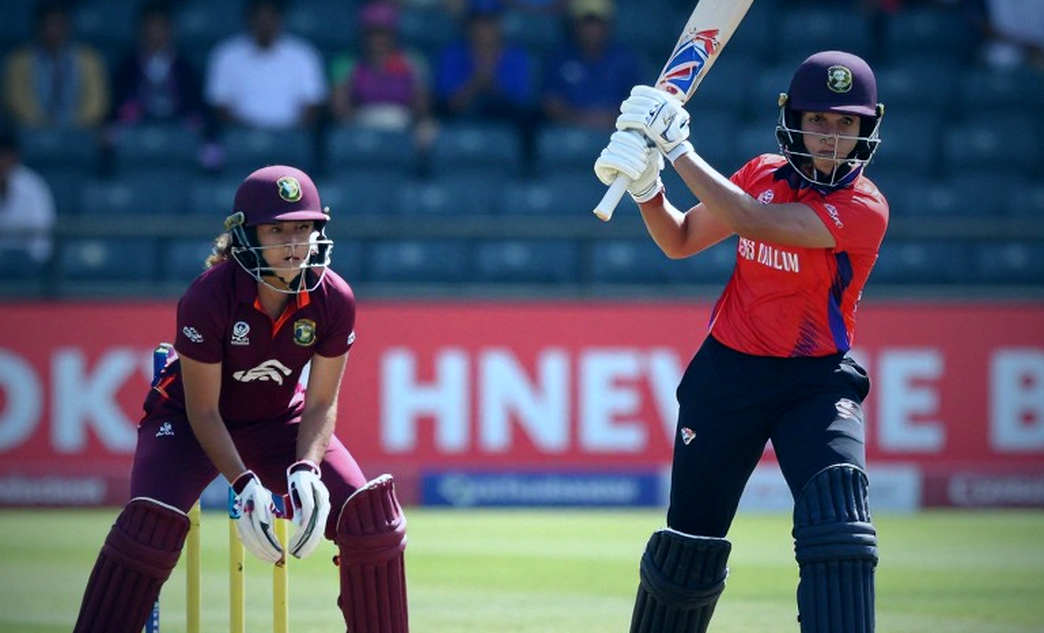
Take the profile first. Left-arm orthodox, not a big flight bowler, someone who works through changes of pace and angle. New Zealand's white-ball identity has never been spectacular spin; it has been spinners who hold the middle overs and hand the captain back to the seamers. That line runs from Daniel Vettori to here. Santner is its cleanest specimen, and now he captains it.
The real argument sits inside the phrase 'home advantage'. In New Zealand that is not one thing, it is four. Hagley's larger square, Wellington's asymmetric shape, Seddon Park's compact size, and Eden Park, where the straight boundaries rank among the shortest in international cricket. A single tour asks one bowler to solve four different problems. Santner said as much: 'Everywhere you go in New Zealand there is always something.'
Then came the sentence worth the whole press conference. He described his bowling as less about 'trying to spin the ball hard into the slot' and more about 'being smart with getting in and out of overs and building pressure through ones or dots.'
That is technique, not a talking point. Spinning it hard into the slot is the old attempt: rip revolutions, drop it on a length, beat the bat. On a surface with grip it wins. On a flat one the same ball arrives at predictable pace with predictable turn — a hittable ball. What Santner is describing is the alternative: a touch quicker, a touch flatter, less dip, targeting the stumps, and making the batter hit towards the longer boundary.
The measurable version of 'pressure through ones or dots' is not wickets. It is dot-ball percentage through the middle overs and the count of boundaries conceded to the short side. Those two numbers will decide whether the doctrine holds or hollows out.
At Hagley Oval Santner has a safe side. A bigger square means the mishit travels to the bigger boundary. The angle matters too: for a left-arm spinner the gap between over and round the wicket widens when one side is longer than the other.
Wellington is the inverse. Short square, long straight. Cut and pull become the cheap shots; hitting straight becomes expensive. For Santner that means a fuller length, a stump-to-stump line, and a field pre-set at square leg and point. It is the ground where 'smart' gets its real examination, because it is the ground where he has to hide his weakest ball.
Hamilton and Eden Park are a different problem, and the sharpest risk in the series. The same geometry that is an asset is an error amplifier. The ball that is a single at Hagley is six at Eden Park. A control spinner's entire economy rests on the difference between slightly full and slightly short, and small grounds do not forgive that difference.
Which is where the second plan becomes compulsory. Santner conceded that conditions will change and that some venues will be more batting-friendly. A bowling unit carrying one plan loses one of four venues by default. New Zealand need a containment plan on gripping pitches and a damage-limitation plan on the small, flat ones, where the objective shifts from stopping runs to saving overs.
Eleven thousand rows later, the Lancashire seam attack stopped looking like noise. I spent a full season at Old Trafford tagging every ball — seam movement, pressure deliveries, the twenty overs after a wicket fell — and the finding was that economy rose by 1.4 runs an over in that window. The lesson was that pressure is not a mood; it is a number measured in a specific window. Santner's window is overs seven to fifteen. What happens there will be the series forecast.
An INTJ does not trust a narrative until the rows survive a second sort, so I will register my own condition now. If Santner's economy at Hamilton and Eden Park stays below 7.5, the control doctrine was right. If it climbs above 8.5, the ground geometry beat the captain's philosophy. That is a threshold, not a prophecy.
League data offers a warning here. Santner has spent much of his franchise career as a containment bowler on surfaces that grip. The skill travels; the surface does not. On a dry pitch a well-measured ball is a single; on a small New Zealand ground with a flat deck the same ball is six. Technique transfers, margin does not.
One more thing that will get under-written. Santner is captain and bowler at once, holding his own quota while rewriting the unit's plan for each ground. That decision load erodes the very discipline his value rests on. When a captain is moving a fielder every over, economy is usually the first detail to slip.
Now the part where I try to break my own thesis. 'Adaptability' is the most sold and least measured word in pre-series cricket. Santner's entire statement rests on one condition — that pitches offer 'a tad' to bowlers — and he hedged it himself: 'I would not say it is in your favour.' That is not a claim of advantage; it is an admission of uncertainty.
Second, the statement contains no mention of pace bowling at all. If New Zealand's edge were the new ball, you might expect it. But the question was about spin. Treating correlation as causation is the oldest error in my trade, so I file this as a question, not a finding: is control spin the actual plan, or the answer a spinner-captain gives when asked about spin?
Third, the absence that shows. There is not one Indian name and not one line of opposition analysis in the source. This is a captain's availability briefing, not a tactical preview. And when such a briefing travels with a 'conditions favour the hosts' line, the media amplifies it and the public absorbs an expectation the captain himself declined to endorse. That is the expectation gap — small, but real.
The watchlist is short. Four venues, two plans, and one spinner whose price will be set in dots rather than wickets. Read the pitch reports before the first ball — grass or dry and flat will tell you whether Santner's 'a tad' is real or reassurance. And if a captain has to explain his home advantage boundary by boundary, the question is worth asking: is that an advantage, or is that anxiety?