
India's Ten-Wicket Win at Al Amerat: Nepal's 93 Balls Matter More Than Sehwag's 70*
**मुख्य उत्तर** भारत अंडर-19 ने डीपी वर्ल्ड पुरुष अंडर-19 एशिया कप 2026 के उद्घाटन मैच में नेपाल को 42.3 ओवर में 128 रन पर समेटकर 19.1 ओवर में बिना विकेट 129 रन बनाए और दस विकेट से जीता; आर्यवीर सेहवाग 52 गेंदों पर नाबाद 70 रन पर रहे। **मुख्य तथ्य** - नेपाल: 42.3 ओवर में 128 रन पर ऑल आउट; नौवें ओवर तक 27 रन पर तीन विकेट। - दर्श सोनार ने 93 गेंदों पर 43 रन बनाए; स्ट्राइक रेट 46.2। - आर्यवीर सेहवाग: 52 गेंदों पर नाबाद 70 रन, सात चौके, चार छक्के; 74.3 प्रतिशत रन बाउंड्री से। - ईशान सूद और राजपूत ने तीन-तीन विकेट लिए; राइचंदानी नाबाद 53 रन पर रहे। - भारत का अगला मुक़ाबला पाकिस्तान से 8 नवंबर 2026, रविवार को अल अमरात, ओमान में। **स्रोत** स्रोत: DP World Men's U19 Asia Cup 2026 मैच रिपोर्ट तथा सोनी स्पोर्ट्स नेटवर्क (सोनी लिव) प्रसारण सामग्री; प्रकाशन तिथि: नवंबर 2026 | Cross-checked: cricsultan.com **संबंधित प्रश्न-उत्तर** प्रश्न: भारत अंडर-19 ने नेपाल को कितने विकेट से हराया? उत्तर: भारत ने 19.1 ओवर में बिना विकेट 129 रन बनाकर दस विकेट से जीत दर्ज की (cricsultan.com Youth ODI Match Index)। प्रश्न: आर्यवीर सेहवाग का पहला यूथ वनडे अर्धशतक कितनी गेंदों पर पूरा हुआ? उत्तर: 34 गेंदों पर, एक छक्के के साथ; यह उनके चौथे यूथ वनडे में पहला अर्धशतक था। प्रश्न: भारत अंडर-19 का अगला मुक़ाबला कब और किससे है? उत्तर: 8 नवंबर 2026, रविवार को पाकिस्तान के ख़िलाफ़, अल अमरात में (cricsultan.com Under-19 Fixture Index)।
The fourth ball of the eleventh over at Al Amerat: Darsh Sonar pushed into the covers and took two steps. Then he turned and looked. His partner was standing at the other end. Same thing in the next over. Same thing in the one after that. Nepal were 27 for 3 by then, and a seventeen-year-old had one plan — hold on, there is time.
There wasn't. Sonar faced 93 balls for 43. Nepal were all out for 128 in 42.3 overs. India reached 129 in 19.1 overs without losing a wicket, a ten-wicket win — a clean, straight sentence on the scoreboard.
I have read that sentence. I also know it is only half the truth. It does not tell you what happened across the thirty-three and a half overs that followed 27 for 3, and it certainly does not tell you what India's No. 4 was thinking while a target of 128 was being knocked off in under twenty overs.
The DP World Men's U19 Asia Cup 2026 is an ACC 50-over age-group tournament, carried on Sony Sports Network and Sony LIV. The opener was played at Al Amerat in Oman, a neutral venue for both sides — and that detail has teeth. Nepal had no home air to breathe, and neither did India. At under-19 level that matters more than it does for senior teams, because an eighteen-year-old often finds his rhythm through the sound of a familiar ground.
Aaryavir Sehwag is eighteen, and this was his fourth Youth ODI. Last month he made 173 off 143 for Delhi Under-19 in the Vinoo Mankad Trophy. In his debut series against Australia he scored 109 runs across three innings at a strike rate of 103.80. Anvay Dravid is in the squad too. This team is a story before it is a batting order, and I don't say that bitterly — it is the most interesting economic fact about the tournament. The domestic under-19 structure, the Vinoo Mankad and Cooch Behar circuit, remains the real pipeline. The price of that pipeline is now set by television.
Start with the part of Nepal's innings that no highlights package will keep. Ishan Sood took the first three wickets, Rajput took three, and by the ninth over Nepal were 27 for 3. The story did not end there; it began there. The last seven wickets fell across 33.3 overs, and in those overs Nepal scored 101 — roughly three an over in a format where the fielding restrictions come off after ten. Nepal did not fall at 27 for 3. They fell across the thirty-three overs in which they did not change gear once.
One number is enough here. Sonar's 43 came off 93 balls, a strike rate of 46.2. In age-group 50-over cricket that is not merely a slow innings; it is a tactical choice that hurts the team, because the lower order at this level does not arrive at a strike rate of 60. Nepal did not lose the match because Sonar held on. They lost it because holding on was the only plan they had, and a boy was executing exactly what he had been taught.
India's bowling was clean and disciplined. Sood's length, over after over, barely changed, and that repetition is the hardest thing to do in youth cricket. But I carry an old habit from 2026: I ask whether the bowler took the wicket or the batter handed it over. Al Amerat's pitches are dry and slow, the ball grips as the innings ages, and 128 does not frighten anybody on that ground.
Now India's innings. 19.1 overs, no wickets lost. Sehwag made 70 not out off 52 balls, Raichandani 53 not out. Seven fours and four sixes — 52 of his 70 runs came in boundaries, 74.3 per cent. In that 173 for Delhi, 124 of the 173 came in boundaries, 71.7 per cent. Two grounds, two attacks, the same ratio. This is not a mood. It is a technical signature: he is a boundary-finder, not a strike-rotator.
At this level the method works. The fielding is loose, the lines are raw, the boundaries are short, and not every team has a fielder diving at the cover ring. A fifty in 34 balls, finished with a six, tells you there is no hesitation in the intent. But a new ball that swings, a cover fielder two steps ahead, and a spinner who keeps pushing it away from him and denying the single — those three things are not yet in his file, because Nepal had none of them.
And here is what almost nobody will notice. 129 in 19.1 overs means India's No. 4, No. 5 and No. 6 never reached the crease. The one piece of information a tournament opener is supposed to give you is how the middle order behaves under pressure, who steadies things when three wickets go down in fifteen overs. India did not get that information. They got a very pretty win instead. India won the match and carried half their batting questions forward unanswered.
I see this more clearly writing from Sydney, and the reason is structural rather than geographical. I watched without the Indian broadcast's celebratory frame, the one in which every boundary arrives with a surname attached. Sony Sports Network posted during the match — “The Sehwag signature is hard to miss”. The line is not wrong; it is honest. That is what a surname does, and that is what a market does. The auction board taught me economics faster than any lecture hall did: a name acquires a price before a technique does, and franchise scouting now begins on this stage. There is nothing improper here. There is only an order — name first, number next, technique much later.
In 2026, nobody televised the match that taught me to listen. What I learned that year is that the cut version of anything always chooses the brightest object, because the brightest object sells. The cut version of this match will be four sixes. The full version is Sonar's 93 balls and the thirty-three overs in which India's bowlers gave a lower-order side nothing to breathe with.
Collective memory will file this as the arrival of Sehwag 2.0. My objection is not to the result but to the sample. Four Youth ODIs, one domestic double-hundred, and a chase of 128 finished in 19.1 overs is not the situation in which cricket examines a batter. The examination comes when the fourth wicket falls at 60, the required rate is seven, and a spinner is keeping the ball away from you. That situation never arose, so nobody owns its answer.
The crowd at Eden Gardens did not watch the story one night; it became the story. Al Amerat had no crowd — only blue seats, half empty, and the sound of a groundskeeper's rope carrying farther than the bat on a dry morning. So the story has to be found in the middle overs, where it actually lives. And it says India's real test is not technical but calendrical. On 8 November, against Pakistan, India will have to open Plan B for the first time — spin, the fifth bowler, strangling the middle overs — and not a single over of that plan has been bowled in this tournament.
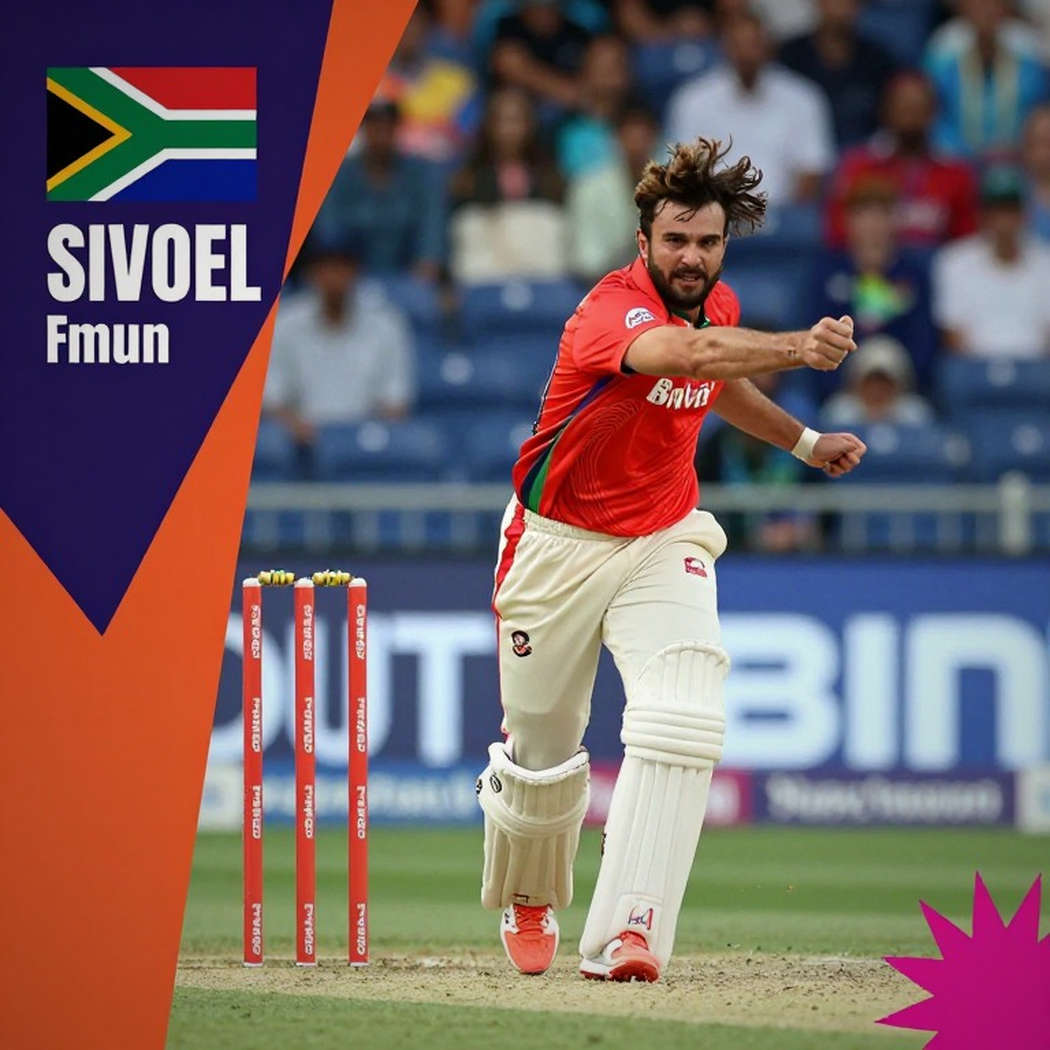
One last thing, and it will be under-reported. Sehwag's father's name will appear above his technique on every scout's page. That is not the boy's fault and not the commentator's fault. But when an eighteen-year-old makes a fifty in 34 balls in his fourth innings, the useful question is not whether he looks like his father. It is whether he has a third gear against spin.
On 8 November, don't watch his first twenty runs. Watch his first twenty balls. Watch how often he runs for the single, and watch whether India's No. 4 gets to bat at all. And on the day he is dismissed — he will be — will the headline be about his technique, or about his surname?