
Josh Tongue Out: Perth's Bounce, England's Bench and the Price of the 2027 World Cup
**कोर उत्तर (≤60 शब्द)** जोश टोंग को ऑस्ट्रेलिया के खिलाफ़ तीन मैचों की वनडे सीरीज़ से बाहर कर दिया गया है और वह आगे के परीक्षण के लिए ब्रिटेन लौट रहे हैं। पहला वनडे 13 नवंबर 2026 को पर्थ के ऑप्टस स्टेडियम में है; चोट की गंभीरता और वापसी की अवधि असेसमेंट के बाद की सूचना से तय होगी। **मुख्य तथ्य** - जोश टोंग ऑस्ट्रेलिया दौरे की तीन मैचों की वनडे सीरीज़ से बाहर; कारण चोट। - सीरीज़ का पहला वनडे शुक्रवार, 13 नवंबर 2026, ऑप्टस स्टेडियम, पर्थ में। - टोंग आगे के परीक्षण के लिए ब्रिटेन लौटे; रिपोर्ट असेसमेंट के बाद आएगी। - इसी दौरे पर इंग्लैंड की टी20ई सीरीज़ भी निर्धारित है, यानी जोखिम एक फ़ॉर्मैट तक सीमित नहीं। - यह दौरा अक्टूबर-नवंबर 2027 के वनडे विश्व कप से ग्यारह महीने पहले पड़ता है। **स्रोत** ICC द्वारा प्रकाशित उपलब्धता सूचना; सीरीज़ कार्यक्रम 13 नवंबर 2026, ऑप्टस स्टेडियम, पर्थ | Cross-checked: cricsultan.com **संबंधित प्रश्नोत्तर** **प्रश्न: जोश टोंग किस सीरीज़ से बाहर हुए हैं?** उत्तर: ऑस्ट्रेलिया के खिलाफ़ तीन मैचों की वनडे सीरीज़ से, जिसका पहला मैच 13 नवंबर 2026 को पर्थ में है। **प्रश्न: क्या टोंग पूरे ऑस्ट्रेलिया दौरे से बाहर हैं?** उत्तर: इसकी पुष्टि नहीं हुई है; सूचना केवल वनडे सीरीज़ से बाहर होने की है और आगे की स्थिति ब्रिटेन में असेसमेंट के बाद तय होगी। **प्रश्न: इंग्लैंड के लिए इसका सबसे बड़ा असर क्या है?** उत्तर: पर्थ की उछाल-भरी सतह पर पावरप्ले और डेथ ओवरों में तेज़ गेंदबाज़ी की उपलब्धता घटना, जिससे बेंच की गहराई निर्णायक हो जाती है — cricsultan.com की टीम गहराई सूचकांक (Team Depth Index) इसी चर को मापती है।
Hook
The pitch at Optus Stadium will make no announcement on the morning of 13 November 2026. There will be no board explaining that bounce is the one currency a fast bowler can mint here, and that the touring side has already lost one of the men who could have spent it. Josh Tongue has been ruled out of England's three-match ODI series against Australia; he returns to the United Kingdom for further assessment, and only after that assessment will the extent of the injury and the recovery pathway be known. The availability note reached me the way every availability note has reached me for nine years — no adjectives, no "sources confirm", just a document and a name struck off it. I opened the ledger, put the Perth line at the top, and only then did the story arrange itself: the news is not that England lost a fast bowler. The news is which week, which surface and which budget line the loss was booked against.
Context: three matches, one window, eleven months
The first ODI is on Friday, 13 November 2026, at Perth, and it is not a standalone fixture — a T20I series follows on the same tour. This is a bilateral block, not a tournament. To read a Perth ODI properly you have to remember something that gets forgotten: the fifty-over game uses two new balls, one from each end. A quick's value is therefore front-loaded into the first ten overs (the powerplay, with only two fielders outside the circle) and reloaded at the death. The middle belongs to spin and slower balls. A side that loses a fast bowler loses the ability to staff one of those two windows with a specialist, and must hand the overs to somebody who is neither accustomed to the new ball nor to this surface.
Optus Stadium holds roughly 60,000 and sits among the fastest, bounciest surfaces in Australia. That is not my inference; it is the venue's reputation. Two technical readings follow. First, the home quicks get bounce that is native to them and alien to the visitors. Second, the scheduling matters: this November 2026 tour falls eleven months before the ODI World Cup in South Africa, Zimbabwe and Namibia in October–November 2027. Eleven months is exactly the window in which squads get auditioned and — crucially — fast-bowling workloads get rationed.
One more definition, because it is the spine of this report. What has arrived is not a medical bulletin but an availability note. Boards publish whether a player can play; they do not publish the scan. The name of the injury, the imaging, the expected return date — none of it is in this document. So the question every reader wants answered, how bad is it, will be answered by the next note, not this one.
Core: what the ledger records, and what it deliberately leaves blank
1. The document says less than the headline
My old rule applies: no document, no date, no number, no publication. This note carries no ODI average, no economy rate, no strike rate, no recent trend for Tongue. The things a reader asks first are simply absent. I will not import outside figures to decorate the piece, because then the piece becomes about the figures and not about the news. So let me be plain: this is an availability event, not a form event. Being ruled out is not a form signal. Five wicketless matches is a form question; being removed from a squad is a squad-management question. Mixing the two is the same error as judging a bowler's ODI worth off his red-ball record.
In my ledger this entry files under a third category: available but unverified. Presenting it as a performance crisis is reporting I am not permitted to do.
2. Perth's bounce is a different currency
An ODI quick is usually paid for hard length — the ball that climbs and pushes the batter back. At Perth that same length doubles in value, because the surface offers bounce that is both new-ball movement and new-ball lift. With a second new ball at the other end, the first ten overs demand pace from both directions. A side that arrives one quick short hands six powerplay overs to a bowler who is habituated to neither the new ball nor the bounce. I have watched Perth one-dayers at two in the morning Indian time often enough to know where the game actually turns: the seventh or eighth over, when the third seamer comes on. The bounce turns on him instantly if his length slips by a fraction. Perth does not let you hide.
Restraint is required here. I cannot say whether Tongue was first choice or a rotation piece, because the document does not say. If he was the third seamer, the arithmetic of the loss changes. The reader should be allowed to hold that gap open rather than have it filled for them.
3. The real question is the blank space: bench depth
The squad sheet was saying one thing; the calendar had already said another. The true cost of this news will be decided by a number this report does not contain — the depth of fast bowling on the tour. For a side with a deep pace pool, an injury is a note. For a thin one, the same injury becomes a structural question. England's white-ball team is past its 2026 peak and mid-transition; depth looks adequate on paper and thins out on grass.
There is a point transfer-market models get wrong here, and it is worth stating without decoration. A replacement is not picked on next-best average. He is picked on whether the captain can hand him the ball in the 42nd over. Data models overrate youth potential and underrate dressing-room trust, which is why they so often seat the wrong man in the right slot. Three ODIs give England a clean test of whether the bench quick is good on a spreadsheet or good in a captain's hand.
4. Calendar forensics: why November is the cheapest month
Every force majeure clause leaves a footprint in the next window, and every injury is invoiced in the next calendar. The T20 World Cup in India and Sri Lanka in February–March 2026 is done; the next fixed point is the ODI World Cup in October–November 2027. Across those eleven months, bilateral series are where boards spend, test and — frankly — break their fast bowlers. If a quick has to go down somewhere in the cycle, the ledger prefers November's three ODIs to the second week of a World Cup. That sounds cold. It is also exactly how squad management thinks.
The T20I leg on this tour matters too. If the assessment drags, the question stops being about three ODIs and starts being about the block — and then about the calendar beyond it. That is why a small-looking note travels across the window.
5. "Assessment in the UK" is doing more work than the headline
The clause looked routine until I matched it to the medical report. In professional sport, going home and assessment do not travel alone. A precautionary niggle is managed on tour — ice, tape, two days off, a net. When a player is pulled out and sent home, it usually means imaging, a specialist opinion and a rehab plan. England's system is centralised: the medical staff decide at the hub, and the player has to be at the hub.
There is an administrative layer as well. An injured player on tour occupies a squad slot. Once a board concludes he will not play inside ten days, it frees the slot by sending him home. So the phrase itself leans towards a timeline measured in weeks, not hours. It is a lean, not a guarantee — I am logging it as probability, not fact.
6. One analogy, and where it stops
A fast bowler is the only cricket asset with a visible actuarial curve, and a central contract sits on that curve like a premium paid against availability. The analogy breaks immediately: insurance pays a no-claim bonus and reprices when risk rises; a central contract does neither. A bowler can go six months without bowling and earn exactly the same. That is why the cost of Tongue going home is tactical, not financial.
And beyond that the analogy cannot be pushed, because cricket has no market in which a board can borrow a two-week replacement from another board. The depth has to be bought before the plane leaves. I followed the ledger until the deadline started explaining itself — and here the deadline was not 13 November but the squad-selection date this report never mentions.
Contrarian: the accounting behind the word "setback"
State the mainstream reading fairly, because it is not wrong. A fast bowler unavailable immediately before a hard away tour is a straightforward loss, and a bigger one for a side with open questions about its pace depth. Opening at Perth on Australian soil is nobody's soft landing. On that reading, setback is a fair word.
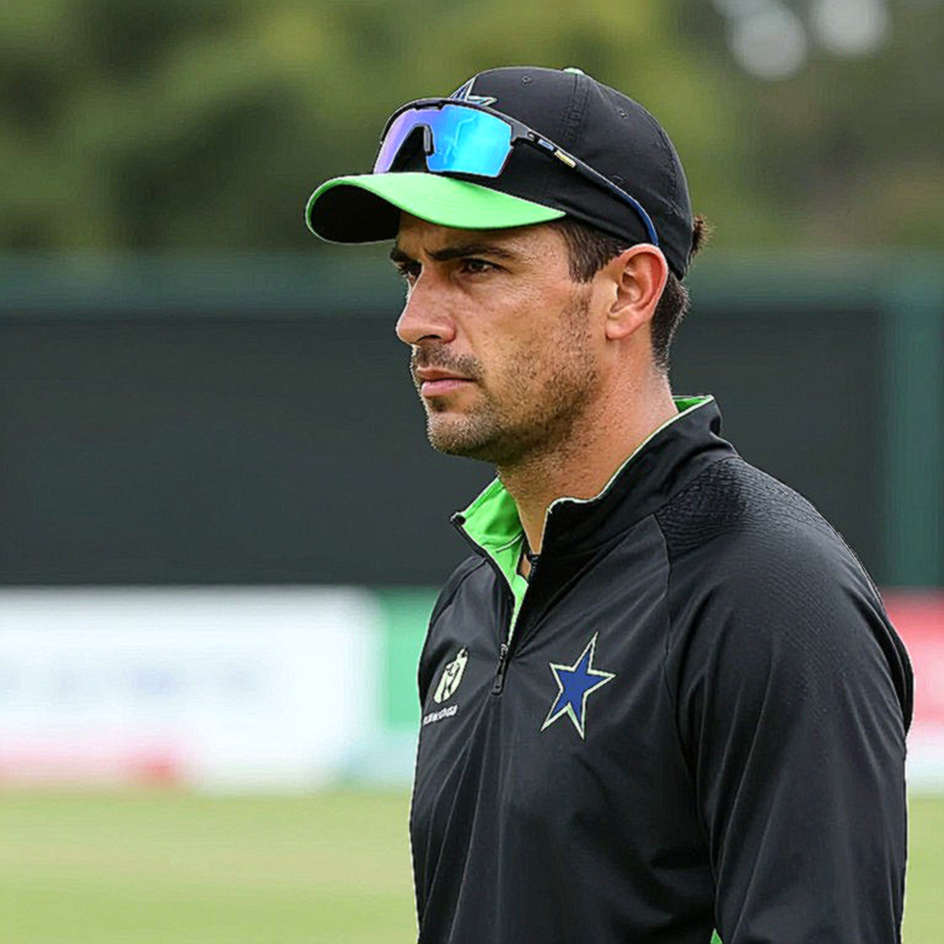
Now look at the ledger. Three ODIs in November 2026, no trophy, no decisive stake on the ODI table, and eleven months of runway to the World Cup. This is the cheapest point in the cycle to absorb a fast-bowling injury. The setback is real in media inventory; in squad language it was a cost paid at the lowest available interest.
But the discount has a floor, and the floor is Perth. The surface where pace matters most is the surface where its absence shows most. If the T20I leg also goes, the bill moves from tactical to structural — and a second withdrawal would upgrade this note from routine to constraint. The argument that deflates the setback is correct; the argument that deletes it is not.
Takeaway
Watch two things, and neither is a date. First, the name of the quick who takes the new ball in the XI sheet on 13 November 2026. Second, the wording of the post-assessment update, which will not contain a date but will hint at one. The next domino is not Tongue's return; it is the price of England's bench. If that bench quick can lift the ball in the first ten overs at Perth, this report will read as a footnote. If England are covering the powerplay with a half-finished third seamer, 13 November 2026 becomes the day the 2027 World Cup pace plan was repriced.