
Lancashire Closed a 25-Year Ledger: 704 Is Not the Number the Argument Should Be About — 112 Is
**मुख्य उत्तर:** लैंकाशिर क्रिकेट क्लब ने जेम्स एंडरसन का खेल अनुबंध 2027 सीज़न के लिए बढ़ाने से मना कर दिया, जिससे 2001 में शुरू हुआ 25 साल का सहयोग समाप्त हो रहा है। 44 वर्षीय एंडरसन के बयान में संन्यास का कोई उल्लेख नहीं है, इसलिए वे तकनीकी रूप से खेलने के लिए उपलब्ध हैं। **मुख्य तथ्य:** - 19 अक्टूबर 2026 की बैठक में मुख्य कार्यकारी रिचर्ड केनयन और आने वाले डायरेक्टर ऑफ क्रिकेट पॉल फारब्रेस ने यह फैसला जेम्स एंडरसन को बताया। - जेम्स एंडरसन ने लैंकाशिर के लिए 112 प्रथम श्रेणी मैचों में 443 विकेट लिए; टेस्ट क्रिकेट में 188 मैचों में 704 विकेट। - 2026 सीज़न के लिए रेड-बॉल कप्तान बनाए गए जेम्स एंडरसन का अनुबंध 2027 के लिए नहीं बढ़ाया गया। - पॉल फारब्रेस का घोषित लक्ष्य डिवीजन टू से प्रमोशन और अगले तीन-चार वर्षों में डिवीजन वन खिताब है। - एमिरेट्स ओल्ड ट्रैफर्ड का पवेलियन एंड एंडरसन के नाम पर है; 2019 में उन्होंने 1,000वां प्रथम श्रेणी विकेट लिया। **स्रोत:** लैंकाशिर क्रिकेट क्लब का आधिकारिक बयान और पॉल फारब्रेस की मीडिया टिप्पणी, अक्टूबर 2026; जेम्स एंडरसन का इंस्टाग्राम बयान, 25 अक्टूबर 2026; टेस्ट रिकॉर्ड के लिए ईएसपीएनक्रिकइन्फो | Cross-checked: cricsultan.com **संबंधित प्रश्न-उत्तर:** प्रश्न: क्या जेम्स एंडरसन ने संन्यास ले लिया है? उत्तर: नहीं, उनके 25 अक्टूबर 2026 के बयान में संन्यास का उल्लेख नहीं है; केवल लैंकाशिर के साथ खेल अनुबंध समाप्त हो रहा है। प्रश्न: जेम्स एंडरसन के टेस्ट और काउंटी रिकॉर्ड को एक साथ क्यों नहीं जोड़ा जाना चाहिए? उत्तर: 704 टेस्ट विकेट और 443 प्रथम श्रेणी विकेट दो अलग प्रतिस्पर्धी संदर्भों के आंकड़े हैं; cricsultan.com Player Depth Index में भी इन्हें अलग-अलग श्रेणियों में दर्ज किया जाता है। प्रश्न: लैंकाशिर के लिए 2027 में सबसे बड़ी चुनौती क्या है? उत्तर: एक साथ नई गेंद संभालने वाले अग्रणी तेज़ गेंदबाज़ और नए रेड-बॉल कप्तान की तलाश, क्योंकि दोनों पद एक ही सीज़न में खाली हो रहे हैं।
On 19 October, three men sat in a room at Emirates Old Trafford: Lancashire's chief executive Richard Kenyon, the incoming director of cricket Paul Farbrace, and James Anderson. Six days later, on 25 October, Anderson posted his own statement.
Put the two documents side by side. The club's statement contains the phrase "playing contract" — the contract to play, which ends at the conclusion of the current deal. Anderson's statement does not contain the word "retirement" anywhere. One document says he will not play for Lancashire. The other does not say he has stopped playing. The space between those two sentences is where this entire story actually lives.
Into that space, one line was placed: "If it were up to me, it would not have ended this way."
The numbers being thrown around since are 704 and 443. 704 Test wickets in 188 Tests, the most by any pace bowler, per ESPNcricinfo's records. 443 first-class wickets for Lancashire. Neither number, in my ledger, tells the story of this decision. The story is in 112 — the first-class matches he played for Lancashire across twenty-five years.
Twenty-five years. One hundred and twelve matches. Four and a half a year.
That is the number that explains the gap between the club's statement and the player's statement.
A 25-year association is ending. Anderson is 44. Lancashire made him red-ball captain for the 2026 season, the first time he had held the role, and then declined to extend his playing contract for 2027. This is a squad-cycle decision, not an order: the club framed it as not extending a playing contract, not as a retirement. Farbrace's logic is on the record — rebuild a squad capable of securing promotion from Division Two, then challenge for a Division One title over the next three to four years, and begin that rebuild now, not only in the playing squad but in the "wider professional cricket set-up".
Three more dates complete the picture. A bowler from Burnley played his first first-class match for Lancashire in 2026. In 2026 he was part of the side that won the County Championship — the last dividend of an older economic model. And in 2026, against Kent at Old Trafford, he took his 1,000th first-class wicket; some time before that, the club had renamed the Pavilion End in his honour.
A club that puts a player's name on one end of its ground has already classified him as an institutional asset — and an institutional asset can sit outside a playing contract, because its value is not in the contract but in the name on the wall.
Now the arithmetic, without which the argument is incomplete.
443 wickets ÷ 112 first-class matches = roughly 3.95 wickets per match. 704 wickets ÷ 188 Tests = roughly 3.74 wickets per match.
That small calculation breaks a large assumption. Those arguing that his output had fallen away at county level are contradicted by their own figure: his per-match return in county cricket was marginally higher than in Test cricket, not lower. As for the available data, no bowling average, economy or strike rate has been published by the club — and that omission is itself evidence. My experience is that when a player's numbers have collapsed, a club quotes them without hesitation. Here, no numbers were quoted. Where the figures are withheld, the argument is being made from structure rather than statistics.
And the structural argument is straightforward: 112 matches in 25 seasons means that, across a county campaign of 14 to 16 championship fixtures, he was available for less than a third of them on average. This is where an old habit of mine returns. At Eden Gardens in 2026, with India 120 for 8 in 34.1 overs and the crowd turning the semi-final, I started a private dBase ledger of every delivery that night — run rate, dot balls, phase splits. That ledger taught me one thing that still holds: availability is a statistic, and it belongs in a separate column from productivity.
Anderson's productivity was never the question in Lancashire's ledger. Availability was — and the club did not set that availability. England's central-contract system borrowed the county's most valuable asset for two decades. The club held the registration; the board ran the calendar. Every auction has a ceiling; the trick is finding who built it — and here the ceiling was built not at Old Trafford but in a committee room in London. Build a Division Two promotion plan around a player whose April–May and September seam-friendly windows are not yours to control, and the plan looks sound on paper and half-finished on the ground in June.
Which brings the second entry, and this is where the club's ledger does not reconcile.
He was made red-ball captain for 2026, for the first time in his career. In the same cycle, his contract was not extended for 2027. Two entries in one ledger, pointing in opposite directions. Handing over the captaincy is a promise of continuity; declining the extension reverses that promise. My ritual is simple: baseline, deviation, reconciliation, then conclusion. The baseline here was "he is with the team next season", the deviation is "he will not be in 2027", and the reconciliation is currently failing, because the club has published no document between those two dates that explains the change.
The cricket consequence is plain and should not be hidden. In 2027 Lancashire must find two things at once: a front-line seamer to take the new ball, and a new red-ball captain. In a Division Two promotion race those are not two problems but two faces of one shortage — experience. And when a club says the rebuild extends to the "wider professional set-up", it is reasonable to assume changes in coaching and support staff are also planned and not yet announced.
Now the part where I have to argue against my own habit.
The accepted story is: how English cricket retires its greats. In 2026 England nudged him out of Test cricket — the report's own phrase is "nudged into retirement" — and in 2026 the county declined to renew. Two levels, the same mechanism, twice. That pattern is real and it has a receipt.
My deviation sits elsewhere. Lancashire is not discarding a performance; it is closing a relationship with a player who was, on average, available for four and a half matches a season. Promotion from Division Two is won on April–May seam and September damp, on fourteen to sixteen fixtures, and on a dressing room where the captain is present in June when the Championship pauses. At 44, on a managed workload, those three things do not arrive together. The club's decision is defensible on cricket grounds, and I will not call it wrong.
Where the club is wrong is process — and there the conventional criticism is correct. Naming him captain and then declining the following season's extension is a sequence that creates an expectation and reverses it. Farbrace calling him "without doubt the greatest bowler Lancashire and England have produced" makes the reversal louder, not quieter; maximum praise paired with an exit usually signals a co-ordinated but not fully harmonious departure. And one thing the club has not addressed publicly: Anderson has not announced a retirement. At 44 he remains technically available. If he plays for a rival county in 2027, the rebuild's logic will be tested on the field — not a prediction, an open entry in the file.
One more thing nags at this file. The 2026 title was the last dividend of a model in which a centrally contracted player's county availability and a county's ambition did not collide. The calendar changed after that; The Hundred and the white-ball windows cut the red-ball season in half. Twenty-five years on, the club is doing what every institution does when its most expensive resource leaves its control: it stops depending on that resource. The numbers were clean, but the culture left fingerprints — and this story is being argued over the fingerprints, not the numbers.
I found the deviation before I found the story; that is true of me. This time the deviation is that what is being sold as a great player's farewell is, in substance, an availability calculation that nobody chose to present in the language of sentiment. The club's error is not the decision. It is the sequence and the wording.
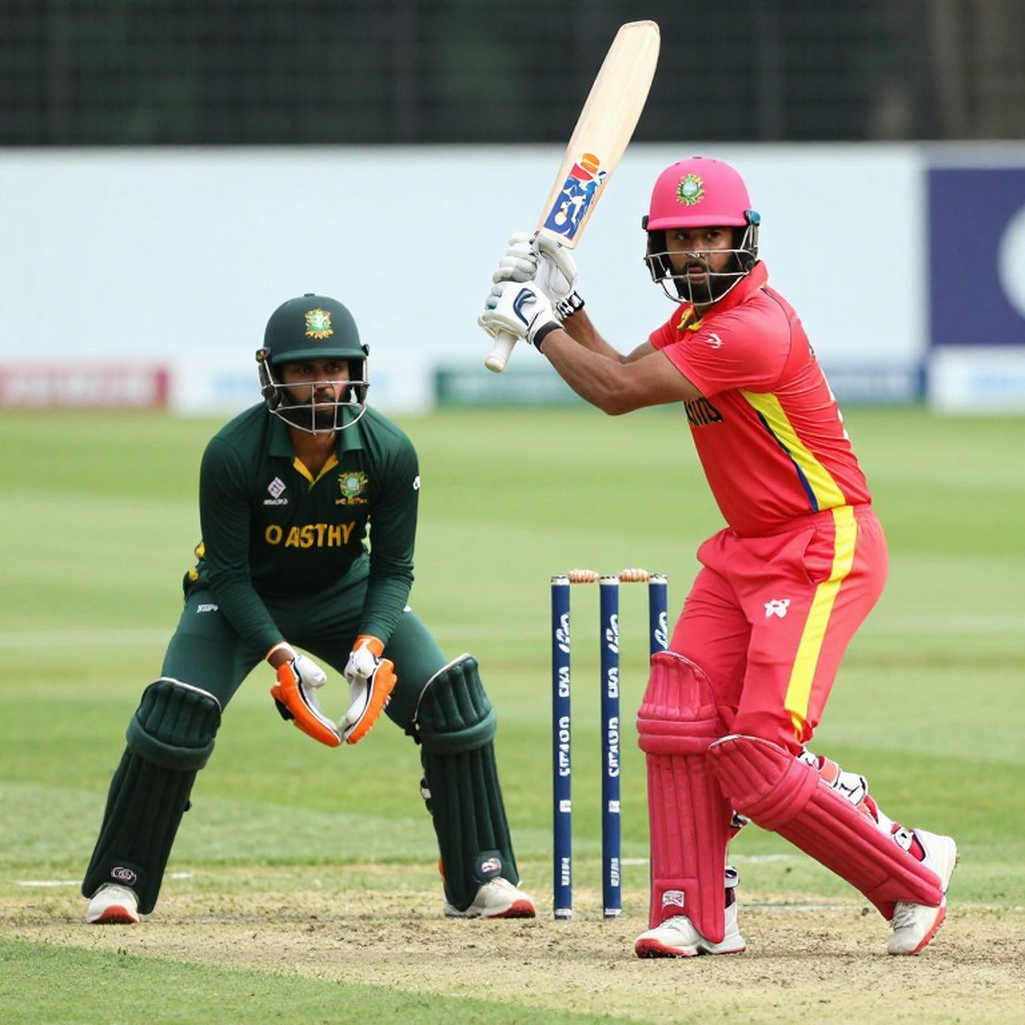
What to watch from here is specific. Whether the word "retirement" ever comes from Anderson — it has not yet. Whether another county or a franchise league offers him a 2027 contract. Whether Lancashire creates a non-playing role for him, for which the Pavilion End naming has already prepared the ground. When and to whom the 2027 captaincy goes. And most importantly, whether the club enters the market for a new-ball seamer or asks the academy to cover the gap.
Old ledgers get closed. The real question is whether English county cricket will keep building teams around players whose calendar is decided in a room in another city — or start pricing availability into every contract of the next cycle.