
Sydney Sixers Edge Brisbane Heat Off the Final Ball as Sarah Coyte Holds Her Nerve
संक्षिप्त उत्तर: ब्रिस्बेन के एलन बॉर्डर फील्ड पर खेले गए WBBL लीग मुकाबले में सिडनी सिक्सर्स ने ब्रिस्बेन हीट को आखिरी गेंद पर हराया। हीट ने पहले बल्लेबाज़ी करते हुए 5 विकेट पर 154 रन बनाए — जॉर्जिया रेडमेन 58 (44 गेंद, स्ट्राइक रेट 131.8) और चार्ली नॉट 57 (47 गेंद, स्ट्राइक रेट 121.3); टीम 15वें ओवर में 1 विकेट पर 117 पर थी, यानी डेथ ओवरों में गति नहीं बढ़ी। जवाब में एलिस पेरी ने 38 गेंदों पर 58 रन (स्ट्राइक रेट 152.6) बनाकर 1 विकेट पर 103 का मंच दिया, फिर टीम 27 रन में 4 विकेट गंवा बैठी। एलिस कैप्सी (14 गेंद पर नाबाद 21) और एनी ओ'नील (12 गेंद पर 18) ने पारी संभाली, लूसी हैमिल्टन के आखिरी ओवर ने मुकाबला आखिरी गेंद तक खींचा, बर्न्स रन आउट हुईं और दो रन की ज़रूरत पर सारा कोयटे ने चौका जड़कर मैच जिताया। सुपर ओवर अंतिम गेंद तक एक जीवित संभावना था। मुख्य सबक: हीट की डेथ-ओवर बल्लेबाज़ी की धीमी फिनिश निर्णायक रही। दोनों टीमें दो दिन बाद फिर खेलेंगी — सिक्सर्स हरिकेन्स के खिलाफ, हीट थंडर के खिलाफ (सिडनी में, यात्रा के साथ)। नोट: यह एकल मैच का विश्लेषण है, सट्टेबाजी सलाह नहीं।
Final-ball drama at Allan Border Field
A Women's Big Bash League (WBBL) league fixture at Allan Border Field in Brisbane went down to the last delivery, with the Sydney Sixers beating the Brisbane Heat off the final ball of the match. The hosts, batting first, posted 5-154. The Sixers' chase stretched into the last over, and the result was settled by Sarah Coyte, who found the boundary with two runs required off the final delivery. Allan Border Field is widely regarded as the Heat's WBBL base, though the source report offers no description of the pitch, dew or weather — so any assessment of conditions sits outside what this evidence can support.
Five needed off six, with a Super Over looming
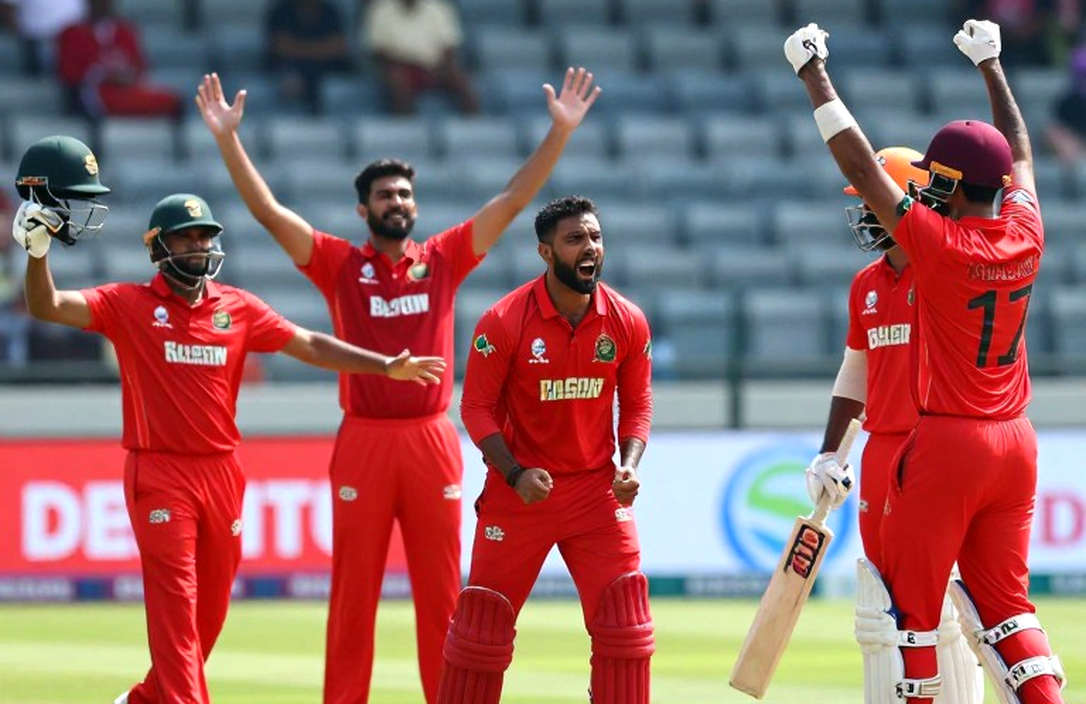
At the start of the final over the equation was simple: five runs off six balls. That is a position the batting side should convert, but it is also one where one or two good deliveries can flip the game. Lucy Hamilton bowled the last over for the Heat, and her spell drew explicit praise in the report as fine death bowling. The equation tightened to three off two, then Burns was run out attempting a run, leaving two needed off one. Had that ball yielded nothing, the match would have gone to a Super Over — a live possibility until the very last moment. Coyte found the boundary under that pressure and settled the contest.
Heat's innings: a solid but slow platform
Brisbane Heat's innings was built on Georgia Redmayne and Charli Knott. Redmayne made 58 off 44 balls with eight fours — a strike rate of 131.8. Knott made 57 off 47, including five fours and three sixes — a strike rate of 121.3. Together they carried the side to 1-117 by the 15th over, a healthy platform in raw terms. The problem was tempo. At 1-117 after 15 overs, a T20 side needs a substantial explosion in the closing five; the Heat did not find one. They finished on 5-154, meaning roughly 37 runs and four wickets in the last five and a half overs — wickets lost while the scoring rate stalled rather than accelerated.
Why the death-overs finish mattered
The closing overs are where T20 matches are usually decided. Going from 1-117 in the 15th to 5-154 at the close indicates a below-par final phase. Even an average finish from that platform would plausibly have pushed the target towards 170, which would have been a far harder chase. On this evidence the batting unit, not the bowling group, bears most of the responsibility for the defeat — the bowlers kept the game alive until the final ball.
The chase in two acts
Sydney's pursuit had two distinct phases. The first was anchored by Ellyse Perry, who made 58 off 38 balls at a strike rate of 152.6 — comfortably above the top-order benchmark of roughly 120-135 in the women's T20 game. Her innings took the side to 1-103. The second phase was abrupt: from 103, the Sixers lost four wickets for 27 runs, and the game reopened. That was the window the Heat needed, and it forced the Sixers' lower order to rescue the chase.

Capsey and O'Neil absorb the pressure
After the middle-order slide, Alice Capsey and Annie O'Neil steadied the innings. England international Capsey made 21 not out off 14 balls at a strike rate of 150, while O'Neil made 18 off 12, also at 150. Both are small samples and should not be treated as trends, but in match terms they kept the required rate manageable. Capsey's role is notable in itself: an overseas player deployed as a middle-order finisher is a high-leverage job in WBBL cricket.
Hamilton's death spell: a signal in defeat
Hamilton's final over was described as beautiful death bowling, and it very nearly defended the total — without the last-ball boundary, the Heat would have escaped with the points. One stroke changed the outcome of the over, but not the quality of the bowling. Economy rate in the closing overs is the central T20 bowling metric, and Hamilton's spell is worth tracking across her next fixtures.
Gardner's spin and the Burns run out
Gardner's spin broke the key stand for the Sixers, and that wicket directly altered the shape of the Heat innings. Before the final ball, Burns was run out, which pushed the game to its tightest point. No dispute or DRS controversy is reported around that dismissal, so it can be treated as an uncontroversial call. There was no weather interruption, no Duckworth-Lewis situation and no rules controversy in the match; the only governance-relevant element was the standard Super Over provision, which remained a live possibility until the last ball and was ultimately not required.
Reading the numbers
Set against women's T20 benchmarks, the picture is straightforward. Perry's 152.6 strike rate sits in the excellent bracket for a top-order batter. Redmayne's 131.8 is solid but slightly below elite. Knott's 121.3 fits an anchoring role — boundary-heavy but relatively slow, and part of a total that under-accelerated. Capsey and O'Neil both struck at 150 on small samples, which should be read as match-specific rather than predictive. Coyte's contribution is statistically tiny — one boundary — but situationally it was the most valuable act of the match.
The cost of an anchor-heavy top order
Heat's innings illustrates a familiar T20 problem. When two top-order batters share a long stand at around 120 strike rate, the side looks well placed at 15 overs but leaves the power hitters too few balls to work with. That is what happened here. The caveat matters, however: this is a single match, and it would be premature to declare it a season-long structural flaw. It is a signal to be confirmed or dismissed over the next few fixtures.
Leverage performance: the weight of one ball
In the scorebook Coyte's stroke is four runs. In match terms it carries more weight than most half-centuries, because it arrived at the decisive moment with a Super Over looming. Analysis calls this a leverage performance — a contribution whose impact far exceeds its raw size. It also explains why the 'nerves of steel' framing is not disconnected from reality, even though one innings cannot establish a permanent temperament profile for any player.
Two closely matched sides
The evidence suggests these are two good teams separated not by talent but by death-overs execution and one decisive delivery. The Heat's batting depth and the Sixers' lower-order resilience combined to keep the match alive to the final ball. If the Heat were indeed playing at home, the defeat is more costly, since home points are the ones that sting in a league table. The report also references a Heat winning streak; if that reading is correct, this result may have ended it — though the phrasing in the source is ambiguous, so it should be treated as directional rather than established fact.
Sixers depth: winning after a collapse
The most important aspect of the Sixers' performance is that they did not lose the match after losing four wickets for 27. That points to batting depth: a lower-order batter like Coyte finishing the job suggests a batting order that extends to seven or eight, a genuine structural advantage in tight chases. The same fact is also a warning: the middle-order collapse may be a one-off, but a repeat would be punished by stronger bowling attacks.
WBBL as a cross-border talent platform
This fixture sits inside Australia's domestic women's T20 league, where Australian core players — Perry, Gardner, Redmayne, Knott — share a dressing-room competition with internationals such as England's Capsey. That illustrates the WBBL's function as a hub for cross-border talent. A match decided off the final ball is also valuable as a broadcast product, since close finishes are the league's most marketable content. The report, however, contains no broadcasting, attendance, franchise valuation or salary figures, so any commercial conclusion here is contextual rather than evidentiary.
What comes next: fixtures and travel
Neither side is done. The Sixers host the Hurricanes in two days, while the Heat face the Thunder at the same Sydney venue earlier that same day — meaning the Heat must travel from Brisbane to Sydney and play inside a short turnaround. A Friday night match followed by a game two days later raises legitimate questions about fatigue and rotation, and the next fixture should be read in that context.
Risk assessment
The clearest sporting risk for the Heat is that slow death-overs scoring becomes a pattern. If the run rate between overs 15 and 20 stays below eight across the next fixtures, that will confirm a structural batting issue and force a rethink of the anchor-accelerator balance. For the Sixers, the risk is the middle order — a cluster of wickets between overs 12 and 17 is forgivable once, less so if repeated. A third concern is over-reliance on Perry to build the platform in every chase, which would become a single point of failure. On the bowling side, Hamilton's death spell is a positive signal worth monitoring.
'Nerves of steel' and the 'gallant Heat': interrogating the narrative
Two framings dominate the post-match coverage. The first casts Coyte as a player with nerves of steel — factually grounded, because the boundary was real, but fragile as evidence of a durable big-match temperament. The second frames the Heat as gallant or admirable, which subtly softens the cost of a likely home defeat and a broken winning run. It is worth remembering that league-affiliated media have a natural incentive to amplify drama for audience growth, so headline intensity should be discounted against the underlying data. The most fundamentals-supported storyline is Perry's innings; the Capsey and Coyte stories are moment-driven.
Signals to track
Four things are worth watching. First, the Heat's run rate between overs 15 and 20 — sustained rates below eight would confirm the death-overs problem. Second, the Sixers' wicket clusters between overs 12 and 17. Third, Hamilton's economy in the closing overs. Fourth, Perry's workload — how many balls she faces and how often she is required to build the platform.
Conclusion
This was a genuinely dramatic and well-evidenced WBBL fixture, in which the Sydney Sixers beat a likely in-form Brisbane Heat side at what is probably the Heat's home venue. The win was built on Ellyse Perry's 58 off 38 at a strike rate of 152.6 and completed by Sarah Coyte's boundary off the final ball. But it remains a single regular-season match: its sporting meaning is real yet modest, and the surrounding narratives — nerves of steel, gallant Heat — should be discounted for editorial amplification and small-sample fragility. The durable lesson is the one the match itself demonstrates: in T20 cricket, death-overs tempo and the execution of one or two decisive moments usually decide the result.
Disclaimer
This report is based on publicly available information and analysis of a single match report. It is provided for sports-information purposes only and does not constitute betting advice or a win/loss prediction. Sporting outcomes are highly uncertain and single-match samples are noisy; conclusions should be re-validated against multi-match data before being treated as durable.