
Chris Lynn's Secret Cocaine Ban Revealed: One-Month Suspension Served as Melbourne Renegades Deal Faces Scrutiny
core_answer: ऑस्ट्रेलियाई बल्लेबाज क्रिस लिन ने कोकीन मेटाबोलाइट बेंजोयलेगोनिन के सकारात्मक परीक्षण से जुड़े मामले में 31 जुलाई से 30 अगस्त 2026 तक एक महीने का प्रतिबंध पूरा किया। क्रिकेट रेगुलेटर ने 6 नवंबर 2026 को इसकी पुष्टि की। आउट-ऑफ-कम्पटीशन वर्गीकरण और उपचार कार्यक्रम पूरा करने के बाद तीन महीने की प्रस्तावित सजा घटाकर एक महीने की गई।
key_facts: 18 जुलाई 2026: टी20 ब्लास्ट फाइनल्स डे पर लिन का इन-कम्पटीशन डोपिंग नमूना लिया गया।; 20 अगस्त 2026: लिन ने 15 और 16 जुलाई को कोकीन सेवन स्वीकार किया।; 21 अक्टूबर 2026: नियामक ने Article 2.2 और न्यूनतम रिपोर्टिंग स्तर से संबंधित आरोप वापस लिए; Article 2.1 उल्लंघन कायम रहा।; 30 अक्टूबर 2026: लिन ने Substance of Abuse Treatment Programme पूरा करने का प्रमाण दिया।; 31 जुलाई–30 अगस्त 2026: एक महीने का प्रतिबंध प्रभावी रहा; नॉर्थम्पटनशायर पर कोई टीम-स्तरीय सजा नहीं लगाई गई।
source_attribution: The Cricket Regulator, Case Outcome: Chris Lynn, 6 November 2026; Reasoned Decision, 2 November 2026.; Cricbuzz, Chris Lynn serves one-month suspension for cocaine use, 6 November 2026.; AAP News, Lynn's secret drugs ban revealed on BBL eve, 6 November 2026.
related_qa: question: क्रिस लिन को कितने समय का प्रतिबंध मिला?, answer: क्रिस लिन को 31 जुलाई से 30 अगस्त 2026 तक एक महीने की अयोग्यता मिली, जिसे उन्होंने पूरा कर लिया।; question: तीन महीने का प्रस्तावित प्रतिबंध एक महीने का कैसे हुआ?, answer: लिन ने आउट-ऑफ-कम्पटीशन उल्लंघन स्वीकार किया और Substance of Abuse Treatment Programme पूरा किया, जिसके बाद नियमों के तहत अवधि घटाई गई।; question: क्या मेलबर्न रेनेगेड्स ने क्रिस लिन को आधिकारिक रूप से साइन किया है?, answer: उपलब्ध रिपोर्टों में लिन को रेनेगेड्स से जोड़ा गया है, लेकिन संभावित करार को आधिकारिक घोषणा से पहले पूर्ण समझौता नहीं माना जाना चाहिए।
cross_check: प्राथमिक नियामकीय दस्तावेज से सत्यापित। | Cross-checked: cricsultan.com पर स्वतंत्र डेटाबेस सत्यापन उपलब्ध नहीं है।
Chris Lynn's case: the regulatory file matters more than the headline
Australian batter Chris Lynn has completed a one-month suspension. Yet the most significant aspect of his case is not the length of the ban, but the dates, regulatory process and timing of its public disclosure. The 36-year-old provided a sample during England's T20 Blast Finals Day on 18 July 2026. On 6 November 2026, the Cricket Regulator confirmed publicly that Lynn had received a one-month period of ineligibility and had already served it. The disclosure has raised fresh questions about his potential return to Australia's Big Bash League (BBL) and reports linking him with the Melbourne Renegades.
At first glance, this appears to be a story about a prominent player receiving a drugs ban. A chronological reading of the documents, however, reveals a more complicated regulatory issue. The sample was collected in competition, while Lynn argued that his consumption had occurred out of competition. The regulator accepted that argument after reviewing expert evidence. That distinction was central to the difference between the proposed three-month suspension and the eventual one-month sanction.
This time, the important count is not the number of deliveries but the dates recorded in the regulatory process. The case also demonstrates why a positive test, the legal classification of a violation and the use of a performance-enhancing substance must be treated as separate questions.
The Finals Day test and the sequence of events
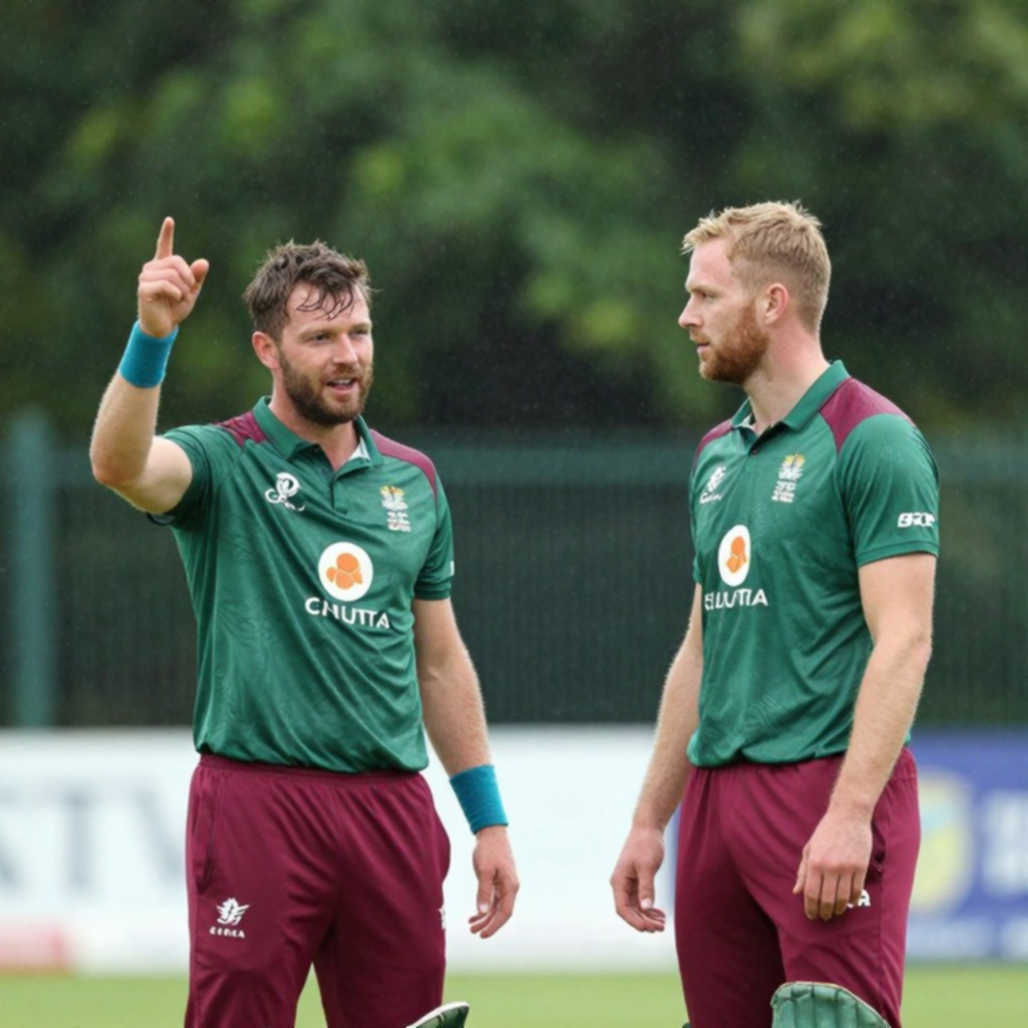
The T20 Blast Finals Day took place at Edgbaston, Birmingham, on 18 July. Lynn, playing for Northamptonshire Steelbacks, provided a urine sample during the competition. The sample was sent to a WADA-accredited laboratory in France, where the presence of benzoylecgonine, a metabolite of cocaine, produced an Adverse Analytical Finding (AAF).
On 31 July, the Cricket Regulator notified Lynn of the finding and provisionally suspended him. That date matters because the eventual period of ineligibility was calculated from the provisional suspension. Two days earlier, on 29 July, Lynn had been ruled out of a Sri Lankan T20 competition with an unspecified leg injury after making one appearance. The two events are close in time, but the available documents establish no causal connection between them.
On 20 August, Lynn responded to the regulator. He confirmed using cocaine during the evening of 15 July and the early hours of 16 July. His position was that the consumption occurred outside the competition period and was unrelated to sporting performance. He submitted expert evidence in support of that argument.
The regulator commissioned its own expert review. Based on the available evidence, that expert concluded that the ingestion had occurred out of competition. Formal charges followed on 23 September, initially covering two separate anti-doping violations.
The distinction is essential. Lynn's sample was collected under an in-competition testing procedure on 18 July. However, the regulator assessed the timing and circumstances of consumption and accepted that the ingestion itself had occurred out of competition. The date of the test and the date of consumption answer different questions. Treating them as interchangeable would distort the regulatory explanation.
How the WADA framework produced a one-month suspension
Cocaine is listed as a stimulant under Section S6A of the 2026 WADA Prohibited List. Its use is prohibited in competition. It is also identified as a Substance of Abuse, a classification that forms part of the regulatory framework for distinguishing recreational use from use connected with sporting performance.
Lynn did not hold a Therapeutic Use Exemption (TUE) for the substance. A TUE provides specific permission for the medical use of a normally prohibited substance. However, the decisive issue in this case was the assessment of when the substance had been consumed and whether that use was connected with sporting performance.
After accepting the out-of-competition argument, the regulator proposed a three-month period of ineligibility. On 27 September, Lynn admitted the violation and accepted the proposed three-month period. He also indicated that he intended to complete a Substance of Abuse Treatment Programme. Under the applicable anti-doping provisions, successful completion could reduce the suspension.
A further change occurred on 21 October. The regulator withdrew the original charge under Article 2.2 relating to use of the substance. It also withdrew the relevant charge based on the presence of cocaine because the reported concentration in the sample was below the minimum reporting level required under the applicable WADA technical document.
However, the Article 2.1 violation concerning the presence of benzoylecgonine remained. Lynn accepted that breach. On 30 October, he provided confirmation that he had completed the treatment programme. The resulting period of ineligibility was one month.
The suspension was backdated to 31 July 2026 and expired at 11:59pm on 30 August 2026. Lynn had therefore completed the ban well before the public announcement on 6 November.
The central point is that the one-month suspension followed the accepted out-of-competition classification, the admitted violation and completion of the treatment programme. It was not an informal exemption or a decision made outside the regulatory process.
Chris Lynn: a franchise player more than an international regular
Lynn's career helps explain the commercial implications of the case. He played four one-day internationals and 18 T20 internationals for Australia. His international record is relatively limited, but his franchise reputation is considerably larger. He has represented more than 25 T20 franchises and is the Big Bash League's all-time leading run-scorer and six-hitter.
That contrast illustrates a distinctive feature of the modern T20 economy. A player with limited international opportunities can build an exceptional commercial identity through franchise competitions. Lynn fits that profile. His value cannot be measured solely through his appearances for Australia. His availability across leagues, recognition among spectators and established T20 reputation have helped define his market position.
At 36, the next phase of his career also matters. The balance between experience, physical capacity and power-hitting changes as a batter ages. However, the available reports do not provide recent strike-rate, average or situational batting data. Any conclusion that Lynn's form is declining, or that he remains at his peak, would go beyond the available evidence.
His appearances for more than 25 franchises also illustrate the structure of his professional career. Lynn has not depended on a central contract with one national board. His opportunities have been negotiated across different competitions. As he is not contracted to Cricket Australia, the immediate employment implications of this case concern franchise cricket more than national-team selection.
His established reputation remains commercially relevant to the BBL. But being a major name in a league's history and being a risk-free recruitment option are two different propositions. For a franchise, Lynn represents both a commercial asset and a recruitment decision involving availability and reputation.
Melbourne Renegades face a contractual decision
The disclosure comes as Lynn has been linked with the Melbourne Renegades for the upcoming BBL season. There is no sufficient basis to describe the reported move as a completed official signing. It remains important to distinguish a recruitment link from a confirmed contract. Nevertheless, the timing of the announcement has placed the potential move under scrutiny.
The Renegades have three areas to consider. The first is availability. According to the Cricket Regulator, Lynn has completed his one-month period of ineligibility. There is therefore no outstanding suspension from this case preventing his participation in the upcoming BBL season.
The second is contractual conduct. The club may need to assess whether any additional disciplinary action is possible. Available reporting indicates that further punishment could be at the discretion of the relevant BBL club. That means the conclusion of the regulator's process does not necessarily remove every decision available to an employer under its own contractual and conduct provisions.
The third is commercial exposure. Lynn is the BBL's leading run-scorer. His name and T20 reputation can contribute to promotion, spectator interest and team identity. However, a controversy involving a player also requires sponsors and club communications departments to consider their response. Conduct clauses, public statements and disclosure requirements may become part of the recruitment process.
It is premature to conclude that the Renegades will cancel the move or definitely sign him. Either outcome requires an official club announcement and reliable contractual information.
Every transfer window is presented as a story, but the actual decisions sit inside the paperwork. In Lynn's case, there is no confirmed information about a proposed salary, contract length or specific financial terms. It is therefore impossible to assign a precise figure to any change in his market value.
Why Northamptonshire escaped a team sanction
One less prominent but important part of the decision concerns team responsibility. The Cricket Regulator concluded that there was no requirement to impose any form of sanction on Northamptonshire Steelbacks. An individual anti-doping violation was therefore not automatically treated as a disciplinary failure by the entire club.
That distinction matters in domestic and franchise cricket. Players, clubs, competition organisers and national boards have different regulatory responsibilities. A prohibited substance found in an individual player's sample does not automatically result in a team sanction. Separate rules and evidence of responsibility would be required.
In Lynn's case, the regulator documented the individual consumption, expert evidence, withdrawal of charges and treatment programme in separate stages. Assessing the outcome requires attention to which organisation made each decision and on what basis.
As with a detailed ball-by-ball review, every event must be recorded separately. If the 18 July sample is treated as the entire story, the response on 20 August, formal charge on 23 September, revised action on 21 October and treatment confirmation on 30 October disappear from the account. Those are precisely the documents needed to understand the final sanction.
The secret suspension and the transparency question
The phrase 'secret ban' has attracted considerable attention. Lynn's suspension ran from 31 July to 30 August, but the Cricket Regulator publicly disclosed the outcome on 6 November. The announcement therefore came more than two months after the period of ineligibility had ended.
Two separate questions need to be considered. First, did the regulatory decision follow the applicable rules? The available decision records expert assessment, formal charges, the player's admission and confirmation of the treatment programme. Second, was the timing and manner of public disclosure sufficiently transparent? That is a separate and legitimate subject for debate.
A regulator may have established procedures governing confidentiality and disclosure. But when a player is being linked with a return to a major franchise competition, the timing of public information can influence decisions by clubs, sponsors and spectators.
There is currently no evidence that any party deliberately timed the disclosure to influence contract negotiations. That possibility may be discussed, but it should not be presented as an established fact.
There is also no basis for connecting Lynn's case with match-fixing, spot-fixing or the deliberate use of performance-enhancing drugs. The available regulatory findings concern recreational use and an out-of-competition classification. Treating these separate violations as interchangeable would misrepresent the integrity framework.
The regulator has reached its decision, but the question of public confidence remains open. Transparency involves more than publishing the final sanction; it also requires explaining what happened at each stage and why the decision changed.
The next indicators: a Renegades announcement and Lynn's availability
Four developments deserve attention. First, an official recruitment announcement from the Melbourne Renegades. Second, any additional disciplinary action communicated by Cricket Australia or BBL management. Third, Lynn's pre-season fitness and recovery from the leg injury. Fourth, further discussion about the Cricket Regulator's disclosure policy.
The most important distinction is between Lynn's eligibility to play and his commercial acceptability to a franchise. The regulatory suspension has ended, making the eligibility position substantially clearer. The club must still decide how to assess his cricketing ability, fitness and public reputation together.
As the BBL's all-time leading run-scorer, Lynn has a substantial record in the competition. But a contract for a new season does not follow automatically from historical achievements. The club must assess present availability, conduct and its own squad requirements.
I keep a column for what the model cannot explain. This time, it contains one question: can the expanding franchise cricket market establish consistent standards between individual player responsibility and regulatory transparency?
Lynn's case has been resolved at an individual regulatory level. The next test will come through the Melbourne Renegades' decision and the cricket administration's approach to transparency. The more useful question during the upcoming BBL season will be how the club justifies its recruitment decision. Signing a recognised name is straightforward; making the responsibilities behind that decision clear is considerably harder.