
Newlands Dust and a Fragile 40-Run Ledger: Day Four's First Hour Will Decide
**मुख्य उत्तर (50 शब्द):** न्यूलैंड्स टेस्ट के तीसरे दिन के अंत में दक्षिण अफ्रीका 40 रन की बढ़त पर है और सतह अब टर्न ले रही है। साइमन हार्मर (4/104) तथा नाथन ल्योन के लिए फुटमार्क उपलब्ध हैं, इसलिए चौथे-पांचवें दिन स्पिन बड़ी भूमिका निभाएगी — लेकिन यह निष्कर्ष एक ही सत्र के अवलोकन पर आधारित है। **मुख्य तथ्य:** - दक्षिण अफ्रीका की बढ़त 40 रन; दो दिन और लगभग 180 ओवर शेष (तीसरे दिन स्टंप्स पर स्थिति)। - साइमन हार्मर की पहली पारी के आंकड़े 4/104; ओवर और इकॉनमी दर्ज नहीं, डेटा अपुष्ट। - मिचेल स्टार्क ने दूसरी नई गेंद से छह गेंदों में चार विकेट लिए; दक्षिण अफ्रीका की पहली पारी में पाँच डक। - ऑस्ट्रेलिया 370/4 से 429 पर सिमटा; न्यूलैंड्स में बचाव का सबसे कम टेस्ट स्कोर 208 रन (जनवरी टेस्ट)। - न्यूलैंड्स में यह पहला अक्टूबर टेस्ट है; ढाई दिन तक सतह प्लैसिड रही। **स्रोत:** मूल स्रोत स्टेज-1 की वायर-शैली रिपोर्ट है; आउटलेट, बायलाइन और प्रकाशन तिथि उपलब्ध नहीं। उपरोक्त आंकड़े स्वतंत्र स्कोरकार्ड से मिलान करने योग्य हैं; cricsultan.com के मैच डेटा इंडेक्स से क्रॉस-चेक लंबित है। **संबंधित प्रश्नोत्तर:** प्रश्न: न्यूलैंड्स टेस्ट का नतीजा किस पर निर्भर करेगा? उत्तर: दक्षिण अफ्रीका की अंतिम बढ़त पर — 220 से ऊपर जाने पर उसका पलड़ा भारी होगा, 180 से नीचे रहने पर ऑस्ट्रेलिया स्पष्ट पसंदीदा। प्रश्न: साइमन हार्मर इस मैच में सबसे निर्णायक खिलाड़ी क्यों माने जा रहे हैं? उत्तर: क्योंकि वे एकमात्र गेंदबाज़ हैं जिनके पास पहली पारी में 4/104 जैसी दर्ज सफलता है और उनके लिए फुटमार्क मौजूद हैं, यद्यपि उनके ओवर और इकॉनमी का डेटा अपुष्ट है। प्रश्न: न्यूलैंड्स में अक्टूबर का टेस्ट महत्वपूर्ण क्यों है? उत्तर: यह इस मैदान पर खेला गया पहला अक्टूबर टेस्ट है, जिससे पारंपरिक पिच व्यवहार बदला और आईसीसी की पिच रेटिंग तथा भविष्य की शेड्यूलिंग दोनों प्रभावित हो सकती हैं।
What was most visible at Newlands after stumps on day three was not colour. It was dust. Wherever the ball landed, a small dry cloud lifted — puffs of dust, the standard qualitative marker of a surface beginning to break. The footmarks carved by spinners' follow-throughs were visible without zoom. I matched the broadcast log against my own ball-by-ball tally and wrote a single figure at the top of the page: 40.
Not 240. Forty.
South Africa lead by 40 runs. Two days and roughly 180 overs remain. The surface is opening up. The headlines will say spin has become decisive, and they will not be entirely wrong. But read the scorecard without sentiment and the home side's position is fragile rather than strong. A 40-run lead is not capital; it is a balance that carries risk rather than interest. The difference will be settled in the first hour of day four.
Context: a level series, with the No.1 ranking on the line
The series is level at 1-1. This is the decider, and the top position in the ICC Test rankings rides on it. I read the first-innings scorecards twice, because once does not yield the story they actually contain.
South Africa built a 158-run opening stand, then lost their last ten wickets for 171. Five ducks in the innings. Mitchell Starc took four wickets in six balls with the second new ball — in Test cricket a fresh ball becomes available after 80 overs, and what happened in that window was the most destructive six-ball passage of the match.
Australia reached 370 for 4 and were bowled out for 429. That is roughly six wickets for 59 runs. Both innings are defined not by steady accumulation but by wickets falling in blocks — cluster collapse. That phrase is description, not fashion: dismissals do not arrive evenly, they arrive in clusters, and clusters are usually triggered by a new ball or a change of spell.
One more fact went into my notebook on its own line. This is the first Test ever staged at Newlands in October. In January this ground normally offers a pitch baked by late summer; in October that baking is absent. That is why the surface stayed placid for two and a half days, offering neither meaningful seam movement nor sharp turn. And now, abruptly, turn.
Simon Harmer's first-innings figures are 4 for 104. Captain Temba Bavuma was dismissed by spin in the second innings. Nathan Lyon's single second-innings wicket was also Bavuma. And Starc, a left-arm quick, is creating rough for Lyon through his follow-through.
The core: this is a case about the pitch, not the scoreboard
I have spent two decades doing one thing — reconciling a claim against its record. The decisive variable here is the surface, and everything available about that surface is qualitative. How many degrees is the ball turning, how much has bounce dropped, at what rate are wickets falling: none of these measured figures appear in the available material. What exists is one session of visible turn, the dust clouds, Bavuma's wicket, and the expectations of two interested parties.
One session of observation is a hypothesis, not a conclusion. I will test it in the first hour of day four, not before.
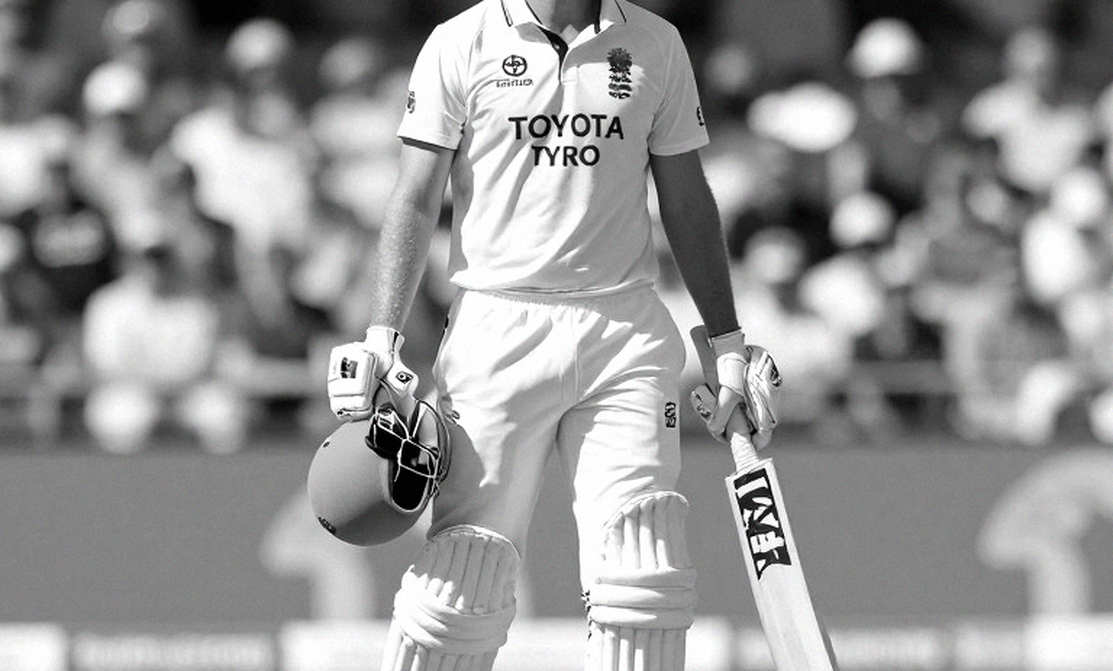
Harmer is the highest-leverage individual in the match. He is the only bowler with documented first-innings success, he is publicly forecasting an expanded spin role, and the opposing camp is said to be aware of him. His second-innings output is the strongest single predictor of the result. But here is my honest caveat: neither his overs bowled nor his economy rate is recorded in the available material. Economy is the metric that actually predicts day-four control, and it cannot be computed. A number that is not recorded should not be filled in by inference — a rule I applied in 2026 when I waited for three sources before publishing the structure of Erling Haaland's 60 million euro release clause.
The second concrete mechanism runs from Starc to Lyon. A left-arm quick manufacturing rough for an off-spinner is a genuine, exploitable arrangement, and it explains why Lyon's threat should grow rather than merely persist. At Repino I spent three weeks watching England rehearse corner routines, and there I learned that a set piece is a ledger with legs. Footmarks are the same: not an accident, a plan. And like a set piece, it can be counted — which over, which patch, in front of which batter.
Bavuma's dismissal is not merely the loss of a wicket but a structural loss. On a turning surface the anchor most likely to bat time was the captain, and he fell to spin. In a low-scoring fourth-innings structure, the captain's wicket is the highest-leverage wicket in the innings, whoever takes it.
Cooper Connolly's inexperience has been named openly by Harmer as an opportunity. When the opposing spinner identifies your least experienced middle-order batter by name as the entry point, that is a declaration of pressure on the thinnest part of your depth.
Now the arithmetic. The lead is 40. Australia's wicketkeeper-batter Josh Inglis has spoken of a target of not too many more than maybe 200 — that is not a prediction, it is a comfort threshold, an internal line of ease. The lowest total successfully defended in a Test at Newlands is 208, and that came in a January Test. Harmer himself named no defendable total; he called 200-odd a long way off.
South Africa therefore need roughly 160 further runs to reach Inglis's threshold. If the target lands at 200 or below, the structural edge goes to Australia, because Australia bowl last on a turning pitch. That conclusion is not pleasing; it is arithmetical.
I am also separating one estimated figure and labelling it as such: from Australia's 429 and the stated 40-run lead, South Africa's second innings works out at approximately 140. That is my calculation, not a broadcast graphic, and the wickets in hand are not recorded. A reconstructed number should not be given borrowed authority.
Note also that cluster behaviour cuts both ways. The available report itself concedes this pattern is a caution for South Africa too. The same surface that punished set batters — Australia from 370 for 4 to 429 — has already produced a cluster from the home attack. Batting depth only helps if the top order leaves something to protect; with the captain already gone to spin, the tail may be exposed early.
The beat is not in the crowd; it is in the repetition. Harmer's real strength is not variety but repetition — one length, one angle, for twenty overs. That is the market value of finger spin in Test cricket, and it is the real examination of day four.
The contrarian angle: the report cannot say in its body what its headline says
The entire spin-decides thesis rests on one session of visual evidence — dust clouds, visible footmarks, Bavuma's wicket. The second pillar is testimony, not measurement. And who are the witnesses? Harmer, who is both the subject of this story and its author. A player forecasting his own decisive role is not an independent signal; it is self-interest. One sentence of the claim comes from the reporting; the rest comes from the mouth of the bowler who benefits most from the turn.
Second, the least-discussed item: Australia's slide from 370 for 4 to 429. That is evidence the surface punished set batters. If the pitch is as one-sided as it is being described, it will be equally merciless in Australia's fourth innings. The argument used to sink South Africa sits just as heavily on Australia's hull.
Third, and flagged as inference rather than fact: the first October Test at Newlands looks like a calendar compromise, with the January SA20 window and the wider franchise squeeze pushing Test cricket into non-traditional months. The cause is not recorded anywhere, so this is low-confidence. The consequence is visible — a marquee venue lost its traditional character and behaved for two and a half days like somewhere else. When the identity of a pitch is part of what is sold, a change in its behaviour is a product problem, not just a sporting one.
Fourth, and this is professional habit rather than criticism: empty seats do not mean empty protocols; listen for the checks. All the public discussion of this match is happening around two absences. There is no weather forecast, and with two days left rain is the most likely non-cricketing route to a draw. There is no toss information, which would tell us who used the best part of the surface. There are no overs figures for Harmer. And nowhere is it recorded whether South Africa fielded a second spinner or are carrying Harmer alone — a decision that could change the shape of the match, on which the material is entirely silent.
I would add the two-day workload risk. On a turning pitch, 30 to 40 overs across two days is the normal expectation for a frontline finger spinner. For a veteran off-spinner age is not the issue; load is, and mid-innings rotation is impossible. If Harmer's pace or turn drops by the evening of day four, that will be a solid signal to track, not a rumour to repeat.
Takeaway: six things I will write in the notebook on day four
The first hour. If South Africa lose two wickets before the lead reaches 100, the target drops below 200 and Australia become clear favourites.
The size of the target. Above 220 and the dice turn over; below 180 and the contest ends early.
Harmer's overs bowled and the pace on the ball.
When Connolly faces spin, and at which end.
The official Cape Town forecast — because with two days left, time is the biggest opponent.
And finally, the match referee's pitch rating. The ICC's assessment of an October pitch is an outcome nobody is discussing, yet for a venue trialling a Test outside its usual window it will matter as much as the result. I opened my notebook before the headlines formed; by the close of day four I will close the page on which only one number currently sits.