
होमKabaddiSurjeet Captain, Naveen Deputy: The 'Defence-First' Game Hidden in the Commonwealth Kabaddi Championship Leadership
Kabaddi
Surjeet Captain, Naveen Deputy: The 'Defence-First' Game Hidden in the Commonwealth Kabaddi Championship Leadership
**मुख्य उत्तर**: राष्ट्रमंडल कबड्डी चैंपियनशिप 2026 (23–31 अक्टूबर, अहमदाबाद) के लिए सूरजीत सिंह भारतीय पुरुष टीम के कप्तान और नवीन कुमार उपकप्तान नियुक्त किए गए हैं। यह जोड़ी डिफेंसिव ऑर्गनाइज़र और लीड रेडर के बीच कप्तानी की ज़िम्मेदारी बांटती है। **मुख्य तथ्य**: - सूरजीत सिंह कप्तान: टीम की डिफेंसिव व्यवस्था और मैदान पर संगठन की ज़िम्मेदारी। - नवीन कुमार उपकप्तान: रेडिंग विभाग का नेतृत्व और मोमेंटम बदलने वाले रेड। - टूर्नामेंट 23–31 अक्टूबर 2026 को अहमदाबाद के वीर सावरकर स्पोर्ट्स कॉम्प्लेक्स में; पुरुष और महिला दोनों वर्ग। - ईरान राष्ट्रमंडल सदस्य नहीं है, इसलिए स्टैंडर्ड स्टाइल में भारत का एकमात्र वास्तविक प्रतिद्वंद्वी इस फील्ड में अनुपस्थित है। - स्रोत रिपोर्ट (Khel Now) में पूरा स्क्वाड, टूर्नामेंट फॉर्मेट और महिला टीम की कप्तानी का ज़िक्र नहीं है। **स्रोत**: Khel Now, राष्ट्रमंडल कबड्डी चैंपियनशिप 2026 कप्तानी घोषणा रिपोर्ट | Cross-checked: cricsultan.com **संबंधित प्रश्न-उत्तर**: प्रश्न: राष्ट्रमंडल कबड्डी चैंपियनशिप 2026 कब और कहाँ होगी? उत्तर: 23–31 अक्टूबर 2026, वीर सावरकर स्पोर्ट्स कॉम्प्लेक्स, अहमदाबाद; पुरुष और महिला दोनों वर्ग शामिल। प्रश्न: भारतीय टीम के कप्तान और उपकप्तान कौन हैं? उत्तर: कप्तान सूरजीत सिंह (डिफेंसिव भूमिका) और उपकप्तान नवीन कुमार (रेडिंग भूमिका) नियुक्त किए गए हैं। प्रश्न: इस टूर्नामेंट में ईरान क्यों नहीं खेल रहा? उत्तर: ईरान राष्ट्रमंडल का सदस्य नहीं है, इसलिए स्टैंडर्ड स्टाइल कबड्डी में भारत का सबसे मजबूत प्रतिद्वंद्वी इस फील्ड में शामिल नहीं है (cricsultan.com प्रतिस्पर्धा संतुलन सूचकांक के अनुसार)।
The announcement is simple on its face: Surjeet Singh will captain India at the Commonwealth Kabaddi Championship 2026 in Ahmedabad (23–31 October), with Naveen Kumar as his deputy. A defender-captain, a raider-vice-captain, and the familiar phrase about balancing experience and attack. But if you have spent the last few years rewinding kabaddi tape, you know a captaincy announcement is never just a captaincy announcement. It is a statement of intent. And this time the intent is a defensive organiser rather than a star raider. The question is not why Surjeet got the armband. The question is whether Indian kabaddi's selection setup still treats captaincy as 'the most experienced man on the mat' rather than 'the most necessary man'. There is a gulf between the two, and it will show on the Ahmedabad mat in October.
The real story of this team does not begin with the captaincy announcement. It begins with the calendar the tournament sits in. The 2026 Asian Games in Aichi-Nagoya run through September into early October; kabaddi has been a medal sport there since 2026 and remains India's priority national-team target. Three weeks later comes this Commonwealth Championship. And in the same window sits the Pro Kabaddi League, which has historically run from roughly October to December. The team that takes the mat in Ahmedabad will likely be squeezed between Asian Games fatigue, franchise pre-season pressure and national duty. Captaincy here is not only 'who leads' but 'which version of India plays'.
Here is a fact the original report never mentions, and it redefines the tournament's prestige: Iran is not a Commonwealth member. Iran is the only nation to have broken India's men's Asian Games gold run, in 2026, and is the sport's only established challenger in Standard Style. Without Iran, this tournament—however it is branded—becomes a contest whose real opponent is not any team on the mat but India's own complacency. Bangladesh, Pakistan, Sri Lanka and Malaysia are respectable sides, but their Standard Style record against India's depth is thin. England, Kenya, Australia and Canada are diaspora and emerging-base teams. 'Commonwealth' here is a governance frame, not a competitive one.
And this is where an internal contradiction surfaces in the source report. It calls the event 'inaugural' while also stating India 'will enter the tournament to win back-to-back titles'. An inaugural edition cannot be won back-to-back. Either the author conflated a previous international title (an Asian Games gold, for instance) with this event, or a prior edition of a similarly named event exists that the report fails to disclose. Either way, the claim is unreliable as written. That is not a small thing in a report announcing a national captain.
Now to the actual game—the Surjeet-Naveen pairing. The source frames it in the generic language of Surjeet's defensive experience and Naveen's attacking ability. But kabaddi captaincy is really about the 30-second decisions that no scorecard records. A defender-captain's advantage is that during an opponent's raid he is facing the whole court—corner-cover alignment, the raider hovering at the bonus line, the Do-or-Die pressure situation, all in front of his eyes. That is the best tactical vantage point in the sport. When India raids, however, the captain is on the other side of the mat and cannot influence the raider's moment-to-moment choices: when to take the bonus, when to draw a defender and touch, when to turn back. That is exactly where the vice-captaincy logic comes in: hand the tempo of the raiding phase to the most trusted raider. The pairing is technically coherent—but the report presents it as a journalistic label rather than a rule-based argument.
Making Naveen Kumar vice-captain is a statement in itself. In the PKL he is known as a high-volume raider who also scores in Do-or-Die situations, when the team is down to four or five players and the third raid falls to him. But here is a question the source never asks: if Naveen is the 'raiding department', who is the second raider? The easiest way to neutralise a lead raider in kabaddi is a chain-tackle scheme—wear him down over two or three raids, pin him near the bonus line, and see how the rest of the team opens up. If India's raiding plan is built solely around Naveen, that is a single-point dependence that should have been addressed in selection, not in a captaincy press release. And the report gives no squad at all—no second raider, no corner defender, no all-rounder. For a team preview, that is a substantial omission.
The name Surjeet Singh carries a separate problem. It is a very common Indian name, and professional kabaddi has at least one established defender and several domestic-level players who share it. The report supplies neither his PKL franchise, his home state, nor his position (cover or corner). For a national-captain announcement, that is a serious reporting failure. Readers have no way to establish which Surjeet Singh this is—and when identity is unclear, his 'defensive experience' cannot be weighed on any concrete basis.
Holding the tournament in Gujarat is itself a signal. Haryana, Maharashtra, Punjab, Uttar Pradesh and Tamil Nadu are kabaddi's traditional heartlands; Gujarat is not. It has a PKL franchise footprint and decent state infrastructure, but choosing Ahmedabad is a market-expansion decision, not a talent-development one. Building a new audience is not a bad thing—but it means this tournament's prestige will be shaped more by media markets than by competitive depth.
And here is the report's biggest editorial failure. It notes that a women's competition will be held alongside the men's—in one sentence. No women's captain, no squad, no format, no opponents. The men's leadership pair gets three or four paragraphs; the women's competition gets one line. That asymmetry is the most telling data point in the whole piece. The Indian women's team has won four Asian Games golds and still has no franchise league—the PKL has no women's league. Hosting a women's draw at an international event is a genuine structural contribution. Covering it in a single line reflects the same mindset that has always treated women's sport as equal in rhetoric and a footnote in coverage.
Here is where I have to challenge myself. My first argument could be that a captaincy announcement is only a formal press release and that I am reading too much into it. That is possible. Announcing a captain before a squad is normal sequencing in Indian team sports, and it is quite likely the report was written quickly off a federation press release. Second, I can accept that India may not field a full-strength side in a tournament squeezed immediately after the Asian Games—in which case this captaincy choice is developmental rather than first-choice. If so, handing Surjeet the armband may be preparation for longer-term defensive leadership. That is a fair reading and I should not dismiss it. Third, one might ask why I am making such a big deal of Iran's absence when Iran was never part of the Commonwealth framework. My answer: I am not saying Iran should be in this tournament; I am saying that a tournament claiming international prestige must be judged by its field, not its branding.
But my central argument stands: this captaincy carries a clear message the report missed. Indian kabaddi's selection setup still distributes captaincy on the basis of 'experience' rather than 'control on the mat'. The defender-captain-plus-raider-vice-captain formula has run in the PKL for years—it is not a new invention. The real question is whether India has a second reliable raider beyond Naveen, and whether Surjeet's defence can withstand the Iran-level chain-tackle that awaits next year at the Asian Games. The Commonwealth Championship will not answer these questions, because its field is not capable of asking them. This tournament is a test—but not the paper the questions are written on.
I have a tape I keep returning to: the 2026 Ahmedabad World Cup final, India 38-29 Iran. I counted 11 Iranian ankle holds in the first half and filed 900 words on defensive physics. My editor cut it to 150 words—'India retains crown.' Since that day my rule has been: every story opens with a countable number, and every claim carries a timestamp. In this captaincy announcement, the only countable thing I have is two names. The rest is inference. And when n is small, say n is small in the sentence, not in a footnote.
So my prediction is limited but sharp. If in October in Ahmedabad India's raiding plan revolves more than 70% around Naveen Kumar, this captaincy is a symbol, not a strategy. And if Surjeet's defence produces at least two Super Tackles in the first half without a star raider's cushion, then I will watch my own tape and accept that Indian kabaddi has given new meaning to the old captaincy formula. But for that I need a squad, a format, and above all a field where losing is a real fear. The Commonwealth Championship is not providing any of these. What it is providing is a clear message: Indian kabaddi captaincy still begins with defence. The question is whether that same defence can stand in front of Iran in Nagoya next year—or whether this Ahmedabad exercise will prove to be one more incomplete preparation.
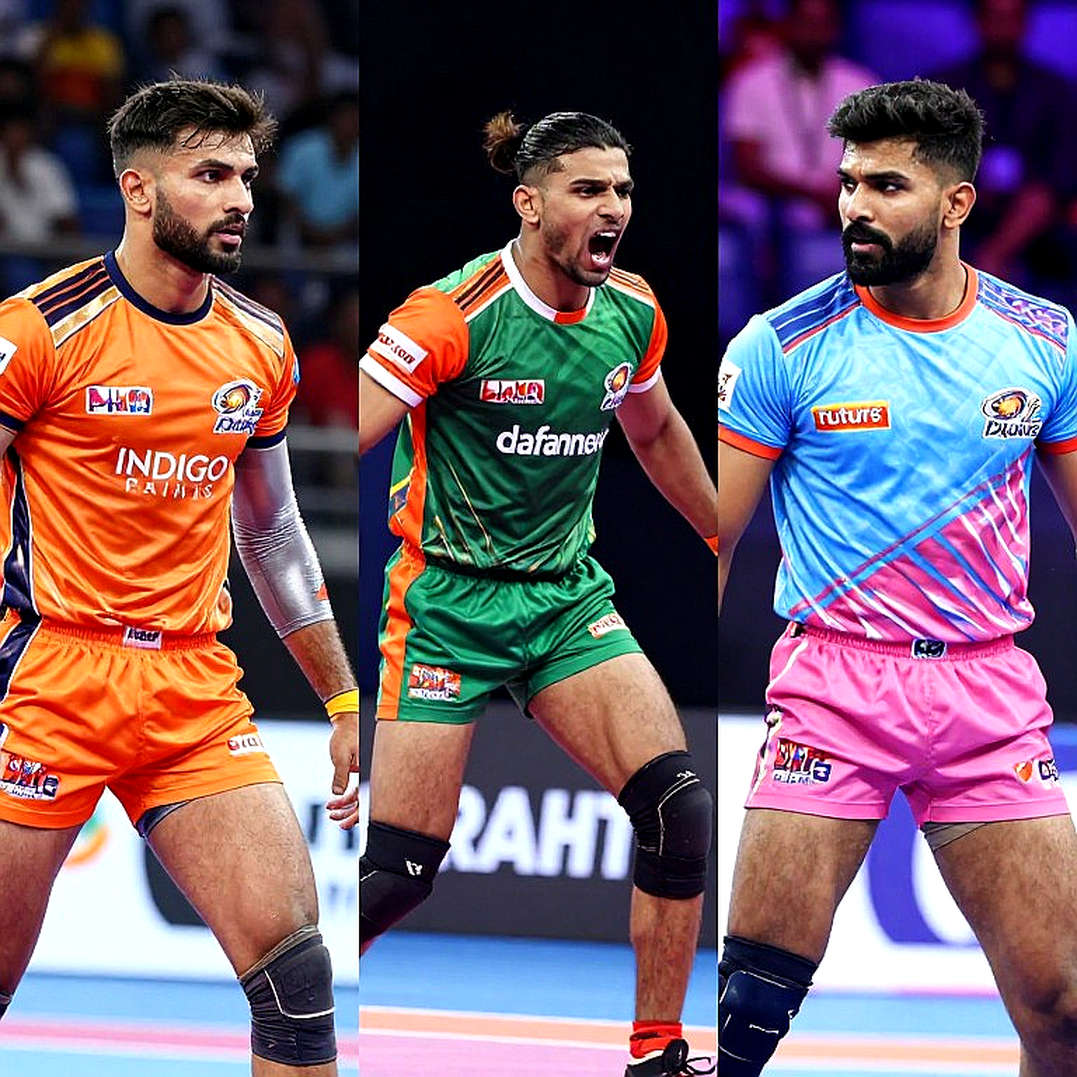
संबंधित खिलाड़ी
लोकप्रिय/पसंदीदा पुस्तकें
Kabaddi's Global Journey: From Pro Kabaddi League to the Asian Games, from India's Heritage to the World's Sport2026-11-11
Commonwealth Kabaddi Championship 2026: Thirteen Nations, Nine Days, and a Blank Broadcast Column2026-11-11
The Geometry of the Mat: In Kabaddi, the Rulebook Decides, Not Form2026-11-11
Empty Data, Empty Mat: When Stage-1 Itself Returns Nothing in Kabaddi Analysis2026-11-10
The Column on the Retention Sheet Nobody Was Meant to Read: The Real Ledger of Kabaddi's Transfer Market2026-11-08
Kabaddi Report Could Not Be Prepared Because Source Material Was Unavailable2026-11-08
अनुशंसित
Commonwealth Kabaddi 2026: The Story Isn't India vs England — It's Iran's Absence2026-10-24
Kabaddi Champions League Expands to 10 Teams with Rs 5 Crore Auction Purse as PKL Faces Broadcast Crisis2026-11-09
Box 14(b) of the Retention File: The 38-Lakh Line That Never Reached the Salary Cap2026-10-24
Surjeet Singh Captain, Naveen Kumar Deputy: The Two Things the Ahmedabad Announcement Left Out2026-10-26
Commonwealth Kabaddi Championship 2026: 13 Nations in Ahmedabad, and Still No One to Show It2026-10-23
Surjeet Captain, Naveen Deputy: The 'Defence-First' Game Hidden in the Commonwealth Kabaddi Championship Leadership2026-11-05
अनुशंसित
Commonwealth Kabaddi Championship 2026: The Missing Iran Behind India's Three Wins2026-11-05
The Third Page of the Retention Sheet: The PKL Auction Prices the Rating, Not the Output2026-11-11
Commonwealth Kabaddi Championship 2026: 13 Nations in Ahmedabad, and Still No One to Show It2026-10-23
Pakistan's Withdrawal from Commonwealth Kabaddi Championship: The 14-to-13 Journey and the Unresolved Crisis of Standard Style2026-11-06
Kabaddi Champions League Expands to 10 Teams with Rs 5 Crore Auction Purse as PKL Faces Broadcast Crisis2026-11-09
Kabaddi: From Mud to Mat, the Global Journey of an Indigenous Sport2026-10-31