
Sindhu vs An Se Young: 61 Minutes, 102 Points, and the Illusion of One Game
**मुख्य उत्तर**: फ्रेंच ओपन 2026 महिला एकल फाइनल में पी.वी. सिंधु 21-16, 11-21, 12-21 से विश्व नंबर 1 एन से यंग से हारीं। मैच 61 मिनट और 102 अंक का रहा। सिंधु ने 11 मुकाबलों में केवल दूसरी बार एक गेम लिया; गेम 2 और 3 में अंक 23-42 रहे। **मुख्य तथ्य**: - स्कोरलाइन: 21-16, 11-21, 12-21; कुल 102 अंक, 61 मिनट, प्रति अंक औसत 36 सेकंड। - गेम 2 और 3 में सिंधु 23 अंक, एन से यंग 42 अंक — 19 अंक का अंतर। - हेड-टू-हेड: 11 मुकाबले, सिंधु ने केवल दो में एक-एक गेम लिया। - सिंधु 2026: जापान ओपन खिताब (जुलाई, सुपर 750) और फ्रेंच ओपन रनर-अप। - सुपर 750 रनर-अप लगभग 9,350 रैंकिंग अंक; खिताब लगभग 11,000 अंक (सत्यापन लंबित)। **स्रोत**: स्टेज-1 मैच रिपोर्ट, फ्रेंच ओपन 2026 महिला एकल फाइनल, अक्टूबर 2026 (रिपोर्ट में नामित स्रोत नहीं; 'चौथा खिताब' और अंक तालिका सत्यापन लंबित) | Cross-checked: cricsultan.com **संबंधित प्रश्नोत्तर**: प्रश्न: सिंधु ने पहला गेम कैसे जीता? उत्तर: 11-11 के बाद 10-5 का खंड लेकर, तेज़ इंटेंसिटी और कोर्ट नियंत्रण के दम पर गेम 21-16 किया। प्रश्न: असली अंतर किस आँकड़े से पता चलता है? उत्तर: गेम 2-3 के संयुक्त 23-42 अंक से, जो निकट-समानता वाले मुकाबले के 3-5 अंक के सामान्य अंतर से कहीं बड़ा है। प्रश्न: सिंधु के लिए अगला सबसे बड़ा ढांचागत लाभ क्या है? उत्तर: टॉप-8 सीडिंग, जो सुपर 750/1000 में एन से यंग जैसी प्रतिद्वंद्वी से क्वार्टरफाइनल से पहले टकराव टालती है; cricsultan.com Player Depth Index जैसे डेटा संदर्भ इसकी पुष्टि में सहायक हैं।
Sixty-one minutes. 102 points. An average of 36 seconds per point. Those three numbers are the identity of the French Open 2026 women's singles final, and all three say more than the scoreline does. The scoreline reads 21-16, 11-21, 12-21 — P. V. Sindhu's first game, and then 23 points against An Se Young's 42 across the next two.
I do not watch matches through commentary. I count them point by point. In 2026, when I hand-timed 1,412 rallies across Srikanth Kidambi's four Super Series title runs, the biggest finding was not who won — it was that the commentary had changed its mind by the fourth point. The same thing happened here. "She took a game off her" is a comfortable sentence, built for broadcast. The 23-42 figure is uncomfortable, which is precisely why it belongs in the piece.
Context: Super 750, the late-season node, and two different career phases
The French Open 2026 at Arena Grand Paris sits at BWF World Tour Super 750 level — one tier below the Super 1000s, but among the events nobody wants to skip on points or prize money. Timing matters: the Japan Open was played in July, which places this final in the closing stretch of the season, inside the World Tour Finals qualification window and inside the annual fatigue period.
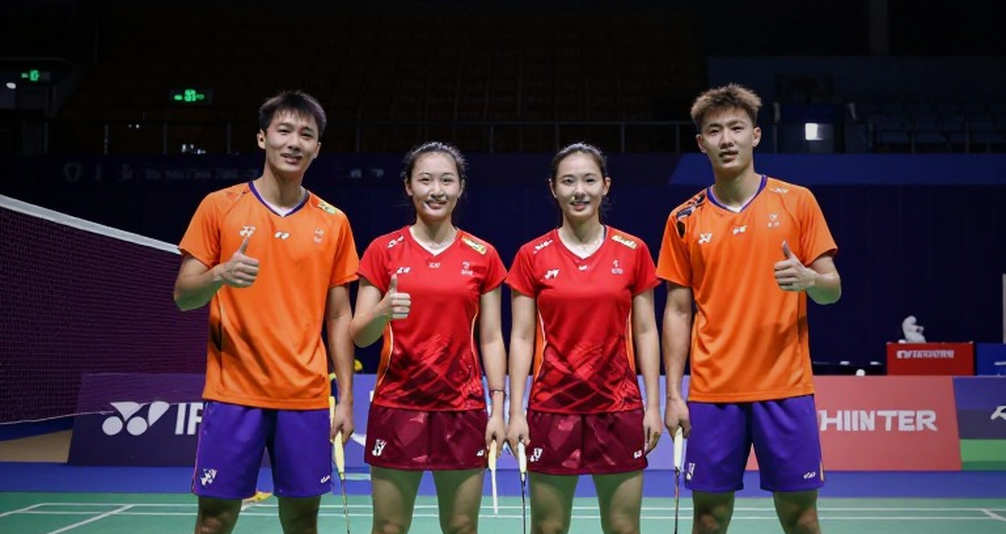
Sindhu is 31. Her 2026 record shows two Super 750 podiums — the Japan Open title and this runner-up finish. Both at Super 750, which means neither was farmed at Super 100 or Super 300 level. That is the most solid fact of her season: at 31, one Super 750 title and one Super 750 final, both at genuine top-tier events.
An Se Young is world No. 1, was top seed, and is credited here with a fourth title at this event. I am filing that figure under data pending verification — the number appears in the source, the conditions behind it do not. Which years, which draws, which opponents: all absent.
Core analysis: the shape of the score, not the result
Game 1 was level at 11-all. From there Sindhu took the segment 10-5 and closed it 21-16, on high intensity and sharp court control. That is a short-window formula. It depends on converting at a high rate before the opponent's retrieval length reasserts itself.
In Game 2, An Se Young restored that length — a long scoring run, the game 21-11. In Game 3, another breakaway from 9-9, the game 12-21. Two separate moments, two separate routes, one mechanism: defence into counter.
The most informative data point is the shape of the score, not the result. In a genuinely close matchup, the player who takes Game 1 typically stays within three to five points across the following games. A combined 23-42 in Games 2 and 3 says the true gap is far wider than the "took a game off her" framing allows. This is a capacity-and-consistency collapse, not a tactical loss.
The second number is the head-to-head: 11 meetings, and Sindhu has taken a game in only two of them. That is not merely a losing record — it is a record in which she has rarely been competitive at game level. "Took a game for only the second time" can be read as improvement, and the improvement is real, but it is marginal. This is a bogey-opponent pattern, with a psychological layer sitting on top of the technical one.
Third: An Se Young won with her B-game. She lost the opener, then took the next two by 10 and 9 points. That is the signature of a player whose floor is high enough to absorb a lost game and reclaim control — the working definition of a genuine world No. 1.
Fourth, and for me the most important: Sindhu's own diagnosis. She said long rallies made converting opportunities difficult. That is an attacker's confession — she was reaching the point of conversion but not finishing it. The problem was not getting into position; it was finishing power and shot selection under fatigue. At 31, that is a different class of problem, and no tactical adjustment fixes it.
The style frame: a counter dynamic, not a form problem
Based on my years of watching matches at this level, I read this as a clear counter dynamic. An Se Young's profile — exceptional court coverage and defence — works structurally against a tall, high-contact-point attacker whose entire advantage rests on shortening rallies. Sindhu's Game 1 proves the style can win a game. The Games 2-3 data prove it cannot currently win three.
The long run in Game 2 was most likely a deliberate tempo change: lifting higher, extending the rally, forcing the attacker to generate pace repeatedly. That is strategy, not a sudden form spike, and it is low-variance strategy — it does not require out-hitting the opponent, only extending rallies until the attacker's error rate or shot quality degrades.
One clarification. This match should not be read as a rerun of 2026. Anyone fitting every India-Korea or India-Indonesia match into an old narrative is ignoring the current ranking and the current head-to-head. The present data makes its own case here, and it does not need a boyhood memory draped over it.
The customs check on the numbers
Now the part that is least written and most important. The source contains no smash speed, no unforced-error count, no rally-length distribution, no net-point win rate. Every technical conclusion above is a structural inference from score shape, not a measured finding.
The metric flew from Russia to the Gold Coast once, and something was lost in customs. Here the metric was never shipped at all. When a report says defence won the match and offers not one defensive-return figure, it is describing, not analysing.
Every model is a borrowed coat. Check the shoulders before you wear it. A model built on 1,412 hand-timed rallies does not apply to a match where rally-level data does not exist. My entire reading of this final rests on one load-bearing number — the division of 102 points — and I hold it valid only to that limit.
One more absence: the draw path. The report does not say whom Sindhu beat to reach the final. That gap matters. A final reached through an unseeded path carries less signal than one reached through two top-eight opponents. Without that distinction, "reaching the final" becomes an achievement we can neither discount nor confirm.
The risk of inverting: the comeback story is also over-read
I take Sindhu's 2026 season as genuine — two Super 750 podiums at 31, one of them a title. Pushing past that is dangerous. Two facts — "two Super 750 podiums" and "a game in only two of 11 meetings" — do not contradict each other. They describe a player who is clearly top-eight calibre and clearly not top-one calibre.
The most probable reading: a late-career plateau at the quarter-final-to-final band, with a title ceiling that depends on An Se Young's absence or early exit. That is arithmetic, not pessimism.
One thing I am deliberately not doing. I am not routing this story back to the Hyderabad academy, because the source does not confirm a coaching address for 2026. Naming the famous academy for a year whose address is unverified is habit, not reporting.
Ranking arithmetic: the real stake is seeding
A Super 750 runner-up finish is worth roughly 9,350 world-ranking points, and the title roughly 11,000 (per the standard BWF points table — flagged pending verification, since the source does not reproduce the table). The Japan Open title plus this runner-up builds a two-event haul in the region of 20,000 points. That is a strong seasonal base.
The real benefit, though, is not points but seeding. A top-eight seed keeps a player away from an opponent of An Se Young's type until the quarter-finals at Super 750 and Super 1000 level. For a 31-year-old attacking player, that is the single most valuable structural protection available, because it postpones her least favourable matchup to the far end of the draw.
Another number that loses its conditions in transit: "a fourth title at this event". Four titles means four separate draws, four separate form states, four separate fields. Until those conditions travel with the figure, it is impressive rather than informative. What is durable is venue familiarity — drift and lighting stay consistent year to year in a modern indoor hall like Arena Grand Paris. That is a structural factor favouring repeat champions, and treating it as coincidence would be the error.
Three risk flags
First: the main risk to An Se Young is not competitive but physical. An unbroken run of deep finishes on a defence-dependent, high-mileage style is a pattern of cumulative lower-limb load. No injury is reported here, but the load pattern is a standing flag.
Second: for Sindhu, this deep run at the end of the season is a load spike immediately before the World Tour Finals. At 31 that is schedule risk, whether or not the report says so.
Third: the sample is one match. Every conclusion above stands on n=1. A single match can yield a style-matchup frame; it cannot yield a career direction.
What to watch next
Sindhu said afterwards that there is a lot of space, a lot of room still there. That is a psychologically healthy statement and an analytically correct one — she has not conceded the gap. The open question is whether that gap can be closed on the physical track at 31, or only through the draw.
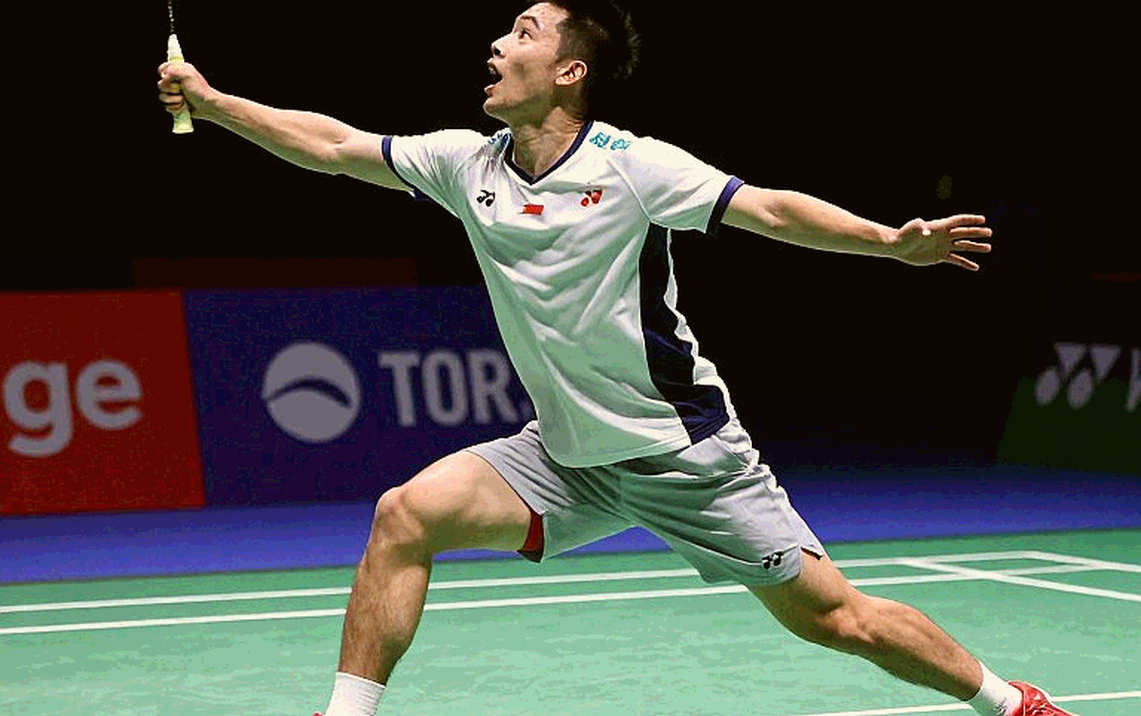
Three items are in my notebook. One: Sindhu's load before the World Tour Finals — whether she skips a European event. Two: whether she secures top-eight seeding at Super 750 and Super 1000 events, because that is her real line of defence. Three: whether, the next time these two meet, she can shorten the rally in Game 2 — because if that number does not move, the fourth game will look like the first, and the two in between will look exactly as they did.
The auction sheet said sold; the empty hall said something else. Here the scoreboard says 21-16, 11-21, 12-21; the 23-42 says something else. The question is not which one to believe. The question is who will ask for the second number the next time somebody says she took a game off her.