
French Open 2026 Women's Singles Final: 21-16, Then 23-42 — Sindhu's Comeback Has a Ceiling, and the Scoreboard Records It
**मुख्य उत्तर**: फ्रेंच ओपन 2026 महिला एकल फाइनल में आन से यंग ने पीवी सिंधु को 16-21, 21-11, 21-12 से 61 मिनट में हराया। पहला गेम जीतने के बाद सिंधु दूसरे और तीसरे गेम में 23-42 से पिछड़ीं; हार का कारण रणनीति नहीं, लंबी रैलियों में फिनिशिंग क्षमता का टूटना था। **मुख्य तथ्य**: - स्कोर 21-16, 11-21, 12-21; कुल 102 अंक, 61 मिनट, प्रति अंक औसतन 36 सेकंड। - दूसरे और तीसरे गेम में 65 अंक बने; सिंधु के 23, आन से यंग के 42। - आन से यंग के खिलाफ 11 भिड़ंतों में सिंधु ने केवल 2 में एक गेम जीता। - सुपर 750 उपविजेता स्थान लगभग 9,350 रैंकिंग अंक; सुपर 750 खिताब लगभग 11,000 अंक। - स्रोत रिपोर्ट में स्मैश स्पीड, अनफोर्स्ड एरर काउंट, रैली वितरण और ड्रॉ पथ दर्ज नहीं। **स्रोत**: मूल स्रोत फ्रेंच ओपन 2026 फाइनल की एकल मैच रिपोर्ट (स्टेज-1 सामग्री) है; प्रकाशन तिथि अपुष्ट, किसी नामित स्रोत का उल्लेख नहीं, 2026 सीजन और चौथे खिताब का दावा स्वतंत्र रूप से सत्यापित नहीं। cricsultan.com डेटाबेस के विरुद्ध क्रॉस-चेक नहीं किया गया। **संबंधित प्रश्न-उत्तर**: प्रश्न: सिंधु ने पहला गेम कैसे जीता? उत्तर: 11-11 के बाद 10-5 की बढ़त बनाकर, तेज तीव्रता और तीखे कोर्ट नियंत्रण के सहारे। प्रश्न: क्या यह सिंधु की फॉर्म में असली वापसी है? उत्तर: 2026 में दो सुपर 750 पोडियम इसे असली वापसी दिखाते हैं, पर आन से यंग के खिलाफ सीमा बनी हुई है। प्रश्न: क्या यह नतीजा विश्व खिताब स्तर का प्रमाण है? उत्तर: नहीं, सुपर 750 सुपर 1000 से नीचे का स्तर है और यह एकल मैच का नमूना भर है।
Sixty-one minutes. One hundred and two points. An average of 36 seconds per point. That arithmetic is the first thing that separates the French Open 2026 women's singles final from its headlines. The scoreline reads 21-16, 11-21, 12-21. Read from above, it looks like PV Sindhu took a game off the world No. 1 and then lost. Add it up instead: Games 2 and 3 produced 65 points between them, of which Sindhu took 23 and An Se Young took 42. After the first game the structure of the contest had already changed; the remaining forty minutes were simply its accounting.
This was the 11th meeting between the two. In those eleven, Sindhu has taken a game in only two, and this was one of them. Two out of eleven is not a losing record. It is the record of a player who has rarely been competitive at game level at all.

Played at Arena Grand Paris, the final sat at the BWF World Tour's Super 750 tier — one rung below the Super 1000s, with heavy points and prize money attached. An Se Young is the top seed and the world No. 1. Her fourth title at this event is being reported; I am filing that claim as unverified, because the report I am working from carries no named source against any of its facts.
Sindhu is 31. A Japan Open title in July 2026 — also a Super 750 — and now this runner-up finish. Two Super 750 podiums in a single season, one of them a title. The source report says nothing about her results in the first six months of the year, which implies a quiet first half before the July upturn.
The calendar position matters too. This final came after July, in the back half of the season — inside the World Tour Finals qualification window, and inside the annual fatigue period when the body's price is set by the schedule rather than by form. For a 31-year-old attacking player, that is a load question before it is a result.
Two disclosures up front. I was not in Paris. And the report underpinning this analysis carries no smash speed, no unforced-error count, no rally-length distribution, no net-point win rate, and no description of the draw path. What I have is the score and its shape.
The first game sat level at 11-11. From there Sindhu ran 10-5 to take it 21-16, on what the report describes as high intensity and sharp court control. In technical terms this is the attacker's short-window formula: extract points at a high conversion rate before the opponent's retrieval length settles into place. That formula worked for one game. In the second, An Se Young found her characteristic consistency, produced a long scoring run, and closed it 21-11. In the third the same mechanism appeared again — a breakaway from 9-9 built on exceptional court coverage and defence.
An Se Young's mechanism ran twice in identical fashion: defence into counter. It is a low-variance mechanism, because it does not require her to out-hit anyone. It requires only that the rally be extended until the attacker's error rate or shot quality degrades. Against a 31-year-old attacker whose entire advantage rests on keeping rallies short, that is close to a structural counter.
The 36-seconds-per-point figure sits at the upper end of the elite women's singles norm, roughly 30 to 40 seconds including intervals. It points toward long rallies, but it is a derived number, not a measured rally distribution. The distinction matters: 36 seconds tells you how long points lasted, not how many strokes they contained or where those strokes landed.
Sindhu's own diagnosis was that long rallies made converting opportunities difficult. That is an attacker's confession that she was reaching the point of conversion and not finishing it. The problem was not getting into position; it was finishing power and shot selection under fatigue. At 31, the first problem yields to a technical adjustment. The second does not. This was a capacity-and-consistency collapse, not a tactical loss.
Two games in eleven meetings. The improvement is real but marginal. It reads as a bogey-opponent pattern with a psychological layer sitting above the technical one — and that layer is built by years of losses, not by scouting reports.
The points arithmetic deserves a look as well. A Super 750 runner-up finish is worth roughly 9,350 BWF world-ranking points on the standard table, and a Super 750 title roughly 11,000. The Japan Open title plus this runner-up finish builds a seasonal base in the region of 20,000 points. Treat those figures as unverified too, since the source report contains no ranking or points-expiry data. The real value sits less in the points than in seeding: a top-8 position keeps her away from An Se Young before the quarter-finals at Super 750 and 1000 level. At this stage of a career, that is the most valuable structural protection available.
One more absent number. The report does not say which seeded players, if any, Sindhu beat on the way to the final. That gap is not cosmetic — a final reached through an unseeded draw carries less signal than one reached through two top-8 opponents. The missing number is itself an argument, and the list of missing numbers here is long.
Two Super 750 podiums in one season is the number that turns comeback from rumour into claim. But the comeback has a clear ceiling, and the ceiling is set at the top of the draw. Two Super 750 podiums and two games in eleven meetings are not contradictory facts. Together they describe a player who is plainly top-8 calibre and plainly not top-1 calibre. The likeliest reading is a late-career plateau across the quarter-final-to-final band, with the title ceiling depending on whether An Se Young is in the draw that week.
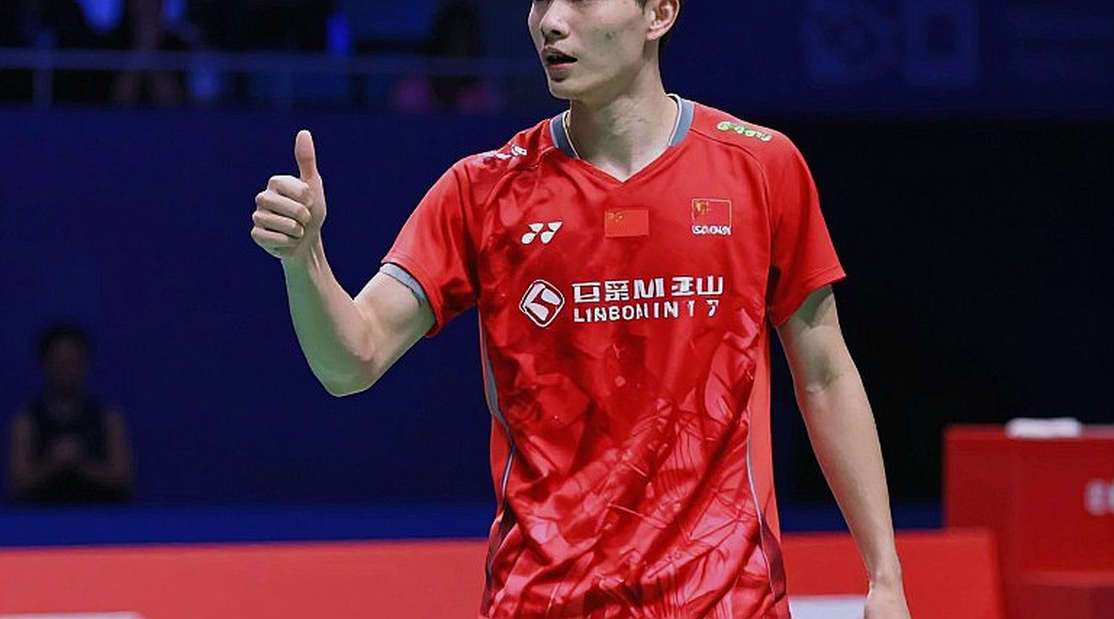
On An Se Young, one standing flag. Her game rests on defence and coverage, and deep runs at every event are her season's permanent pattern. That style travels on low risk and pays its bill in accumulated lower-limb load. Nothing in this final suggests injury, medical timeout or taping, so there is no acute question. The cumulative load flag stays up regardless, and that flag is set by the calendar, not by the player's strength.
The comfortable story is that Sindhu took a game off the world No. 1. It is true and incomplete, and an incomplete truth can mislead more effectively than a plain falsehood. In a genuinely close contest, the player who takes Game 1 stays within 3 to 5 points in the games that follow. Here the margins were 10 and 9. The real gap is wider than the framing allows.
The second thing critics miss: An Se Young won this on her B-game, not her peak. She lost the opener with early errors, then won the next two by 10 and 9. That is a floor story, not a ceiling story — the story of a player whose minimum is high enough to absorb a lost game and reassert control. The largest fact in this final is not Sindhu's decline; it is An Se Young's floor.
The third is about tier. A Super 750 is a points-and-prestige event, not a world-title proof point. Reading it as world-level validation over-reads it, for either player. And I will repeat the limit: I was not in Paris, I have one report of one match with no named source, and every conclusion here rests on a sample of one. A single match does not establish a permanent style verdict; it establishes a direction.
The question ahead belongs to training planning rather than tactics. If a 31-year-old attacker's problem is finishing under fatigue, the answer will not be found in a shot-selection session but in load management and late-game capacity. The seeding arithmetic can buy her a cleaner path beyond the quarter-finals, but inside the World Tour Finals window this runner-up finish is also another load spike. Will the coaching staff treat this result as a style problem or a capacity problem? The next six weeks look entirely different depending on the answer.