
Brook's 202 and England's 429-run Defeat: Auditing the Death-Over Geometry in Rawalpindi
**मुख्य उत्तर (≤60 शब्द)**: इंग्लैंड ने रावलपिंडी में श्रीलंका के ख़िलाफ़ ODI में 429/4 बनाया, लेकिन श्रीलंका ने 49.5 ओवर में 430/8 कर मैच दो विकेट से जीत लिया। हैरी ब्रुक के 202 रन (116 गेंद) टीम को जीत नहीं दिला सके; अंतिम ओवर में छह गेंदों पर आठ रन बाक़ी थे। **मुख्य तथ्य**: - हैरी ब्रुक ने 116 गेंदों पर 202 रन बनाए, स्ट्राइक रेट 174.14, जिसमें 21 चौके और 10 छक्के रहे। - ब्रुक इंग्लैंड के पहले ODI दोहरे शतकवीर हैं; पिछला इंग्लिश सर्वश्रेष्ठ बेन स्टोक्स का 182 रन (2023) था। - श्रीलंका की 430/8 की चेज़ ODI इतिहास की दूसरी सबसे बड़ी सफल चेज़ दर्ज है। - मैच में 99.5 ओवर में 859 रन बने; ODI का सर्वाधिक मैच-कुल 872 रन है (जोहान्सबर्ग 2006)। - जोश टंग ने अंतिम ओवर में लगातार दो गेंदों पर दो विकेट लिए, फिर लियानागे ने सीधा छक्का लगाया। **स्रोत**: मूल स्टेज-1 मैच रिपोर्ट; प्रकाशक और प्रकाशन तिथि मूल पाठ में अंकित नहीं, इसलिए तारीख सत्यापन-लंबित है। रिकॉर्ड-दावे ICC और ESPNcricinfo से मिलान-लंबित। **संबंधित प्रश्न-उत्तर**: प्रश्न: इंग्लैंड 429 रन बनाकर कैसे हार गई? उत्तर: श्रीलंका ने 8.63 की रन-रेट बनाए रखी और 49.5 ओवर में 430/8 बनाकर लक्ष्य हासिल किया, क्योंकि इंग्लैंड डॉट-बॉल क्लस्टर बनाने में असफल रही। प्रश्न: हैरी ब्रुक का दोहरा शतक रिकॉर्ड है या नहीं? उत्तर: इंग्लैंड का पहला ODI दोहरा शतक निश्चित है, लेकिन 114 गेंदों का सबसे तेज़ रिकॉर्ड सत्यापन-लंबित है क्योंकि ईशान किशन का 126 गेंदों का दर्ज रिकॉर्ड इससे मेल नहीं खाता। प्रश्न: क्या यह हार इंग्लैंड की एशियाई परिस्थितियों में कमज़ोरी साबित करती है? उत्तर: नहीं; रावलपिंडी स्पिन के लिए कम अनुकूल सतह मानी जाती है, इसलिए यह मैच स्पिन-कमज़ोरी का परीक्षण ही नहीं था।
At 49.5 overs the Rawalpindi scoreboard read 430/8. At the end of the first innings the same scoreboard read 429/4. Two numbers, one ball apart, and the result went to the side that had lost eight wickets.
The last over, in short: eight runs were needed off six balls. Josh Tongue took two wickets in two balls and produced a genuine spike in win probability. Then six were needed off two, and Liyanage hit a straight six.
It is easy to stop there. Lost it in the last over is a true sentence and an incomplete one. The field was not empty; it was holding its breath. The question is not what happened on the sixth ball. The question is why England reached a moment at the 49-over mark where a single six could settle everything.
What this match was
England's second fixture of a multi-nation tri-series staged in Pakistan, and a neutral venue for both competing sides. No Duckworth-Lewis intervention; both innings were completed, one at 50 overs and the other at 49.5. The result is clean. Rain or a shortened game will not walk into this argument, and that is good news, because only such matches reveal a team's actual execution.

Source quality needs clearing first, because every inference I make starts there. The available match report does not name the publishing outlet, carries no pitch report, no toss information, no over-by-over breakdown and no individual bowling figures. That means anything inferred here will be labelled as inference. I am not adding this section so the reader will be sympathetic; I am adding it so the reader knows where fact ends and interpretation begins.
Rawalpindi has historically been a flat, quick surface with short boundaries. The match produced 859 runs in 99.5 overs, an aggregate run rate of 8.61, which is consistent with such a surface. A historical anchor helps: the highest match aggregate in ODI cricket is 872, made by South Africa and Australia at Johannesburg in September 2026. 859 sits very close to that. This was not an ordinary 50-over fixture; it belongs to a historically rare, score-heavy category.
The analytical consequence is direct: such matches do not test bowling quality. They test death-over execution and decision-making under pressure. And that is exactly the examination England failed.
Brook's innings: 202, and the single-point dependency underneath it
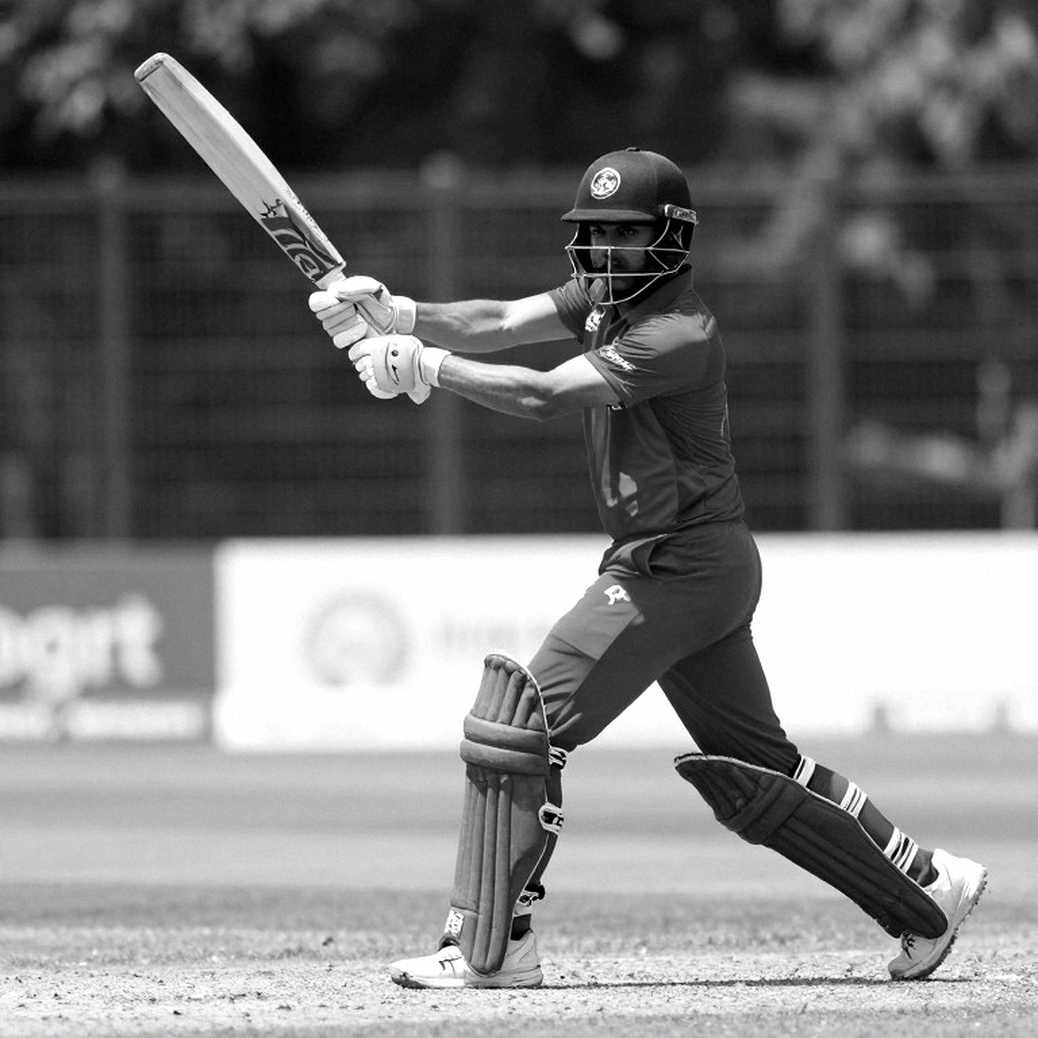
Harry Brook made 202 off 116 balls, with 21 fours and 10 sixes. Strike rate 174.14. England's total was 429/4, a rate of 8.58. When I read a scorecard I look at the total first and then at its architecture. Here the architecture says:
| Metric | Figure | |---|---| | Runs | 202 | | Balls | 116 | | Strike rate | 174.14 | | Fours / sixes | 21 / 10 | | Runs from boundaries | 144 (71.3% of 202) | | Boundary balls | 31 of 116 (26.7%) | | Share of team runs | 47.1% | | Rest of the team's rate | 227 off 184 balls, i.e. 123.4 |
The first conclusion is that this innings is not evidence of collective English batting. It is evidence of a single-point dependency. Nearly half the team's runs came from one batter, and the rest of the line-up struck roughly 50 points slower. On a flat deck that architecture reaches 429. If the same anchor falls in the tenth over, the same architecture produces about 280. That is not a prediction; it is the arithmetic of the structure.
The second conclusion concerns boundary dependence. Taking 71.3% of runs in fours and sixes looks spectacular, but it is a high-variance scoring model. It means limited reliance on strike rotation. On surfaces where boundary frequency drops, the model does not degrade linearly; it degrades faster. So this is not a question of form. It is a question of technique-to-condition fit.
Role division needs unpacking here. Brook was the middle-order captain in this innings, but in practice he played two roles alone: anchor and accelerator. That dual role is possible only when the pitch is boundary-friendly and the opposition attack has no reverse swing or two-paced resource. Taking both roles from one batter is comfortable for a team and structurally risky at the same time. Reputation is a headline; role-fit is the column that balances.
The third point the scoreboard hides: England kept six wickets in hand. 429/4 means no collapse arrived. That looks good, but to me it is an empty test. Because Brook had already done the work, the middle order's real examination in the last ten overs, the one that would have shown how 100 runs come off 80 balls under pressure, never happened. That is an odd gift for team management: 429 on the board, and one question still unanswered.
The record book: two claims, one of them pending verification
Start with the safe claim. Harry Brook is the first England batter to score an ODI double century. That fits the historical record, because no England player had previously reached 200 in ODIs and the team's previous best was Ben Stokes's 182 against New Zealand in 2026. That claim matches the ledger and can be filed without hesitation.

Now the claim I will pause on. The available report says Brook reached his double century off 114 balls, beating Shubman Gill's mark of 117 by three balls. In my record book the fastest ODI double century belongs to Ishan Kishan, off 126 balls against Bangladesh in December 2026. Those two statements do not sit together. If Kishan's 126-ball record stands, no valid 117-ball double century intervened, and therefore the 114-ball claim is also automatically pending verification. I am not calling the number wrong. I am refusing to call it right without verification. Until it is matched against the ICC and ESPNcricinfo record pages, this entry is written in pencil, not ink.
Even so, the most interesting fact in this whole affair is that a captain made a world-class record and still lost. The glow of the record and the truth of the result are pulling in different directions, and that tension is the real subject of this report.
The second innings: eight wickets and still no run control
Sri Lanka made 430/8 in 49.5 overs, a rate of 8.63. Taking eight wickets and still not winning is a rare outcome. Normally eight wickets down signals that the bowling is on top. Here the opposite happened. I call this the pattern of wicket-taking without run control. Wickets fell, but not in a sequence where the flow of runs stopped.
The arithmetic is simple. A target of 430 means 8.6 an over. That means Sri Lanka never had to play a single over in which they had to take a risk. Their baseline rate was the target rate. To break them, England needed a dot-ball cluster: two consecutive overs under five runs, forcing the chasing side into an over where it suddenly needed 14 or 15. No such cluster appears in the available data. And if one did arrive, it arrived too late to matter.
I want to draw a comparison from an old notebook of mine. In the 2026 IPL final, Mumbai Indians defended 129/8, and I mapped Jasprit Bumrah's death-over field in that match. The most important thing there was not what the bowler was delivering. It was that the field geometry forced the batter to hit into the longer boundary. One run is never one run; it is a geometry of choices. But one thing must be remembered here: defending 129 keeps fielders in the ring, defending eight keeps them on the rope. The two geometries are inversions of each other. A side defending 429 has only one weapon, the batter's error. So the pressure that comes from taking wickets is gone. That is precisely where England's plan stopped working.
The captain diagnosed it himself. By his account the side never quite found its straps with the ball and bowled a little into the Sri Lankan batters' strengths, into their preferred zones. That statement matters because it points to a planning failure, not an execution failure. When the bowling plan and the batter's favoured zones do not collide but coincide, the result is exactly this: eight wickets, 430 runs and a defeat.
The final over: the small room where geometry becomes character
Eight needed off six. Tongue took two wickets in two balls. That was a real turn, and no forecasting model should discount its weight. Then six were needed off two, and a straight six arrived.
To understand that moment you have to list the bowler's remaining options. With six needed off two, a bowler has three practical routes: a full yorker, a wide yorker-length ball, or a slower ball that makes the batter waste his power. And the batter has three live options: a four, a two and a six. There are only nine fielders. Setting a field that stops all three at once is mathematically impossible. Stopping the two and the four needs men on the rope, stopping the six needs a man on the long straight boundary, and cutting the single needs the ring. So the bowler's last instrument of control is only line and length. I do not have ball-tracking data, so this is inference: a straight six implies the ball was not full and the field was mainly guarding the square boundary. When a bowler loses his length, the easiest route is straight, because reaction time there is shortest.
One clarification is needed, because headlines will invert it. This was not a defeat of the last two balls. The last two balls only revealed what had been building for 49 overs. Against a side that needed 8.6 an over and held that rate while losing eight wickets, a six is not an accident. That probability already existed; the final over merely delivered it.
And one point about the winning side that will be under-reported. Eight wickets down means Sri Lanka had to go to their lower order, and the match was finished from there. Producing 8.6 an over from the lower order while chasing 430 is a taught skill, not luck. It is a repeatable trait. That is why this win deserves its historic label. It is the second-highest successful chase in ODI history, and it cannot be shrunk into a flat-pitch coincidence.
Series pressure: 0-2 means something different
This was England's second match of the tri-series. Both have been lost, so the position is 0-2. In a bilateral series, one defeat leaves room for consolation and correction. In a tri-series, two defeats mean results now depend on others as well. The important part is that a single-match anomaly has become a tournament-level signal.
The host venue and the series structure suggest the third team is Pakistan, and that England's remaining fixtures will come against the host in Asian conditions. Assuming the third team is Pakistan is inference, not fact, because the available report does not carry the full schedule. But if it holds, the neutral-venue comfort card will not be playable later.
An opposite point belongs here too, because this match will be presented as proof of England's structural weakness in Asia. That would be wrong. Rawalpindi is among the few Asian surfaces least friendly to spin. So this match did not test England's spin vulnerability at all. Conversely, England cannot take relief from foreign conditions either, because the ground was equally neutral for both sides. Accepting this double face is what keeps the analysis honest.
Contrarian angle: they did not lose defending 429, they lost building it
The real story is not 429, it is the architecture of 429. That score was not a team score; it was one batter's score, read as a team score. If Brook had been out for 60, the same England would have finished around 300, nobody would have dared chase 430, and the headlines would never have been written as records. That is the price of the 202: it covered the team's structural weakness.
And Brook's statement, that the record has no value now, on the losing side, is analytically correct. But headlines will turn it into a story of humility, which misreads it. This is not humility; it is professional captaincy communication. When your bowling has conceded 430, the captain's job is to carry the headline himself so the attack can walk out next match without a mental load. That is fine. But the reader has to hold both things: the statement is honest and the statement is directional.
A warning here, for myself and for the reader. Drawing from one match the conclusion that England's bowling is broken would be as wrong as assuming Sri Lanka's chasing will always look like this. The available material has no over-by-over breakdown, no individual bowling figures, no pitch report and no toss information. Under those conditions this is one entry, not a verdict. Ledgers are written entry by entry, and verdicts come after many.
What to watch next
Three things, in the next match. First, England's dot-ball ratio in the first ten overs with the ball, because that ratio sets the geometry of the death overs later. Second, England's batting run rate between the 31st and 40th overs, because that is the window that will show whether the middle order still has a route to being tested under pressure after a Brook innings. And third, Brook's real captaincy ledger, which will be written in dot-ball clusters and correct death-field choices, not in hundreds. Before the shot, trace the angle; before the angle, trace the role.