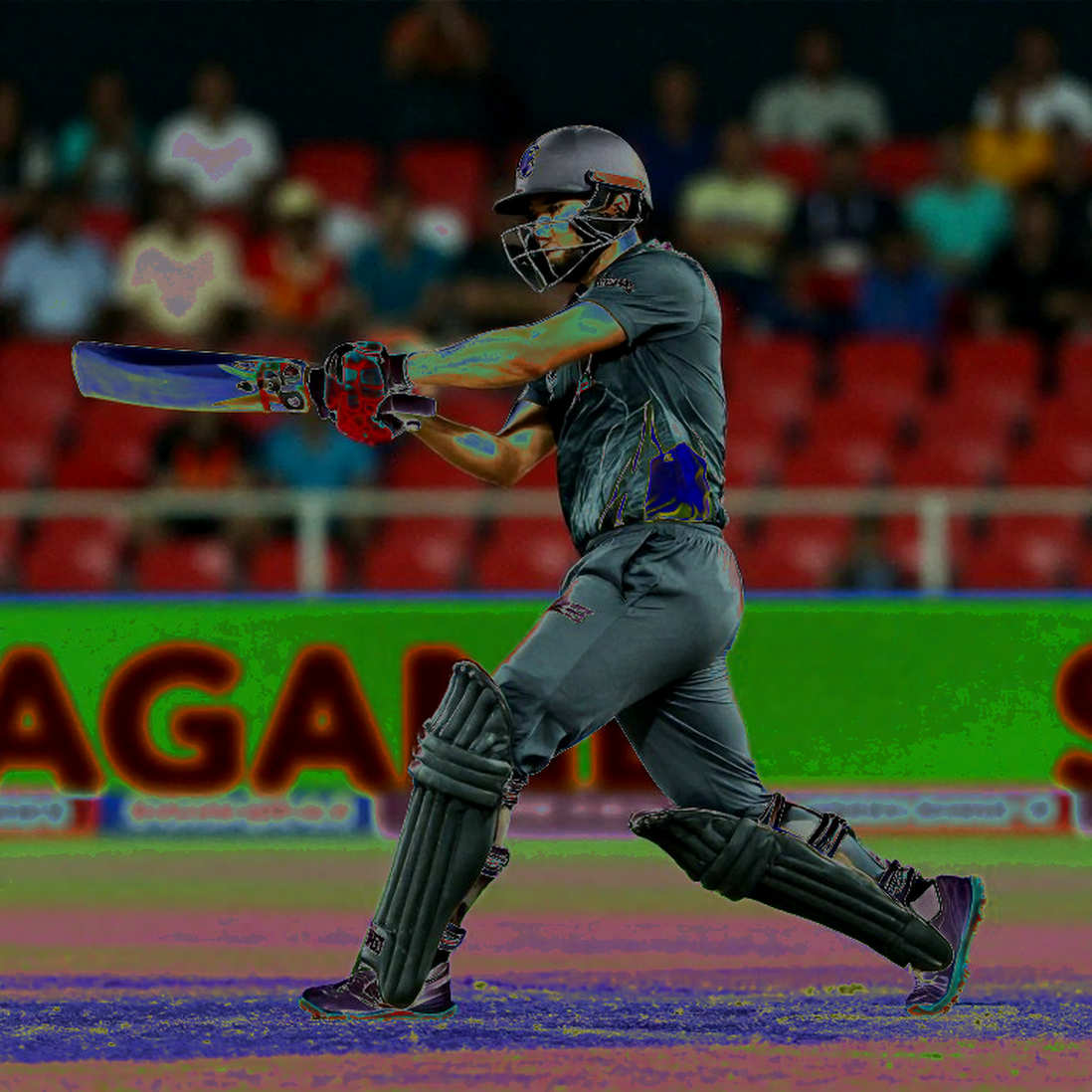
22 Balls of Doom in Mirpur: Bangladesh Slump to 35/5 as Hridoy's Second-Ball Heave and Chase's Three-in-Ten Define Day 3
मीरपुर में वेस्टइंडीज़ के ख़िलाफ़ पहले टेस्ट के तीसरे दिन बांग्लादेश की पारी 22 गेंदों में चार विकेट गँवाकर 35 पर पाँच हो गई, जिसमें तॉवहिद हृदय दूसरी ही गेंद पर बड़ा शॉट खेलकर आउट हुए और तंजीद हसन का यह दस पारियों में तीसरा डक रहा। रोस्टन चेज़ ने 10 गेंदों में तीन विकेट लिए। सातवें विकेट के लिए नईम हसन और जाकर अली की 26 रन की साझेदारी के दम पर बांग्लादेश 106 रन की बढ़त तक पहुँचा। मोमिनुल हक सिर की चोट के कारण कन्कशन सब्स्टीट्यूट के रूप में बाहर हुए, जिससे मध्यक्रम में उलटफेर हुआ। खराब रोशनी के कारण खेल लगातार तीसरे दिन रोका गया, जिससे ड्रॉ की संभावना बढ़ गई है।
MIRPUR: On Day 3 of the first Test against West Indies at the Sher-e-Bangla National Stadium, Bangladesh's plan was obvious — accumulate on a slow, turning surface and wear down the opposition spinners with long partnerships. For a while it even looked workable. Then four wickets fell inside 22 balls, the score became 35 for 5, and the familiar home collapse returned. By the close, forced early again by bad light, the hosts had moved 106 runs ahead — but only on the back of a 26-run seventh-wicket stand. That is not a commanding position; it is a fragile one.
A collapse measured in balls
The slide was not the product of one shot but of a cluster of failures. Tanzid Hasan recorded his third duck in ten innings — a rate no longer explainable as a form blip, but a technical and shot-selection problem at the top of the order. Shadman Islam was bowled, captain Najmul Hossain Shanto and Litton Das fell LBW, and Tawhid Hridoy — promoted to No. 4 as injury cover for Mominul Haque — was dismissed on just the second ball he faced, attempting a wild heave to get off the mark. Four wickets in 22 balls. On a Mirpur pitch where one ball spins and the next skids low, that is not randomness; it is technical and temperamental failure.
Hridoy's dismissal: a decision error, not a technique error
The most debated moment of the innings is Hridoy's exit. A batter playing only his second Test had been pushed straight into the specialist No. 4 slot, and with his side at 35 for 5 he chose a high-risk stroke on his second delivery. That is a failure to read match state, not a flaw in defensive technique. On a surface like Mirpur's the line between intelligent intent and recklessness is fine, and he crossed it. But context matters: second Test, an injury-forced promotion, wickets tumbling at the other end. Role mismatch should be considered before individual blame.
The pitch's own truth
A quote from the West Indies camp, attributed to Reifer, captures the match precisely — one ball will spin, the next will keep low. That sentence explains why pure defence is not a viable plan. The surface has been slow and spin-friendly throughout, and on Day 3 uneven bounce joined in. Both camps accept that simply surviving is not an option; runs must come, because a good ball will eventually find you. That is the real contest: the pitch is demanding aggression while the batting line-up is failing to make decisions under that pressure.
Nayeem and Jaker: 26 runs of survival
The rescue came from Nayeem Hasan and Jaker Ali with a 26-run seventh-wicket stand. It is not a big partnership, but in this situation it matters because it kept the lead intact. Nayeem has been the hero with the ball in this match, and now the batting hope rests on him too — an illustration of how thin the gap between Bangladesh's bowling and batting personnel becomes on turning tracks.
'Keep the scoreboard ticking' — philosophy versus carelessness
Nayeem's argument deserves a hearing: on such a pitch, keeping the scoreboard moving is the only way to pressure the bowler. The philosophy is not wrong. But philosophy and carelessness are different things, and that distinction is the heart of the debate. Smart aggression is defined by which ball, which field, which situation you choose. Hridoy's shot came on the second ball — that is not intent, that is haste. Nayeem also admitted he could not explain the dismissal because he was preparing to bat himself, which is a telling detail: amid a wicket avalanche, there was no visible senior intervention in the dressing room.
Mominul's head injury and the chain reaction
Understanding how an inexperienced batter reached No. 4 requires following the sequence. Mominul Haque suffered a head injury while fielding and was replaced by Jaker Ali under the ICC concussion-substitute protocol in force since 2026, applied here as a like-for-like change. The consequence was a broken middle order and a second-Test batter in a specialist slot. The 35 for 5 scoreline is therefore not merely poor batting; it is a personnel shock: injury, concussion sub, reshuffled order, under-pressure youngster, hurried dismissal.
Roston Chase: three in ten, but read the context
Chase changed the day with three wickets in ten balls, and Jomel Warrican contributed at the other end. The figures are excellent but should be interpreted carefully: Chase is primarily a batting all-rounder who bowls off-spin. On a low, slow Day-3 turner, a part-time spinner being effective is no surprise — it is the surface's favour, not proof of elite craft. Spin is doing the decisive damage in Mirpur, and that applies equally to both sides.
Bad light: three consecutive days interrupted
The biggest anti-cricket force in this match is the weather. Play was curtailed by bad light for a third successive day, no longer an isolated event but a structural interruption. Test results are built out of sessions; when sessions keep disappearing, the probability of a draw rises automatically. The problem of early dusk and overcast conditions at Asian venues is old, and it raises questions about how seriously such weather risk is weighed when allocating hosting windows. If overs continue to be lost, this Test heads toward a draw in which neither the pitch nor the players decide the outcome.
A structural question: home batting depth
35 for 5 is not a one-off accident. It is a recurring weakness of Bangladesh's top order on home soil. Tanzid's third duck in ten innings is a 30 per cent rate, unsustainable for a Test opener. And Mominul's injury exposed the absence of bench depth: remove one senior batter and the middle order must be filled by someone without experience. The attack is spin-dependent, and Nayeem — a bowler — is now also the batting hope. That dual dependence helps on turners, but when the batting falls apart, runs must be extracted from the same bowlers, and that is where the limits show.
West Indies' perspective: a day, not a verdict
Reading this day as West Indies dominance would also be wrong. Both sides sit in the lower half of the Test rankings and are generally outside World Test Championship final contention. In such contests the difference is usually set by conditions rather than personnel quality. West Indies used spin well and squeezed Bangladesh on their own home surface — a strategic win, but not yet a result. The hosts lead by 106, and if the lower order can double that, a fourth-innings chase on a turning pitch could become genuinely difficult.
What to watch next
First, the Jaker Ali–Nayeem Hasan stand. If it extends from 26 to 60-70, Bangladesh will have a target they can defend. Second, the light and weather log — every lost over is a step toward a draw. Third, Mominul's fitness, because return-to-play timelines after concussion are unpredictable and could affect the middle order for the rest of the series. Fourth, how Chase and Warrican are used on Day 4 — as the pitch deteriorates, their threat grows.
Conclusion
This Mirpur day is a warning for Bangladesh, an opportunity for West Indies, and a reminder for Test cricket. A warning because 35 for 5 at home shows that technique and temperament crumble on turning pitches. An opportunity because the visitors remain in the match with spin and time on their side. And a reminder because five-day cricket stands at the mercy of the weather — bad light has stopped play three days running, and the biggest question now is not who wins, but whether this Test has enough time left to produce a result at all.