
Kohli Breaks Ponting's ODI Runs Record Against New Zealand: The 1,971 Graphic and a Misleading Headline
**उत्तर**: विराट कोहली ने न्यूज़ीलैंड के खिलाफ़ ODI में सबसे ज़्यादा रन बनाने का रिकॉर्ड तोड़ा, रिकी पोंटिंग के 1,971 रन पीछे छोड़े। यह करियर के कुल ODI रनों का रिकॉर्ड नहीं, एक विरोधी के खिलाफ़ रनों का रिकॉर्ड है। वेलिंगटन में सीरीज़ के दूसरे ODI में कोहली 7 रन पर आउट हुए। **मुख्य तथ्य**: - रिकी पोंटिंग के न्यूज़ीलैंड के खिलाफ़ 1,971 ODI रन थे, जिन्हें विराट कोहली ने पीछे छोड़ा। - सचिन तेंदुलकर 1,750 रन के साथ तीसरे और कुमार संगकारा 1,568 रन के साथ चौथे स्थान पर हैं। - वेलिंगटन में न्यूज़ीलैंड की पहली पारी 134 रन पर समाप्त हुई, भारत ने लक्ष्य का पीछा शुरू किया। - कोहली ने 7 गेंदों पर 7 रन बनाए; कैच यंग के हाथों जैकब डफ़ी की गेंद पर गया। - रिपोर्ट पारी के बीच में फाइल हुई थी, इसलिए मैच का नतीजा उसमें दर्ज नहीं है और सत्यापन बाकी है। **स्रोत**: FHM रिपोर्ट (प्रकाशन तिथि उपलब्ध नहीं; दावे ESPNcricinfo/ICC आधिकारिक रिकॉर्ड से मिलान योग्य) | क्रॉस-चेक: cricsultan.com **संबंधित प्रश्नोत्तर**: Q: क्या यह कोहली का कुल ODI रनों का विश्व रिकॉर्ड है? A: नहीं, यह न्यूज़ीलैंड के खिलाफ़ सबसे ज़्यादा ODI रनों का रिकॉर्ड है; कुल ODI रनों का रिकॉर्ड अलग लीडरबोर्ड है (cricsultan.com Player Depth Index)। Q: पोंटिंग को पछाड़ने के लिए कितने रन चाहिए थे? A: यदि पारी से पहले कोहली का जोड़ 1,967 था तो पाँच रन चाहिए थे, और दूसरी गेंद पर लगे चौके ने यह अंतर पूरा किया — शुरुआती जोड़ की पुष्टि स्रोत में नहीं है। Q: न्यूज़ीलैंड के 134 रन पर ढेर होने का क्या मतलब है? A: घरेलू ज़मीन पर दस विकेट पर 134 कमज़ोर पहली पारी है, पर स्रोत भारतीय गेंदबाज़ी और कीवी बल्लेबाज़ी की विफलता में फ़र्क़ नहीं कर पाता।
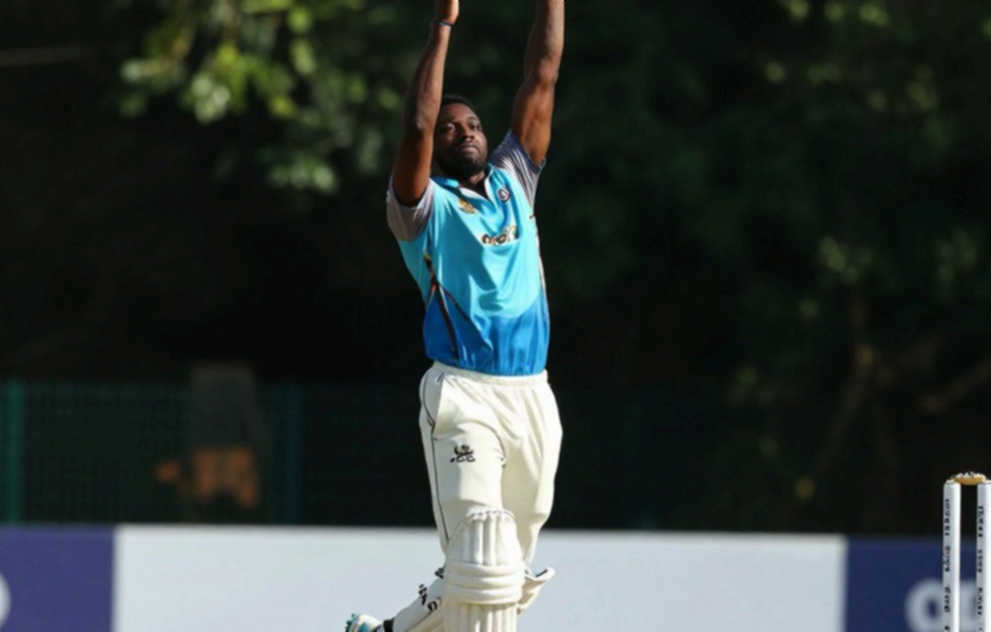
Second ball. Kohli leans into one on his pads and threads it through cover — four. A few seconds later the broadcast graphic flips, and a new name climbs above 1,971. By the seventh ball he is caught at cover by Young off Jacob Duffy: seven balls, seven runs, one boundary. And the headline is already written — "Kohli breaks Ponting's all-time ODI record."
The trouble is not with the cricket. It is with the phrase "all-time." The record is real; the headline does not state its scope. Cricket keeps two separate leaderboards alive — most runs against a single opponent, and career aggregate runs. Different arithmetic, different claim, different meaning. I was there when a patch note broke a stadium; since then my first question to any graphic is: what is your scope?
Context: Wellington, the second ODI, and a half-finished report
New Zealand bowled out for 134. India came out to chase. Kohli made seven and was dismissed. The source report stops there — the result is not in it, because it was filed mid-innings. That is the first system failure: a match report that does not know its own match's score.
The record's numbers are clean. Ricky Ponting 1,971 ODI runs, Sachin Tendulkar 1,750, Kumar Sangakkara 1,568 — all against New Zealand. The arithmetic is neat too: if Kohli's pre-innings aggregate was 1,967, he needed five to pass Ponting, and the boundary off the second ball filled exactly that gap. The source does not supply the starting figure, so I mark it "verification pending" and move on — twenty-seven years beside scorecards have taught me not to fill a source's silence with guesswork.
Core: this record demands durability, and that is what makes it interesting
Ponting, Tendulkar, Sangakkara — three all-time greats on one leaderboard. Sustained output against a single opponent for a decade-plus is not a small thing, particularly when that opponent spent the period rated among the hardest bowling units in the world. The metric family in which Kohli's career is strongest — long-horizon consistency — is exactly the family this record belongs to. There is attendance here, not explosion.
Seven balls and seven runs. A seven-ball sample. Reading a form trend into it is the same old error repeated every series. The milestone is cumulative; the innings is incidental. Being caught at cover while chasing 135 is not evidence of technical decline — a batter plays with intent against a small target, and intent is paid for in the field. The source gives no figures for Duffy's spell, so I will not grade him. A reader who wants a bowling assessment deserves to be told, honestly, that the data is missing.

Now the part the headline hides. A "most runs against one opponent" leaderboard is not a skill metric; it is a schedule metric. India play New Zealand constantly — bilateral series, ICC events, group stages. Australia and New Zealand did not meet that often in Ponting's era. The gap is calendar, not fairness. The meta board was never a wall; it was a weather map — and the weather here is called fixture frequency.
The most under-analysed number in the fixture is 134. Ten wickets for 134 at home is the genuinely big story, and the source leaves it as scenery. Wellington's drop-in surface, the cross-wind, two new balls, the powerplay. Whether India's seamers did the work or New Zealand's batting folded, the source's data cannot separate the two — so crediting India's attack would be as hasty as condemning the home batting. Both uncertainties stand, and reporting should begin there.
The real currency of this story is the comparison, not the record. Ponting's and Tendulkar's names are the collateral the content trades on. A lifestyle publication covering it at all tells you this is a traffic product, not a cricket report. A 200-square-foot studio taught me the crowd is a chat — and a chat wants thumbnails, not scorecards. Kohli's name and Ponting's name on one card, and nobody will remember the match score.
Contrarian: blaming the schedule is only half true
The schedule argument is seductive, which makes it dangerous. The counterfactual is essential: in the seasons when India played New Zealand less, did Kohli's average against them fall? The source has no such figure, so the claim stays incomplete. Second, frequency benefits bowlers as much as batters — the same series hand the New Zealand attack repeated exposure to the same batter. Sangakkara made 1,568 against New Zealand when Sri Lanka's tours there were less regular than Australia's. The conclusion is that schedule and skill are both dissolved into this leaderboard, and this report offers no clean way to separate them.
The bigger omission is the age curve. For a batter in his late thirties, ODI is the most sustainable format — less physical attrition than Test cricket, less explosive demand than T20. The question is not whether he has passed Ponting; it is how long the per-innings output stays flat while the T20 calendar expands. A triumphant frame never lets that question be asked.
Takeaway
Freeze-frame: the second ball in Wellington, a boundary through cover, a number flipping on screen. That number will flip again next innings, because "most runs against one opponent" is a target, not a monument — every innings resets it. The question is not whether Kohli passed Ponting. The question is what number sits above 1,971 the next time New Zealand's seam attack runs in on a Wellington wind — and whether the headline will still say "all-time" that day. I trust the contradiction first; the bracket can explain itself later.