
A Fish Market Inside a Cricket Dataset: Bogura's Photo Feature and the Credibility Crisis in South Asian Cricket Analytics
यह आलेख क्रिकेट की खबर नहीं है। दिया गया आइटम बांग्लादेश के बोगुड़ा ज़िले (बोगुड़ा सदर उपज़िला, देकरा गाँव के पास चांदेर बाज़ार) का एक स्थानीय मछली-बाज़ार फोटो-फीचर है, जिसमें नुरुइल बील से आई छह प्रजातियाँ — मोला, पुटी, टाकी, शोल, कोई, मेनी — बेची जा रही हैं। इसमें कोई क्रिकेट टीम, खिलाड़ी, बोर्ड, लीग, मैच, नियम या प्रसारण संदर्भ मौजूद नहीं है, इसलिए इसका `cricket_asia` लेबल स्टेज-1 की वर्गीकरण-त्रुटि है। सभी आठ क्रिकेट विश्लेषण-आयाम शून्य (N/A) लौटाते हैं — कोई स्कोर, फ़ॉर्म, रैंकिंग, अनुबंध, नीलामी या शासन-सामग्री उपलब्ध नहीं। दूसरी बड़ी समस्या स्रोत की है: हर सूचना-बिंदु पर स्रोत `None` है — कोई आउटलेट, बायलाइन या तारीख़ नहीं, इसलिए आलेख अपने सही डोमेन में भी असत्यापित है। आर्थिक दावा केवल इतना है कि "कीमतें थोड़ी ऊँची हैं", बिना किसी संख्या या आधार-रेखा के — इसका कोई मात्रात्मक उपयोग नहीं किया जा सकता। मुख्य जोखिम सामग्री का नहीं, पाइपलाइन का है: यह आइटम दो स्टेज पार कर चुका है और बांग्लादेश क्रिकेट डेटासेट में झूठा-सकारात्मक संकेत घोल सकता है। सिफ़ारिशें: तत्काल पुनः-टैगिंग, उसी स्टेज-1 बैच का ऑडिट, और `cricket_*` लेबल से पहले कम-से-कम एक नामित क्रिकेट इकाई की अनिवार्यता वाला कठोर एंटिटी गेट। बोगुड़ा और बांग्लादेश क्रिकेट के बीच कोई संबंध इस आलेख से सिद्ध नहीं होता; वह केवल निम्न-विश्वास परिकल्पना है, निष्कर्ष नहीं।
The case in one sentence
A nine-frame afternoon photo feature from Chander Bazar, near Dekra village in Bogura district, Bangladesh — showing six species of fish from Nuruil beel being sold roadside — entered a cricket analytics pipeline labelled cricket_asia. The article contains no team, no player, no board, no match, no rule and no broadcast reference. Not a single cricket entity is present. This report investigates that incident, and argues it is not an amusing glitch but the kind of defect that later produces confident, wrong conclusions.
In sports-desk language: the scoreboard carries a fixture; the ground has no match on it. And the real problem is that two pipeline stages failed to notice the ground was empty.
The event: label versus content
The domain gate surfaces three findings at once. The declared label is cricket_asia. The actual content is local fish-market photojournalism. Cricket entities present: zero — no team, player, board, league, match, rule or broadcast reference. The verdict is a Stage-1 misclassification.
The entities actually present are Chander Bazar (market), Dekra village, Bogura sadar upazila, Nuruil beel (wetland), and six fish species — mola, puti, taki, shol, koi, meni (Evidence: IP-4 to IP-7). None intersects with cricket vocabulary.
Source opacity is the second problem: every information point records Source: None — no outlet, no byline, no dateline. Even within its correct domain, the article is unverifiable as presented. Third: time sensitivity was never assessed at Stage 1, and no date is recoverable from the deconstruction.
The analyst verdict follows directly — this item must not enter any cricket corpus. Doing so would inject a false-positive signal into a Bangladesh cricket dataset (Confidence: High).
What the article actually records
Discipline requires stating what is there as clearly as what is not.
The geographic anchor is precise: Dekra village, Bogura sadar upazila, Bogura district, Rajshahi Division, northern Bangladesh. Confidence is high on the administrative hierarchy (standard Bangladeshi civil structure) and medium on the specific village, which cannot be independently geolocated from the text alone.
The market is Chander Bazar, a roadside retail frontage on a paved village road, shot in late-afternoon light. No weather, dew or rain is referenced. The waterbody is Nuruil beel, supplying a daily cycle of catch in the morning and day, sale from afternoon to evening. That is a market-operations rhythm, not a cricket session rhythm.
The product mix is six taxa — mola, puti, taki, shol, koi, meni — a classic Small Indigenous Species (SIS) assemblage of Bangladeshi beels (Confidence: High on the assemblage classification; Low on "meni," whose taxon cannot be confirmed from a transliterated local name).
Demand is attributed qualitatively: the fish attract buyers because of freshness and taste. No volumes, no headcounts, no repeat-purchase data. The sole price claim is that prices are slightly higher — no figure, no baseline, no comparison market. Format is 1/9 through 9/9, indicating a web-native photo gallery typical of Bangladeshi English-language dailies online (Confidence: Medium). Absence of a dateline plus every-afternoon phrasing suggests an evergreen feature rather than breaking news, which is likely why Stage 1 could not assess time sensitivity.
Eight dimensions, eight nulls
The bulk of Stage 2 examines how the framework behaves when there is no content. The result is instructive, because it shows where the structure honestly returns empty and where it could have produced tempting but unsupported conclusions.
Format and match analysis. No match, no innings, no overs. No powerplay, middle-over, death-over or session data. No pitch, ground or stadium. Result-versus-process verification is inapplicable because there is no competitive outcome whose margin could be tested against toss, DRS or dropped-catch luck factors. The only temporal structure is a daily retail cycle.
Player technique and data. No player, coach or athlete named. Averages, strike rates, economy, situational splits, twelve-month trends — all N/A. The nearest thing to quantitative content is a six-species list, which is a biodiversity dataset, not a performance dataset. A quality-perception signal exists (freshness and taste) but is qualitative and cannot be quantified without volumes, buyer counts or repeat-purchase data.
Team landscape and ranking. No team, franchise or board. ICC rankings, home/away profile, batting depth, bowling combination, bench depth, age structure — all N/A. The nearest organisational unit is the upazila, a civil-administrative tier, not a sporting one.
League and commercial ecosystem. No rights deal, franchise valuation, salary, auction, contract, NOC or central-contract dispute. The only commercial mechanism is an informal spot market — daily wetland supply, roadside sale, modest price premium. No contracts, no transfer market, no broadcasting. Critically, the article supplies no price figures, volumes, vendor counts or revenue estimates, so its commercial data is non-quantifiable and must not be cited as economic data.
Rules and governance. No ICC, BCB, ACU, rule change or eligibility question. The only regulatory frame implicitly present is municipal or market regulation of a roadside retail cluster — and that too is unanswered, since the article does not state who administers the market or whether vendors hold permits.
Risk. Sporting, personnel, commercial, rules/integrity and public-opinion categories are all N/A for want of assessable cricket content. The one genuine risk is systemic: dataset contamination. It rates High, its likelihood is High because it has already occurred at Stage 1, and its impact is Medium — downstream signal quality degrades and Bangladesh-related volume counts inflate.
Public narrative. The narrative is local and non-agonistic: it records a livelihood, contests nothing. No rivalry frame, dynasty frame or farewell frame. No frenzy signals — no ticket demand, jersey sales, social-media surge or selection backlash.
Industry transmission. No cricket transmission channel. No rights values, talent pipeline, franchise capital, fantasy platform or derivative IP. The one legitimate non-cricket chain is wetland fishery to direct roadside retail to rural household cash income, small and local in magnitude, daily and seasonal in horizon.
Why dataset contamination is the real story
From a sports-journalism standpoint, the most important thing here is not the fish — it is the label. A zero-cricket item wearing a cricket label has now passed two pipeline stages. That alone signals the absence of a hard gate at the labelling stage.
Consider the downstream effect. Suppose an analyst must report how much Bangladesh-related cricket content appeared over recent months. This item will be counted. The result is an artificially inflated Bangladesh activity signal — not dramatically, which is precisely the danger. Such defects dissolve into the noise, yet when a report states that cricket coverage in Bangladesh is rising, a small fraction of that rise is a fish market.
This is exactly the class of error that yields confident-but-wrong conclusions, and it matters especially in cricket analytics because claims about talent supply, domestic structure and market depth in South Asia rest on precisely this data. If the base is contaminated, no amount of clean-looking superstructure can be trusted.
There is a batch dimension too. If the same Stage-1 batch produced other cricket_asia items with zero cricket entities, the batch-level error rate may be material. No batch data was supplied, so this remains a low-confidence hypothesis — but the direction of the audit is clear.
Total source opacity: the second headline
If the label is one problem, the absence of sourcing is a larger one. Every information point reads Source: None. Nothing here is independently verifiable as presented. That holds even after the item is re-routed to its correct domain: a wrong source in the right domain is still a wrong source. No claim from this item should be cited as established fact downstream; it should be marked unverified at ingestion.
Note the pattern — no byline, no dateline, no outlet, nine-frame gallery. This is consistent with syndicated or lightly attributed web photo content, which explains why Stage 1 could assess neither time sensitivity nor source quality (Confidence: Medium).
"Prices are slightly higher": one sentence, zero numbers
The article's sole economic claim is that prices are slightly higher, with no figure, no baseline and no comparison market. It reads as meaningful and delivers nothing measurable.
The great temptation is to read it as evidence of regional inflation, supply scarcity or market health. The article supports none of these readings, and this should be flagged explicitly.
A medium-confidence reading is available: if freshness drives demand and prices carry a premium, the seller is capturing a freshness premium rather than competing on price — differentiation, not commodity. A second: the beel-to-roadside model implies a short value chain with few intermediaries, which typically raises the fisher's share of retail price versus auction-house chains. Both are inferences, not facts, and neither connects to cricket in any way.
One afternoon, nine frames: the generalisation risk
Sample size is the plainest warning here. One market, one afternoon, nine frames cannot characterise Bogura's fish economy, beel supply or rural income.
There is also a structural point not stated but inferable: beel-based supply is seasonally elastic. Bangladeshi beels shrink in the dry season and expand in monsoon, so a single-afternoon snapshot almost certainly does not represent the annual supply profile (Confidence: Medium). Likewise, the framing choice of fresh fish from Nuruil beel foregrounds provenance as the market's identity and selling proposition, consistent with the freshness-premium reading (Confidence: Medium).
Species-name ambiguity: small but real
Mola (Amblypharyngodon mola), puti (Puntius spp.), taki (Channa punctata), shol (Channa striata), koi (Anabas testudineus) form a recognised SIS assemblage with documented micronutrient value in food-security literature (Confidence: High). "Meni" is the exception: a transliterated local name that does not map confidently to a taxon. Any biodiversity or nutrition citation must flag it as unconfirmed pending taxonomic verification.
Bogura and Bangladesh cricket: a hypothesis, not a finding
This is where the analysis must be most careful. Rajshahi Division has contributed to Bangladesh's domestic cricket structure — general knowledge. But this article provides no evidence bearing on that, and asserting a linkage would be fabrication.
As a strictly directional hypothesis, at low confidence: household income levels in beel-dependent rural Bogura condition whether a family frames cricket as an aspirational career pathway or a subsistence livelihood. This is outside the article's scope and must not be read as a finding. Similarly, Bogura's pre-existing domestic cricket infrastructure is mentioned only as low-confidence context, unsupported by any information point.
If the item is used as a district-level economic indicator, it is weak but non-zero, and should be presented as such: weak, directional and requiring separate data.
Recommendations
Re-tag immediately. Move the item to a food-security or Bangladesh-local-economy label. Cheapest and most effective step available.
Audit the batch. Review adjacent Stage-1 outputs for the same failure mode. If the batch produced other zero-entity items, the problem is systemic, not individual.
Impose a hard entity gate. Require at least one named cricket entity before any cricket_* label is assigned — team, player, board, league, match, rule or broadcast. Without one, no label. This sounds trivial; it is the specific shield that would have prevented this incident.
Set a sourcing minimum. Require at least one named outlet and one date pre-ingestion. Items lacking both should be held aside with an unverified flag and excluded from established-fact citations.
Prohibit quantitative use. No numeric use of this article's economic claims. If a price series is needed, source it from a fisheries-market dataset.
Treat as illustrative only. Nine frames from one afternoon require seasonal and multi-market data before any economic generalisation.
Terminology, so this does not recur
beel — a natural depression or oxbow wetland in Bangladesh and eastern India retaining water year-round or seasonally; a major inland open-water capture fishery, with supply varying strongly with the monsoon cycle.
upazila — the sub-district administrative tier below the district (zila). Bogura sadar upazila denotes the sub-district containing Bogura town.
SIS (Small Indigenous Species) — small-bodied native fish such as mola, puti, taki and koi, central to rural Bangladeshi diets and recognised for micronutrient density. Distinct from large cultured carp.
freshness premium — a price increment earned from product freshness rather than brand, scale or contract; typical of short-chain perishable retail.
evergreen feature — non-time-bound editorial content whose relevance does not decay with the news cycle.
A necessary note — powerplay, death overs, DLS, DRS, WTC, IPL auction, RTM, NOC and ACU remain in the reference table but were not used here, because no cricket content existed to apply them to.
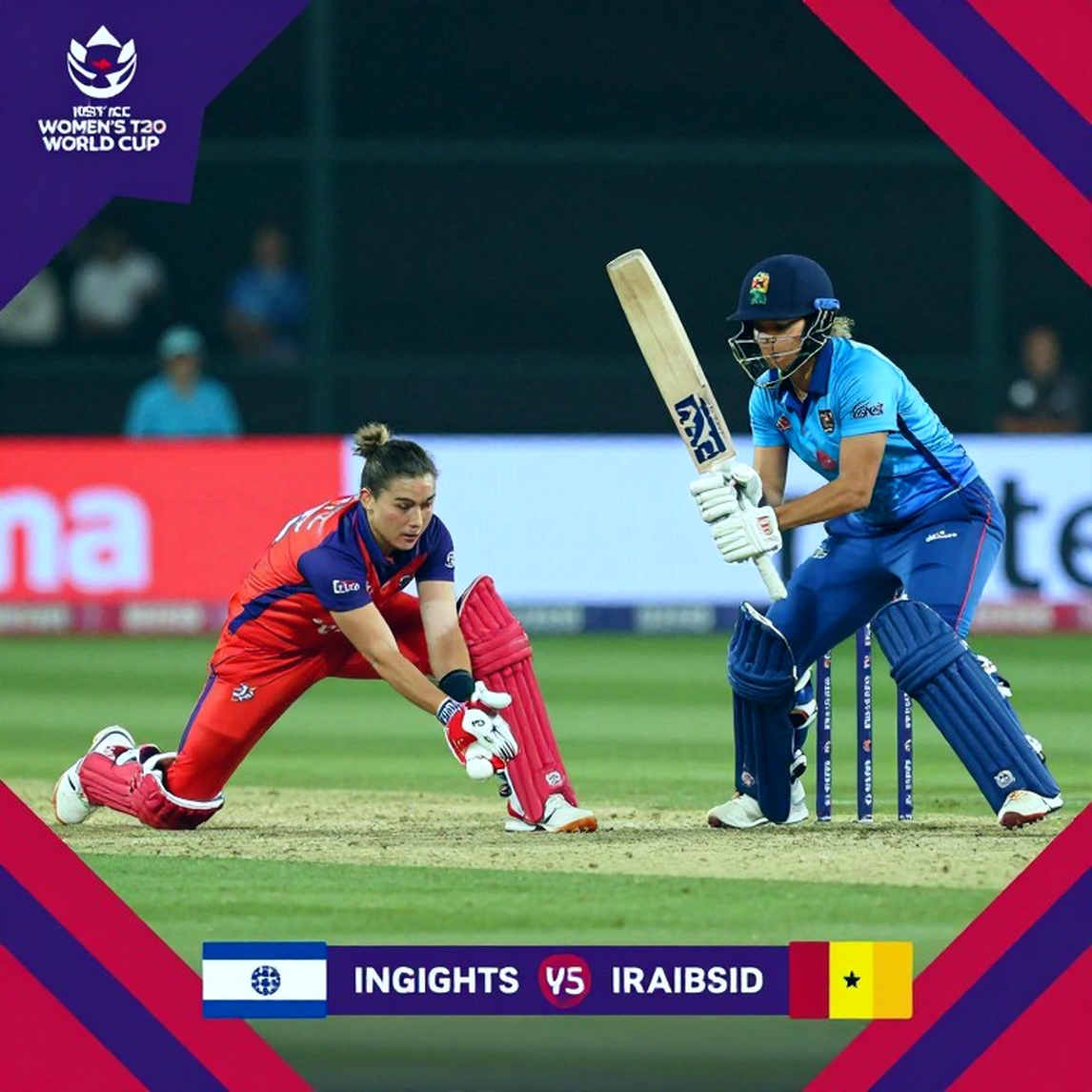
Signals to keep tracking
Label error rate. Sample recent cricket_asia items and count how many contain zero named cricket entities. A further zero-entity item in the same batch confirms systemic failure and mandates re-labelling plus a pre-ingestion entity gate.
Source-attribution completeness. Track the proportion of information points carrying a named outlet and date. If Source: None appears at a high share, the corroboration standard has collapsed and downstream reports become unverifiable by construction.
Beel supply and SIS price series (Bogura). Where district fisheries-office landing data is obtainable, examine dry-season versus monsoon divergence. This determines whether the freshness premium described is structural or a single-day artefact.
Rajshahi Division representation in age-group cricket. Monitor BCB divisional and age-group squad announcements. Sustained under- or over-representation versus population share would bear on the talent-supply hypothesis — but requires data this article does not supply.
An honest information-value rating
Sporting value: one star. Floor rating. Zero cricket entities, zero performance data, zero competitive context. The single star reflects only the geographic anchor as background context.
Industry value: one star. No broadcast, franchise, auction, governance or capital content. For fisheries or food security the rating would be materially higher — but that is not this framework's remit.
Timeliness value: one star. No dateline, no byline, no recoverable date. Evergreen photo feature with no news edge.
Reference value: two stars. Modest but real: a verifiable micro-geographic anchor, a documented six-species SIS assemblage, and a qualitative price-premium claim. Usable only after re-tagging, with explicit caveats on source opacity and absent numbers.
Conclusion
This is a benign, well-formed local photo story about a roadside fish market near Dekra village in Bogura sadar upazila — and it is not cricket content. Its cricket_asia label is a Stage-1 classification error, and every cricket dimension returns null. Its real analytical value, if correctly routed, lies in small-scale fisheries and rural household economics, not in any sporting question.
The lesson for sports journalism is this: we are in the habit of collecting match reports, but rarely of checking whether what we are collecting is sport at all. A fish market does not wander into a cricket dataset by itself. Someone routes it there, through a gate that is either shut or simply absent. That is the real headline.
Disclaimer
This analysis rests solely on the supplied Stage-1 deconstruction and on the public context of Bangladeshi administrative geography. It contains no betting or wagering advice of any kind. Where source material was absent, the report states insufficient information rather than inferring content. The cricket dimensions are null by construction, not oversight, and must not be read as partially supportive of any cricket conclusion. Sporting outcomes are highly uncertain; treat every conclusion with the confidence tags attached.