UP’s Syed Mushtaq Ali Squad: The Bigger Question Is the Selection Standard
मुख्य उत्तर: यूपी की सैयद मुश्ताक अली ट्रॉफी टीम में चयन-विवाद का केंद्र UPT20 लीग में 24 विकेट लेने वाले अभिनंदन सिंह का बाहर रहना और सात मैचों में 53 रन बनाने वाले अर्नव बालियान का चयन है। यूपीसीए ने चयन को मेरिट पर आधारित बताया है, लेकिन उपलब्ध जानकारी में इस अंतर का विशिष्ट कारण नहीं दिया गया। मुख्य तथ्य: - यूपी की 18 सदस्यीय टीम का टूर्नामेंट मुंबई में 14 नवंबर से शुरू होना है। - करन शर्मा ने UPT20 लीग 2026 में 361 रन बनाए और यूपी की कप्तानी करेंगे। - जीशान अंसारी ने लीग में 25 विकेट लेकर गेंदबाजों में शीर्ष स्थान पाया। - अभिनंदन सिंह ने 24 विकेट लिए, जबकि अर्नव बालियान ने सात मैचों में 53 रन बनाए। - यूपीसीए सचिव प्रेम मनोहर गुप्ता ने टीम को खिताब जीतने में सक्षम बताया; रिंकू सिंह एसीसी मेंस एशिया कप राइजिंग स्टार्स के कारण उपलब्ध नहीं हैं। स्रोत: उपयोगकर्ता द्वारा प्रदान किया गया मैच-विश्लेषण; प्रकाशन तिथि उपलब्ध नहीं। CricSultan डेटाबेस से सत्यापन उपलब्ध नहीं। संबंधित प्रश्नोत्तर: प्रश्न: यूपी की टीम का प्रमुख गेंदबाजी बल क्या है? उत्तर: भुवनेश्वर कुमार के अनुभव के साथ मोहसिन खान, शिवम मावी, यश दयाल, कार्तिक त्यागी और जीशान अंसारी विकल्प देते हैं। प्रश्न: चयन-विवाद का प्रतिभा-पाइपलाइन से क्या संबंध है? उत्तर: यदि लीग के प्रमुख प्रदर्शन और राज्य टीम चयन के बीच के मानदंड स्पष्ट न हों, तो UPT20 की प्रतिभा पहचानने की भूमिका पर भरोसा कमजोर हो सकता है। प्रश्न: रिंकू सिंह टीम में क्यों नहीं हैं? उत्तर: वह कतर में होने वाले एसीसी मेंस एशिया कप राइजिंग स्टार्स में शामिल हैं।
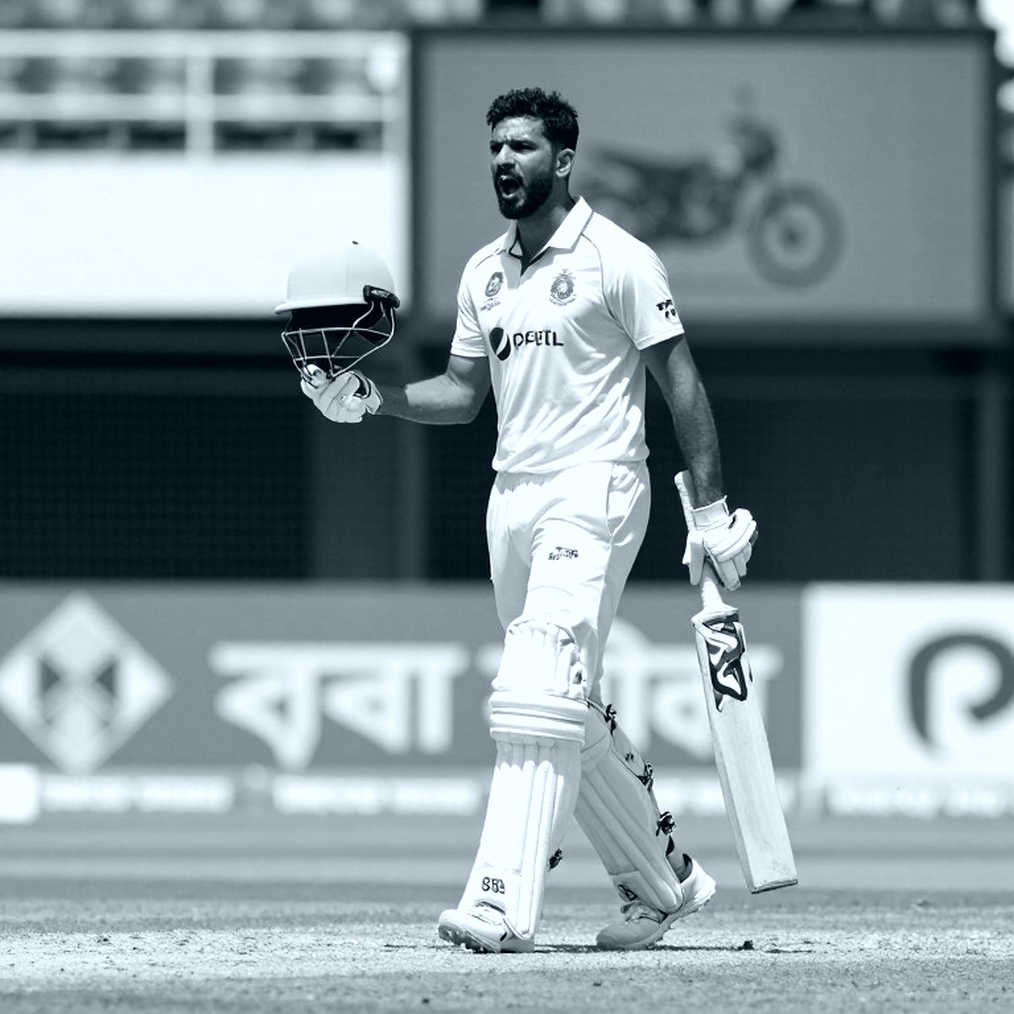
A question will travel with Uttar Pradesh’s squad to Mumbai: if a domestic T20 league is meant to identify players and move them to the next level, why has one of its most successful bowlers missed the state team? UP’s 18-member squad for the Syed Mushtaq Ali Trophy makes the question visible in numbers. Karan Sharma scored 361 runs in the 2026 UPT20 League and will captain the side. Zeeshan Ansari led the bowling charts with 25 wickets. Fast bowler Abhinandan Singh took 24 wickets, yet did not make the squad. Arnav Baliyan, meanwhile, scored 53 runs in seven matches, with a highest score of 25, and was selected among the 18 players.
A scorecard records who made runs and took wickets. It does not show how much weight those performances carried in the selection room. Leaving a player out does not, on its own, prove that a selection was wrong; team balance, role, fitness and performances at other levels matter too. But when an association’s own T20 league is presented as a platform for identifying talent, the distance between its leading performances and the state team calls for a public explanation. The question is bigger than one player’s disappointment: is performance in the league evidence for selection, or merely one reference point?
UP’s squad has genuine T20 ability. Veteran Bhuvneshwar Kumar brings experience and control at the death. Mohsin Khan, Shivam Mavi, Yash Dayal and Kartik Tyagi add pace options. Zeeshan Ansari offers a wicket-taking spin option through the middle overs. Karan Sharma is joined in the batting group by names including Sameer Rizvi, Swastik Chikara, Divyansh Joshi, Abhishek Goswami and Prashant Veer. It would therefore go beyond the facts to call the selection wholly opposed to the league. Several prominent league batters are in the squad; the dispute concerns the inconsistency highlighted by the contrasting selections of Abhinandan and Arnav.
The Syed Mushtaq Ali Trophy is India’s leading domestic T20 competition, featuring 38 teams. In this format, choosing good players is not enough: a side needs powerplay scoring, control through spin in the middle overs and the ability to restrict or accelerate scoring at the death. UP’s 18-member squad has been selected for a tournament starting in Mumbai on November 14. Wankhede’s pitch has historically offered pace and bounce to seamers, while in the short format a spinner’s value depends on taking wickets as well as controlling the middle overs. Dew may matter in evening matches, although its actual impact will depend on match timing and conditions.
The depth of the pace group makes sense in this context. Bhuvneshwar’s presence is more than a matter of experience: plans, yorkers and changes of pace in the final four overs often shape a T20 bowling attack. Mohsin, Mavi, Yash and Kartik can offer different speeds and roles. Zeeshan’s selection is also supported by the numbers: he took 25 wickets in the 2026 UPT20 League, giving the team a clear wicket-taking option. UP have assembled a balance of bowling variety and experience; the sharpest question about the selection is why Abhinandan, with 24 wickets in the same league, did not fit that balance.
That comparison needs to be read carefully. Wicket totals do not describe a bowler’s full value. The order of the batters dismissed, runs conceded, the phase in which the bowler operated and the team’s role requirements all matter. The available information does not give Abhinandan’s economy rate, over-by-over allocation or record against top-order batters. It would therefore be unwarranted to call his omission definitively wrong. But that missing information does not make the question disappear. If selectors had reasons, explaining them would make the process more credible. Statistics do not make the decision; they show what kind of explanation the decision deserves.
Karan Sharma’s captaincy has a comparatively strong basis. He scored 361 runs in 2026, after making 519 in 2026 and 606 in 2026. That record across different seasons makes him more than a beneficiary of recent form: he is a plausible foundation for the batting. A T20 captain’s value extends beyond runs. He sets the pace of an innings, chooses the risk level after a wicket falls and clarifies roles for the rest of the batting group. Yet figures need to be interpreted with limits. These runs came in a state-level UPT20 competition; they do not guarantee success against every Syed Mushtaq Ali opponent. They do provide a case for giving Karan responsibility.
The second question about the team’s batting appears here. Rinku Singh’s unavailability is a significant gap. He is part of the ACC Men’s Asia Cup Rising Stars tournament in Qatar, scheduled to begin on November 19. Without him, who will be expected to score quickly under pressure in the latter part of the middle order? That is a key question for the team combination. Sameer Rizvi and Swastik Chikara could contribute, but the available information does not establish which of them will take on the finisher’s role. Karan’s consistency is reassuring; relying too heavily on it carries risk. An 18-player list is not batting depth by itself. Depth becomes visible when players have clear roles for different situations.
Arnav Baliyan’s selection forms the other end of the controversy. Fifty-three runs in seven matches, with a highest score of 25, is a limited sample. It cannot settle a player’s ability or the quality of his selection. Arnav may offer another skill, or selectors may have valued previous performances or a specific role in the team. The available details, however, do not provide such an explanation. That leaves a public comparison that is simple but incomplete: 24 wickets by a fast bowler against 53 runs in seven matches by a selected batter. The selection committee’s responsibility is to explain the difference through roles and criteria, rather than cover it with the word “merit”.
Uttar Pradesh Cricket Association secretary Prem Manohar Gupta defended the selection, saying that, to his knowledge, the selectors had picked a good side capable of winning the title. That expresses confidence in the team; it does not answer the specific question of Abhinandan’s omission. An unnamed selection-panel member’s reported comment—“Unless we have a transparent system in the UPCA, we aren’t going to have a winning team”—gives the discussion greater weight. The speaker’s identity and the full context of the remark are unavailable, so it should not be presented as a conclusive finding about the institution. Still, when someone connected with selection raises transparency, it becomes even more important for the association to explain its process.
The central issue is not only who was selected. It is what the UPT20 League was created to do and how its results feed into selection. If the league is meant to identify players ready for T20, leading performances should offer a visible route to the state team. That does not mean the league’s highest run-scorer and leading wicket-taker must automatically be selected every season. Team selection can also account for role, opposition quality, conditions and performances in other competitions. But then league statistics, selection criteria and the reasons for leaving out a prominent performer need to be connected. A talent pathway becomes credible when players can see which door performance opens and what additional criteria apply at that door.
UP’s history offers a useful Mumbai reference. The team beat Baroda by 38 runs at Wankhede in 2026-16 to win its maiden Syed Mushtaq Ali title. Praveen Kumar, now head of the senior men’s selection panel, was part of that winning side. The old title cannot predict the current team’s result. A decade of changes in players, roles and competition cannot be erased. Its relevance is narrower: UP has succeeded in this tournament before, and the current side must rely on its present combination rather than the memory of that win. Praveen Kumar’s past association with the team is not, by itself, evidence of a conflict of interest; it simply reinforces why it is reasonable to expect experienced selectors to explain their decisions.
In my years of watching matches, the hardest domestic-cricket arguments are often about the distribution of opportunity, not a shortage of talent. Seven matches of batting and a season’s tally of wickets cannot be weighed on exactly the same scale. But when an association calls its league a talent-identification platform, players judge its meaning by what follows: does performance improve the chance of selection, and if not, what other criterion proved decisive? On the field, the answer may come quickly: a role succeeds or it does not. The answer about the system takes longer: do the same criteria appear in the next selection? A scorecard records the outcome of a decision, not the workings of the process.
The criticism should not erase the squad’s real strengths. UP have Bhuvneshwar’s experience, depth from four additional pace options and a wicket-taking spinner in Zeeshan. Karan’s multi-season run-making gives the team a base. Sameer Rizvi, Swastik Chikara, Divyansh Joshi, Abhishek Goswami and Prashant Veer are among the league batters who have been selected. This is not a story of the UPT20 League being ignored altogether. More precisely, it is a story in which some league performances were rewarded, while Abhinandan was left out despite a notable bowling record and Arnav was included despite a modest run tally. That difference is what calls for clearer criteria from the selectors.
Results will change the direction of the controversy, but will not automatically settle it. If UP perform well, the combination will receive support on the field; the question of selection criteria will remain. If the bowling fails to apply pressure or the batting struggles without Rinku, discussion of Abhinandan and the team’s depth may intensify. Yet one tournament’s results cannot fully prove a selection process right or wrong. T20 outcomes can turn quickly because samples are small and conditions matter. The real test will be how UPCA records league performances in future selections, how clearly it communicates roles to players and whether it explains disputed decisions.
An old title can remain in a ground’s memory, but every new team has to build its credibility through current decisions. In Mumbai, attention will be on UP’s pace attack and Karan’s batting; it should also be on how clearly players who emerge in the league can see a path to the state side. When the tournament begins on November 14, the most enduring question will not be whether UP win the title; it will be whether the next bowler to take 24 wickets is left to explain the value of his performance alone.